Introduction
Choosing the right profession is one of the most important decisions a person can make. A good role not only provides financial stability but also shapes confidence, lifestyle, growth opportunities, and personal satisfaction. In today’s rapidly changing employment market, making informed decisions is more important than ever. Technology, globalization, remote work, and changing business models are transforming industries at an incredible pace. Because of this, individuals who make smart career choices early can enjoy long-term success and adaptability.
Many professionals spend years in positions that do not align with their interests or future goals. Others continue learning, upgrading their skills, and selecting paths with long-term potential. The difference between these two groups often comes down to planning and awareness. A strategic approach to professional development can create opportunities that completely transform someone’s future.
This article explores ten powerful professional directions that can help individuals build stability, growth, and long-term success in 2026 and beyond.
https://arrmanpowerconsultancy.com
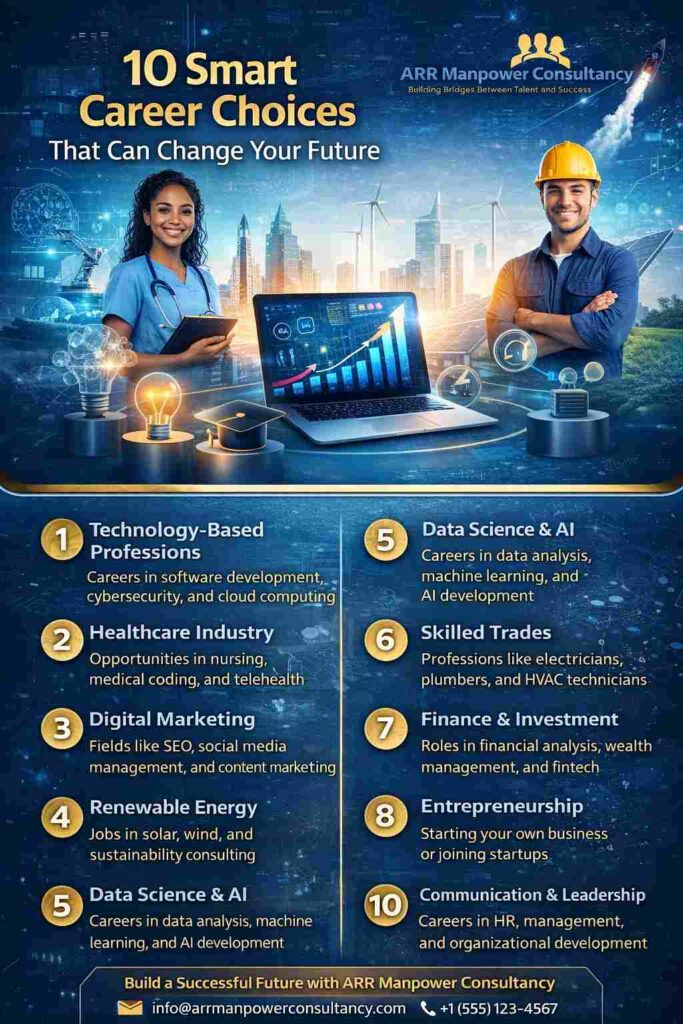
1. Choosing Technology-Based Professions
Technology continues to dominate almost every industry across the world. Businesses rely heavily on software, artificial intelligence, cybersecurity, cloud computing, and automation. Individuals who enter technology-focused roles often benefit from strong salaries, remote work opportunities, and long-term demand.
Software developers, data analysts, cybersecurity specialists, and cloud engineers are among the most sought-after professionals today. Companies need skilled people who can manage digital systems, secure data, and improve online operations.
Learning coding languages such as Python, JavaScript, or Java can open multiple opportunities. Even non-technical professionals benefit from understanding digital tools because modern workplaces increasingly depend on technology.
Technology-oriented roles also allow flexibility. Many professionals work remotely, freelance internationally, or build their own startups. As industries continue digitizing operations, people with technical knowledge are likely to remain valuable for decades.
2. Entering the Healthcare Industry
Healthcare remains one of the most stable sectors worldwide. Hospitals, clinics, diagnostic centers, and telemedicine platforms constantly require skilled professionals. The aging population and growing focus on wellness ensure continued demand in this field.
Doctors and nurses are essential, but there are also opportunities in healthcare administration, medical coding, physiotherapy, laboratory technology, pharmacy, and mental health services.
Telehealth has expanded significantly in recent years. Online consultations, digital prescriptions, and remote monitoring systems are creating entirely new employment opportunities. Professionals with healthcare knowledge combined with digital skills have a strong advantage.
People interested in helping others while securing long-term employment often find healthcare rewarding. The sector also offers continuous learning and specialization opportunities that improve earning potential over time.
3. Building a Future in Digital Marketing
Businesses now compete online more than ever before. Because of this, digital marketing has become a powerful professional field. Organizations require experts who can improve online visibility, attract customers, and increase brand awareness.
Search engine optimization, content marketing, social media management, email campaigns, video marketing, and paid advertising are major areas within this industry. Professionals who understand online audience behavior are highly valuable.
One of the biggest advantages of digital marketing is accessibility. Individuals can learn skills through online courses, certifications, internships, and practical experience. Many successful marketers begin freelancing before joining agencies or corporate organizations.
The field also supports entrepreneurship. Skilled marketers can launch their own consulting businesses, manage clients globally, or create personal brands. Since companies increasingly rely on digital platforms, professionals in this industry can expect strong future growth.
4. Pursuing Careers in Renewable Energy
The world is shifting toward sustainable solutions and environmentally friendly technologies. Governments and organizations are investing heavily in renewable energy sources such as solar, wind, and hydroelectric power.
This transition has created demand for engineers, project managers, sustainability consultants, energy analysts, and environmental specialists. Individuals with expertise in green technology are likely to enjoy growing opportunities in the coming years.
Sustainability is no longer just a trend. Businesses now prioritize reducing environmental impact and meeting global climate goals. Professionals who understand renewable systems and energy efficiency can contribute significantly to future industries.
Young professionals entering this sector today may become leaders in one of the fastest-growing industries globally. Renewable energy combines innovation, environmental responsibility, and long-term professional potential.
5. Exploring Data Science and Artificial Intelligence
Data has become one of the most valuable assets in the modern economy. Companies collect large amounts of information and require professionals who can analyze patterns, predict trends, and support strategic decisions.
Data science and artificial intelligence are transforming industries including finance, healthcare, retail, manufacturing, and education. Specialists in machine learning, predictive analytics, and automation are increasingly in demand.
Professionals in this area use statistics, programming, and business understanding to solve complex problems. Although the field requires technical learning, the rewards are substantial. High salaries, international opportunities, and innovation-driven projects make it highly attractive.
Artificial intelligence is expected to influence nearly every industry in the future. Individuals who gain expertise in this field today position themselves strongly for tomorrow’s job market.
6. Choosing Skilled Trades and Technical Services
While many people focus only on corporate professions, skilled trades remain essential and profitable. Electricians, plumbers, HVAC technicians, automotive specialists, and industrial mechanics are in high demand across many countries.
Infrastructure growth, smart buildings, and industrial expansion continue increasing the need for technical workers. Skilled professionals often enjoy job security because their expertise cannot easily be replaced by automation.
Technical professions also provide opportunities for independent business ownership. Many experienced technicians establish successful service companies and employ teams of workers.
Vocational training programs and certification courses make entry into these professions relatively accessible compared to lengthy university education. For many individuals, skilled trades provide stable income, practical experience, and career growth.
7. Developing Expertise in Finance and Investment
Financial knowledge remains valuable in every economy. Organizations need professionals who understand budgeting, investment strategies, taxation, auditing, and risk management.
Careers in finance include financial analysis, accounting, banking, wealth management, insurance, and investment consulting. These roles often provide structured growth opportunities and strong compensation.
Financial technology is also reshaping the industry. Digital banking, cryptocurrency, blockchain systems, and online investment platforms are creating new professional paths. Individuals who combine financial expertise with technological understanding have significant advantages.
Professionals in finance often gain skills that benefit both their employers and personal lives. Understanding investments, savings, and financial planning helps individuals build long-term wealth and security.
8. Moving Into Entrepreneurship and Startups
Entrepreneurship offers individuals the opportunity to create something meaningful while controlling their own professional direction. Starting a business requires courage, planning, adaptability, and persistence.
Modern technology has made entrepreneurship more accessible than ever. Small businesses can reach global customers through websites, e-commerce platforms, and social media marketing. Freelancers and consultants can also establish independent brands with relatively low startup costs.
Although entrepreneurship involves risk, it also offers unlimited growth potential. Many successful business owners begin with small ideas that gradually expand into profitable companies.
The startup ecosystem continues growing in sectors such as technology, education, healthcare, logistics, and digital services. Individuals with creativity and problem-solving abilities may find entrepreneurship highly rewarding.
Building a business also develops leadership, communication, and strategic thinking skills that remain valuable throughout life.
9. Choosing Education and Skill Development Fields
Education is evolving rapidly through online learning platforms, virtual classrooms, and professional training programs. Skilled educators, trainers, and instructional designers are increasingly needed to support lifelong learning.
Teaching is no longer limited to traditional classrooms. Professionals can now become online instructors, corporate trainers, career coaches, language tutors, or technical educators.
As industries continue changing, employees require constant upskilling. Organizations invest heavily in training programs to improve workforce productivity. This creates opportunities for professionals who can teach practical and industry-relevant knowledge.
People passionate about sharing knowledge often find great satisfaction in education-related professions. The ability to influence others positively while building a stable future makes this field especially meaningful.
10. Focusing on Communication and Leadership Roles
Strong communication remains one of the most valuable professional skills. Organizations need leaders who can manage teams, solve conflicts, negotiate effectively, and inspire employees.
Roles in human resources, public relations, corporate communications, management consulting, and leadership development continue expanding. Professionals with emotional intelligence and strategic thinking are especially valuable in modern workplaces.
Automation may replace repetitive tasks, but human interaction remains irreplaceable. Businesses still depend on professionals who can build relationships, motivate teams, and maintain organizational culture.
Leadership abilities can also accelerate growth in almost any industry. Employees who communicate clearly and demonstrate initiative are often promoted faster than others.
Developing communication skills through public speaking, networking, teamwork, and professional training can significantly improve long-term opportunities.
How to Identify the Right Professional Direction
Selecting the right path requires self-awareness and research. Individuals should consider their strengths, interests, long-term goals, and preferred working style before making major decisions.
Some people thrive in creative environments, while others prefer analytical or technical work. Understanding personal motivation helps avoid dissatisfaction later. Financial expectations, work-life balance, and future industry demand should also influence decisions.
Researching market trends is essential. Industries experiencing rapid growth usually provide better long-term opportunities. However, passion and personal interest are equally important because they influence consistency and performance.
Seeking mentorship can also provide valuable guidance. Experienced professionals often share insights that help younger individuals avoid common mistakes and identify promising opportunities.
The Importance of Continuous Learning
Modern industries evolve quickly, making continuous learning essential for long-term success. Degrees alone are no longer enough. Professionals must regularly update their knowledge through certifications, workshops, online courses, and practical experience.
Adaptability is one of the most valuable qualities in today’s employment market. People willing to learn new technologies and improve their abilities remain competitive even during economic changes.
Soft skills are equally important. Communication, teamwork, problem-solving, and leadership contribute significantly to professional growth. Employers increasingly value individuals who combine technical expertise with interpersonal abilities.
Continuous improvement not only increases opportunities but also builds confidence and professional credibility.
Common Mistakes to Avoid
Many individuals make professional decisions based solely on salary. While financial stability matters, choosing a role without considering long-term satisfaction can lead to burnout and frustration.
Another common mistake is resisting change. Industries evolve constantly, and refusing to adapt can limit opportunities. Professionals should remain open to learning and exploring new possibilities.
Lack of planning also creates challenges. Successful individuals often set short-term and long-term goals that guide their progress. Strategic planning helps maintain focus and motivation.
Finally, ignoring networking opportunities can slow growth. Building strong professional relationships often leads to mentorship, collaborations, and new opportunities.
Final Thoughts
The future belongs to individuals who make informed and adaptable professional decisions. Technology, healthcare, renewable energy, finance, education, and communication-focused roles are among the strongest opportunities available today. Each field offers unique advantages, growth potential, and long-term stability.
Success does not happen overnight. It requires learning, persistence, flexibility, and strategic planning. By selecting meaningful paths and continuously improving skills, individuals can create rewarding futures filled with growth and opportunity.
Smart career choices are not simply about finding employment. They are about building a life that combines financial security, personal satisfaction, and long-term achievement. The decisions made today can shape opportunities for many years to come.
https://www.ilo.org/topics-and-sectors/skills-and-lifelong-learning