Introduction
Hiring the right talent is one of the most important responsibilities of any hiring manager. A successful recruitment process can strengthen team performance, improve workplace culture, and contribute directly to business growth. On the other hand, poor hiring decisions can lead to productivity issues, increased turnover, and higher recruitment costs.
While organizations invest heavily in sourcing candidates and employer branding, the effectiveness of the interview process often determines whether the best candidate is selected. Conducting interviews is more than simply asking questions and reviewing resumes. It requires preparation, communication, observation, evaluation, and decision-making abilities that help managers identify the most suitable talent.
The best hiring managers understand that interviews are opportunities to evaluate technical competence, cultural alignment, motivation, adaptability, and long-term potential. Developing strong interviewing capabilities helps organizations make informed hiring decisions while creating a positive experience for candidates.
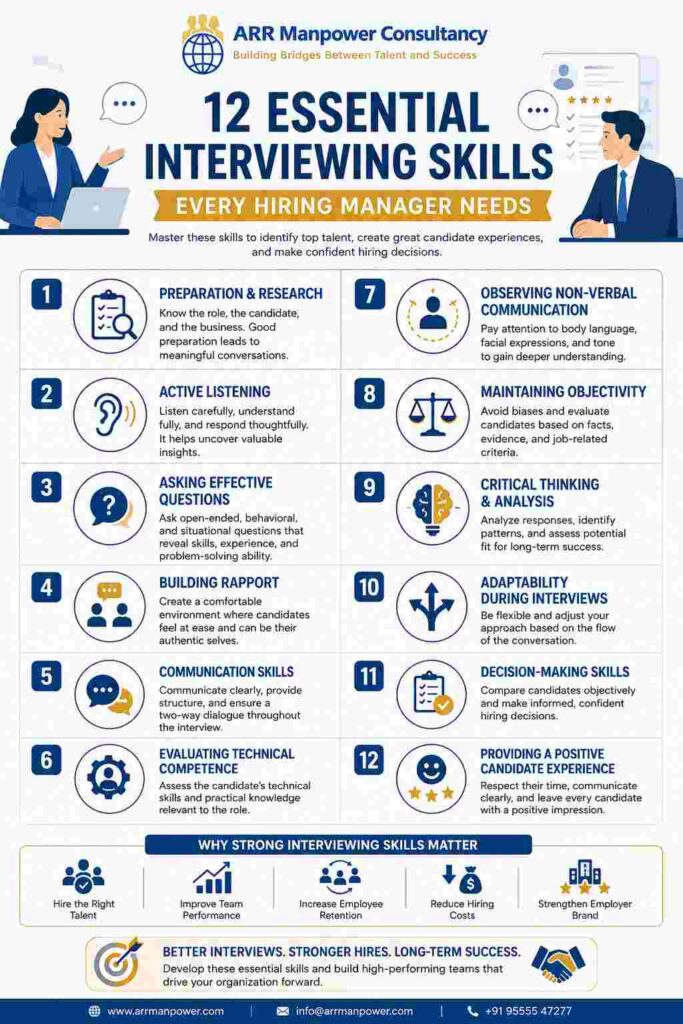
Here are 12 essential interviewing skills every hiring manager should master.
https://arrmanpowerconsultancy.com
1. Preparation and Research
Successful interviews begin long before the candidate enters the room or joins a video call. Preparation enables hiring managers to conduct focused and productive conversations.
Before the interview, review the candidate’s resume, cover letter, portfolio, and any assessment results. Familiarize yourself with the job description, team requirements, and organizational goals.
Preparation allows you to:
- Ask relevant questions
- Identify areas requiring clarification
- Evaluate qualifications effectively
- Save time during the discussion
- Create a professional candidate experience
When interviewers arrive unprepared, candidates often perceive the organization as disorganized or uninterested. Proper preparation demonstrates professionalism and respect for the applicant’s time.
2. Active Listening
Active listening is one of the most valuable skills a hiring manager can possess. Many interviewers focus so heavily on their next question that they miss important details in a candidate’s responses.
Effective listening involves:
- Maintaining attention
- Avoiding interruptions
- Taking meaningful notes
- Asking thoughtful follow-up questions
- Understanding both verbal and non-verbal cues
Candidates often reveal critical insights about their experience, work ethic, and problem-solving approach through detailed explanations. Active listening helps interviewers gather deeper information and make more accurate evaluations.
Additionally, candidates appreciate being heard, which improves their overall impression of the organization.
3. Asking Effective Questions
The quality of an interview often depends on the quality of the questions being asked. Strong questions encourage candidates to provide detailed, meaningful responses rather than simple yes-or-no answers.
Examples include:
- Tell me about a challenging project you managed.
- Describe a time when you handled workplace conflict.
- How do you prioritize competing responsibilities?
- What motivates you in your professional career?
Behavioral and situational questions are particularly effective because they reveal how candidates have acted in the past and how they may respond in future scenarios.
Well-crafted questions provide valuable information about competencies, leadership potential, communication abilities, and cultural fit.
4. Building Rapport
Candidates perform best when they feel comfortable. Establishing rapport helps reduce nervousness and encourages open communication.
Simple ways to build rapport include:
- Greeting candidates warmly
- Maintaining a friendly tone
- Explaining the interview process
- Showing genuine interest in their background
- Encouraging conversation
Creating a welcoming atmosphere allows candidates to showcase their abilities more effectively. It also reflects positively on the company’s culture and professionalism.
A positive interview experience can influence whether top candidates accept future job offers.
5. Communication Skills
Strong communication is essential throughout every stage of the interview process. Hiring managers must clearly explain expectations, responsibilities, company culture, and next steps.
Effective communication includes:
- Speaking clearly and professionally
- Providing concise explanations
- Avoiding confusing terminology
- Offering transparency about the role
- Answering candidate questions honestly
Clear communication reduces misunderstandings and helps candidates make informed decisions about potential employment opportunities.
It also contributes to a positive employer brand and strengthens candidate engagement.
6. Evaluating Technical Competence
For many positions, assessing technical knowledge is a critical component of the hiring process. Hiring managers must be able to determine whether candidates possess the skills necessary to perform successfully.
Methods for evaluating technical capabilities include:
- Skills assessments
- Portfolio reviews
- Technical discussions
- Case studies
- Practical exercises
The goal is not merely to test knowledge but to understand how candidates apply their expertise in real-world situations.
A structured evaluation process ensures consistency and improves hiring accuracy.
7. Observing Non-Verbal Communication
Communication extends beyond spoken words. Non-verbal signals often provide valuable insights into a candidate’s confidence, professionalism, and engagement.
Areas to observe include:
- Eye contact
- Body language
- Facial expressions
- Posture
- Responsiveness
While non-verbal cues should never be used as the sole basis for evaluation, they can help provide additional context during conversations.
For example, enthusiasm, attentiveness, and confidence may reinforce a candidate’s verbal responses, while inconsistent behavior may warrant further questioning.
Interviewers should remain objective and avoid making assumptions based solely on body language.
8. Maintaining Objectivity
Bias can significantly impact hiring decisions. Effective hiring managers recognize the importance of remaining objective throughout the evaluation process.
Common biases include:
- Similarity bias
- Confirmation bias
- First-impression bias
- Halo effect
- Recency bias
To maintain fairness:
- Use standardized questions
- Follow evaluation criteria
- Focus on job-related qualifications
- Involve multiple interviewers
- Document observations consistently
Objectivity promotes diversity, equity, and better hiring outcomes by ensuring decisions are based on evidence rather than personal preferences.
9. Critical Thinking and Analysis
Interviews generate a large amount of information. Hiring managers must analyze responses carefully to determine whether candidates possess the required competencies.
Critical thinking involves:
- Identifying strengths and weaknesses
- Comparing qualifications objectively
- Evaluating problem-solving abilities
- Assessing long-term potential
- Verifying consistency in responses
Strong analytical skills help interviewers distinguish between candidates who interview well and those who can genuinely perform successfully in the role.
This capability becomes especially important when comparing multiple qualified applicants.
10. Adaptability During Interviews
No interview follows a perfectly predictable path. Candidates may provide unexpected answers, introduce new experiences, or reveal qualifications not initially apparent.
Adaptable interviewers can:
- Modify questioning strategies
- Explore relevant topics in greater depth
- Clarify ambiguous responses
- Adjust interview flow naturally
- Respond effectively to different personalities
Flexibility allows hiring managers to gather richer information while maintaining a productive conversation.
Adaptability is particularly valuable when interviewing candidates from diverse industries, backgrounds, and experience levels.
11. Decision-Making Skills
The ultimate purpose of an interview is to make informed hiring decisions. Effective decision-making requires balancing multiple factors while avoiding emotional judgments.
Key considerations include:
- Technical qualifications
- Relevant experience
- Soft skills
- Cultural compatibility
- Growth potential
- Team needs
Strong decision-makers rely on structured evaluation methods and documented evidence rather than intuition alone.
A systematic approach improves consistency, reduces hiring mistakes, and increases confidence in final selections.
Organizations that emphasize data-driven hiring often experience stronger workforce performance and retention rates.
12. Providing a Positive Candidate Experience
Every interaction during the hiring process contributes to the candidate’s perception of the organization.
Even candidates who are not selected can become future applicants, customers, or brand advocates. Therefore, creating a positive experience benefits the company regardless of hiring outcomes.
Best practices include:
- Being punctual
- Showing respect
- Communicating clearly
- Providing realistic expectations
- Following up promptly
Candidates appreciate transparency and professionalism throughout the recruitment journey.
A strong candidate experience enhances employer reputation and helps organizations attract top talent in competitive job markets.
Why Interviewing Skills Matter More Than Ever
Modern recruitment environments are increasingly competitive. Organizations must compete for highly skilled professionals who often have multiple employment options.
As a result, interviews serve two purposes:
- Evaluating candidates.
- Promoting the organization as an employer of choice.
Hiring managers who possess strong interviewing capabilities can identify high-potential talent while creating positive impressions that encourage candidates to join the company.
Furthermore, effective interviewing reduces:
- Hiring errors
- Employee turnover
- Training costs
- Recruitment expenses
- Productivity disruptions
The long-term impact of successful hiring decisions extends far beyond filling vacant positions.
How Hiring Managers Can Improve Their Interview Performance
Developing stronger interviewing capabilities requires ongoing learning and practice.
Managers can improve by:
- Participating in interviewer training programs
- Practicing behavioral interviewing techniques
- Reviewing hiring outcomes regularly
- Seeking feedback from peers
- Learning about unconscious bias
- Refining evaluation methods
Continuous improvement helps ensure interviews remain effective, fair, and aligned with organizational objectives.
The most successful hiring managers treat interviewing as a strategic business skill rather than an administrative task.
Conclusion
Great hiring decisions begin with great interviews. Hiring managers who master preparation, active listening, communication, critical thinking, adaptability, and objective evaluation are better equipped to identify candidates who can contribute meaningfully to organizational success.
The 12 essential interviewing skills discussed in this article provide a strong foundation for conducting effective and professional interviews. By continually refining these abilities, hiring managers can improve hiring quality, strengthen employer reputation, and build high-performing teams that drive long-term business growth.
In today’s competitive talent landscape, interviewing excellence is no longer optional—it is a critical factor in attracting, selecting, and retaining the best people for the organization.
Additionally, organizations that prioritize effective interviewing practices gain a significant competitive advantage in attracting exceptional talent. Strong interview processes help create a consistent hiring framework that supports better workforce planning and organizational development. As workplace expectations continue to evolve, hiring managers must stay updated on modern recruitment strategies and communication techniques.
Investing time in developing interviewing expertise not only improves candidate selection but also contributes to stronger employee engagement, higher retention rates, and sustainable business success in the long run.