Introduction
Employee satisfaction is one of the most important factors influencing organizational success. When employees feel valued, respected, and supported, they become more engaged in their work and contribute positively to business growth. Satisfied employees are more likely to remain loyal to their employers, deliver high-quality work, and create a positive workplace culture.
In today’s competitive job market, attracting and retaining talented professionals requires more than offering a paycheck. Employees seek meaningful work, growth opportunities, flexibility, recognition, and a healthy work environment. Organizations that prioritize these aspects often experience lower turnover rates, higher productivity, and stronger team morale.
Improving employee satisfaction is not a one-time initiative but an ongoing commitment. Businesses must continuously evaluate workplace practices and adapt to changing workforce expectations. This article explores fourteen essential ways organizations can enhance workplace experiences and create an environment where employees can thrive.
https://arrmanpowerconsultancy.com
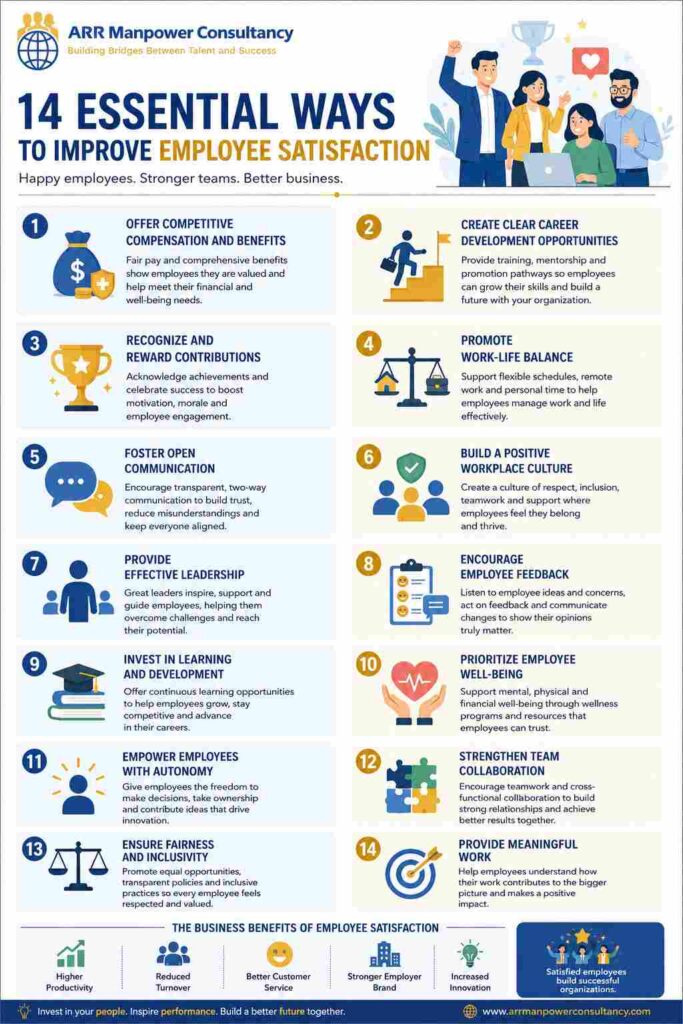
1. Offer Competitive Compensation and Benefits
Compensation remains a fundamental factor in workplace happiness. Employees want to feel that their efforts are rewarded fairly and competitively. While salary alone does not guarantee long-term engagement, inadequate pay can quickly lead to dissatisfaction.
Organizations should regularly review market trends and benchmark salaries against industry standards. Comprehensive benefits packages, including health insurance, retirement plans, paid leave, and wellness programs, also contribute significantly to overall job satisfaction.
Providing financial security helps employees focus on their responsibilities without unnecessary stress. Transparent compensation structures further build trust and demonstrate organizational fairness.
2. Create Clear Career Development Opportunities
Employees are more motivated when they can envision a future within the organization. Career growth opportunities demonstrate that the company values long-term professional development.
Employers can support advancement through:
- Training programs
- Leadership development initiatives
- Mentorship opportunities
- Skill enhancement workshops
- Internal promotion pathways
When employees see opportunities to grow and progress, they become more invested in organizational success. Career development initiatives also help companies build a stronger internal talent pipeline.
3. Recognize and Reward Contributions
Recognition is a powerful motivator. Employees want their hard work and achievements to be acknowledged by managers and peers.
Recognition can take many forms, including:
- Employee awards
- Public appreciation
- Performance bonuses
- Personalized thank-you messages
- Team celebrations
Consistent recognition reinforces positive behaviors and helps employees feel valued. Even simple expressions of gratitude can significantly boost morale and motivation.
Organizations that celebrate accomplishments create a culture where people feel appreciated and encouraged to perform at their best.
4. Promote Work-Life Balance
Maintaining a healthy balance between professional and personal responsibilities is essential for employee well-being. Excessive workloads and constant pressure can lead to burnout, stress, and decreased productivity.
Employers can support work-life balance by:
- Encouraging reasonable working hours
- Providing flexible schedules
- Offering remote work options
- Respecting personal time
- Supporting family responsibilities
Employees who can effectively manage their work and personal lives often experience greater happiness and remain more committed to their organizations.
5. Foster Open Communication
Transparent communication strengthens trust between employees and leadership. Workers want to understand organizational goals, expectations, and changes that affect their roles.
Companies should encourage:
- Regular team meetings
- Feedback sessions
- Open-door policies
- Employee surveys
- Transparent leadership communication
When employees feel heard and informed, they become more engaged in decision-making processes. Open communication also reduces misunderstandings and strengthens workplace relationships.
6. Build a Positive Workplace Culture
Workplace culture significantly influences how employees feel about their jobs. A positive culture encourages collaboration, respect, inclusivity, and mutual support.
Organizations can strengthen culture by:
- Promoting teamwork
- Encouraging diversity and inclusion
- Celebrating successes
- Supporting employee well-being
- Demonstrating company values consistently
A healthy work environment creates a sense of belonging and helps employees feel connected to the organization’s mission and goals.
7. Provide Effective Leadership
Managers play a critical role in shaping employee experiences. Strong leaders inspire confidence, provide guidance, and support team members through challenges.
Effective leaders typically:
- Communicate clearly
- Show empathy
- Provide constructive feedback
- Encourage professional growth
- Lead by example
Employees often leave managers rather than organizations. Investing in leadership development ensures managers possess the skills needed to support and motivate their teams effectively.
8. Encourage Employee Feedback
Employees possess valuable insights that can help organizations improve processes, policies, and workplace culture. Encouraging feedback demonstrates respect for employee perspectives.
Methods for gathering feedback include:
- Anonymous surveys
- Suggestion programs
- One-on-one meetings
- Focus groups
- Town hall discussions
Collecting feedback is only the first step. Organizations must also act on employee concerns and communicate the actions taken. This reinforces trust and demonstrates that employee opinions matter.
9. Invest in Learning and Development
Continuous learning opportunities contribute significantly to professional fulfillment. Employees appreciate organizations that invest in their skills and future success.
Learning initiatives may include:
- Online courses
- Industry certifications
- Workshops
- Conferences
- Cross-functional training
Providing access to education helps employees stay competitive while enabling organizations to develop a more capable workforce. Learning opportunities also increase engagement and motivation.
10. Prioritize Employee Well-Being
Employee well-being extends beyond physical health. Mental, emotional, and financial wellness all contribute to workplace satisfaction.
Organizations can support well-being through:
- Wellness programs
- Mental health resources
- Employee assistance programs
- Stress management initiatives
- Fitness incentives
A workforce that feels supported is generally healthier, more productive, and more resilient. Prioritizing wellness demonstrates genuine concern for employees as individuals rather than simply workers.
11. Empower Employees with Autonomy
Employees often feel more motivated when they have a sense of ownership over their work. Micromanagement can reduce confidence and hinder creativity.
Organizations can promote autonomy by:
- Delegating responsibility
- Encouraging independent decision-making
- Providing clear objectives
- Trusting employees to manage tasks
- Supporting innovation
Empowered employees tend to be more engaged and proactive. They are also more likely to contribute creative solutions that benefit the organization.
12. Strengthen Team Collaboration
Strong workplace relationships contribute significantly to a positive employee experience. Collaboration helps employees feel connected, supported, and engaged.
Employers can encourage teamwork through:
- Collaborative projects
- Team-building activities
- Cross-department initiatives
- Knowledge-sharing sessions
- Open communication channels
A collaborative environment improves problem-solving, fosters innovation, and strengthens workplace morale. Employees who enjoy positive relationships with colleagues are often more satisfied with their jobs.
13. Ensure Fairness and Inclusivity
Fair treatment is a cornerstone of a healthy workplace. Employees expect equal opportunities, unbiased decision-making, and respectful treatment regardless of background.
Organizations should focus on:
- Inclusive hiring practices
- Equal growth opportunities
- Transparent policies
- Diversity initiatives
- Anti-discrimination measures
When employees believe they are treated fairly, trust increases, and workplace engagement improves. Inclusivity also strengthens innovation by encouraging diverse perspectives and ideas.
14. Provide Meaningful Work
Employees want to understand how their efforts contribute to broader organizational goals. Meaningful work creates a sense of purpose and fulfillment.
Organizations can help employees find meaning by:
- Communicating company mission and vision
- Connecting roles to organizational objectives
- Recognizing contributions
- Involving employees in decision-making
- Supporting community initiatives
When employees see the impact of their work, they often become more motivated and committed to achieving organizational success.
Measuring Employee Satisfaction
Improvement efforts should be supported by consistent measurement and evaluation. Organizations need reliable methods to assess workplace sentiment and identify areas for enhancement.
Common measurement tools include:
- Employee engagement surveys
- Pulse surveys
- Exit interviews
- Retention metrics
- Performance indicators
- Feedback sessions
Regular assessment enables organizations to monitor progress and make informed decisions. Data-driven approaches help leaders understand employee needs and implement meaningful improvements.
The Business Benefits of Employee Satisfaction
Organizations that prioritize employee satisfaction often experience substantial business advantages. These benefits extend beyond individual well-being and contribute directly to organizational performance.
Key benefits include:
Higher Productivity
Satisfied employees are generally more motivated and committed to delivering quality work. Increased engagement often leads to improved efficiency and performance.
Reduced Turnover
Employee retention improves when workers feel valued and supported. Lower turnover reduces recruitment costs and preserves institutional knowledge.
Better Customer Service
Happy employees frequently provide better customer experiences. Positive workplace attitudes often translate into stronger customer interactions.
Stronger Employer Brand
Organizations known for excellent workplace environments attract top talent more easily. A strong employer reputation enhances recruitment efforts and competitive positioning.
Increased Innovation
Employees who feel empowered and supported are more likely to share ideas and contribute innovative solutions that drive business growth.
Conclusion
Creating a workplace where employees feel valued, respected, and motivated requires deliberate effort and continuous improvement. From competitive compensation and career development opportunities to open communication and meaningful work, every aspect of the employee experience contributes to overall satisfaction.
Organizations that invest in employee well-being and professional growth often enjoy stronger retention, improved productivity, and a more positive workplace culture. By implementing these fourteen essential strategies, businesses can build an environment that encourages engagement, loyalty, and long-term success.
As workforce expectations continue to evolve, companies must remain committed to understanding employee needs and adapting their practices accordingly. Prioritizing employee satisfaction is not merely a human resources initiative—it is a strategic investment that strengthens organizational performance and supports sustainable growth for years to come.
Furthermore, organizations that consistently listen to employee feedback and respond with meaningful improvements foster stronger trust and commitment. By creating a supportive and inclusive environment, businesses can enhance workplace morale, strengthen team collaboration, and maintain a motivated workforce capable of adapting to future challenges and opportunities.