Introduction
The job market has become more competitive than ever. While candidates spend countless hours polishing resumes, preparing for interviews, and networking, many remain unaware of what actually happens behind the scenes during the hiring process. Recruiters and hiring managers follow strategies, screening techniques, and evaluation methods that most job seekers never see.
Understanding these hiring secrets can significantly improve your chances of securing the right opportunity. It is not about manipulating the process; rather, it is about understanding how employers make decisions and positioning yourself effectively.
Whether you are a recent graduate, an experienced professional, or someone planning a career change, knowing these insights can help you stand out from the crowd. In this article, we will uncover five shocking hiring secrets recruiters don’t want you to ignore and explain how you can use them to your advantage.
https://arrmanpowerconsultancy.com/
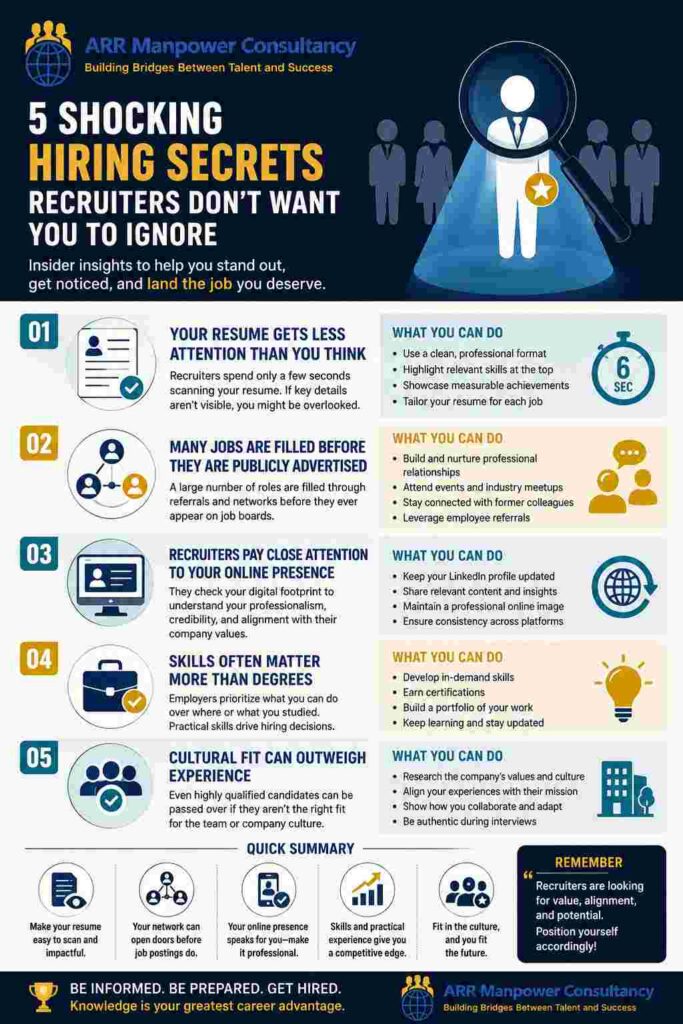
1. Your Resume Gets Less Attention Than You Think
One of the most surprising realities of recruitment is that recruiters often spend only a few seconds reviewing a resume during the initial screening stage.
With hundreds of applications arriving for a single position, hiring teams simply do not have the time to read every document in detail. Instead, they quickly scan for relevant keywords, skills, experience, and qualifications.
Why This Happens
Recruiters typically look for:
- Job title relevance
- Industry experience
- Technical skills
- Educational qualifications
- Measurable achievements
If these elements are not immediately visible, your application may be overlooked regardless of your capabilities.
How to Improve Your Chances
To make a strong first impression:
- Use a clean and professional format.
- Place important skills near the top.
- Include quantifiable accomplishments.
- Tailor your resume to each job application.
- Avoid lengthy paragraphs.
For example, instead of writing:
“Responsible for managing a sales team.”
Write:
“Led a sales team of 12 professionals and increased revenue by 28% within one year.”
The second statement immediately demonstrates value and results.
Key Takeaway
Your resume is not a biography. It is a marketing document designed to communicate your value quickly and effectively.
2. Many Jobs Are Filled Before They Are Publicly Advertised
This hiring secret surprises many candidates. A significant number of positions are filled through internal referrals, employee recommendations, and professional networks before they ever appear on job boards.
The Hidden Job Market
Employers often prefer referrals because:
- They reduce hiring risks.
- Candidates come pre-vetted.
- Recruitment costs are lower.
- Hiring decisions can be made faster.
As a result, many excellent opportunities never reach public job listings.
Why Networking Matters
Professional relationships can provide access to opportunities unavailable elsewhere.
Effective networking includes:
- Connecting with industry professionals.
- Attending conferences and events.
- Participating in webinars.
- Engaging in professional online communities.
- Maintaining relationships with former colleagues.
Building Meaningful Connections
Networking should focus on creating genuine professional relationships rather than immediately asking for job opportunities.
Ways to build credibility include:
- Sharing industry insights.
- Offering helpful information.
- Participating in discussions.
- Supporting others in your network.
Over time, these relationships can lead to referrals and career opportunities.
Key Takeaway
Many candidates focus only on submitting applications. Successful professionals often invest equal effort in building and maintaining their professional network.
3. Recruiters Pay Close Attention to Your Online Presence
In today’s digital world, your online footprint can influence hiring decisions more than you realize.
Many recruiters review candidates’ online profiles before scheduling interviews or extending offers.
What Recruiters Look For
Common areas of review include:
- Professional networking profiles
- Industry contributions
- Public portfolios
- Personal websites
- Professional achievements
Recruiters want to see consistency between your resume and your online presence.
Common Red Flags
Certain online behaviors can negatively impact hiring decisions:
- Unprofessional content
- Inappropriate comments
- Misleading information
- Aggressive interactions
- Contradictory career claims
Employers are not necessarily looking for perfection, but they do look for professionalism.
Building a Strong Digital Brand
You can strengthen your professional image by:
- Keeping profiles updated.
- Showcasing accomplishments.
- Sharing industry knowledge.
- Highlighting certifications.
- Publishing relevant content.
A strong online presence can reinforce your expertise and credibility.
The Power of Personal Branding
Personal branding is no longer optional. Employers often evaluate whether candidates represent the organization’s values and culture.
By consistently presenting yourself as knowledgeable and professional, you increase your chances of making a positive impression.
Key Takeaway
Your online presence acts as an extension of your resume. Make sure it supports your career goals rather than undermines them.
4. Skills Often Matter More Than Degrees
For decades, academic qualifications were considered the primary indicator of professional potential. Today, many employers place greater emphasis on demonstrated skills and practical experience.
The Shift in Hiring Priorities
Rapid technological change has altered workforce requirements. Employers increasingly seek candidates who can deliver results immediately.
Organizations now prioritize:
- Problem-solving abilities
- Communication skills
- Technical expertise
- Adaptability
- Leadership potential
A degree may open doors, but skills often determine who gets hired.
Why Employers Value Skills
Skills provide evidence of capability.
For example:
A candidate with practical experience managing projects may be preferred over someone with advanced academic credentials but limited workplace exposure.
Employers want confidence that new hires can contribute quickly and effectively.
Demonstrating Your Skills
Candidates can showcase their abilities through:
- Portfolios
- Certifications
- Project work
- Freelance assignments
- Volunteer experiences
- Professional achievements
Real-world examples often carry more weight than theoretical knowledge alone.
Continuous Learning Is Essential
Successful professionals understand that learning does not stop after graduation.
Staying competitive may involve:
- Taking online courses
- Earning certifications
- Learning new technologies
- Developing leadership capabilities
- Expanding industry knowledge
Continuous development demonstrates initiative and commitment.
Key Takeaway
Degrees remain valuable, but employers increasingly focus on what you can do rather than simply what you have studied.
5. Cultural Fit Can Influence Hiring Decisions More Than Experience
One of the most overlooked aspects of recruitment is cultural fit.
Even highly qualified candidates can lose opportunities if employers believe they may struggle to integrate into the organization.
What Is Cultural Fit?
Cultural fit refers to how well a candidate aligns with an organization’s values, communication style, work environment, and overall mission.
Employers assess whether a candidate is likely to:
- Collaborate effectively
- Adapt to company practices
- Contribute positively to team dynamics
- Support organizational goals
Why Cultural Fit Matters
Hiring mistakes can be expensive.
Recruiters understand that technical skills can often be developed through training, but personality conflicts and cultural mismatches can create long-term challenges.
As a result, employers frequently evaluate:
- Attitude
- Professional behavior
- Communication style
- Teamwork abilities
- Problem-solving approach
How to Demonstrate Alignment
Research the company before interviews.
Look for information about:
- Mission statements
- Core values
- Leadership philosophy
- Employee experiences
- Organizational culture
During interviews, connect your experiences and work style to the company’s objectives.
Balancing Authenticity and Adaptability
Candidates should never pretend to be someone they are not. Instead, focus on identifying organizations where your values genuinely align with the workplace culture.
When there is a strong match, both the employee and employer benefit.
Key Takeaway
Employers hire people, not just qualifications. Demonstrating cultural alignment can significantly improve your chances of receiving an offer.
How to Use These Hiring Secrets to Your Advantage
Now that you understand these hidden aspects of recruitment, the next step is applying them strategically.
Optimize Your Application Materials
Ensure your resume and cover letter:
- Highlight relevant achievements.
- Include industry-specific keywords.
- Demonstrate measurable impact.
- Remain concise and easy to read.
Invest in Professional Relationships
Networking remains one of the most effective career development tools.
Regularly engage with:
- Industry professionals
- Mentors
- Former colleagues
- Recruiters
- Professional associations
Strengthen Your Professional Brand
Maintain a consistent and professional image across all platforms.
Regular updates, industry participation, and thought leadership can enhance your visibility.
Focus on Skill Development
Identify skills that employers value in your industry and continuously improve them.
This approach increases employability and long-term career growth.
Prepare for Behavioral Interviews
Many employers use behavioral questions to assess cultural fit and soft skills.
Practice discussing:
- Teamwork experiences
- Leadership situations
- Challenges overcome
- Conflict resolution
- Professional achievements
Preparation improves confidence and interview performance.
Conclusion
The hiring process often appears straightforward from the outside, but many important decisions happen behind the scenes. Understanding how recruiters evaluate candidates provides a significant competitive advantage.
The five hiring secrets discussed in this article reveal that success involves much more than simply submitting applications. Recruiters spend only seconds reviewing resumes, many positions are filled through networks before becoming public, online presence matters greatly, skills frequently outweigh formal qualifications, and cultural fit can influence final hiring decisions.
Candidates who understand these realities can approach their job search more strategically. By optimizing resumes, building professional relationships, strengthening personal brands, developing relevant skills, and demonstrating cultural alignment, job seekers can position themselves ahead of the competition.
The employment landscape continues to evolve, but one principle remains constant: employers seek individuals who can create value, contribute positively to teams, and support organizational goals. By applying these hiring insights, you can improve your visibility, enhance your professional reputation, and increase your chances of securing meaningful career opportunities.
Success in today’s job market is not solely about what recruiters know—it is also about what candidates understand. The more informed you are about the hiring process, the better prepared you will be to navigate it successfully and achieve your professional objectives.