Introduction
Workplace culture is the foundation of every successful organization. It influences employee engagement, productivity, collaboration, retention, and overall business performance. A positive culture creates an environment where employees feel valued, motivated, and aligned with organizational goals. Conversely, a toxic or unhealthy culture can lead to dissatisfaction, poor performance, and high turnover rates.
As businesses evolve in an increasingly competitive market, leaders must recognize and address cultural challenges before they become significant obstacles. Understanding workplace culture issues and implementing effective solutions can help organizations create a thriving work environment that attracts and retains top talent.
This article explores 7 Critical Workplace Culture Issues and Solutions that organizations commonly face and provides practical strategies to overcome them.
https://arrmanpowerconsultancy.com
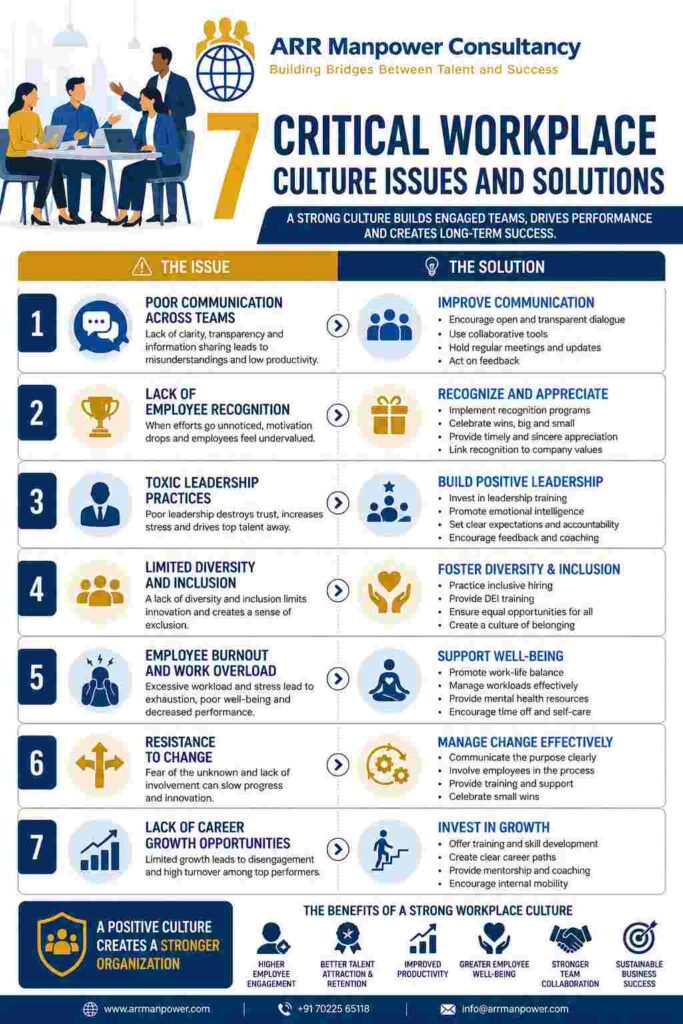
What Is Workplace Culture?
Workplace culture refers to the shared values, beliefs, attitudes, and behaviors that shape how employees interact and perform within an organization. It influences everything from communication styles and leadership approaches to employee morale and customer satisfaction.
A strong culture promotes trust, accountability, collaboration, and innovation. However, when cultural problems arise, they can negatively impact every aspect of business operations.
Let’s examine the most common workplace culture challenges and how organizations can effectively address them.
1. Poor Communication Across Teams
The Issue
Communication is the backbone of organizational success. When communication breaks down, misunderstandings increase, productivity decreases, and employees may feel disconnected from company objectives.
Poor communication often manifests as:
- Lack of transparency from leadership
- Confusing expectations
- Delayed information sharing
- Departmental silos
- Frequent misunderstandings
Employees who do not receive clear information may become frustrated and disengaged, leading to reduced performance and morale.
The Solution
Organizations should establish clear communication channels and encourage open dialogue at all levels.
Effective strategies include:
- Regular team meetings and updates
- Transparent leadership communication
- Employee feedback systems
- Collaborative communication tools
- Clearly defined responsibilities
Leaders should also foster a culture where employees feel comfortable asking questions and sharing ideas without fear of criticism.
Benefits
Improved communication enhances teamwork, reduces confusion, and strengthens trust between employees and management.
2. Lack of Employee Recognition
The Issue
Employees want to feel appreciated for their efforts. When achievements go unnoticed, motivation declines, and employees may feel undervalued.
A lack of recognition can result in:
- Reduced engagement
- Lower job satisfaction
- Increased turnover
- Decreased productivity
Many organizations focus heavily on performance metrics while overlooking the importance of acknowledging employee contributions.
The Solution
Develop a structured recognition program that celebrates both individual and team accomplishments.
Recognition methods may include:
- Employee appreciation awards
- Public acknowledgment during meetings
- Performance bonuses
- Personalized thank-you messages
- Career advancement opportunities
Recognition should be timely, genuine, and aligned with organizational values.
Benefits
Employees who feel valued are more likely to remain engaged, loyal, and motivated to contribute their best work.
3. Toxic Leadership Practices
The Issue
Leadership significantly influences workplace culture. Toxic leadership behaviors such as micromanagement, favoritism, intimidation, or lack of accountability can damage employee morale and trust.
Signs of toxic leadership include:
- High employee turnover
- Fear-based management
- Lack of transparency
- Employee burnout
- Poor team relationships
Even a single ineffective leader can negatively impact an entire department.
The Solution
Organizations must invest in leadership development and accountability measures.
Key actions include:
- Leadership training programs
- Regular performance evaluations
- Anonymous employee feedback surveys
- Coaching and mentoring initiatives
- Clear leadership expectations
Promoting emotional intelligence and servant leadership principles can help managers build stronger relationships with their teams.
Benefits
Positive leadership fosters trust, collaboration, and long-term organizational success.
4. Limited Diversity and Inclusion
The Issue
A workplace that lacks diversity and inclusion may struggle with innovation, employee satisfaction, and equitable opportunities.
Common challenges include:
- Unconscious bias
- Unequal career advancement
- Lack of representation
- Discrimination concerns
- Exclusion from decision-making
Employees who feel excluded are less likely to contribute fully to organizational goals.
The Solution
Create a comprehensive diversity and inclusion strategy that promotes fairness and belonging.
Practical measures include:
- Inclusive hiring practices
- Diversity training programs
- Equal growth opportunities
- Employee resource groups
- Inclusive leadership initiatives
Organizations should regularly assess workplace policies to ensure fairness and accessibility for all employees.
Benefits
Diverse teams bring broader perspectives, improved problem-solving capabilities, and increased innovation.
5. Employee Burnout and Work Overload
The Issue
Burnout has become one of the most significant workplace challenges in recent years. Excessive workloads, unrealistic expectations, and poor work-life balance contribute to physical and emotional exhaustion.
Symptoms of burnout may include:
- Chronic fatigue
- Reduced productivity
- Increased absenteeism
- Low morale
- Mental health concerns
Burnout affects not only individual employees but also overall organizational performance.
The Solution
Organizations should prioritize employee well-being and sustainable workloads.
Effective strategies include:
- Encouraging work-life balance
- Flexible scheduling options
- Reasonable workload distribution
- Mental health support programs
- Regular wellness initiatives
Managers should monitor workloads and proactively address signs of employee stress.
Benefits
Supporting employee well-being leads to higher engagement, improved performance, and stronger retention rates.
6. Resistance to Change
The Issue
Change is inevitable in today’s business environment. However, employees often resist change due to uncertainty, fear of failure, or lack of understanding.
Resistance may occur during:
- Organizational restructuring
- Technology implementation
- Policy updates
- Leadership transitions
- Process improvements
Without proper change management, even beneficial initiatives can encounter significant obstacles.
The Solution
Organizations should communicate change clearly and involve employees throughout the process.
Best practices include:
- Explaining the reasons for change
- Providing adequate training
- Encouraging employee participation
- Addressing concerns promptly
- Celebrating progress and milestones
Building trust and transparency can significantly reduce resistance.
Benefits
Employees become more adaptable, and organizations can implement changes more effectively and efficiently.
7. Lack of Career Growth Opportunities
The Issue
Employees are more likely to remain with organizations that support professional development. When growth opportunities are limited, talented individuals may seek advancement elsewhere.
Indicators of this issue include:
- High turnover among top performers
- Low employee engagement
- Reduced motivation
- Skills stagnation
A workforce that feels stuck professionally often becomes less committed to organizational success.
The Solution
Create clear career development pathways that encourage continuous learning and advancement.
Organizations can support growth through:
- Training programs
- Mentorship opportunities
- Leadership development initiatives
- Internal promotions
- Skill-building workshops
Regular career discussions help employees understand their future within the organization.
Benefits
Investing in employee growth improves retention, strengthens workforce capabilities, and enhances organizational performance.
The Role of HR in Shaping Workplace Culture
Human resources professionals play a critical role in identifying and addressing cultural challenges. HR teams can:
- Conduct employee engagement surveys
- Develop recognition programs
- Facilitate leadership training
- Support diversity initiatives
- Monitor employee well-being
- Manage conflict resolution
By proactively addressing cultural concerns, HR departments help create environments where employees can thrive.
How Organizations Can Maintain a Positive Culture
Building a healthy workplace culture is an ongoing process rather than a one-time initiative. Organizations should focus on continuous improvement by:
Listening to Employees
Regular feedback helps leaders understand employee concerns and identify emerging issues before they escalate.
Aligning Values and Actions
Company values should be reflected in daily operations, leadership decisions, and employee interactions.
Promoting Accountability
Employees and leaders alike should be accountable for maintaining a respectful and productive work environment.
Encouraging Collaboration
Cross-functional teamwork strengthens relationships and reduces workplace silos.
Measuring Cultural Health
Organizations should regularly assess engagement, satisfaction, turnover, and performance metrics to evaluate cultural effectiveness.
Conclusion
Addressing workplace culture challenges is essential for long-term organizational success. The 7 Critical Workplace Culture Issues and Solutions discussed in this article highlight the most common barriers that can impact employee engagement, productivity, and retention.
From poor communication and toxic leadership to burnout and limited growth opportunities, each challenge requires intentional action and consistent commitment from leadership. Organizations that prioritize culture create environments where employees feel respected, supported, and motivated to contribute their best work.
A healthy workplace culture does more than improve employee satisfaction—it drives innovation, strengthens collaboration, and positions businesses for sustainable growth in an ever-changing marketplace. By identifying cultural issues early and implementing practical solutions, organizations can build stronger teams and achieve lasting success.
Addressing workplace culture challenges is essential for long-term organizational success. The 7 Critical Workplace Culture Issues and Solutions discussed in this article highlight the most common barriers that can impact employee engagement, productivity, and retention.
From poor communication and toxic leadership to burnout and limited growth opportunities, each challenge requires intentional action and consistent commitment from leadership. Organizations that prioritize culture create environments where employees feel respected, supported, and motivated to contribute their best work.
A healthy workplace culture does more than improve employee satisfaction—it drives innovation, strengthens collaboration, and positions businesses for sustainable growth in an ever-changing marketplace. By identifying cultural issues early and implementing practical solutions, organizations can build stronger teams and achieve lasting success.
Moreover, workplace culture should never be viewed as a static element of business operations. As organizations grow, adopt new technologies, expand into new markets, or embrace hybrid work models, cultural expectations and employee needs continue to evolve. Leaders who regularly assess workplace dynamics and remain responsive to employee feedback are better equipped to maintain a positive and productive environment.
Organizations that invest in culture often experience measurable benefits, including stronger employee loyalty, improved customer satisfaction, enhanced employer branding, and increased profitability. Employees who feel heard, appreciated, and empowered are more likely to take ownership of their responsibilities and contribute meaningfully to organizational goals. This creates a cycle of engagement and performance that benefits both individuals and the company as a whole.
Ultimately, building a thriving workplace requires a long-term commitment to trust, inclusivity, communication, and continuous improvement. Businesses that actively address cultural challenges and foster positive employee experiences will be better positioned to attract top talent, navigate change successfully, and achieve sustainable growth in the years ahead.
Всем привет!
Редко пишу на форумах. Тема близкая, промолчать не получилось. Из своего опыта скажу: внутренние перелёты почти всегда выгоднее чем кажутся если брать заранее. Главное что понял за много поездок: бронь жилья на месте — это лотерея, особенно в сезон.
Пиши что интересует, попробую помочь.
Если вы знаете что такое [url=https://site4tests.ru/]Белокуриха[/url] – вы крутой!