Introduction
Modern workplaces are evolving rapidly. Organizations are expected to deliver higher productivity, maintain customer satisfaction, and adapt to constant changes in technology and market demands. While these expectations drive growth and innovation, they can also place immense pressure on employees. When stress becomes prolonged and unmanaged, it can lead to employee burnout, a serious issue that affects both individual well-being and organizational performance.
Burnout does not happen overnight. It develops gradually as workers experience continuous stress, excessive workloads, unrealistic expectations, and a lack of adequate support. Many employers fail to recognize the early warning signs, allowing the problem to escalate until it impacts morale, productivity, and retention.
Understanding the indicators of burnout is essential for leaders, managers, and human resource professionals. By identifying these warning signs early, organizations can take proactive steps to support their workforce and create a healthier work environment. Below are six alarming signs that may indicate employees are struggling with burnout and need immediate attention.
https://arrmanpowerconsultancy.com/
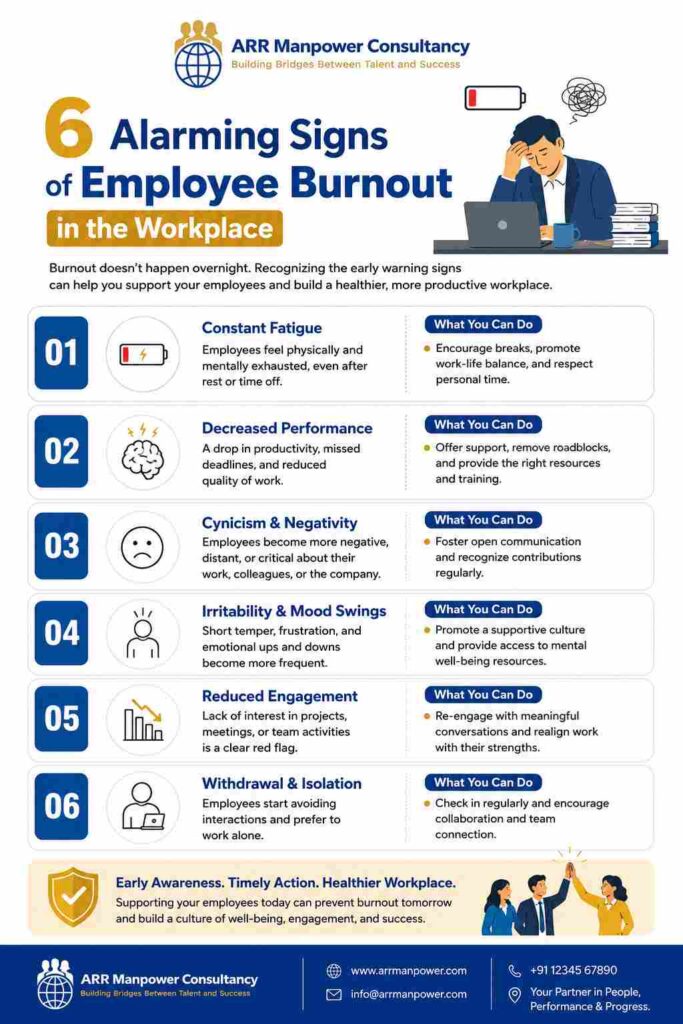
1. Employee Burnout Due to Persistent Physical and Mental Exhaustion
One of the most noticeable indicators of burnout is ongoing exhaustion. Employees who once approached their responsibilities with energy and enthusiasm may begin to appear constantly tired, regardless of how much rest they get outside of work.
This type of exhaustion extends beyond normal fatigue after a busy day. It often manifests as a deep sense of physical, emotional, and mental depletion. Workers may report feeling drained before the workday even begins. Tasks that were once routine can suddenly feel overwhelming and difficult to complete.
Common symptoms include:
- Frequent complaints of tiredness
- Difficulty concentrating
- Lack of motivation
- Increased forgetfulness
- Reduced ability to handle stress
Exhaustion can significantly affect job performance. Employees may struggle to meet deadlines, make more mistakes, and require additional time to complete assignments. Over time, prolonged fatigue can also contribute to health issues such as headaches, sleep disturbances, and weakened immunity.
Managers should pay close attention when team members consistently display signs of extreme tiredness. Addressing workload concerns and encouraging healthy work-life balance practices can help prevent the situation from worsening.
2. Declining Productivity and Performance
A noticeable drop in productivity is another major warning sign. Employees experiencing burnout often find it difficult to maintain the same level of performance they once achieved.
When mental resources become depleted, concentration and decision-making abilities suffer. Workers may spend more time on tasks that previously required minimal effort. Their efficiency decreases, and the quality of their work may begin to decline.
Some common indicators include:
- Missed deadlines
- Increased errors
- Reduced attention to detail
- Difficulty prioritizing tasks
- Lower overall output
This decline is not necessarily due to a lack of skill or commitment. In many cases, the individual wants to perform well but lacks the emotional and mental energy required to do so effectively.
Organizations sometimes respond to reduced productivity by increasing pressure on employees. Unfortunately, this approach can worsen the underlying problem. Instead, managers should investigate potential causes and provide appropriate support. Open communication and realistic workload expectations can make a significant difference.
Regular performance discussions should focus not only on results but also on employee well-being. Understanding what may be affecting performance allows leaders to identify concerns before they become critical.
3. Increased Absenteeism and Frequent Sick Days
Employees experiencing burnout often begin taking more time away from work. While occasional absences are normal, a pattern of frequent sick days or unplanned leave may indicate deeper issues.
Chronic workplace stress can have a substantial impact on physical health. Individuals may experience:
- Frequent headaches
- Digestive problems
- Muscle tension
- Sleep difficulties
- Increased susceptibility to illness
As stress accumulates, employees may seek time away from work simply to recover mentally and emotionally. In some situations, they may call in sick because they feel unable to cope with another demanding day.
Absenteeism can create additional challenges for organizations. Team members may need to absorb extra responsibilities, leading to increased pressure throughout the workforce. This can create a cycle where stress spreads across departments and affects multiple employees.
Tracking attendance patterns can help identify potential concerns early. Human resource teams should look for trends rather than isolated incidents. A sudden increase in absences among previously reliable employees may signal the need for supportive intervention.
Creating a workplace culture that prioritizes wellness can help reduce absenteeism while encouraging employees to seek assistance before reaching a breaking point.
4. Emotional Detachment and Reduced Engagement
Another alarming sign is emotional withdrawal from work and colleagues. Employees who were once enthusiastic participants may become increasingly disconnected from their responsibilities and workplace relationships.
This detachment often develops as a coping mechanism. When individuals feel overwhelmed for extended periods, they may emotionally distance themselves from their work to protect their mental well-being.
Signs of disengagement may include:
- Minimal participation in meetings
- Reduced collaboration with colleagues
- Lack of enthusiasm for projects
- Limited interest in organizational goals
- Avoidance of workplace interactions
Employees may also appear indifferent toward achievements, feedback, or opportunities for professional growth. Activities that once generated excitement no longer seem meaningful or rewarding.
Reduced engagement can negatively affect team dynamics. Collaboration suffers when individuals withdraw from communication and participation. Innovation and creativity may decline as employees become less invested in their work.
Leaders should foster an environment where employees feel valued, heard, and supported. Regular check-ins, recognition programs, and opportunities for meaningful contribution can help maintain engagement and strengthen workplace connections.
5. Increased Irritability and Negative Attitudes
Burnout often influences emotional regulation, causing individuals to become more irritable, frustrated, or pessimistic than usual. Employees who previously maintained positive workplace relationships may begin exhibiting noticeable changes in behavior.
Common signs include:
- Short tempers
- Increased conflict with coworkers
- Negative comments about work
- Cynical attitudes toward leadership
- Reduced patience with customers or clients
Stress can lower an individual’s tolerance for everyday challenges. Minor inconveniences may trigger disproportionate reactions. Workplace disagreements may become more frequent, and interpersonal relationships can deteriorate.
Negative attitudes can spread throughout teams, affecting morale and workplace culture. When one employee consistently expresses frustration or dissatisfaction, others may begin to adopt similar perspectives.
Managers should avoid dismissing these behavioral changes as personality issues. Instead, they should consider whether workplace stress may be contributing to the problem. Constructive conversations can help uncover underlying concerns and identify potential solutions.
Organizations that promote psychological safety encourage employees to discuss challenges openly without fear of judgment. This approach can prevent frustration from escalating into more serious workplace conflicts.
6. Loss of Job Satisfaction and Desire to Leave
One of the most serious signs of burnout is a growing desire to leave the organization. Employees who feel overwhelmed for prolonged periods often begin questioning their career choices and future within the company.
This loss of satisfaction can manifest in several ways:
- Expressions of frustration about work
- Reduced commitment to long-term goals
- Lack of interest in advancement opportunities
- Frequent discussions about finding another job
- Emotional disconnection from organizational success
Individuals may feel that their efforts are no longer appreciated or that the demands of their role outweigh the rewards. Over time, they may become convinced that leaving is the only solution.
High turnover associated with burnout can be costly for organizations. Recruitment, onboarding, and training expenses increase, while valuable institutional knowledge is lost. Team stability and productivity may also suffer during transition periods.
Retaining talented employees requires more than competitive compensation. Organizations must create environments where individuals feel respected, supported, and empowered to succeed. Regular feedback, career development opportunities, and manageable workloads contribute significantly to long-term job satisfaction.
When leaders actively address workplace stressors, they reduce the likelihood that employees will seek opportunities elsewhere.
How Organizations Can Prevent Burnout
Recognizing the signs is only the first step. Employers must also implement strategies to reduce workplace stress and promote employee well-being.
Effective prevention measures include:
Encourage Work-Life Balance
Employees should be encouraged to disconnect from work during personal time. Clear boundaries help prevent excessive stress and support recovery outside working hours.
Provide Adequate Resources
Teams need the tools, staffing, and support necessary to perform their responsibilities effectively. Insufficient resources can quickly contribute to overwhelming workloads.
Promote Open Communication
Employees should feel comfortable discussing challenges and concerns. Transparent communication helps organizations identify problems before they escalate.
Offer Mental Health Support
Access to counseling services, wellness programs, and mental health resources can provide valuable assistance for employees facing ongoing stress.
Recognize Employee Contributions
Recognition plays an important role in maintaining motivation and engagement. Acknowledging accomplishments helps employees feel valued and appreciated.
Train Managers Effectively
Supervisors are often the first to notice changes in employee behavior. Training managers to recognize warning signs and respond appropriately can improve early intervention efforts.
Conclusion
Employee burnout is a growing challenge that can significantly affect individuals and organizations alike. Persistent exhaustion, declining performance, increased absenteeism, emotional detachment, irritability, and a desire to leave are all critical warning signs that should never be ignored.
Early recognition allows employers to take meaningful action before stress develops into a more serious problem. By fostering a supportive workplace culture, promoting healthy work habits, and prioritizing employee well-being, organizations can improve engagement, productivity, and retention.
A healthy workforce is one of the most valuable assets any organization possesses. Investing in employee wellness not only benefits individuals but also strengthens the long-term success and sustainability of the business.