Introduction
Organizations across the globe are facing an unprecedented workforce challenge. While technological advancements, globalization, and evolving business models continue to reshape industries, one issue has emerged as a major concern: the growing lack of qualified professionals. Companies of all sizes are struggling to attract, hire, and retain skilled employees, creating operational bottlenecks and slowing business growth.
The talent shortage is no longer limited to a few specialized sectors. It is affecting manufacturing, healthcare, information technology, logistics, construction, finance, and many other industries. As experienced professionals retire and new skill requirements emerge, employers are finding it increasingly difficult to fill critical positions.
This workforce gap is forcing organizations to rethink their hiring strategies, employee development programs, and retention efforts. Understanding the trends behind this challenge can help businesses prepare for the future and remain competitive in a rapidly changing market.
In this article, we explore five shocking talent shortage trends that are significantly impacting industries worldwide.
https://arrmanpowerconsultancy.com/
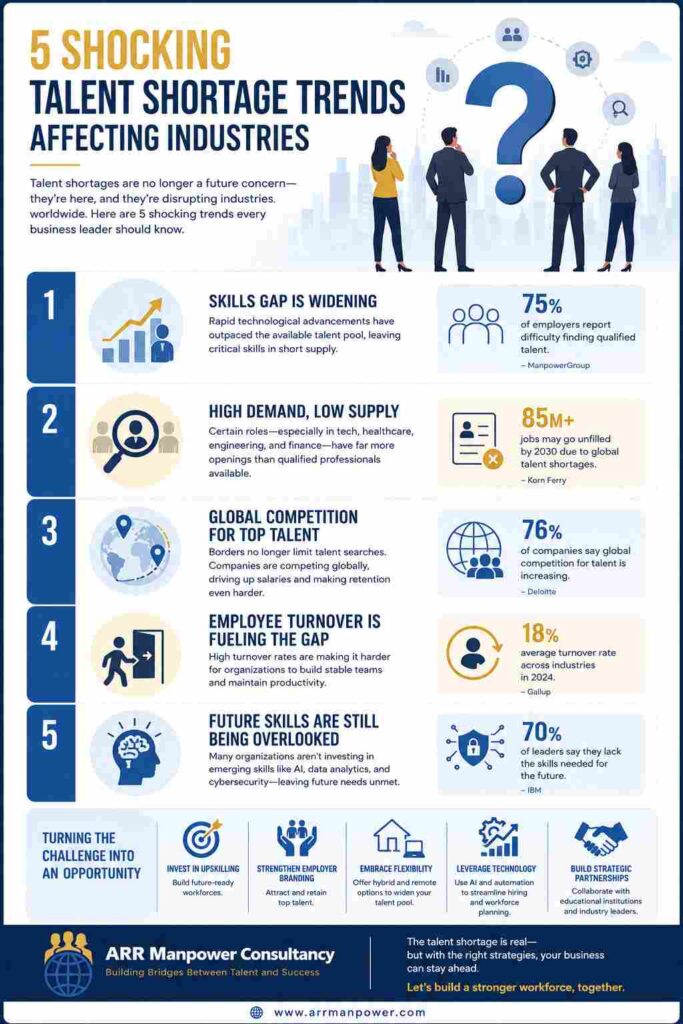
1. The Skills Gap Is Growing Faster Than Workforce Development
One of the most significant trends affecting employers today is the widening gap between available skills and market requirements. Technological innovation is advancing at an incredible pace, but workforce development programs often struggle to keep up.
Industries are increasingly demanding expertise in areas such as artificial intelligence, cybersecurity, cloud computing, automation, robotics, and data analytics. Unfortunately, many job seekers lack the specialized knowledge required to perform these roles effectively.
Why This Trend Matters
Educational institutions frequently update their curricula more slowly than industries evolve. As a result, graduates entering the workforce may not possess the competencies employers need immediately.
Businesses often encounter situations where:
- Job vacancies remain open for months.
- Recruitment costs increase significantly.
- Existing employees experience heavier workloads.
- Project timelines are delayed.
Industries Most Affected
Several sectors are particularly vulnerable to the growing skills gap:
- Information Technology
- Manufacturing
- Engineering
- Healthcare
- Telecommunications
Organizations that fail to address this issue may struggle to maintain productivity and innovation.
Possible Solutions
Employers are increasingly investing in:
- Internal training programs
- Apprenticeship initiatives
- Employee reskilling efforts
- Partnerships with educational institutions
These strategies help create a pipeline of qualified professionals while reducing dependence on external hiring.
2. Experienced Workers Are Retiring Faster Than They Can Be Replaced
Another alarming trend is the retirement of highly experienced professionals. Many industries are witnessing a large portion of their workforce reaching retirement age, resulting in the loss of valuable institutional knowledge.
For decades, these employees have contributed expertise, leadership, and mentorship. When they leave, organizations often struggle to transfer critical knowledge to younger workers.
The Impact of Workforce Aging
The departure of seasoned professionals creates several challenges:
- Reduced productivity during transitions
- Leadership gaps
- Knowledge loss
- Increased training requirements
- Higher recruitment expenses
This issue is particularly severe in industries where technical expertise develops over many years.
Sectors Facing Major Retirement Challenges
Industries heavily affected include:
- Healthcare
- Construction
- Utilities
- Manufacturing
- Transportation
For example, experienced engineers, technicians, and healthcare practitioners often possess specialized knowledge that cannot be quickly replaced.
Why Replacement Is Difficult
Younger professionals entering the workforce may lack practical experience despite strong educational backgrounds. Building expertise often requires years of hands-on exposure.
Organizations are responding by implementing succession planning programs and mentorship initiatives to facilitate knowledge transfer before senior employees retire.
3. Digital Transformation Is Creating New Hiring Challenges & Talent Shortage
Digital transformation has become a strategic priority for businesses worldwide. Companies are investing heavily in automation, cloud technologies, artificial intelligence, and digital infrastructure.
While these investments improve efficiency, they also create a growing demand for professionals with advanced technical capabilities.
Increased Competition for Digital Talent
Organizations across different sectors are competing for the same limited pool of candidates. A manufacturing company, healthcare provider, financial institution, and logistics business may all seek similar technology professionals.
This competition leads to:
- Rising salary expectations
- Longer hiring cycles
- Increased employee turnover
- Greater recruitment complexity
Emerging Roles in High Demand
Some of the most sought-after positions include:
- Data Scientists
- Cybersecurity Specialists
- Cloud Architects
- Machine Learning Engineers
- DevOps Professionals
- Digital Transformation Consultants
The demand for these roles often exceeds supply, creating significant hiring challenges.
The Business Consequences
When companies cannot secure the necessary expertise, digital projects may face delays or fail to deliver expected outcomes.
Businesses that successfully attract digital talent often gain advantages such as:
- Faster innovation
- Improved operational efficiency
- Enhanced customer experiences
- Greater market competitiveness
As technology continues to evolve, the pressure to recruit specialized professionals is expected to increase further.
4. Employee Expectations Are Changing Dramatically
The modern workforce has different priorities than previous generations. Competitive compensation remains important, but employees now evaluate employers based on a broader set of factors.
Professionals increasingly seek flexibility, career growth, workplace culture, and meaningful work experiences.
The Rise of Flexible Work
Remote and hybrid work models have transformed employee expectations. Many professionals now prioritize flexibility when evaluating job opportunities.
Organizations that insist on traditional workplace arrangements may experience:
- Reduced applicant pools
- Higher turnover rates
- Difficulty attracting younger workers
Career Development Matters More Than Ever
Employees want clear pathways for advancement and professional growth.
They often consider factors such as:
- Learning opportunities
- Leadership development
- Mentorship programs
- Internal mobility
Employers that fail to provide growth opportunities risk losing skilled workers to competitors.
Purpose and Workplace Culture
Many professionals seek organizations that align with their values. Diversity, inclusion, sustainability, and employee well-being have become important considerations during the job search process.
Companies with strong workplace cultures often gain an advantage in attracting and retaining high-quality candidates.
Retention Is Becoming as Important as Recruitment
Because replacing employees can be costly and time-consuming, organizations are increasingly focusing on retention strategies such as:
- Wellness programs
- Flexible schedules
- Recognition initiatives
- Career development opportunities
These efforts help reduce turnover while strengthening workforce stability.
5. Global Competition for Talent Is Intensifying
Advancements in communication technology and remote work have expanded hiring opportunities beyond geographical boundaries.
Today, organizations can recruit professionals from virtually anywhere in the world. While this creates opportunities, it also intensifies competition.
Businesses Are Competing Globally
A skilled software developer in one country may receive job offers from employers located across multiple continents.
This trend creates challenges for organizations that rely solely on local hiring strategies.
Advantages of Global Recruitment
Many businesses are expanding their search for talent internationally because it offers:
- Access to larger candidate pools
- Greater workforce diversity
- Specialized expertise
- Enhanced innovation
Global recruitment enables organizations to address skill shortages more effectively.
Challenges of International Hiring
Despite its benefits, international recruitment presents several complexities:
- Compliance requirements
- Cultural differences
- Time zone management
- Communication barriers
- Onboarding challenges
Employers must develop effective systems to manage distributed teams successfully.
The Future of Borderless Hiring
As remote work becomes increasingly accepted, businesses are expected to continue expanding their global recruitment efforts.
Organizations that embrace international hiring strategies may gain access to specialized expertise that is difficult to find locally.
How Industries Are Responding to Workforce Shortages
Recognizing the growing challenge, many organizations are adopting innovative workforce strategies.
Investing in Upskilling and Reskilling
Companies are allocating significant resources toward employee development. Rather than searching endlessly for external candidates, employers are training existing staff to meet evolving business needs.
Benefits include:
- Improved employee loyalty
- Faster skill development
- Reduced recruitment costs
- Increased organizational agility
Leveraging Workforce Analytics
Data-driven recruitment is becoming increasingly popular.
Organizations use workforce analytics to:
- Predict future staffing needs
- Identify skill gaps
- Improve hiring decisions
- Optimize workforce planning
These insights enable more proactive talent management.
Strengthening Employer Branding
A strong employer reputation helps attract qualified candidates.
Businesses are investing in:
- Employee engagement
- Positive workplace culture
- Social responsibility initiatives
- Career development programs
An attractive employer brand can significantly improve recruitment outcomes.
Partnering With Staffing Specialists
Many organizations collaborate with recruitment agencies and staffing firms to access broader talent networks.
These partnerships can:
- Accelerate hiring
- Improve candidate quality
- Reduce vacancy periods
- Support workforce planning
Professional recruitment partners often provide valuable market insights and hiring expertise.
Preparing for the Future
The workforce landscape will continue evolving as technology advances and demographic changes reshape labor markets. Organizations that proactively address workforce challenges will be better positioned for long-term success.
Business leaders should focus on:
- Continuous learning initiatives
- Succession planning
- Flexible work arrangements
- Employee engagement
- Strategic workforce forecasting
By adopting a forward-thinking approach, organizations can reduce workforce risks and build stronger, more resilient teams.
Conclusion
The workforce shortage challenge is reshaping industries around the world. The widening skills gap, accelerating retirements, growing demand for digital expertise, changing employee expectations, and increasing global competition are creating significant hiring and retention challenges for employers.
Organizations that rely on outdated workforce strategies may struggle to remain competitive in the years ahead. However, businesses that invest in employee development, embrace flexibility, strengthen employer branding, and expand their talent acquisition efforts can successfully navigate these challenges.
Understanding these five shocking trends is the first step toward building a workforce capable of supporting future growth. As industries continue to evolve, proactive workforce planning and innovative recruitment strategies will play a critical role in ensuring long-term organizational success.
https://www.weforum.org/publications/the-future-of-jobs-report-2025/