Introduction
In today’s competitive business landscape, hiring the right talent is no longer a simple task—it’s a strategic necessity. Organizations invest significant time, effort, and resources into recruitment, yet many still struggle to build effective teams. The consequences of poor hiring decisions can be severe, ranging from decreased productivity to financial losses and damaged company culture.
Hiring failures are more common than most organizations realize. They often occur due to a lack of expertise, inefficient processes, or inadequate understanding of the evolving job market. Without professional guidance, businesses can unknowingly fall into recruitment traps that cost them dearly.
This is where specialized manpower consultancies play a crucial role. They bridge the gap between employers and qualified candidates, ensuring a smoother and more efficient hiring process. In this article, we explore five shocking reasons why hiring failures occur when organizations operate without expert consultancy support—and how these issues can be avoided.
https://arrmanpowerconsultancy.com/
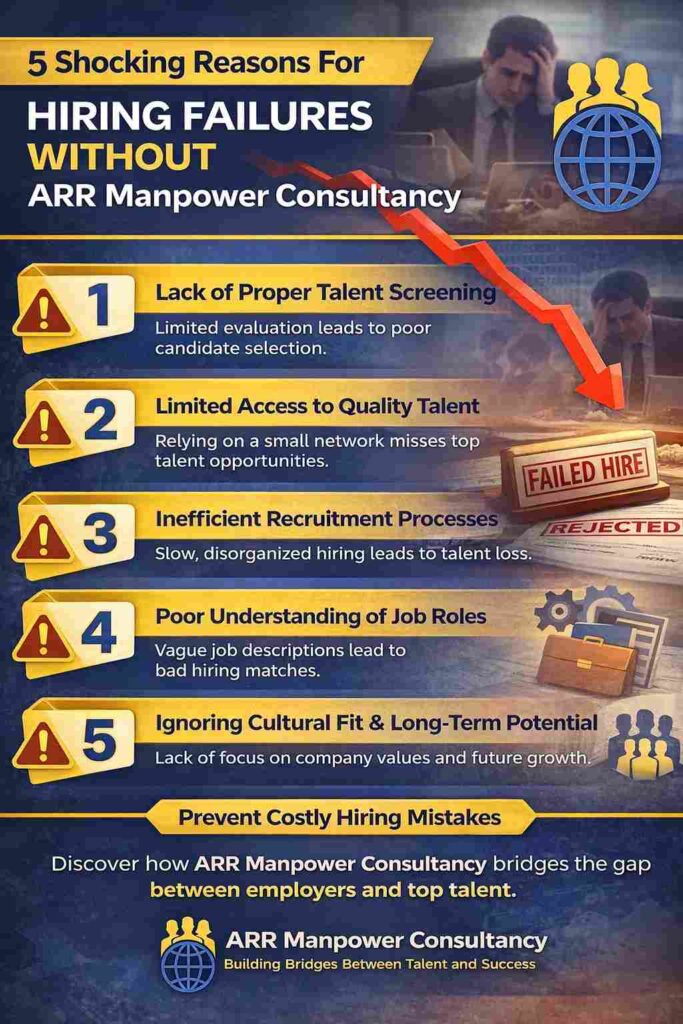
1. Lack of Proper Talent Screening and Evaluation
One of the most significant causes of hiring failures is inadequate screening and evaluation of candidates. Many companies rely heavily on resumes and brief interviews, assuming that qualifications alone guarantee performance. However, this approach often overlooks critical factors such as attitude, adaptability, and cultural alignment.
Why It Happens
Without a structured screening system, businesses tend to:
- Focus only on technical skills
- Ignore behavioral and psychological aspects
- Make decisions based on first impressions
This leads to mismatched hires who may look perfect on paper but fail to deliver in real-world scenarios.
The Impact
Poor screening results in:
- Low employee performance
- Increased turnover rates
- Wasted training resources
Over time, these issues accumulate and contribute significantly to hiring failures across the organization.
What Should Be Done
A comprehensive screening process should include:
- Skill-based assessments
- Behavioral interviews
- Background verification
- Cultural fit analysis
Professional consultancies implement multi-layered evaluation techniques to ensure only the most suitable candidates move forward.
2. Limited Access to Quality Talent Pools
Another shocking reason behind hiring failures is the inability to access a wide and qualified talent pool. Many companies rely on traditional methods like job postings or internal referrals, which often limit their reach.
Why It Happens
Organizations without recruitment expertise:
- Depend on a small network
- Fail to tap into passive candidates
- Struggle to attract top-tier professionals
As a result, they settle for less qualified applicants simply because better options are not visible.
The Impact
Restricted access leads to:
- Compromised hiring decisions
- Lower overall team quality
- Reduced competitiveness in the market
This significantly increases the chances of hiring failures, especially in specialized roles.
What Should Be Done
Expanding talent reach requires:
- Advanced sourcing techniques
- Industry connections
- Use of modern recruitment tools
Consultancies maintain extensive databases and networks, giving businesses access to candidates they would not find otherwise.
3. Inefficient Recruitment Processes
Time is a critical factor in recruitment. A slow or disorganized hiring process can drive away top candidates and result in poor hiring decisions.
Why It Happens
Without professional guidance, companies often:
- Take too long to shortlist candidates
- Have unclear interview processes
- Delay decision-making
These inefficiencies create a negative candidate experience and reduce the chances of securing high-quality talent.
The Impact
Inefficient processes contribute to:
- Loss of top candidates to competitors
- Increased hiring costs
- Frustration among hiring managers
Ultimately, this leads to hiring failures that could have been avoided with better planning and execution.
What Should Be Done
An optimized recruitment process should:
- Be structured and time-bound
- Include clear communication at every stage
- Use technology for faster decision-making
Professional consultancies streamline the entire hiring cycle, ensuring speed and efficiency without compromising quality.
4. Poor Understanding of Job Roles and Market Trends
A surprisingly common cause of hiring failures is a lack of clarity about job roles and current market demands. Many organizations struggle to define what they actually need in a candidate.
Why It Happens
This issue arises when:
- Job descriptions are vague or outdated
- Hiring managers lack industry insights
- There is no alignment between HR and business goals
Without a clear understanding, companies end up hiring candidates who do not meet the actual requirements.
The Impact
This results in:
- Role confusion for employees
- Reduced productivity
- Frequent re-hiring for the same position
Such scenarios significantly contribute to hiring failures and disrupt business operations.
What Should Be Done
To avoid this, companies must:
- Clearly define roles and responsibilities
- Stay updated with industry trends
- Align hiring strategies with business objectives
Consultancies bring market expertise and help organizations refine their hiring requirements effectively.
5. Ignoring Cultural Fit and Long-Term Potential
Many organizations prioritize immediate skill requirements over long-term compatibility. This short-term approach is a major driver of hiring failures.
Why It Happens
Businesses often:
- Focus only on technical abilities
- Ignore company culture
- Overlook growth potential
While a candidate may perform well initially, a lack of alignment with organizational values can lead to dissatisfaction and eventual exit.
The Impact
Ignoring cultural fit leads to:
- Workplace conflicts
- Low employee engagement
- High attrition rates
These factors not only affect team morale but also increase the frequency of hiring failures.
What Should Be Done
A successful hiring strategy should:
- Evaluate cultural compatibility
- Assess long-term growth potential
- Consider team dynamics
Consultancies specialize in identifying candidates who align with both the role and the organization’s culture, ensuring sustainable success.
The Hidden Costs of Hiring Failures
Hiring failures are not just about replacing an employee—they carry hidden costs that can significantly impact a business.
Financial Costs
- Recruitment expenses
- Training and onboarding costs
- Lost productivity
Operational Costs
- Project delays
- Increased workload for existing employees
- Reduced efficiency
Reputational Costs
- Negative employer branding
- Difficulty attracting future talent
By addressing the root causes of hiring failures, businesses can avoid these costly consequences.
How Professional Consultancy Prevents Hiring Failures
Partnering with a manpower consultancy provides several advantages that directly reduce hiring failures:
Expertise and Experience
Consultants understand industry trends and hiring challenges, enabling them to make informed decisions.
Advanced Screening Methods
They use proven techniques to evaluate candidates thoroughly.
Access to Wider Talent Networks
Consultancies connect businesses with high-quality candidates quickly.
Efficient Hiring Processes
They streamline recruitment, saving time and resources.
Focus on Long-Term Success
Consultants prioritize both immediate needs and future growth.
Best Practices to Avoid Hiring Failures
Even with external support, organizations should adopt best practices to strengthen their hiring strategies:
- Clearly define job roles and expectations
- Use structured interview processes
- Focus on both skills and cultural fit
- Leverage data-driven hiring decisions
- Continuously improve recruitment strategies
Implementing these practices reduces the risk of hiring failures and improves overall workforce quality.
Conclusion
Hiring failures rarely happen because of a lack of effort. In most cases, they occur due to ineffective recruitment strategies, poor candidate screening, slow hiring processes, and the inability to identify long-term talent potential. These challenges can quietly drain company resources, reduce productivity, increase employee turnover, and negatively impact overall business growth. What may seem like a minor hiring mistake today can become a costly organizational problem tomorrow.
This is where ARR Manpower Consultancy makes a significant difference. By combining industry expertise, proven recruitment methodologies, and access to a wide network of qualified professionals, ARR Manpower Consultancy helps businesses avoid the common pitfalls that lead to hiring failures. Instead of relying on guesswork, organizations gain access to a structured and data-driven recruitment process designed to deliver reliable results.
The value of partnering with a professional recruitment consultancy extends far beyond filling vacant positions. It ensures that businesses hire candidates who align with company goals, workplace culture, and long-term growth objectives. Better hiring decisions contribute to stronger teams, improved employee retention, higher productivity levels, and enhanced business performance. In today’s competitive employment market, these advantages can provide a crucial edge over competitors struggling to attract and retain top talent.
As industries continue to evolve and workforce demands become increasingly complex, companies need recruitment partners who understand changing market trends and talent expectations. ARR Manpower Consultancy serves as a strategic ally, helping organizations navigate hiring challenges with confidence and efficiency. Their expertise reduces recruitment risks while enabling businesses to focus on innovation, customer satisfaction, and expansion.
Ultimately, the shocking hiring failures discussed throughout this article highlight the importance of having the right recruitment partner. Investing in professional hiring support is not an expense—it is a strategic decision that safeguards your workforce and strengthens your future. Businesses that choose ARR Manpower Consultancy position themselves for smarter hiring, stronger teams, and sustainable long-term success in an increasingly competitive marketplace.
Hiring failures can have a profound impact on any organization, affecting productivity, finances, and long-term growth. The reasons behind these failures are often hidden in inefficient processes, limited talent access, and poor decision-making strategies.
Without professional support, businesses are more likely to encounter these challenges repeatedly. By understanding the root causes and taking proactive measures, organizations can significantly improve their hiring outcomes.
A structured, strategic approach to recruitment—supported by expert consultancy—ensures that companies not only find the right talent but also build strong, sustainable teams for the future.