In today’s competitive employment landscape, excelling in a manpower job requires far more than basic skills. Whether you are working in recruitment, workforce management, or staffing coordination, mastering this field demands strategy, adaptability, and a deep understanding of people dynamics.
A manpower job is not just about filling positions—it’s about aligning the right talent with the right opportunity while ensuring efficiency, productivity, and long-term organizational success. If you want to stand out and grow rapidly in this field, you need to develop a strong foundation along with advanced techniques.
This guide will walk you through 10 powerful ways to help you master your role and perform like a seasoned professional.
https://arrmanpowerconsultancy.com/
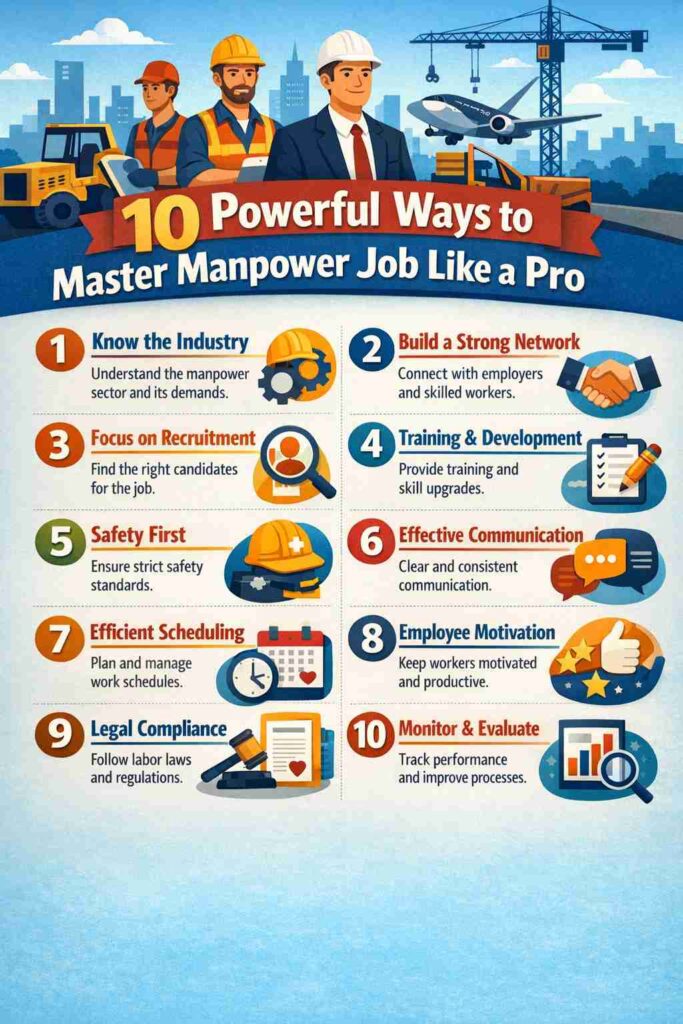
1. Understand the Core Responsibilities Thoroughly
Before aiming for excellence, you must clearly understand what your role demands. A manpower job often involves recruitment, scheduling, workforce planning, and employee coordination.
Take time to learn:
- Job descriptions and hiring requirements
- Industry-specific workforce needs
- Organizational goals and expectations
The better you understand your responsibilities, the more effectively you can execute them. Clarity builds confidence, and confidence improves performance.
2. Develop Strong Communication Skills
Communication is the backbone of any manpower-related role. You will constantly interact with candidates, employees, and management.
To improve:
- Practice clear and concise speaking
- Enhance your listening skills
- Learn professional email etiquette
- Adapt your tone depending on the audience
Strong communication ensures fewer misunderstandings and better collaboration, which directly improves outcomes.
3. Build Excellent People Management Skills
Handling people is not always easy. Every individual has different expectations, behaviors, and motivations.
To master this:
- Learn conflict resolution techniques
- Practice empathy and patience
- Understand team dynamics
- Motivate employees effectively
A professional in a manpower job must balance organizational needs with employee satisfaction.
4. Learn Recruitment Strategies and Techniques
Recruitment is a major component of this field. You need to identify the right talent quickly and efficiently.
Focus on:
- Writing compelling job descriptions
- Screening resumes effectively
- Conducting structured interviews
- Using modern hiring tools
Smart recruitment saves time and reduces hiring errors, making you more valuable in your role.
5. Stay Organized and Manage Time Efficiently
A manpower job often involves juggling multiple tasks at once—interviews, schedules, reporting, and coordination.
To stay on track:
- Use digital tools like calendars and task managers
- Prioritize urgent tasks
- Set realistic deadlines
- Avoid multitasking overload
Good organization leads to higher productivity and less stress.
6. Gain Knowledge of Labor Laws and Policies
Understanding legal aspects is crucial. You must be aware of employment regulations, contracts, and workplace policies.
Key areas include:
- Labor laws and compliance
- Employee rights and obligations
- Workplace safety standards
- Documentation procedures
This knowledge protects both the organization and employees while ensuring smooth operations.
7. Embrace Technology and Automation
Technology is transforming how workforce management operates. Modern tools can simplify many processes.
Learn to use:
- Applicant tracking systems (ATS)
- HR management software
- Data analytics tools
- Scheduling platforms
Using technology efficiently gives you a competitive edge and improves accuracy.
8. Focus on Continuous Learning and Skill Development
The workforce industry evolves constantly. Staying updated is essential for long-term success.
You can:
- Attend workshops and webinars
- Take online courses
- Read industry blogs and reports
- Network with professionals
Continuous improvement keeps your skills relevant and sharp.
9. Build Strong Professional Relationships
Success in a manpower job is heavily dependent on relationships. Building trust with candidates, employees, and management is key.
Ways to strengthen relationships:
- Be reliable and consistent
- Follow up regularly
- Provide honest feedback
- Show appreciation and respect
Strong relationships lead to better teamwork and long-term collaboration.
10. Develop Problem-Solving and Decision-Making Skills
Challenges are inevitable in this field—last-minute staffing issues, employee conflicts, or hiring delays.
To handle them effectively:
- Stay calm under pressure
- Analyze situations logically
- Consider multiple solutions
- Make informed decisions quickly
A professional who can solve problems efficiently becomes indispensable.
Bonus Tip: Maintain a Positive and Professional Attitude
Your attitude defines your success. A positive mindset helps you handle pressure, adapt to changes, and inspire others.
Remember:
- Stay motivated even during challenges
- Be open to feedback
- Maintain professionalism at all times
A strong attitude can often outweigh technical skills.
Conclusion
Mastering a manpower job is not simply about filling vacancies or matching candidates with employers. It is a dynamic profession that requires a combination of communication skills, industry knowledge, problem-solving abilities, relationship management, and a commitment to continuous learning.
As recruitment trends evolve and businesses face increasing competition for top talent, manpower professionals play a more strategic role than ever before. Their ability to identify the right candidates, understand organizational goals, and create successful workforce solutions directly impacts business growth and long-term success.
The ten powerful ways discussed throughout this article provide a practical roadmap for anyone looking to excel in the manpower and recruitment industry. From understanding client requirements and improving candidate sourcing strategies to leveraging technology and building strong professional networks, each skill contributes to becoming a highly effective recruitment specialist. Professionals who consistently apply these practices position themselves as trusted advisors rather than simply service providers.
One of the most important factors in mastering a manpower job is adaptability. Recruitment markets change frequently due to economic conditions, technological advancements, workforce expectations, and industry demands. Recruiters who stay informed about these changes can anticipate hiring trends and provide valuable insights to clients. This proactive approach not only strengthens client relationships but also enhances credibility within the industry. Being adaptable means embracing innovation, learning new tools, and refining recruitment strategies to meet evolving market needs.
Building strong relationships is another critical element of success. Recruitment is fundamentally a people-centered profession. Whether interacting with employers, candidates, hiring managers, or industry partners, trust and communication are essential. Strong relationships lead to repeat business, better referrals, and a larger talent network.
Candidates are more likely to engage with recruiters who demonstrate professionalism, transparency, and genuine interest in their career goals. Similarly, employers prefer working with recruitment partners who understand their organizational culture and consistently deliver quality talent.
Technology also plays a significant role in modern manpower services. Applicant Tracking Systems (ATS), artificial intelligence, recruitment automation, and data analytics have transformed traditional hiring processes. Professionals who effectively utilize these tools can improve efficiency, reduce hiring timelines, and enhance candidate experiences. However, technology should complement human judgment rather than replace it. The most successful manpower professionals combine technological capabilities with personal interaction to create meaningful hiring outcomes.
Continuous skill development remains essential for long-term career growth. The recruitment industry rewards individuals who invest in learning and professional improvement. Enhancing interviewing techniques, negotiation skills, communication abilities, and industry-specific knowledge can significantly improve performance. Attending workshops, earning certifications, participating in industry events, and staying updated with recruitment best practices help professionals remain competitive in a rapidly changing market.
Time management is equally important in a manpower role. Recruiters often handle multiple job openings, client expectations, candidate communications, and administrative responsibilities simultaneously. Developing strong organizational habits allows professionals to prioritize tasks effectively and maintain productivity without compromising quality. Efficient time management reduces stress, improves responsiveness, and enables recruiters to focus on delivering exceptional results.
Another key aspect of mastering a manpower job is maintaining a candidate-centric approach. Successful recruiters understand that candidates are not just profiles or resumes; they are individuals with unique aspirations, skills, and career objectives.
Providing timely updates, constructive feedback, and respectful communication creates positive experiences that strengthen employer branding and improve candidate engagement. Even candidates who are not selected for a role can become valuable contacts for future opportunities when treated professionally.
Ethics and integrity should always remain at the core of recruitment activities. Honest communication, confidentiality, and fairness help establish a strong reputation in the industry. Recruiters who prioritize ethical practices build trust among clients and candidates alike. Over time, this trust becomes one of the most valuable assets a manpower professional can possess, leading to stronger partnerships and sustainable business growth.
Ultimately, mastering a manpower job is a journey of continuous improvement rather than a destination. Every placement, client interaction, and recruitment challenge offers an opportunity to learn and grow. Professionals who remain dedicated, adaptable, and focused on delivering value will consistently achieve better outcomes for both employers and job seekers.
As organizations continue to seek skilled talent and workforce demands become increasingly complex, the importance of experienced manpower professionals will only grow. By applying the strategies outlined in this article and maintaining a commitment to excellence, recruiters can elevate their careers, strengthen their industry reputation, and become indispensable partners in the hiring process.
Success in manpower recruitment comes from combining expertise, technology, relationship-building, and persistence into a powerful approach that delivers measurable results. Those who embrace these principles will not only master the profession but also create lasting impact in the world of talent acquisition and workforce development.
Mastering a manpower job is a journey that requires dedication, skill, and continuous improvement. By focusing on communication, organization, recruitment strategies, and relationship building, you can transform your performance and stand out as a true professional.
Success in this field is not just about managing people—it’s about creating value through effective workforce solutions. When you combine knowledge, skills, and the right mindset, you position yourself for long-term growth and career advancement.
Start applying these powerful strategies today, and you will gradually build the expertise needed to excel like a pro.