In today’s highly competitive job market, attracting and retaining the right talent has become one of the biggest challenges for organizations. Businesses are no longer just filling positions—they are building teams that define their growth, culture, and long-term success. This is where strategic hiring plays a crucial role.
ARR Manpower Consultancy understands the evolving dynamics of recruitment and has helped numerous organizations streamline their workforce with precision and efficiency. Whether you are a startup, SME, or large enterprise, adopting the right approach can significantly improve hiring outcomes.
In this comprehensive guide, we will explore 12 essential strategies that can transform how you recruit, evaluate, and retain employees while ensuring sustainable business growth.
https://arrmanpowerconsultancy.com/
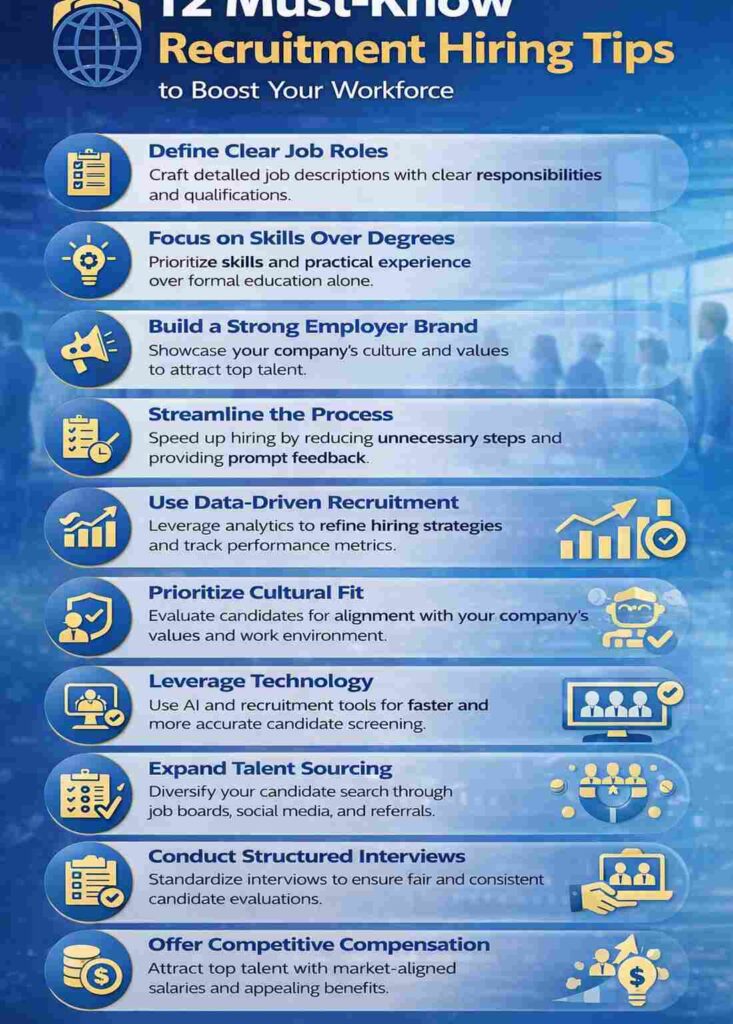
1. Define Clear Job Roles and Expectations
One of the most common reasons for hiring failures is unclear job descriptions. Many organizations rush into recruitment without properly defining what they actually need.
A well-structured job role should include:
- Key responsibilities
- Required skills and qualifications
- Performance expectations
- Growth opportunities
When expectations are clearly communicated, candidates can better assess their fit, leading to improved retention and job satisfaction.
2. Focus on Skills Over Degrees through Hiring Tips
While academic qualifications still matter, modern hiring trends are shifting toward skill-based evaluation. Many highly capable candidates may not have traditional degrees but possess strong practical expertise.
Employers should:
- Use skill assessments
- Conduct practical tests
- Evaluate real-world problem-solving abilities
This approach opens doors to a wider talent pool and ensures you hire individuals who can actually perform the job.
3. Build a Strong Employer Brand
Candidates today research companies before applying. Your organization’s reputation directly influences the quality of applicants you attract.
To strengthen your employer brand:
- Maintain an active online presence
- Share employee success stories
- Highlight company culture and values
A strong brand not only attracts top talent but also reduces hiring costs over time.
4. Streamline the Recruitment Process
A lengthy and complicated hiring process can lead to candidate drop-offs. Top professionals often have multiple offers and may lose interest if delays occur.
To improve efficiency:
- Reduce unnecessary interview rounds
- Communicate timelines clearly
- Provide quick feedback
A smooth process creates a positive experience and increases the chances of securing the best candidates.
5. Use Data-Driven Recruitment
Modern hiring is no longer based solely on intuition. Data analytics can provide valuable insights into candidate behavior, sourcing channels, and hiring success rates.
Organizations can track:
- Time-to-hire
- Cost-per-hire
- Candidate conversion rates
Using these insights helps refine strategies and improve decision-making.
6. Prioritize Cultural Fit
Technical skills are important, but cultural alignment is equally critical. Employees who align with company values are more likely to stay longer and perform better.
Assess cultural fit by:
- Asking behavioral questions
- Evaluating communication style
- Understanding personal values and work preferences
A strong cultural match leads to better teamwork and a healthier work environment.
7. Leverage Technology and Automation
Recruitment technology has transformed how companies identify and engage talent. From applicant tracking systems to AI-driven screening tools, automation can save time and improve accuracy.
Key benefits include:
- Faster resume screening
- Reduced manual workload
- Improved candidate matching
However, technology should complement—not replace—the human element in hiring.
8. Expand Your Talent Sourcing Channels
Relying on a single hiring channel limits your reach. To find the best candidates, organizations should diversify their sourcing strategies.
Consider:
- Job portals
- Social media platforms
- Employee referrals
- Recruitment agencies
A multi-channel approach ensures access to a broader and more diverse talent pool.
9. Conduct Structured Interviews
Unstructured interviews often lead to biased decisions. A structured approach ensures consistency and fairness in candidate evaluation.
Best practices include:
- Preparing standardized questions
- Using scoring systems
- Involving multiple interviewers
This method improves the accuracy of hiring decisions and reduces subjectivity.
10. Offer Competitive Compensation and Benefits
Attracting top talent requires more than just a good job role. Compensation plays a major role in a candidate’s decision-making process.
Employers should:
- Research market salary trends
- Offer performance-based incentives
- Provide additional benefits like flexible work options
A well-rounded compensation package enhances employee satisfaction and retention.
11. Invest in Employee Development
Hiring doesn’t end once a candidate joins. Continuous development is essential to keep employees engaged and productive.
Organizations can:
- Provide training programs
- Offer career growth opportunities
- Encourage skill enhancement
Employees who see growth opportunities are more likely to stay loyal to the company.
12. Partner with a Professional Consultancy
Recruitment can be time-consuming and complex. Partnering with experts like ARR Manpower Consultancy can simplify the process and ensure better results.
Benefits include:
- Access to pre-screened candidates
- Industry expertise
- Faster hiring cycles
- Customized recruitment solutions
A professional partner helps businesses focus on core operations while ensuring high-quality talent acquisition.
Conclusion
In today’s highly competitive business environment, successful recruitment is no longer just about filling vacancies—it is about building a resilient, skilled, and future-ready workforce that can drive long-term organizational growth. The hiring process has evolved significantly, and companies that continue to rely on outdated recruitment methods often struggle with talent shortages, high turnover rates, and reduced productivity. By implementing the 12 recruitment hiring tips discussed above, organizations can create a more strategic and effective hiring framework that attracts top talent and strengthens overall workforce performance.
One of the most important takeaways is that recruitment should always begin with a clear understanding of business goals and workforce requirements. When employers define job roles accurately and align hiring decisions with organizational objectives, they significantly improve the chances of selecting candidates who can contribute meaningfully from day one. A structured hiring process also reduces confusion, saves valuable time, and helps ensure consistency across recruitment efforts.
Technology has become another critical component of modern hiring success. From applicant tracking systems and AI-powered screening tools to digital interviews and talent databases, recruitment technology enables organizations to streamline operations and identify qualified candidates more efficiently. Companies that embrace digital recruitment strategies gain a competitive advantage by reducing hiring timelines while improving candidate quality.
At the same time, employers must never overlook the human side of recruitment. Candidate experience plays a vital role in shaping an organization’s reputation in the job market. Clear communication, timely feedback, transparent hiring processes, and professional interactions help build trust and leave a positive impression on potential employees. Even candidates who are not selected may become future applicants, customers, or brand advocates if they have a positive recruitment experience.
Another key factor in successful hiring is focusing on skills, adaptability, and cultural fit rather than relying solely on qualifications and experience. As industries continue to evolve, organizations need employees who can learn quickly, embrace change, and contribute to a collaborative work environment. Hiring managers who evaluate both technical capabilities and interpersonal strengths are more likely to build high-performing teams that thrive under changing business conditions.
Workforce diversity and inclusion should also remain a priority in every recruitment strategy. Diverse teams bring unique perspectives, encourage innovation, and improve decision-making across organizations. By creating inclusive hiring practices and expanding talent sourcing channels, businesses can access a broader pool of qualified candidates and strengthen their competitive position in the marketplace.
Retention begins with recruitment as well. Hiring the right candidate from the start reduces employee turnover, lowers replacement costs, and improves overall workforce stability. Thorough screening, skill assessments, and behavioral interviews help organizations make informed hiring decisions that support long-term employee success. Investing additional effort during recruitment often saves significant resources in the future.
Partnering with experienced recruitment specialists can further enhance hiring outcomes. Professional staffing consultants possess industry expertise, extensive candidate networks, and proven recruitment methodologies that help organizations identify top talent faster and more effectively. Their support enables businesses to focus on core operations while ensuring recruitment objectives are met with precision and efficiency.
As workforce trends continue to shift in 2026 and beyond, organizations must remain agile and proactive in their hiring approach. Remote work, hybrid employment models, evolving skill requirements, and increasing competition for talent will continue to influence recruitment strategies. Businesses that continuously refine their hiring processes and adapt to market changes will be better positioned to attract exceptional candidates and achieve sustainable growth.
ARR Manpower Consultancy understands these evolving recruitment challenges and provides tailored hiring solutions designed to meet the unique needs of modern organizations. With a commitment to quality, efficiency, and workforce excellence, ARR Manpower Consultancy helps businesses connect with qualified professionals who align with their goals, culture, and long-term vision. Whether hiring for entry-level positions, specialized roles, or large-scale workforce requirements, the right recruitment strategy can make a significant difference in organizational success.
Ultimately, recruitment is not simply an HR function—it is a strategic investment in the future of the business. Every hiring decision contributes to organizational performance, innovation, and growth. By applying these essential recruitment hiring tips and adopting a forward-thinking approach to talent acquisition, companies can build stronger teams, enhance productivity, and create a workforce capable of meeting the demands of an increasingly dynamic and competitive business landscape.
Effective recruitment is not just about filling vacancies—it’s about building a strong foundation for long-term success. By implementing these strategies, organizations can significantly improve their hiring outcomes, reduce turnover, and create a high-performing workforce.
ARR Manpower Consultancy continues to support businesses with tailored solutions that align with modern industry needs. With the right approach, tools, and expertise, companies can overcome hiring challenges and unlock their true potential.