Introduction
The recruitment industry has changed dramatically during the past decade. Traditional staffing approaches that once relied on referrals, newspaper listings, and local business connections have evolved into data-driven, technology-powered operations that compete on speed, quality, specialization, and client experience. As the industry becomes more competitive, recruitment firms are under increasing pressure to create predictable revenue streams rather than relying solely on one-time placements or seasonal hiring cycles.
Annual Recurring Revenue, often referred to as ARR, has become one of the most important indicators of long-term stability for modern recruitment businesses. Firms that develop recurring income models are better positioned to survive market fluctuations, attract investors, retain clients, and scale operations efficiently. Yet many agencies struggle to transition from transactional sales toward recurring client partnerships.
The challenge is not simply about offering subscription packages or long-term contracts. Sustainable revenue growth comes from understanding client psychology, improving operational systems, building stronger relationships, and creating measurable business value over time. Recruitment firms that succeed in this area often use methods that are not immediately visible from the outside. These organizations quietly implement strategic practices that gradually increase retention, improve margins, and strengthen recurring income.
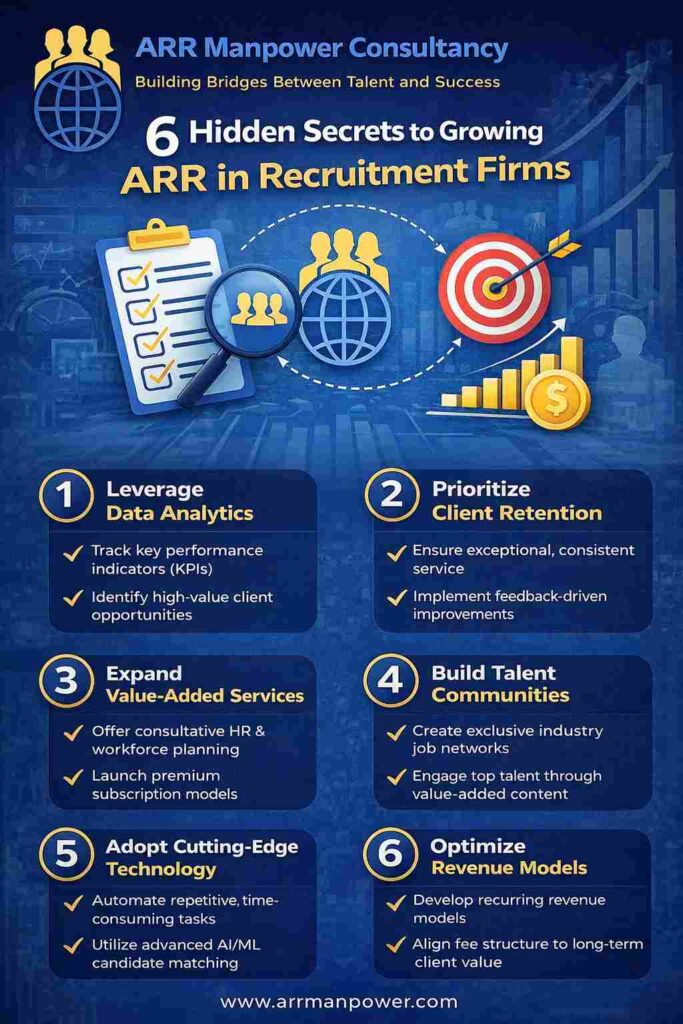
This article explores six hidden secrets that successful recruitment firms use to strengthen recurring revenue and build scalable growth models. These strategies focus on operational excellence, client engagement, workforce specialization, technology integration, employer branding, and value-based partnerships. Each section explains how these approaches work, why they matter, and how firms can apply them in practical ways.
The purpose of this guide is not to promote quick fixes or unrealistic growth hacks. Instead, it provides detailed insights into sustainable practices that recruitment businesses can implement step by step. Whether a firm specializes in executive search, temporary staffing, healthcare recruitment, IT hiring, or niche talent acquisition, the principles discussed here can support stronger client retention and more consistent financial performance.
https://arrmanpowerconsultancy.com/
Secret 1: Building Long-Term Client Ecosystems Instead of Transactional Relationships
Many recruitment firms focus heavily on filling immediate vacancies. While this approach can generate short-term revenue, it rarely creates dependable recurring business. High-performing agencies understand that long-term growth comes from becoming deeply integrated into a client’s hiring ecosystem.
Understanding the Difference Between Vendors and Strategic Partners
A vendor fills positions when requested. A strategic partner influences hiring decisions, workforce planning, talent branding, and retention strategies. Recruitment firms that position themselves as strategic advisors create stronger relationships and gain access to ongoing opportunities.
Clients increasingly seek recruitment partners that understand industry trends, salary benchmarks, workforce behavior, and candidate expectations. When agencies provide insights beyond candidate sourcing, they become more valuable to clients.
For example, a recruitment firm serving technology startups can provide:
- Quarterly salary trend reports
- Competitor hiring analysis
- Talent availability forecasts
- Interview process recommendations
- Employer branding insights
- Diversity hiring strategies
These additional services strengthen trust and encourage long-term engagement.
Creating Embedded Recruitment Models
Embedded recruitment models involve integrating recruiters directly into the client’s hiring process. Instead of acting as external vendors, recruiters collaborate with internal HR teams and hiring managers.
This approach provides several advantages:
- Better understanding of company culture
- Improved candidate quality
- Faster hiring cycles
- Increased communication efficiency
- Higher client retention
- Consistent monthly revenue
Recruitment firms that adopt embedded models often secure multi-month or annual agreements rather than one-time placement fees.
Focusing on Client Retention Metrics
Many agencies measure success primarily through placements made. However, firms seeking stable recurring income should also track:
- Client retention rate
- Revenue per client
- Average contract duration
- Expansion opportunities
- Client satisfaction scores
- Renewal percentages
Retention-focused metrics encourage long-term thinking and reveal opportunities for deeper partnerships.
Providing Predictive Workforce Planning
Organizations often struggle to anticipate future hiring needs. Recruitment firms can become indispensable by helping clients forecast workforce requirements.
This may involve analyzing:
- Seasonal hiring patterns
- Industry expansion trends
- Geographic talent availability
- Skill shortages
- Workforce aging trends
- Emerging technology demands
By helping clients prepare proactively, recruitment firms move from reactive service providers to strategic workforce advisors.
Strengthening Communication Frameworks
One hidden factor behind successful recurring relationships is communication consistency. Recruitment firms that maintain structured communication systems typically experience higher retention.
Effective communication practices include:
- Monthly strategy calls
- Quarterly business reviews
- Talent pipeline updates
- Hiring analytics dashboards
- Candidate experience reports
- Feedback collection systems
Clients appreciate transparency and proactive updates. Consistent communication reinforces trust and reduces the likelihood of losing accounts to competitors.
Developing Multi-Level Client Relationships
Some recruitment firms depend too heavily on a single contact within a client organization. This creates vulnerability if that person changes roles or leaves the company.
Successful agencies build relationships across multiple departments and leadership levels. They engage:
- HR managers
- Department heads
- Talent acquisition leaders
- Finance executives
- Operations teams
- Company founders
Broader engagement strengthens account stability and opens opportunities for expanded services.
Turning Insights Into Revenue Opportunities
Recruitment firms often collect valuable hiring data but fail to monetize it effectively. Agencies that package insights into strategic recommendations create stronger business value.
For example, firms can provide:
- Workforce market intelligence
- Candidate availability studies
- Compensation benchmarking
- Hiring process optimization reports
- Retention risk analysis
These services increase perceived value and justify ongoing contracts.
Why Long-Term Ecosystems Matter
Recruitment firms that prioritize ecosystems rather than transactions achieve:
- Greater revenue predictability
- Stronger client loyalty
- Reduced sales pressure
- Better forecasting ability
- Higher operational efficiency
- Improved profit margins
Long-term partnerships create stability that supports scalable growth.
Secret 2: Specializing in High-Value Niches Instead of Competing Broadly
Many recruitment agencies attempt to serve every industry and role category. While this may seem like a growth strategy, broad positioning often weakens differentiation. Specialized firms usually outperform general agencies because they offer deeper expertise and stronger market credibility.
Why Specialization Increases Revenue Stability
Clients prefer recruiters who understand their industry language, technical requirements, compliance standards, and workforce challenges. Specialized agencies become trusted advisors because they speak the same professional language as their clients.
For example:
- Healthcare recruiters understand credentialing and licensing
- IT recruiters understand programming frameworks and certifications
- Legal recruiters understand regulatory requirements
- Manufacturing recruiters understand operational workflows
- Executive recruiters understand leadership evaluation
This expertise increases placement accuracy and client confidence.
Creating Authority Through Industry Expertise
Recruitment firms that dominate specific niches often invest heavily in industry knowledge.
This includes:
- Attending industry conferences
- Publishing market research
- Producing salary guides
- Hosting webinars
- Building specialized candidate communities
- Networking with industry leaders
Authority strengthens brand recognition and attracts inbound opportunities.
Building Proprietary Talent Networks
Specialized recruitment firms typically develop exclusive candidate databases over time. These proprietary networks become major competitive advantages.
Candidates prefer recruiters who understand their career paths and can connect them with relevant opportunities.
To build strong talent communities, agencies can:
- Create industry newsletters
- Host networking events
- Share career development content
- Offer salary insights
- Build online professional groups
- Maintain consistent candidate engagement
Strong candidate relationships improve placement speed and quality.
Increasing Pricing Power
General recruitment agencies often compete aggressively on pricing. Specialized firms, however, can command premium fees because of their expertise.
Clients are usually willing to pay higher rates when recruiters:
- Reduce hiring risk
- Deliver faster placements
- Provide market insights
- Access difficult talent pools
- Improve candidate quality
Premium positioning supports healthier margins and recurring contracts.
Reducing Competition Through Differentiation
Broad recruitment markets are crowded. Niche specialization reduces direct competition and strengthens market positioning.
Instead of competing with hundreds of agencies, specialized firms compete with fewer highly targeted businesses.
This allows agencies to:
- Focus marketing efforts
- Refine messaging
- Improve operational efficiency
- Build industry credibility
- Develop repeatable systems
Differentiation becomes easier when the target audience is clearly defined.
Creating Repeatable Recruitment Processes
Specialization enables firms to create standardized hiring workflows.
For example, an agency focused on cybersecurity recruitment can develop:
Conclusion
Growing Annual Recurring Revenue (ARR) in a recruitment firm is not simply about filling more positions or increasing client acquisition efforts. Sustainable ARR growth comes from building a business model that generates predictable revenue, strengthens client relationships, and creates long-term value for both employers and candidates. The six hidden secrets discussed throughout this article demonstrate that the most successful recruitment firms focus on strategic improvements rather than relying solely on traditional placement fees.
By creating recurring service offerings, firms can transform one-time transactions into ongoing partnerships. Whether through Recruitment Process Outsourcing (RPO), talent pipeline management, workforce planning, or subscription-based hiring services, recurring revenue streams provide greater financial stability and reduce dependence on fluctuating hiring cycles. This allows recruitment businesses to forecast growth more accurately and invest confidently in future expansion.
Client retention also plays a critical role in ARR growth. Acquiring a new client often requires significant time, effort, and marketing investment. Retaining existing clients, however, is usually far more cost-effective and profitable. Recruitment firms that consistently deliver results, maintain clear communication, and proactively solve workforce challenges often enjoy stronger client loyalty and higher lifetime value. Long-term partnerships naturally create more opportunities for upselling and cross-selling services that contribute directly to recurring revenue.
Technology adoption is another powerful growth driver. Modern recruitment firms that leverage automation, applicant tracking systems, CRM platforms, and data analytics can improve efficiency while delivering a superior client experience. Technology not only reduces administrative workload but also provides valuable insights that help firms identify revenue opportunities, improve hiring outcomes, and strengthen decision-making processes.
Specialization should not be overlooked either. Firms that position themselves as experts in a specific industry, profession, or geographic market often command higher fees and attract clients seeking specialized expertise. A focused niche strategy can differentiate a recruitment agency from competitors while creating stronger brand authority and increasing client trust.
Equally important is the use of data-driven performance measurement. Tracking key metrics such as client retention rates, recurring revenue growth, placement quality, time-to-fill, and customer satisfaction helps firms identify strengths and uncover areas for improvement. Recruitment businesses that consistently monitor and optimize these metrics are better equipped to scale their operations and maximize profitability.
Finally, investing in long-term relationships rather than short-term wins creates the foundation for lasting ARR growth. Clients want strategic partners who understand their business objectives, workforce challenges, and future hiring needs. Recruitment firms that become trusted advisors rather than transactional vendors position themselves for recurring contracts, referrals, and sustainable expansion.
As the recruitment industry continues to evolve, firms that embrace innovation, prioritize recurring revenue strategies, and focus on delivering exceptional value will be best positioned for long-term success. ARR growth is not achieved through a single tactic or quick fix. It results from a combination of strategic planning, operational excellence, client-centric service, and continuous improvement. By implementing these six hidden secrets consistently, recruitment firms can build a stronger, more resilient business capable of generating predictable revenue and achieving sustainable growth year after year.
- Technical asses
- http://HubSpot CRM Resources
- https://www.imf.org/en/home