Introduction
The employment landscape for fresh graduates has undergone a dramatic transformation over the past decade. Advances in technology, changing business priorities, remote work adoption, and evolving candidate expectations have reshaped how organizations recruit entry-level talent. What worked for graduates just a few years ago may no longer guarantee success in today’s competitive job market.
Employers are increasingly seeking candidates who can adapt quickly, demonstrate practical skills, and contribute value from day one. At the same time, graduates face new challenges as automation, artificial intelligence, and global competition redefine workforce requirements.
Understanding modern graduate hiring trends is essential for students, universities, employers, and recruitment professionals. These trends reveal surprising shifts that many job seekers fail to anticipate. From the declining importance of academic grades to the rising demand for soft skills, the recruitment landscape is evolving faster than ever.
This article explores six shocking facts that are changing the way organizations hire graduates and how young professionals can position themselves for success.
https://arrmanpowerconsultancy.com
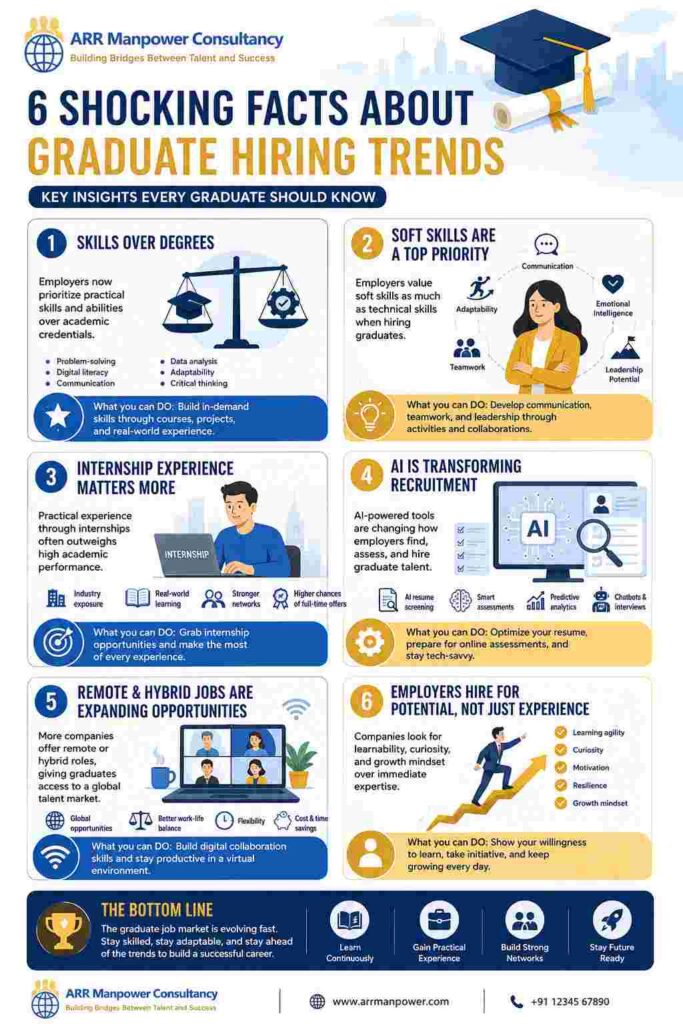
1. Employers Value Skills More Than Degrees
One of the most surprising developments in graduate recruitment is the growing emphasis on skills rather than academic qualifications alone.
For decades, earning a degree was considered the primary gateway to professional employment. While education remains important, many employers now prioritize practical competencies over academic credentials.
Organizations increasingly recognize that a degree does not always reflect a candidate’s ability to solve real-world problems. As a result, hiring managers are focusing on skills such as:
- Communication
- Problem-solving
- Critical thinking
- Project management
- Data analysis
- Digital literacy
- Team collaboration
Many companies now assess candidates through skill-based evaluations, assignments, and portfolio reviews rather than relying solely on resumes.
Graduates who complete internships, certifications, freelance projects, or volunteer work often gain a competitive advantage because they can demonstrate practical experience.
This shift represents one of the most significant graduate hiring trends shaping the modern workforce. Candidates who invest in developing marketable skills often outperform peers with stronger academic records but limited hands-on experience.
2. Soft Skills Have Become a Major Hiring Priority
Many graduates assume technical expertise is the most important factor in securing employment. However, employers increasingly rank soft skills among their top hiring criteria.
In an era where technology can automate repetitive tasks, human-centered abilities have become more valuable than ever. Organizations seek graduates who can work effectively with colleagues, customers, and stakeholders.
Key soft skills employers look for include:
Adaptability
Business environments change rapidly. Employers want individuals who can learn new processes and embrace change without significant disruption.
Emotional Intelligence
The ability to understand and manage emotions contributes to stronger workplace relationships and better collaboration.
Communication
Graduates must communicate clearly through presentations, meetings, emails, and digital platforms.
Leadership Potential
Even entry-level candidates are evaluated for their future leadership capabilities.
Creativity
Innovation remains critical for organizational growth, making creative thinking highly desirable.
Recruiters often report that technical skills can be taught more easily than interpersonal skills. Consequently, many organizations prioritize candidates who demonstrate strong character, professionalism, and teamwork abilities.
Among current graduate hiring trends, the increasing importance of soft skills stands out as one of the most impactful changes affecting recruitment decisions.
3. Internship Experience Often Matters More Than Academic Performance
Many students spend years striving for perfect grades, believing academic excellence guarantees employment. Surprisingly, internship experience frequently carries greater weight during hiring decisions.
Employers view internships as evidence that a graduate understands workplace expectations and can apply theoretical knowledge in practical situations.
Internships help candidates develop:
- Industry knowledge
- Professional networks
- Workplace communication skills
- Time management abilities
- Technical competencies
- Business awareness
Hiring managers often compare two candidates with similar educational backgrounds and choose the one with relevant internship experience.
Internships also reduce hiring risk. Employers gain confidence knowing candidates have already operated in professional environments and adapted to organizational cultures.
Furthermore, internship programs frequently serve as talent pipelines. Many companies extend full-time offers to successful interns, reducing the need for external recruitment.
This reality highlights an important lesson for graduates: practical experience can significantly influence career opportunities, sometimes even more than academic achievements.
As graduate hiring trends continue evolving, experiential learning opportunities are becoming essential components of career preparation.
4. Artificial Intelligence Is Transforming Recruitment Processes
Artificial intelligence is revolutionizing how employers identify, evaluate, and engage graduate candidates.
Many organizations now use AI-powered recruitment systems to streamline hiring operations. These technologies assist recruiters by:
- Screening resumes
- Ranking applicants
- Matching candidates to job requirements
- Scheduling interviews
- Conducting initial assessments
- Predicting candidate suitability
While these innovations improve efficiency, they also create new challenges for job seekers.
Graduates must optimize resumes with relevant keywords and clearly showcase qualifications to ensure applicant tracking systems recognize their applications.
Candidates who fail to tailor their resumes may be filtered out before a human recruiter reviews their profiles.
AI-driven assessments are also becoming more common. Some organizations use automated testing platforms to evaluate cognitive abilities, communication skills, and problem-solving capabilities.
Despite concerns about automation, human decision-making remains a critical component of hiring. Recruiters continue to assess cultural fit, interpersonal qualities, and long-term potential.
Nevertheless, the growing influence of artificial intelligence represents one of the most transformative graduate hiring trends in recent years.
Understanding how recruitment technology works can help graduates navigate the hiring process more effectively.
5. Remote and Hybrid Opportunities Are Expanding Entry-Level Careers
Before the global shift toward remote work, graduates typically searched for opportunities within commuting distance of their homes or universities.
Today, many organizations offer remote and hybrid positions that significantly expand employment possibilities.
This shift has transformed access to career opportunities by allowing graduates to:
- Apply for jobs in different cities
- Work with international teams
- Access specialized industries
- Gain flexible working arrangements
- Improve work-life balance
Employers also benefit from broader talent pools and reduced geographical limitations.
However, remote work introduces new expectations. Hiring managers increasingly seek candidates who can:
- Manage time independently
- Communicate virtually
- Collaborate across digital platforms
- Maintain productivity without direct supervision
Graduates must demonstrate digital communication skills and self-discipline during interviews and assessments.
Remote hiring practices have also changed recruitment methods. Virtual interviews, online onboarding, and digital training programs are now common across many industries.
These developments continue influencing graduate hiring trends and are expected to remain significant factors in future workforce planning.
6. Employers Are Hiring for Potential Rather Than Immediate Expertise
Another surprising trend is the growing focus on long-term potential rather than current expertise.
Many employers understand that graduates naturally have limited professional experience. Instead of expecting complete job readiness, organizations increasingly evaluate a candidate’s ability to learn, adapt, and grow.
Recruiters frequently assess indicators such as:
- Learning agility
- Curiosity
- Motivation
- Initiative
- Resilience
- Growth mindset
Candidates who demonstrate enthusiasm for continuous learning often stand out during recruitment processes.
Organizations recognize that technologies, processes, and market conditions evolve rapidly. Employees who learn quickly can adapt more effectively to future business needs.
As a result, interviews increasingly include behavioral questions designed to assess learning potential and problem-solving approaches.
Graduates can strengthen their profiles by showcasing examples of:
- Independent learning projects
- Professional certifications
- Volunteer experiences
- Leadership activities
- Personal development initiatives
These experiences signal a willingness to grow and contribute beyond immediate job requirements.
Among emerging graduate hiring trends, the emphasis on potential may be one of the most encouraging developments for new professionals entering the workforce.
How Graduates Can Adapt to These Changing Trends
Understanding recruitment changes is only the first step. Graduates must actively adapt their strategies to remain competitive.
Build Relevant Skills
Focus on acquiring industry-specific and transferable skills through courses, certifications, projects, and practical experiences.
Gain Hands-On Experience
Internships, apprenticeships, volunteer work, and freelance opportunities help build credibility and strengthen resumes.
Develop Professional Networks
Networking can uncover hidden opportunities and provide valuable career guidance.
Create a Strong Online Presence
Employers frequently review digital profiles during recruitment. Maintaining professional online visibility can improve job prospects.
Learn Emerging Technologies
Familiarity with modern workplace tools, analytics platforms, and digital collaboration software can provide a competitive edge.
Demonstrate Continuous Learning
Employers appreciate candidates who invest in personal and professional development.
By embracing these strategies, graduates can align themselves with evolving employer expectations and increase their chances of securing meaningful career opportunities.
The Future of Graduate Recruitment
The future of graduate recruitment will likely be characterized by increased technology adoption, greater flexibility, and stronger emphasis on skills-based hiring.
Several developments are expected to shape recruitment practices in the coming years:
- Expanded use of artificial intelligence
- More personalized candidate experiences
- Increased demand for digital competencies
- Greater focus on diversity and inclusion
- Skills-first recruitment frameworks
- Continued growth of remote work opportunities
Universities and training institutions will also need to adapt by aligning educational programs with workforce requirements.
Collaboration between educators and employers will become increasingly important to ensure graduates possess relevant skills and practical experience.
Organizations that successfully identify, attract, and develop graduate talent will gain significant competitive advantages in rapidly changing markets.
Conclusion
The modern recruitment landscape is undergoing profound change, and graduates must understand the forces shaping hiring decisions. The most significant graduate hiring trends reveal that employers are looking beyond academic qualifications and placing greater emphasis on practical skills, soft skills, internship experience, adaptability, and long-term potential.
Artificial intelligence is transforming recruitment processes, while remote work continues expanding career opportunities across geographical boundaries. At the same time, organizations increasingly prioritize candidates who demonstrate curiosity, resilience, and a commitment to continuous learning.
For graduates entering today’s workforce, success depends on more than earning a degree. Building relevant skills, gaining practical experience, embracing technology, and developing strong interpersonal abilities are now essential components of career readiness.
Those who recognize and adapt to these evolving expectations will be better positioned to secure opportunities, grow professionally, and thrive in an increasingly competitive employment market. By understanding these shocking realities and preparing accordingly, graduates can confidently navigate the future of work and build rewarding long-term careers.
https://www.weforum.org/publications/the-future-of-jobs-report-2025/