Introduction
Campus recruitment remains one of the most effective ways for organizations to build a strong talent pipeline. Universities and colleges provide access to enthusiastic graduates who bring fresh perspectives, adaptability, and a willingness to learn. However, despite investing significant resources in recruitment drives, many organizations fail to achieve the desired results because of avoidable mistakes during the hiring process.
An ineffective campus recruitment strategy can lead to poor candidate experiences, high attrition rates, increased hiring costs, and lower workforce productivity. Companies that overlook critical aspects of recruitment often struggle to attract top graduates and may lose promising talent to competitors.
Understanding the common pitfalls in campus recruitment can help organizations improve hiring outcomes, strengthen employer branding, and secure the best candidates. Below are fourteen costly mistakes employers should avoid when hiring from campuses.
https://arrmanpowerconsultancy.com
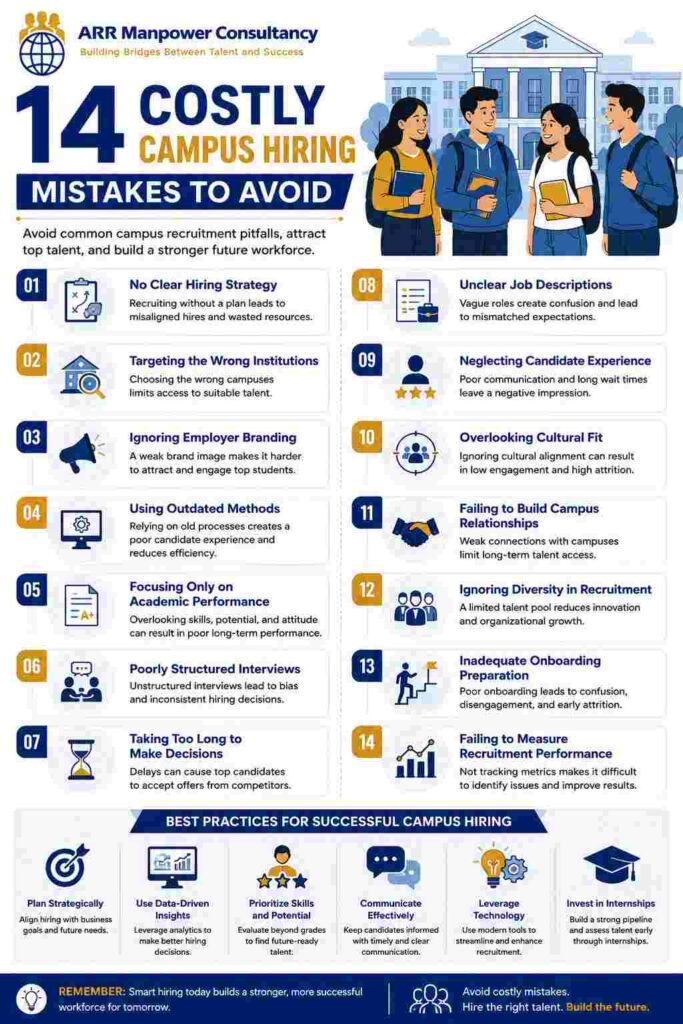
1. Recruiting Without a Clear Campus Hiring Strategy
One of the most common mistakes organizations make is participating in campus drives without a well-defined hiring strategy. Many recruiters focus on filling positions quickly rather than aligning hiring efforts with long-term business goals.
Without a clear plan, companies may recruit candidates whose skills do not match future organizational needs. This mismatch can result in low productivity and higher employee turnover.
Before approaching colleges, organizations should determine:
- Workforce requirements
- Skill gaps
- Job roles and responsibilities
- Future growth plans
- Hiring timelines
A structured approach helps ensure that recruitment efforts support business objectives and deliver better outcomes.
2. Targeting the Wrong Institutions
Not every educational institution produces candidates suitable for every industry or role. Many employers make the mistake of recruiting from campuses based solely on reputation rather than relevance.
For example, a technology company seeking software developers should focus on institutions known for strong engineering programs. Similarly, organizations hiring management trainees should target colleges with reputable business programs.
Selecting the right campuses increases the likelihood of finding candidates with the required skills and educational background.
3. Ignoring Employer Branding
Today’s students conduct extensive research before applying for jobs. A weak employer brand can discourage talented candidates from considering an organization.
Many companies underestimate the importance of presenting themselves effectively during campus engagements. If students lack information about company culture, career opportunities, and employee experiences, they may choose competitors instead.
Organizations should strengthen their employer image by:
- Maintaining an engaging online presence
- Sharing employee success stories
- Participating in campus events
- Providing transparent career information
- Demonstrating workplace values
A strong reputation helps attract quality applicants and improve recruitment results.
4. Using Outdated Recruitment Methods
Modern graduates expect recruitment processes that reflect current technology and communication trends. Organizations that rely solely on traditional methods often struggle to engage candidates effectively.
Lengthy paperwork, manual scheduling, and outdated assessment methods can create a negative impression. Students increasingly prefer digital interactions that offer convenience and speed.
Employers should leverage:
- Online assessments
- Virtual interviews
- Applicant tracking systems
- AI-powered screening tools
- Mobile-friendly application platforms
Modernizing recruitment practices improves efficiency and enhances the candidate experience.
5. Focusing Only on Academic Performance
While academic achievements provide useful insights, they should not be the sole criterion for candidate selection.
Many organizations prioritize grades while overlooking essential qualities such as communication skills, adaptability, leadership potential, and problem-solving abilities. High-performing students academically may not always excel in workplace environments.
A balanced evaluation process should assess:
- Technical competence
- Soft skills
- Teamwork abilities
- Creativity
- Learning agility
This broader perspective helps identify candidates with long-term potential.
6. Conducting Poorly Structured Interviews
Unstructured interviews often lead to inconsistent hiring decisions. Different interviewers may evaluate candidates based on subjective impressions rather than standardized criteria.
This approach can introduce bias and reduce the accuracy of hiring decisions. Candidates may also perceive the process as unprofessional.
Organizations should establish:
- Standard interview questions
- Evaluation scorecards
- Competency-based assessments
- Interviewer training programs
Consistency ensures fair evaluations and better hiring outcomes.
7. Taking Too Long to Make Decisions
Top graduates frequently receive multiple job offers during campus placement seasons. Companies that delay decision-making risk losing talented candidates to faster-moving competitors.
Lengthy approval processes, excessive interview rounds, and slow communication can frustrate applicants and damage employer reputation.
To avoid losing strong candidates, organizations should:
- Streamline approvals
- Reduce unnecessary interview stages
- Communicate promptly
- Provide timely feedback
Quick and efficient hiring processes improve offer acceptance rates.
8. Offering Unclear Job Descriptions
Many organizations fail to communicate role expectations clearly during recruitment. Vague job descriptions can create misunderstandings that affect employee satisfaction after joining.
Candidates need accurate information about:
- Job responsibilities
- Reporting structures
- Performance expectations
- Growth opportunities
- Work locations
Transparency helps students make informed decisions and reduces the risk of early attrition.
9. Neglecting Candidate Experience
Candidate experience significantly influences how students perceive an organization. Unfortunately, some employers focus entirely on selection processes while overlooking candidate interactions.
Common issues include:
- Poor communication
- Long waiting periods
- Lack of feedback
- Disorganized interview schedules
Negative experiences can damage employer reputation and discourage future applicants.
Creating a positive experience involves treating every candidate professionally, regardless of the hiring outcome. Respectful communication builds trust and strengthens employer branding.
10. Overlooking Cultural Fit
Technical skills alone do not guarantee success within an organization. Employees who struggle to align with company culture often experience lower engagement and productivity.
Some recruiters focus heavily on qualifications while ignoring behavioral compatibility. This oversight can contribute to workplace conflicts and increased turnover.
During recruitment, employers should evaluate:
- Work style preferences
- Communication habits
- Professional values
- Adaptability
- Collaboration skills
Assessing cultural alignment supports long-term employee success.
11. Failing to Build Relationships with Campuses
Campus recruitment should not be treated as a once-a-year activity. Many organizations engage with institutions only during placement seasons and miss opportunities to establish long-term partnerships.
Strong relationships with colleges can provide:
- Better access to talent
- Increased brand visibility
- Improved placement opportunities
- Enhanced collaboration
Companies can strengthen connections by:
- Conducting workshops
- Offering internships
- Sponsoring events
- Participating in academic programs
Ongoing engagement creates a sustainable talent pipeline.
12. Ignoring Diversity in Recruitment
A lack of diversity can limit innovation and reduce organizational performance. Some employers unintentionally narrow their talent pool by focusing on specific backgrounds, institutions, or demographics.
Inclusive recruitment practices help organizations benefit from a wider range of perspectives and experiences.
Employers should encourage diversity by:
- Expanding campus outreach
- Using unbiased evaluation methods
- Promoting inclusive hiring policies
- Training interviewers on unconscious bias
A diverse workforce contributes to stronger business outcomes and improved workplace culture.
13. Inadequate Onboarding Preparation
Recruitment success does not end when candidates accept job offers. Many organizations invest heavily in hiring but fail to provide effective onboarding experiences.
Poor onboarding can leave new employees feeling disconnected and uncertain about their roles. As a result, engagement levels decline and turnover risks increase.
Effective onboarding should include:
- Structured orientation programs
- Training sessions
- Mentorship opportunities
- Performance expectations
- Team introductions
A smooth transition helps graduates become productive more quickly and improves retention.
14. Failing to Measure Recruitment Performance
Organizations often overlook the importance of evaluating recruitment effectiveness. Without performance measurement, it becomes difficult to identify areas for improvement.
Tracking key recruitment metrics can reveal valuable insights about hiring success.
Important metrics include:
- Offer acceptance rates
- Time-to-hire
- Cost-per-hire
- Retention rates
- Candidate satisfaction
- Hiring manager feedback
Regular analysis helps organizations refine their recruitment strategies and achieve better outcomes over time.
Best Practices for Successful Campus Recruitment
Avoiding mistakes is only part of the solution. Organizations should also adopt best practices that enhance recruitment effectiveness.
Create a Strong Campus Presence
Consistent engagement with students helps increase brand recognition and attract quality candidates.
Use Data-Driven Decision Making
Recruitment analytics can improve planning, forecasting, and candidate evaluation processes.
Prioritize Skills and Potential
Looking beyond academic performance allows organizations to identify future leaders and high-performing employees.
Improve Communication
Clear and timely communication strengthens candidate relationships and enhances employer reputation.
Invest in Technology
Modern recruitment tools can streamline hiring processes, reduce administrative burdens, and improve candidate experiences.
Develop Internship Programs
Internships provide valuable opportunities to assess talent before making full-time hiring decisions.
Conclusion
Campus recruitment offers organizations a valuable opportunity to secure future talent and build a strong workforce. However, even the most well-funded recruitment initiatives can fail when common mistakes go unnoticed. From targeting the wrong institutions and relying too heavily on academic performance to neglecting candidate experience and delaying hiring decisions, each error can significantly impact recruitment success.
Organizations that approach campus hiring strategically are better positioned to attract, engage, and retain high-potential graduates. By focusing on clear planning, employer branding, efficient processes, diversity, and effective onboarding, companies can create a recruitment framework that delivers long-term value.
Avoiding these fourteen costly mistakes not only improves hiring outcomes but also strengthens organizational reputation among students and educational institutions. As competition for emerging talent continues to grow, businesses that refine their campus recruitment practices will gain a significant advantage in building a skilled, motivated, and future-ready workforce.
Moreover, organizations that continuously review and optimize their recruitment strategies can adapt more effectively to changing workforce demands. Building meaningful relationships with educational institutions and embracing innovative hiring practices ensures access to high-quality talent. A proactive approach to campus recruitment ultimately supports sustainable growth and long-term organizational success.