Introduction
The executive recruitment landscape is evolving rapidly as organizations navigate economic uncertainty, digital transformation, workforce changes, and increasing stakeholder expectations. Leadership hiring is no longer focused solely on experience and industry expertise. Companies now seek executives who can adapt to disruption, drive innovation, foster inclusive cultures, and deliver sustainable growth.
As businesses prepare for the challenges and opportunities of 2026, understanding emerging executive hiring trends can help organizations attract and retain top-tier leadership talent. Boards, investors, and hiring committees are placing greater emphasis on strategic vision, technological literacy, and leadership agility.
This article explores 13 remarkable executive hiring trends expected to shape the future of leadership recruitment in 2026.
https://arrmanpowerconsultancy.com
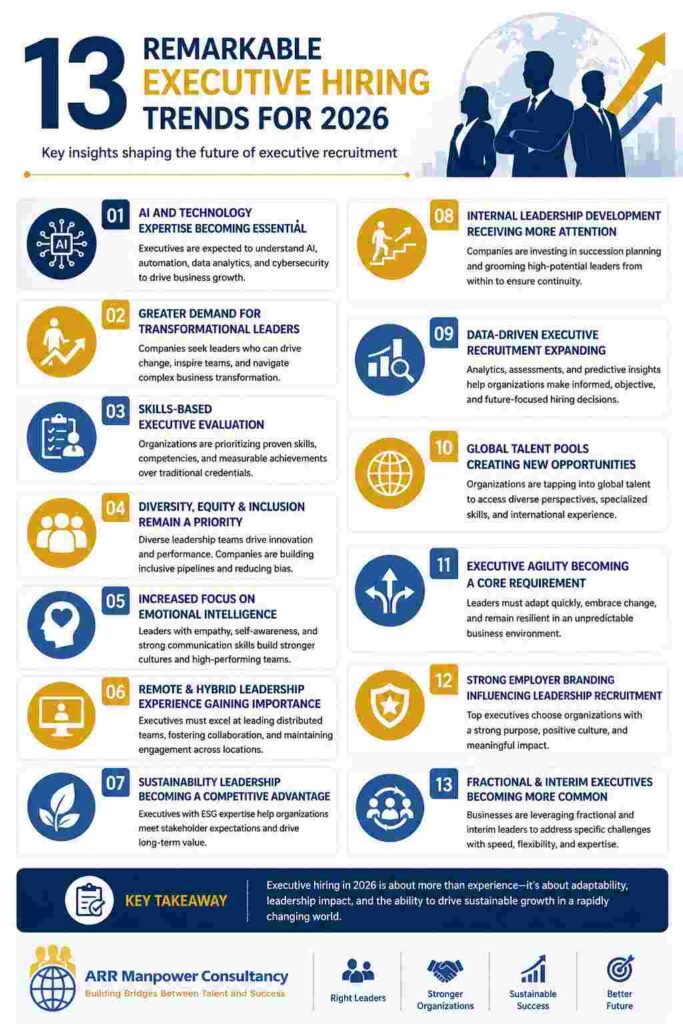
1. AI and Technology Expertise Becoming Essential
Organizations across industries are integrating artificial intelligence, automation, and advanced analytics into their operations. As a result, executives are increasingly expected to understand how technology influences business performance and competitive advantage.
Even leaders in traditionally non-technical roles must demonstrate familiarity with digital transformation initiatives. Boards are prioritizing candidates who can effectively align technology investments with organizational goals.
Executives who understand emerging technologies, cybersecurity risks, and data-driven decision-making will have a significant advantage in the recruitment market.
2. Greater Demand for Transformational Leaders
Businesses are operating in an environment characterized by constant change. Market disruptions, evolving customer expectations, and technological advancements require leaders capable of managing transformation effectively.
Organizations are looking beyond traditional management skills and focusing on candidates who have successfully led major change initiatives. These executives can guide teams through uncertainty while maintaining productivity and morale.
Transformational leadership is becoming one of the most valued qualities in executive recruitment processes.
3. Skills-Based Executive Evaluation
Many companies are moving away from relying solely on prestigious titles, educational backgrounds, or tenure. Instead, they are evaluating candidates based on demonstrated competencies and measurable achievements.
Executive assessments increasingly focus on leadership capabilities, strategic thinking, innovation, communication skills, and change management expertise.
This shift enables organizations to identify leaders who possess the practical skills necessary to address current business challenges rather than relying exclusively on traditional credentials.
4. Diversity, Equity, and Inclusion Remaining a Priority
Organizations continue to recognize the value of diverse leadership teams. Research consistently shows that diverse executive groups contribute to better decision-making, improved innovation, and stronger financial performance.
In 2026, companies are expected to expand efforts to attract candidates from underrepresented backgrounds and build more inclusive leadership pipelines.
Executive search firms and internal talent acquisition teams are implementing structured evaluation methods to reduce bias and ensure fair consideration of all qualified candidates.
5. Increased Focus on Emotional Intelligence
Technical expertise and business acumen remain important, but emotional intelligence is becoming a critical factor in executive selection.
Leaders must navigate complex interpersonal relationships, manage diverse teams, and inspire employees during periods of change. Organizations are evaluating candidates based on self-awareness, empathy, adaptability, and communication skills.
Executives with strong emotional intelligence often foster healthier workplace cultures, improve employee engagement, and strengthen organizational resilience.
6. Remote and Hybrid Leadership Experience Gaining Importance
The widespread adoption of remote and hybrid work models has transformed leadership requirements. Executives must now manage distributed teams, maintain organizational culture, and drive collaboration across multiple locations.
Organizations increasingly seek leaders who have successfully managed virtual workforces and implemented effective remote management strategies.
Candidates who demonstrate the ability to lead geographically dispersed teams while maintaining productivity and engagement are highly attractive to employers.
7. Sustainability Leadership Becoming a Competitive Advantage
Environmental, social, and governance (ESG) initiatives continue to influence corporate strategy. Investors, customers, employees, and regulators are demanding greater accountability from businesses.
As a result, organizations are looking for executives who understand sustainability challenges and can integrate responsible business practices into long-term growth strategies.
Leaders with experience in ESG programs, corporate responsibility initiatives, and sustainable operations are becoming increasingly valuable across industries.
8. Internal Leadership Development Receiving More Attention
Many organizations are strengthening succession planning efforts and investing heavily in internal leadership development programs.
Rather than relying exclusively on external recruitment, companies are identifying high-potential employees and preparing them for senior leadership positions.
This trend helps reduce hiring costs, improve retention, and ensure continuity during leadership transitions. Internal candidates often possess valuable institutional knowledge and a deep understanding of company culture.
As competition for executive talent intensifies, developing leaders from within is becoming a strategic priority.
9. Data-Driven Executive Recruitment Expanding
Recruitment technology is enabling organizations to make more informed hiring decisions. Executive search processes increasingly incorporate data analytics, predictive assessments, and leadership evaluation tools.
Companies use these insights to evaluate candidate fit, forecast leadership performance, and identify potential risks during the hiring process.
Data-driven recruitment helps organizations reduce bias, improve decision quality, and increase the likelihood of successful executive appointments.
The use of analytics throughout executive search processes is expected to continue growing throughout 2026.
10. Global Talent Pools Creating New Opportunities
Geographic barriers to leadership hiring are diminishing. Organizations are increasingly willing to recruit executives from different regions and countries to access specialized expertise and diverse perspectives.
Advances in communication technology and flexible work arrangements make it easier for leaders to manage international teams and operations.
Global executive recruitment enables organizations to expand their talent pools significantly and find candidates with unique experiences that support business growth.
Companies that embrace international leadership hiring often gain valuable competitive advantages in global markets.
11. Executive Agility Becoming a Core Requirement
The pace of change across industries requires leaders who can adapt quickly to new circumstances. Organizations are prioritizing executives who demonstrate flexibility, resilience, and a willingness to learn continuously.
Agile leaders can adjust strategies in response to market shifts, technological disruptions, and changing customer expectations.
Recruiters increasingly assess how candidates have handled uncertainty and navigated complex business environments throughout their careers.
The ability to remain effective amid rapid change is becoming a defining characteristic of successful executives.
12. Strong Employer Branding Influencing Leadership Recruitment
Executive candidates are evaluating organizations as carefully as organizations evaluate candidates. Employer reputation, corporate culture, leadership credibility, and growth opportunities all play significant roles in attracting senior talent.
Companies with strong employer brands are better positioned to attract high-quality executive candidates and secure leadership talent before competitors.
Organizations are investing in transparent communication, employee experience initiatives, and leadership visibility to strengthen their appeal to prospective executives.
A compelling employer brand is becoming an essential component of successful executive recruitment strategies.
13. Fractional and Interim Executives Becoming More Common
Businesses are increasingly utilizing fractional executives and interim leaders to address specific challenges or manage transitional periods.
This approach allows organizations to access specialized expertise without committing to permanent executive appointments. Fractional leaders often support strategic projects, digital transformation initiatives, mergers, acquisitions, and turnaround efforts.
The growing acceptance of flexible leadership arrangements reflects broader workforce trends emphasizing agility and cost efficiency.
For many organizations, interim and fractional leadership solutions provide valuable access to experienced executives while maintaining operational flexibility.
How Organizations Can Prepare for These Changes
To remain competitive in the evolving leadership market, organizations should proactively adapt their recruitment strategies. Several actions can improve executive hiring outcomes:
Strengthen Succession Planning
Identify future leaders early and provide development opportunities that prepare them for executive responsibilities.
Invest in Leadership Assessment Tools
Use structured evaluations, behavioral interviews, and data-driven assessment methods to improve hiring decisions.
Expand Talent Sources
Consider candidates from diverse industries, geographic regions, and professional backgrounds to broaden leadership options.
Enhance Employer Reputation
Build a strong organizational culture and communicate leadership opportunities effectively to attract top executives.
Prioritize Adaptability
Evaluate candidates based on their ability to manage change, drive innovation, and lead through uncertainty.
The Future of Executive Recruitment
Executive recruitment in 2026 will be shaped by technological advancement, workforce transformation, and shifting stakeholder expectations. Organizations will increasingly seek leaders who combine strategic expertise with emotional intelligence, adaptability, and digital fluency.
The growing emphasis on diversity, sustainability, and innovation will further influence leadership selection processes. Companies that modernize their recruitment strategies and embrace emerging trends will be better positioned to secure exceptional executive talent.
Success will depend not only on identifying qualified candidates but also on understanding the evolving qualities that define effective leadership in a rapidly changing business environment.
Conclusion
The executive hiring environment is undergoing significant transformation as organizations respond to technological disruption, changing workforce expectations, and increasing competitive pressures. The 13 trends highlighted in this article demonstrate how leadership recruitment is becoming more strategic, data-driven, and focused on long-term organizational success.
From AI literacy and transformational leadership to diversity initiatives and global talent acquisition, the qualities companies seek in executives continue to evolve. Organizations that recognize these changes and adapt their recruitment practices accordingly will gain a meaningful advantage in attracting top leadership talent.
As 2026 unfolds, businesses that invest in forward-thinking recruitment strategies, leadership development programs, and comprehensive assessment processes will be better equipped to identify executives capable of driving sustainable growth. By understanding and embracing these emerging executive hiring trends, organizations can build leadership teams that are prepared to navigate future challenges while creating lasting value for employees, customers, and stakeholders.
https://hbr.org/topic/subject/leadership-and-managing-people