Introduction
In today’s competitive hiring environment, attracting top talent has become more challenging than ever. Skilled professionals have more employment options, greater access to information, and higher expectations from employers. Organizations that fail to adapt their recruitment strategies often struggle to connect with qualified candidates, resulting in longer hiring cycles, increased recruitment costs, and missed business opportunities.
Many employers invest significant resources in recruitment campaigns but unknowingly make mistakes that discourage potential applicants. These errors can weaken employer branding, reduce candidate engagement, and negatively impact hiring outcomes. Understanding these challenges is essential for organizations seeking to build a strong workforce and maintain a competitive edge.
This article explores seven critical candidate attraction mistakes employers commonly make and provides practical solutions to improve hiring success.
https://arrmanpowerconsultancy.com
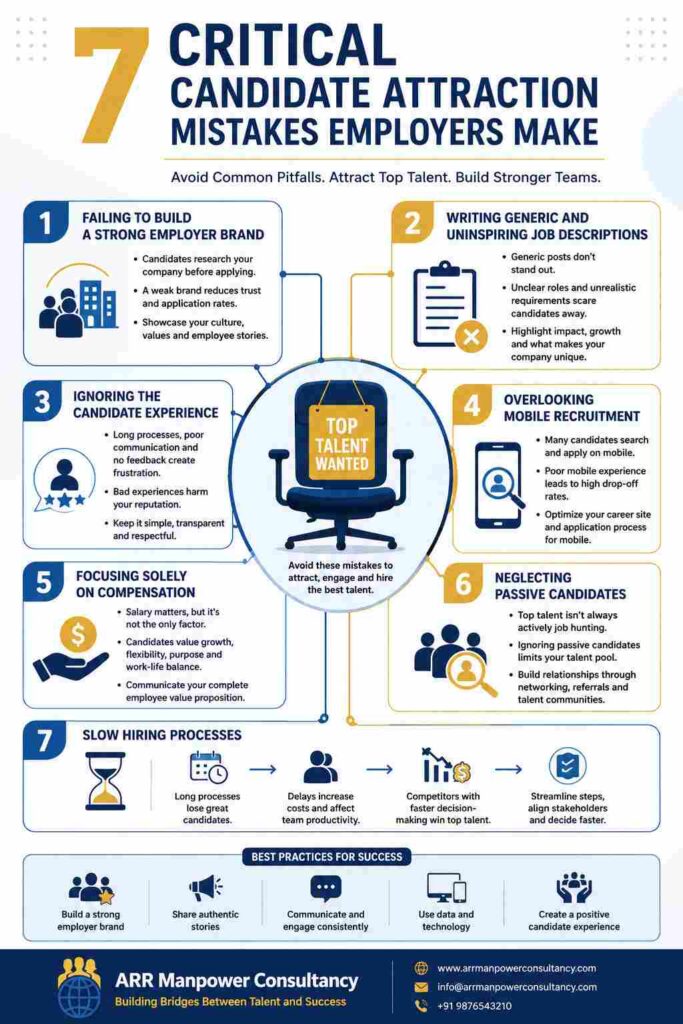
1. Failing to Build a Strong Employer Brand
One of the biggest mistakes organizations make is neglecting their employer brand. Candidates increasingly research companies before applying for positions. They evaluate company culture, employee reviews, leadership reputation, workplace flexibility, and career development opportunities.
When an organization lacks a clear and positive employer brand, talented professionals may hesitate to submit applications. Even highly competitive compensation packages may not overcome concerns about workplace culture or company reputation.
Why It Matters
A weak employer brand can:
- Reduce application rates
- Increase hiring costs
- Create trust issues among job seekers
- Make competitors more attractive
How to Fix It
Employers should actively showcase:
- Company values
- Employee success stories
- Workplace culture
- Diversity and inclusion initiatives
- Professional growth opportunities
Sharing authentic content through company websites, social media platforms, and employee testimonials can significantly strengthen employer appeal.
2. Writing Generic and Uninspiring Job Descriptions
Many job advertisements fail because they focus exclusively on responsibilities and qualifications while ignoring what candidates actually want to know.
Generic job descriptions often sound repetitive and fail to communicate the unique benefits of joining the organization. Job seekers are not only evaluating whether they qualify for a role; they are also assessing whether the company aligns with their goals and values.
Common Problems
Many job postings:
- Use excessive corporate jargon
- Include unrealistic requirements
- Lack personality
- Fail to explain career growth opportunities
- Provide little information about company culture
How to Fix It
Create engaging job descriptions that:
- Clearly explain the role
- Highlight organizational culture
- Describe advancement opportunities
- Communicate benefits effectively
- Use clear and conversational language
Candidates are more likely to apply when they understand how the position contributes to their professional development.
3. Ignoring the Candidate Experience
The candidate experience plays a major role in attracting and retaining top talent. Unfortunately, many organizations overlook how applicants perceive the hiring process.
A complicated application system, poor communication, and lengthy delays can frustrate candidates and encourage them to pursue opportunities elsewhere.
Warning Signs
Negative candidate experiences often involve:
- Long application forms
- Lack of communication
- Delayed interview scheduling
- Unclear hiring timelines
- No feedback after interviews
Business Impact
Poor candidate experiences can damage an organization’s reputation. Candidates frequently share their experiences through social media, review platforms, and professional networks.
How to Fix It
Employers should:
- Simplify application procedures
- Maintain regular communication
- Provide transparent timelines
- Respect candidate time
- Offer constructive feedback when possible
Creating a positive experience improves the likelihood that qualified professionals will remain engaged throughout the recruitment process.
4. Overlooking Mobile Recruitment
Modern job seekers increasingly use smartphones to search and apply for jobs. Organizations that fail to optimize recruitment processes for mobile devices risk losing a significant portion of potential applicants.
Many company career pages still suffer from poor mobile functionality, including slow loading times, difficult navigation, and lengthy application requirements.
Consequences
Mobile recruitment issues can lead to:
- High application abandonment rates
- Reduced candidate engagement
- Lower conversion rates
- Missed opportunities to attract younger professionals
How to Fix It
Employers should ensure:
- Mobile-friendly career websites
- Responsive application forms
- Fast page loading speeds
- Simplified document uploads
- Easy navigation
A seamless mobile experience makes it easier for candidates to complete applications and engage with recruitment content.
5. Focusing Solely on Compensation
Competitive salaries remain important, but modern candidates consider many additional factors when evaluating employment opportunities.
Organizations that emphasize compensation alone may fail to attract individuals seeking long-term career satisfaction and professional growth.
What Candidates Value Today
Many professionals prioritize:
- Flexible work arrangements
- Career advancement
- Learning opportunities
- Work-life balance
- Organizational culture
- Meaningful work
- Leadership quality
Why This Mistake Occurs
Some employers assume salary is the primary motivator for all candidates. While compensation remains significant, it is rarely the sole factor influencing employment decisions.
How to Fix It
Organizations should communicate their complete employee value proposition, including:
- Training programs
- Career progression paths
- Wellness initiatives
- Flexible scheduling
- Recognition programs
- Workplace culture
A well-rounded employment offering often attracts higher-quality candidates than compensation-focused messaging alone.
6. Neglecting Passive Candidates
Many recruitment strategies focus exclusively on active job seekers. However, a substantial portion of top-performing professionals are passive candidates who are not actively searching for new positions.
These individuals may be open to opportunities but require proactive engagement from employers.
The Risk
By ignoring passive talent, organizations limit access to:
- Experienced professionals
- Industry specialists
- High performers
- Leadership candidates
Effective Strategies
Employers can engage passive candidates through:
- Professional networking platforms
- Industry events
- Employee referrals
- Talent communities
- Personalized outreach campaigns
Building long-term relationships with professionals creates a stronger talent pipeline and reduces future hiring challenges.
7. Slow Hiring Processes
One of the most damaging recruitment mistakes is maintaining an excessively slow hiring process.
Top candidates are often evaluating multiple opportunities simultaneously. Lengthy decision-making processes can result in losing qualified professionals to faster-moving competitors.
Common Causes
Slow hiring often results from:
- Too many interview stages
- Delayed internal approvals
- Poor coordination between departments
- Unclear decision-making authority
- Inefficient recruitment workflows
Consequences
Extended hiring timelines can:
- Increase vacancy costs
- Reduce candidate interest
- Damage employer reputation
- Increase offer rejection rates
How to Fix It
Organizations should streamline recruitment by:
- Defining hiring timelines
- Limiting unnecessary interview rounds
- Improving communication between stakeholders
- Using recruitment technology effectively
- Making decisions promptly
Speed and efficiency often provide a competitive advantage in talent acquisition.
Additional Strategies for Improving Candidate Attraction
Avoiding the seven mistakes discussed above is an important first step. However, organizations can further strengthen recruitment performance by implementing additional best practices.
Invest in Employee Advocacy
Employees are often the most credible ambassadors for an organization. Encouraging team members to share positive workplace experiences can significantly enhance employer reputation.
Leverage Data Analytics
Recruitment analytics help organizations identify:
- Application trends
- Candidate drop-off points
- Source effectiveness
- Hiring bottlenecks
Data-driven insights enable continuous improvement in attraction strategies.
Prioritize Diversity and Inclusion
Candidates increasingly evaluate employers based on diversity and inclusion efforts. Demonstrating a commitment to equitable hiring practices can expand talent pools and strengthen organizational culture.
Create Talent Communities
Building relationships with prospective candidates before positions become available allows employers to maintain ongoing engagement and improve future hiring outcomes.
Use Authentic Storytelling
Authentic stories about employee experiences, company achievements, and workplace culture help candidates connect emotionally with an organization.
The Long-Term Cost of Candidate Attraction Mistakes
Recruitment mistakes extend beyond unfilled vacancies. They can create significant long-term consequences for organizational performance.
Potential impacts include:
- Reduced workforce quality
- Higher turnover rates
- Increased recruitment expenses
- Lower productivity
- Weakened employer reputation
- Lost business opportunities
Organizations that consistently struggle to attract qualified professionals may face ongoing talent shortages that hinder growth and innovation.
By addressing common recruitment challenges, employers can create sustainable hiring advantages and strengthen their position in the talent market.
Conclusion
Attracting exceptional talent requires more than posting vacancies and waiting for applications. Modern candidates carefully evaluate employers, recruitment experiences, workplace culture, and career opportunities before making employment decisions.
The seven critical mistakes discussed in this article—weak employer branding, uninspiring job descriptions, poor candidate experiences, lack of mobile optimization, excessive focus on compensation, neglecting passive candidates, and slow hiring processes—can significantly limit recruitment success.
Organizations that proactively address these challenges can improve candidate engagement, strengthen their employer reputation, and build stronger talent pipelines. By focusing on transparency, efficiency, authenticity, and candidate-centered recruitment practices, employers position themselves to attract and retain high-quality professionals in an increasingly competitive labor market.
As workforce expectations continue to evolve, businesses that prioritize effective candidate attraction strategies will be better equipped to secure the talent necessary for long-term success, innovation, and sustainable growth.
Furthermore, organizations should recognize that candidate attraction is not a one-time recruitment activity but an ongoing strategic function. Consistently monitoring market trends, candidate expectations, and emerging hiring technologies helps employers remain competitive in a rapidly changing talent landscape.
Regularly reviewing recruitment processes, gathering candidate feedback, and refining employer branding efforts can reveal valuable opportunities for improvement. Employers that invest in building genuine relationships with prospective talent often create stronger talent pipelines and improve hiring outcomes over time.
A proactive approach also enables businesses to respond more effectively to workforce shortages and changing industry demands. Ultimately, companies that prioritize candidate-focused recruitment practices are more likely to attract skilled professionals who align with organizational goals and culture.
This long-term commitment to excellence in hiring can contribute significantly to business resilience, employee satisfaction, stronger retention rates, and continued organizational growth.
https://www.shrm.org/in/topics-tools/news/building-an-employer-brand-that-attracts-talent–here-s-how