Introduction
In today’s rapidly evolving exclusive businesses environment, recruitment has become more than simply filling vacancies. Organizations are competing for skilled professionals, adapting to digital hiring methods, and searching for ways to improve workforce retention. Companies that fail to modernize their hiring approach often struggle with productivity gaps, employee turnover, and delayed growth.
This is where ARR Manpower Consultancy has built a strong reputation by helping businesses connect with qualified talent while streamlining the recruitment process. Through years of industry experience, the consultancy has identified practical strategies that help employers attract the right candidates and maintain long-term workforce stability.
Whether you are a startup founder, HR manager, or business owner, understanding these recruitment insights can help improve hiring outcomes and create a stronger organization. Below are ten important lessons businesses can learn from modern staffing practices.
https://arrmanpowerconsultancy.com/
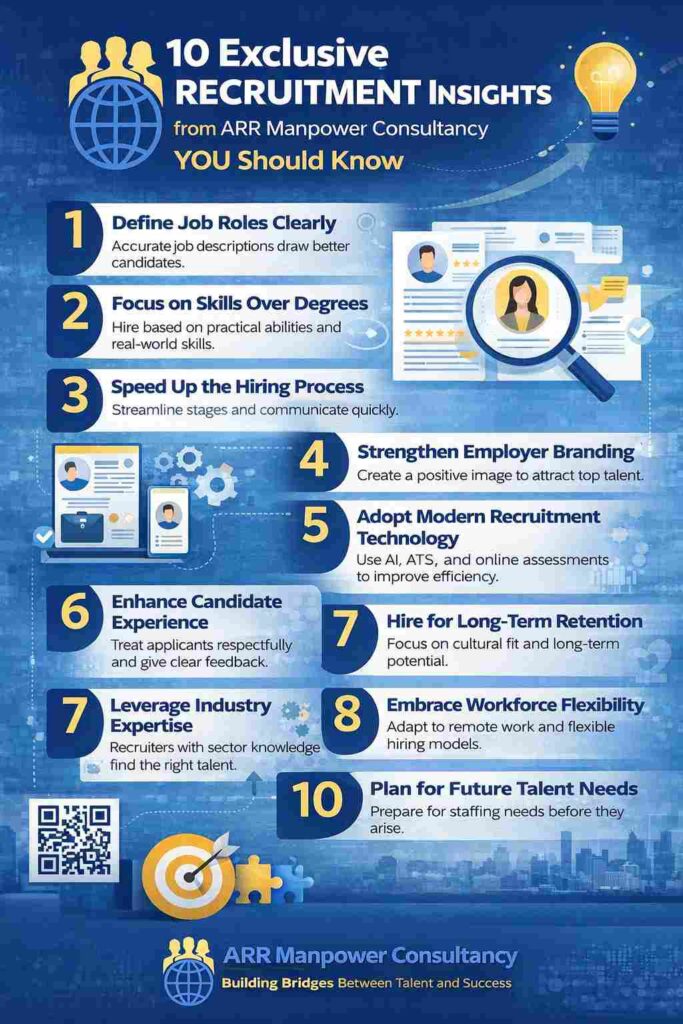
1. Understanding Exclusive Job Roles Before Hiring Improves Results
One of the most common exclusive mistakes organizations make is starting recruitment without clearly defining the role. Many businesses focus only on educational qualifications while ignoring practical skills, communication ability, and adaptability.
Successful businesses recruitment begins with understanding the exact responsibilities of a position. Companies that create detailed job descriptions often receive applications from more relevant candidates. This saves time during screening and increases the chances of hiring someone who fits the company culture.
A well-defined role should include:
- Core responsibilities
- Required technical skills
- Preferred experience level
- Communication expectations
- Growth opportunities
Clear expectations also help candidates decide whether the position aligns with their career goals.
2. Skill-Based Hiring Is Replacing Traditional Recruitment
Modern employers are increasingly focusing on practical abilities instead of relying only on academic credentials. While degrees remain important in many industries, businesses now value candidates who can demonstrate real-world problem-solving skills.
For example, a software company may prioritize coding ability and project experience over university rankings. Similarly, customer service organizations often look for communication skills, adaptability, and emotional intelligence.
Skill-based recruitment benefits businesses because it:
- Expands the talent pool
- Reduces hiring bias
- Improves employee performance
- Encourages diversity in the workplace
Organizations that embrace this approach are often more successful in building innovative teams.
3. Faster Hiring Processes Attract Better Talent
In competitive industries, top candidates rarely stay available for long periods. Businesses that take several weeks to finalize interviews often lose qualified professionals to competitors.
Efficient hiring does not mean rushing decisions. Instead, it involves streamlining each stage of recruitment. A faster process creates a positive candidate experience and reflects professionalism.
Companies can improve hiring speed by:
- Using structured interview schedules
- Automating resume screening
- Conducting virtual interviews
- Reducing unnecessary approval stages
Quick communication also plays a major role. Candidates appreciate timely updates regarding interviews, assessments, and final decisions.
4. Employer Branding Influences Recruitment Success
Today’s job seekers research companies before applying. They explore online reviews, social media pages, workplace culture, and employee feedback. A strong employer brand can attract talented professionals even in highly competitive markets.
Businesses with positive reputations are more likely to receive quality applications. Candidates often prefer organizations that offer growth opportunities, supportive management, and healthy work environments.
Employer branding can be improved by:
- Sharing employee success stories
- Highlighting workplace culture online
- Offering transparent communication
- Promoting career development programs
- Maintaining professional social media profiles
A company’s reputation directly affects its ability to attract skilled individuals.
5. Technology Has Changed the Recruitment Industry
Digital transformation has significantly impacted hiring practices. Recruitment agencies and HR departments now rely on advanced tools to identify suitable candidates more efficiently.
Applicant Tracking Systems (ATS), artificial intelligence, and online assessments help recruiters manage large numbers of applications while reducing manual work. Technology also improves communication between recruiters and candidates.
Popular recruitment technologies include:
- AI-based resume screening
- Video interview platforms
- Online skill assessment tools
- Recruitment analytics software
- Automated communication systems
Businesses that adopt modern recruitment technology often experience improved efficiency and reduced hiring costs.
6. Candidate Experience Matters More Than Ever
A negative hiring experience can damage a company’s reputation. Candidates who feel ignored or disrespected may share negative feedback online, affecting future recruitment efforts.
Organizations should treat applicants professionally at every stage of the process. Even candidates who are not selected should receive respectful communication and constructive feedback whenever possible.
Improving candidate experience involves:
- Responding to applications promptly
- Providing clear interview instructions
- Respecting interview schedules
- Offering professional communication
- Giving transparent updates
Positive experiences encourage candidates to speak favorably about the company, regardless of hiring outcomes.
7. Employee Retention Starts During Recruitment
Recruitment success should not be measured only by how quickly positions are filled. Long-term retention is equally important. Hiring candidates who align with organizational culture often leads to stronger employee satisfaction and reduced turnover.
Many companies experience retention problems because they prioritize speed over compatibility. During interviews, employers should evaluate whether candidates share the company’s values, work style, and long-term goals.
Retention-focused hiring strategies include:
- Discussing career expectations honestly
- Explaining workplace culture clearly
- Offering realistic job previews
- Identifying long-term growth opportunities
When employees feel aligned with company goals, they are more likely to remain committed to the organization.
8. Industry Knowledge Enhances Recruitment Quality
Different industries require different hiring strategies. Recruitment methods that work in the IT sector may not produce the same results in manufacturing, healthcare, logistics, or finance.
Specialized recruitment knowledge helps consultants identify candidates with the right technical expertise and professional mindset. Understanding industry trends also improves the ability to predict workforce demands.
For example:
- Healthcare recruitment requires compliance awareness
- IT hiring focuses on technical adaptability
- Manufacturing recruitment values operational efficiency
- Sales recruitment emphasizes communication skills
Industry-specific expertise allows recruitment professionals to provide more accurate hiring solutions.
9. Workforce Flexibility Is Becoming Essential
The modern workforce is changing rapidly. Many businesses now rely on remote employees, hybrid teams, freelancers, and contract-based professionals to maintain operational flexibility.
Organizations that adapt to flexible workforce models often gain advantages such as:
- Reduced operational costs
- Access to wider talent pools
- Improved employee satisfaction
- Faster project execution
Recruitment strategies must evolve to support these new employment structures. Flexible hiring models also help businesses respond quickly to market changes and economic uncertainty.
Remote hiring, in particular, has expanded opportunities for both employers and job seekers across different regions.
10. Long-Term Recruitment Planning Creates Stability
Many businesses recruit only when vacancies appear. However, reactive hiring often leads to rushed decisions and inconsistent workforce quality.
Strategic workforce planning allows organizations to prepare for future staffing needs before problems arise. Companies that forecast hiring requirements can maintain smoother operations and reduce sudden talent shortages.
Long-term recruitment planning includes:
- Monitoring workforce trends
- Building candidate databases
- Creating internship programs
- Maintaining relationships with skilled professionals
- Identifying future leadership potential
Proactive recruitment strategies support sustainable business growth and improve operational stability.
The Future of Recruitment
The recruitment industry will continue evolving as technology, employee expectations, and workplace structures change. Businesses that remain adaptable will have a significant advantage in attracting skilled professionals.
Several trends are expected to shape future hiring practices:
Increased Use of Artificial Intelligence
AI tools will continue improving resume screening, interview scheduling, and candidate analysis. While human judgment remains essential, automation can simplify repetitive tasks.
Greater Focus on Soft Skills
Communication, creativity, teamwork, and emotional intelligence are becoming increasingly valuable across industries. Employers are recognizing that technical skills alone are not enough.
Expansion of Remote Work
Remote employment opportunities are likely to remain popular as companies seek flexibility and access to global talent pools.
Stronger Emphasis on Diversity and Inclusion
Businesses are investing more in inclusive hiring practices to build balanced teams and improve workplace innovation.
Continuous Learning and Upskilling
Employers are prioritizing candidates who demonstrate adaptability and willingness to learn new skills.
Why Recruitment Partnerships Matter
Many organizations struggle with recruitment because hiring requires time, expertise, and access to qualified professionals. Partnering with experienced staffing consultants can help businesses simplify the process while improving hiring quality.
Professional recruitment support offers several advantages:
- Access to broader talent networks
- Faster hiring processes
- Reduced recruitment workload
- Improved candidate screening
- Industry-specific expertise
For growing businesses, recruitment partnerships can provide the flexibility needed to scale operations efficiently.
Final Thoughts
Partnering with ARR ensures smarter hiring decisions, stronger teams, sustainable growth, and long-term success ahead.
Gain a competitive advantage, reduce hiring risks, improve retention, and accelerate business performance.
Recruitment is no longer just an administrative task. It has become a strategic function that directly influences business performance, employee satisfaction, and long-term growth.
The insights shared above demonstrate how modern staffing strategies can help organizations improve hiring outcomes while adapting to changing workforce expectations. From skill-based recruitment and employer branding to technology adoption and workforce planning, businesses must continuously evolve to remain competitive.
Companies that invest in effective hiring practices are more likely to build productive teams, maintain workforce stability, and achieve sustainable success. By understanding current recruitment trends and focusing on candidate experience, organizations can strengthen their position in today’s demanding business landscape.
As industries continue changing, businesses that prioritize smart recruitment strategies will be better prepared for future opportunities and challenges.