Introduction
The recruitment industry has become one of the most competitive business sectors in the modern economy. Companies are continuously searching for reliable staffing partners that can provide skilled professionals, improve hiring efficiency, and support long-term workforce planning. In this evolving environment, achieving ARR manpower consultancy stability requires more than simply filling job vacancies. It demands strategic planning, operational consistency, strong client relationships, and the ability to adapt to changing market conditions.
Many consultancy firms experience rapid growth during favorable market periods but struggle to maintain momentum during economic slowdowns or shifts in hiring trends. Stability in manpower consulting means creating a sustainable business model that performs consistently regardless of external challenges.
Consultancies that focus on long-term growth strategies are more likely to retain clients, maintain healthy revenue streams, and strengthen their market position. Below are sixteen smart techniques that can help staffing firms create a stable and successful consultancy business.
https://arrmanpowerconsultancy.com/
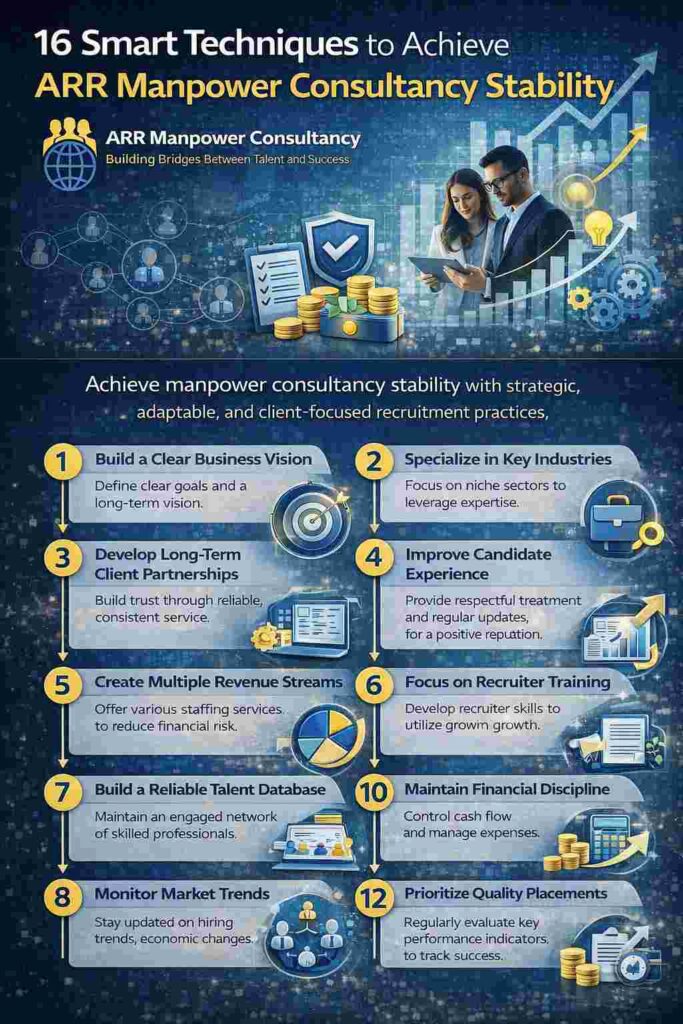
1. Build a Clear Business Vision
Every successful consultancy begins with a strong vision. A clear direction helps define goals, services, target industries, and long-term objectives. Without a strategic vision, recruitment firms often struggle with inconsistent growth and operational confusion.
A defined mission also helps employees understand company priorities and work toward shared goals. Whether the focus is executive hiring, contract staffing, or industry-specific recruitment, clarity creates alignment across the organization.
Businesses with a strong vision are more likely to attract clients who value professionalism and long-term partnerships.
2. Specialize in Key Industries
Industry specialization is one of the most effective ways to create stability in recruitment services. Instead of trying to serve every sector, consultancies can focus on industries where they possess deep knowledge and experience.
Specialized recruiters understand industry terminology, required skills, salary expectations, and hiring challenges. This expertise improves placement quality and increases client trust.
For example, staffing requirements in healthcare differ significantly from those in engineering or information technology. Firms that understand these differences can provide better hiring solutions and gain a competitive advantage.
Niche specialization also reduces competition because businesses prefer consultants with proven expertise in their field.
3. Develop Long-Term Client Partnerships
Client retention is essential for sustainable growth. Consultancy firms that focus only on acquiring new clients may experience inconsistent revenue patterns. Building long-term partnerships creates recurring business opportunities and financial consistency.
Strong client relationships are based on communication, reliability, and trust. Recruiters should understand the culture, hiring goals, and workforce challenges of each organization they serve.
Maintaining regular communication with clients helps identify future hiring needs and strengthens collaboration. Long-term partnerships also increase referrals, which are highly valuable in the staffing industry.
4. Improve Candidate Experience
Candidates are just as important as clients in the recruitment process. A poor experience can damage the reputation of a consultancy and reduce future engagement.
Recruitment firms should provide clear communication, timely updates, and constructive feedback throughout the hiring process. Respectful treatment encourages candidates to remain connected with the consultancy for future opportunities.
A positive candidate experience also improves employer branding because job seekers often share their experiences online or within professional networks.
Satisfied candidates are more likely to recommend the consultancy to others, helping expand the talent pipeline naturally.
5. Invest in Recruitment Technology
Technology plays a critical role in modern staffing operations. Manual recruitment processes can slow down hiring and reduce efficiency. Advanced recruitment tools help streamline operations and improve productivity.
Important technologies for consultancy firms include:
- Applicant tracking systems
- AI-powered sourcing platforms
- CRM software
- Video interview tools
- Recruitment analytics dashboards
Technology allows recruiters to manage candidate databases effectively, automate repetitive tasks, and track hiring performance. It also improves communication between recruiters, clients, and candidates.
Data analytics provides valuable insights into hiring trends, placement success rates, and recruiter performance. These insights support smarter decision-making and long-term planning.
6. Create Multiple Revenue Streams
Depending on a single service can create financial risk. Stable consultancy businesses diversify their services to maintain consistent income.
Additional services may include:
- Contract staffing
- Executive search
- Payroll management
- HR consulting
- Workforce planning
- Temporary staffing
Diversification helps firms remain profitable even when one service experiences lower demand. It also creates cross-selling opportunities with existing clients.
A consultancy offering multiple services becomes more valuable to businesses seeking complete workforce solutions.
7. Focus on Recruiter Training
Recruiters are the foundation of every staffing business. Skilled recruiters improve placement quality, client satisfaction, and operational efficiency.
Continuous training ensures recruiters stay updated on market trends, sourcing methods, communication techniques, and hiring technologies.
Training should cover:
- Candidate screening
- Negotiation skills
- Industry knowledge
- Relationship management
- Compliance awareness
- Technology usage
Well-trained recruiters provide better service and contribute significantly to organizational stability.
8. Strengthen Employer Branding
A strong employer brand increases credibility and attracts both clients and candidates. Companies prefer to work with recruitment agencies that demonstrate professionalism and expertise.
Branding efforts should include:
Professional Website
A modern website with clear service descriptions, testimonials, and informative content builds trust among visitors.
Thought Leadership Content
Publishing blogs, hiring insights, and industry updates positions the consultancy as an expert in recruitment.
Social Media Presence
Consistent activity on professional platforms improves visibility and audience engagement.
Reputation Management
Positive reviews and testimonials strengthen public perception and increase credibility.
Strong branding supports long-term business growth and improves market recognition.
9. Build a Reliable Talent Database
A strong candidate network allows consultancies to respond quickly to hiring requests. Maintaining an updated database of skilled professionals improves efficiency and reduces sourcing time.
Recruiters should regularly engage with candidates even when no immediate vacancies are available. Maintaining relationships with passive candidates creates future opportunities.
Talent databases should include:
- Skills and qualifications
- Industry experience
- Career preferences
- Salary expectations
- Availability status
Well-organized information enables recruiters to identify suitable candidates quickly and improve placement speed.
10. Monitor Market Trends
The recruitment industry changes rapidly due to technological developments, economic conditions, and workforce expectations. Stable consultancy firms continuously monitor market trends and adjust strategies accordingly.
Understanding hiring trends helps firms anticipate demand and prepare for future challenges. For example, remote work and hybrid hiring models have significantly changed recruitment strategies in recent years.
Consultancies that stay informed are better positioned to guide clients and maintain relevance in competitive markets.
11. Maintain Financial Discipline
Financial stability is critical for long-term business success. Recruitment firms should manage cash flow carefully and avoid unnecessary operational expenses.
Important financial practices include:
- Maintaining emergency reserves
- Monitoring revenue and expenses
- Investing strategically
- Reducing delayed payments
- Tracking profitability by service line
Strong financial management helps consultancies survive economic uncertainty and continue operations during challenging periods.
Budget planning also supports sustainable expansion without creating unnecessary risk.
12. Prioritize Quality Placements
Fast placements may increase short-term revenue, but poor hiring decisions can damage client relationships. Stability comes from delivering candidates who perform well and remain with the organization.
Quality recruitment requires:
- Detailed candidate assessments
- Skill verification
- Reference checks
- Cultural fit evaluation
- Honest communication
Clients value staffing partners who prioritize long-term success over quick placements. High-quality recruitment improves retention rates and strengthens trust.
Satisfied clients are more likely to continue partnerships and recommend the consultancy to others.
13. Encourage Team Collaboration
Recruitment is often more effective when teams work collaboratively rather than individually. Sharing knowledge, candidate leads, and market insights improves efficiency and strengthens organizational culture.
Collaboration also reduces dependency on individual recruiters. If one employee leaves, the consultancy can continue operations smoothly because information is shared across the team.
A supportive workplace environment increases employee satisfaction and improves retention.
Team collaboration contributes significantly to operational consistency and long-term stability.
14. Adapt to Workforce Expectations
Employee priorities have changed significantly over the last decade. Modern professionals often value flexibility, work-life balance, career development, and organizational culture alongside salary.
Consultancies that understand these expectations can better match candidates with employers. Recruiters should guide clients on workforce trends and help create attractive job opportunities.
Understanding generational workforce differences improves placement success and candidate satisfaction.
Adaptability is essential in maintaining relevance within the recruitment industry.
15. Measure Performance Consistently
Stable businesses rely on performance data to make informed decisions. Recruitment firms should track key performance indicators regularly to evaluate success and identify improvement areas.
Useful recruitment metrics include:
- Time-to-hire
- Placement success rate
- Candidate retention rate
- Client satisfaction
- Recruiter productivity
- Revenue growth
Performance tracking helps management identify operational strengths and weaknesses. It also supports strategic planning and process improvement.
Data-driven decisions create better outcomes and improve long-term business sustainability.
16. Focus on Reputation and Trust
Reputation is one of the most valuable assets in the recruitment industry. Clients and candidates prefer consultancies known for honesty, reliability, and professionalism.
Trust is built through consistent service quality, transparent communication, and ethical recruitment practices.
Consultancies should respond professionally to feedback and address concerns promptly. Maintaining integrity during difficult situations strengthens credibility and demonstrates commitment to excellence.
Positive reputation leads to:
- Increased referrals
- Better client retention
- Stronger candidate engagement
- Greater market recognition
Trust-based relationships create long-term stability and sustainable business growth.
The Importance of Consistency in Recruitment
Consistency is often overlooked in the staffing industry. Some firms focus heavily on aggressive expansion without building stable operational systems. Sustainable growth requires balance between ambition and reliability.
Consistent service quality creates confidence among clients and candidates. Businesses prefer staffing partners who deliver dependable results over time rather than occasional success.
Operational consistency also improves employee morale because teams work within structured processes and clear expectations.
Building a stable consultancy is not about short-term achievements. It involves creating systems that continue performing effectively as the business grows.
Why Adaptability Determines Long-Term Success
Economic changes, technological innovation, and shifting workforce preferences continue transforming recruitment practices. Consultancy firms that resist change often struggle to remain competitive.
Adaptable businesses embrace innovation and continuously improve their strategies. Whether adopting AI tools, expanding into new industries, or offering remote hiring solutions, flexibility supports long-term survival.
Adaptability also helps firms identify new opportunities before competitors. Businesses that respond quickly to market demands are more likely to achieve sustainable growth.
Continuous learning and improvement are essential in the modern staffing landscape.
Conclusion
Achieving ARR manpower consultancy stability requires strategic thinking, operational discipline, and a commitment to long-term growth. Successful consultancy firms focus on relationship building, recruiter development, technology adoption, financial management, and quality service delivery.
The staffing industry will continue evolving, creating both opportunities and challenges. Firms that remain adaptable, trustworthy, and client-focused are more likely to maintain stability in changing market conditions.
Long-term success is not achieved through rapid expansion alone. It is built through consistency, professionalism, and the ability to provide meaningful workforce solutions over time.
By implementing these sixteen smart techniques, consultancy businesses can strengthen their operations, improve client satisfaction, and create a stable foundation for future growth.
http://Society for Human Resource Management (SHRM) – Talent Acquisition Resources