Introduction
The workplace continues to evolve at an unprecedented pace. Organizations are embracing hybrid work models, adopting advanced technologies, and redefining employee expectations. In this changing environment, creating a positive and motivating workplace culture has become more important than ever.
Employees today seek more than just competitive salaries. They want meaningful work, professional growth, flexibility, recognition, and a sense of belonging. Companies that successfully address these expectations often experience higher productivity, stronger retention rates, improved collaboration, and better overall business performance.
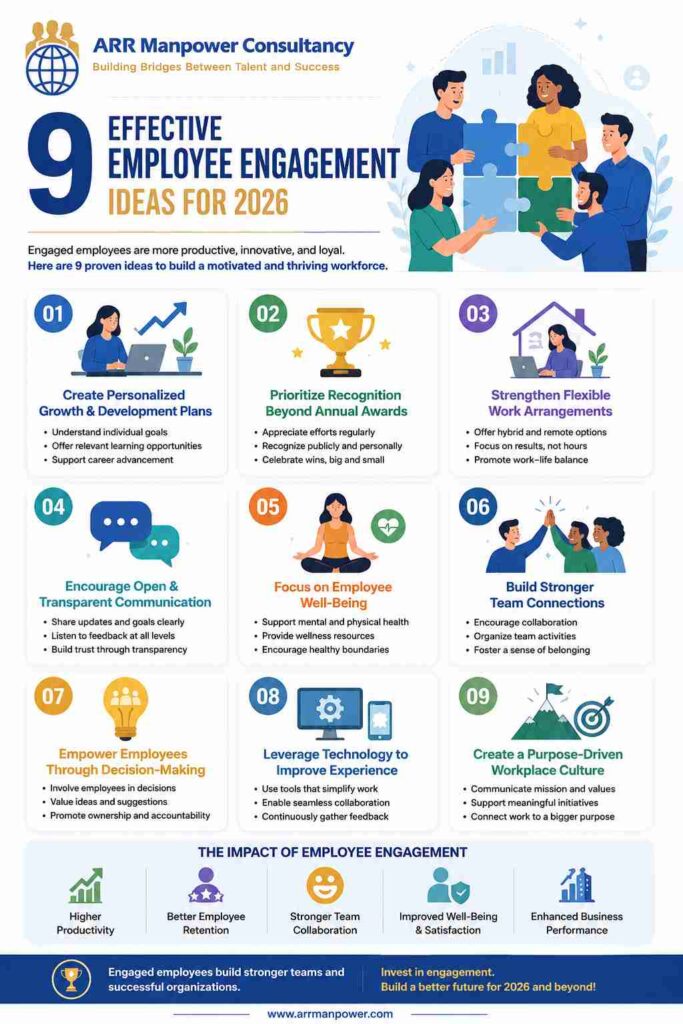
As businesses prepare for the future, leaders must adopt innovative approaches that foster motivation and strengthen workplace relationships. The following nine strategies can help organizations build a more connected, productive, and satisfied workforce in 2026.
https://arrmanpowerconsultancy.com/
1. Create Personalized Growth and Development Plans
Career advancement remains one of the strongest factors influencing workplace satisfaction. Employees want to know that their organization is invested in their long-term success.
Rather than offering generic training programs, companies should create personalized development plans based on individual goals, strengths, and aspirations. Managers can work closely with team members to identify desired skills, future career paths, and learning opportunities.
These plans may include:
- Professional certifications
- Online learning courses
- Leadership development programs
- Industry conferences
- Mentorship opportunities
- Cross-functional projects
When employees see a clear path for growth, they are more likely to remain committed to their organization. Investing in continuous learning also helps businesses build a skilled workforce capable of adapting to industry changes.
2. Prioritize Recognition Beyond Annual Awards
Recognition should not be limited to yearly performance reviews or employee-of-the-month programs. Frequent and meaningful appreciation creates a stronger emotional connection between employees and their workplace.
Organizations can implement recognition initiatives such as:
- Peer-to-peer appreciation programs
- Digital recognition platforms
- Team celebration events
- Personalized thank-you messages
- Achievement spotlights during meetings
The most effective recognition is timely, specific, and authentic. Instead of simply saying “good job,” managers should explain how an employee’s contribution positively impacted a project, team, or customer.
A culture of appreciation helps employees feel valued and motivates them to maintain high performance levels.
3. Strengthen Flexible Work Arrangements
Flexibility is no longer viewed as a workplace perk; it has become an important expectation for many professionals. Employees increasingly value the ability to balance personal responsibilities with professional commitments.
Organizations can support flexibility through:
- Hybrid work models
- Remote work opportunities
- Flexible scheduling
- Compressed workweeks
- Results-oriented performance evaluations
The key is to focus on outcomes rather than hours spent at a desk. When employees are trusted to manage their schedules effectively, they often demonstrate greater accountability and productivity.
Businesses that embrace flexibility are also better positioned to attract top talent from diverse geographic locations and backgrounds.
4. Encourage Open and Transparent Communication
Effective communication is the foundation of a healthy workplace culture. Employees want to understand organizational goals, business priorities, and how their work contributes to overall success.
Leaders can improve transparency by:
- Holding regular town hall meetings
- Sharing business updates consistently
- Encouraging feedback at all levels
- Conducting pulse surveys
- Creating open forums for discussion
Communication should be a two-way process. Employees need opportunities to express concerns, share ideas, and provide constructive feedback.
When organizations actively listen and respond to employee input, trust increases significantly. A transparent environment helps reduce uncertainty and strengthens relationships between leadership and staff.
5. Focus on Employee Well-Being
Workplace well-being has become a major priority for modern organizations. Employees who feel physically, mentally, and emotionally supported are more likely to perform at their best.
Companies can promote well-being through:
- Mental health resources
- Employee assistance programs
- Wellness challenges
- Stress management workshops
- Fitness reimbursements
- Mindfulness initiatives
Additionally, managers should monitor workloads and encourage healthy work-life boundaries. Preventing burnout is just as important as improving productivity.
A workplace that genuinely supports employee well-being creates a positive atmosphere where individuals feel cared for and respected.
6. Build Stronger Team Connections
As hybrid and remote work continue to grow, maintaining strong interpersonal relationships can become challenging. Organizations must intentionally create opportunities for employees to connect and collaborate.
Team-building initiatives may include:
- Virtual coffee chats
- Cross-department projects
- In-person retreats
- Collaborative workshops
- Volunteer activities
- Social events
These interactions help employees develop stronger relationships beyond their daily responsibilities. Improved team cohesion often leads to better communication, increased trust, and enhanced collaboration.
Organizations that foster meaningful workplace relationships create an environment where employees feel connected to both their colleagues and the company’s mission.
7. Empower Employees Through Decision-Making
Employees are more engaged when they feel their opinions matter. Giving individuals greater ownership over their work can significantly improve motivation and job satisfaction.
Leaders can encourage participation by:
- Involving employees in strategic discussions
- Seeking input on process improvements
- Creating innovation committees
- Supporting employee-led initiatives
- Encouraging experimentation and creativity
Empowerment demonstrates trust and respect. It also helps organizations uncover valuable ideas from individuals who are closest to customers, operations, and day-to-day challenges.
When employees have opportunities to influence decisions, they develop a stronger sense of responsibility and commitment toward organizational success.
8. Leverage Technology to Improve Workplace Experience
Technology can play a significant role in creating a more efficient and engaging workplace. Modern digital tools help employees collaborate, communicate, learn, and perform their tasks more effectively.
Organizations should focus on technologies that simplify work rather than create additional complexity.
Examples include:
- Collaboration platforms
- Learning management systems
- Employee feedback tools
- Project management software
- AI-powered productivity assistants
- Internal communication platforms
Technology should enhance the employee experience by reducing administrative burdens and enabling individuals to focus on meaningful work.
Regularly gathering employee feedback about workplace tools can help organizations identify areas for improvement and ensure that technology investments deliver real value.
9. Create a Purpose-Driven Workplace Culture
Today’s workforce increasingly seeks purpose and meaning in their professional lives. Employees want to understand how their work contributes to broader organizational goals and societal impact.
Companies can create a stronger sense of purpose by:
- Clearly communicating mission and values
- Supporting community initiatives
- Promoting sustainability efforts
- Encouraging corporate social responsibility programs
- Highlighting customer success stories
Leaders should consistently connect daily tasks to larger organizational objectives. When employees understand the significance of their contributions, they often feel more motivated and fulfilled.
A purpose-driven culture strengthens emotional commitment and helps employees see themselves as part of something larger than their individual roles.
Measuring Success in 2026
Implementing engagement initiatives is only the first step. Organizations must also evaluate their effectiveness through meaningful metrics.
Useful indicators include:
- Employee satisfaction scores
- Retention rates
- Internal promotion rates
- Productivity measurements
- Absenteeism levels
- Employee referral rates
- Survey participation rates
Regular assessments allow organizations to identify what is working well and where improvements are needed.
Leaders should treat workplace culture as an ongoing process rather than a one-time project. Continuous improvement ensures that initiatives remain relevant as employee expectations evolve.
Common Mistakes to Avoid
While implementing workplace improvement strategies, organizations should avoid several common pitfalls.
Relying Solely on Financial Incentives
Compensation is important, but it is rarely the only factor influencing workplace satisfaction. Employees also value growth opportunities, recognition, flexibility, and purpose.
Ignoring Employee Feedback
Collecting feedback without taking action can damage trust. Employees expect leadership to respond meaningfully to their suggestions and concerns.
Applying One-Size-Fits-All Solutions
Different employees have different needs. Personalization often produces better results than standardized programs.
Focusing Only on Short-Term Results
Building a positive workplace culture requires consistent effort over time. Sustainable improvements rarely happen overnight.
Overlooking Manager Development
Managers play a critical role in shaping the employee experience. Investing in leadership training can significantly improve workplace outcomes.
The Future of Employee Engagement
As organizations move through 2026 and beyond, workplace expectations will continue to evolve. Emerging technologies, changing workforce demographics, and shifting employee priorities will influence how companies attract and retain talent.
Successful organizations will focus on creating environments where employees feel valued, supported, connected, and empowered. Rather than relying on traditional approaches, forward-thinking leaders will adopt flexible strategies that address the diverse needs of modern professionals.
The future workplace will be defined by trust, transparency, continuous learning, and meaningful relationships. Companies that embrace these principles will be better positioned to achieve long-term success.
Conclusion
Creating an engaging workplace in 2026 requires more than occasional team events or annual recognition programs. Organizations must take a holistic approach that addresses employee growth, flexibility, well-being, communication, purpose, and empowerment.
By implementing personalized development plans, strengthening recognition efforts, supporting flexible work arrangements, encouraging transparency, promoting wellness, fostering team connections, empowering decision-making, leveraging technology, and building a purpose-driven culture, businesses can create an environment where employees thrive.
Organizations that prioritize these strategies are more likely to attract top talent, improve retention, enhance productivity, and build a resilient workforce prepared for future challenges. In an increasingly competitive market, investing in employee engagement is not just beneficial—it is essential for sustainable growth and long-term organizational success.
As workplace expectations continue to evolve, organizations that prioritize employee engagement will gain a significant competitive advantage. By creating meaningful experiences and fostering a supportive culture, businesses can build resilient teams, drive innovation, strengthen loyalty, and achieve sustainable growth in the years ahead.