Introduction
Employee turnover has become one of the most significant challenges organizations face today. Businesses invest considerable time, money, and effort in recruiting, training, and developing talent. However, retaining skilled professionals remains a complex task. When employees decide to leave, organizations often experience disruptions in productivity, increased hiring expenses, and a decline in team morale.
Understanding why people choose to move on from their roles is essential for any employer seeking long-term success. While compensation plays a role in employment decisions, research and workplace trends show that several other factors influence an employee’s choice to stay or leave. Recognizing these issues early can help organizations create a more engaging and supportive work environment.
Below are seven critical reasons employees leave their jobs and what organizations can do to address them.
https://arrmanpowerconsultancy.com/
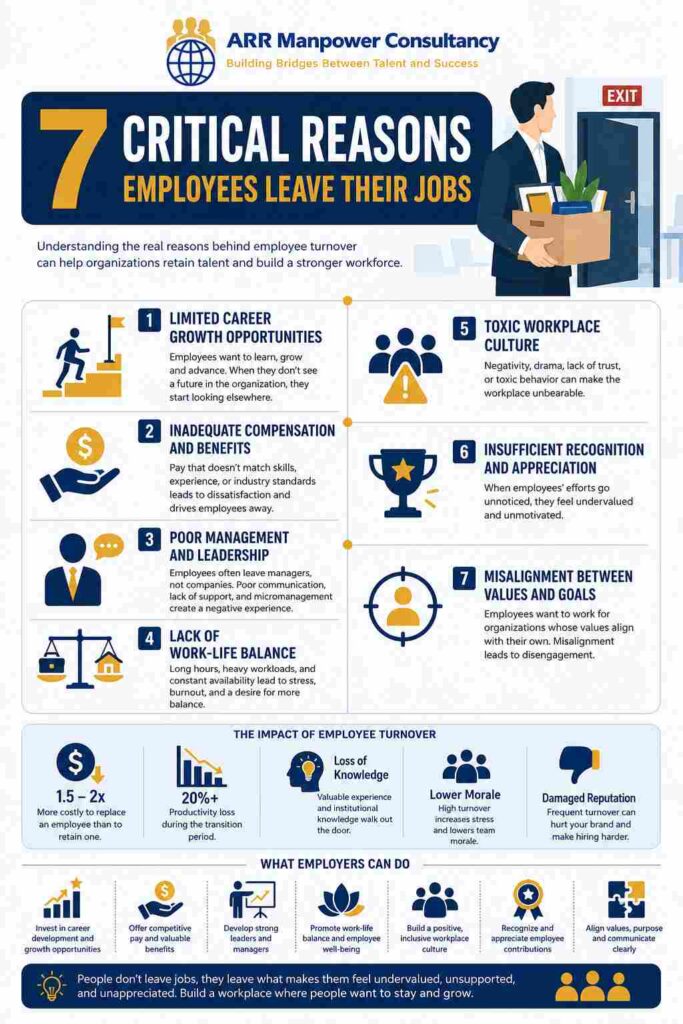
1. Limited Career Growth Opportunities
One of the most common reasons employees seek opportunities elsewhere is the lack of professional growth. Ambitious professionals want to advance their careers, learn new skills, and take on greater responsibilities. When they feel their development has stalled, they often begin exploring external opportunities.
Employees expect clear career pathways and opportunities to progress within an organization. If promotions are rare, development programs are unavailable, or leadership positions appear inaccessible, workers may conclude that their future lies elsewhere.
The absence of growth opportunities can be particularly frustrating for high-performing individuals who consistently deliver results. These employees often seek environments where their contributions are recognized and where advancement is achievable through effort and performance.
Organizations can improve retention by implementing structured career development plans, offering mentorship programs, providing training opportunities, and maintaining transparency regarding promotion criteria. When employees can envision a future within the company, they are more likely to remain engaged and committed.
2. Inadequate Compensation and Benefits
Compensation remains an important factor in employee satisfaction. While money is not always the primary reason people leave, inadequate pay can significantly influence their decision, especially when market rates increase or competitors offer more attractive packages.
Employees regularly compare their salaries, benefits, and incentives with industry standards. If they perceive a substantial gap between their compensation and their contributions, dissatisfaction may develop over time.
Benefits also play a crucial role. Healthcare coverage, retirement plans, performance bonuses, paid leave, wellness initiatives, and flexible benefits can strongly influence how employees perceive their overall employment package.
Organizations should conduct regular compensation reviews to ensure salaries remain competitive. Transparent communication regarding pay structures and performance-based rewards can also help build trust and reduce feelings of inequity.
A fair and competitive compensation strategy demonstrates that the organization values its workforce and recognizes employee contributions.
3. Poor Management and Leadership
Many employees do not leave companies; they leave managers. Leadership quality significantly impacts workplace satisfaction, productivity, and retention.
Poor management can manifest in various ways, including ineffective communication, lack of support, micromanagement, favoritism, inconsistent decision-making, and failure to recognize achievements. These behaviors can create frustration and diminish employee confidence in leadership.
Employees expect managers to provide guidance, feedback, and support. When leaders fail to establish trust or demonstrate empathy, workplace relationships often suffer. Over time, talented professionals may seek organizations with stronger leadership cultures.
Effective leaders create environments where employees feel valued and respected. They encourage collaboration, communicate clearly, and support professional development. Strong managers also address concerns promptly and foster a sense of belonging within their teams.
Investing in leadership training and management development programs can help organizations build stronger relationships between employees and supervisors, ultimately improving retention rates.
4. Lack of Work-Life Balance
The modern workforce increasingly prioritizes work-life balance. Employees seek careers that allow them to maintain their personal well-being while meeting professional responsibilities.
Excessive workloads, unrealistic deadlines, long working hours, and constant availability expectations can contribute to stress and burnout. When employees struggle to maintain balance, their physical and mental health may be negatively affected.
The rise of remote and hybrid work arrangements has also shifted employee expectations. Many professionals value flexibility and autonomy in how they manage their schedules. Organizations that fail to adapt to these changing expectations may find it difficult to retain talent.
A healthy work-life balance contributes to improved productivity, job satisfaction, and overall well-being. Employers can support balance by promoting flexible work arrangements, encouraging reasonable workloads, respecting personal time, and fostering a culture that values employee wellness.
When employees feel that their organization supports their personal and professional lives equally, they are more likely to remain loyal and engaged.
5. Toxic Workplace Culture
Workplace culture plays a critical role in employee retention. A toxic environment can drive even highly compensated employees to seek opportunities elsewhere.
Toxic cultures may include workplace bullying, discrimination, poor communication, excessive competition, lack of accountability, favoritism, and persistent negativity. Such environments create stress and undermine trust among team members.
Employees want to work in organizations where they feel respected, included, and supported. A positive culture promotes collaboration, transparency, and mutual respect. It also encourages innovation and healthy teamwork.
When workplace culture deteriorates, employee engagement often declines. Team members may become disengaged, productivity can suffer, and turnover rates may increase significantly.
Organizations can strengthen culture by establishing clear values, promoting diversity and inclusion, encouraging open communication, and addressing inappropriate behavior promptly. Leadership commitment is essential in creating and maintaining a healthy workplace environment.
A positive culture not only improves retention but also enhances organizational reputation and employee performance.
6. Insufficient Recognition and Appreciation
Employees want to know that their efforts matter. Recognition is a fundamental human need, and its absence can lead to frustration and disengagement.
Many employees invest significant time and energy into achieving organizational goals. When their contributions go unnoticed, they may feel undervalued and disconnected from the company’s mission.
Recognition does not always need to be financial. Simple gestures such as verbal appreciation, public acknowledgment, professional development opportunities, awards, or personalized feedback can have a meaningful impact.
Consistent recognition reinforces positive behaviors and motivates employees to continue performing at a high level. It also strengthens emotional connections between employees and the organization.
Managers should make recognition a regular part of their leadership approach. Celebrating achievements, acknowledging milestones, and expressing gratitude can significantly improve morale and job satisfaction.
Employees who feel appreciated are more likely to remain committed and contribute positively to organizational success.
7. Misalignment Between Employee Values and Organizational Goals
Today’s workforce increasingly seeks purpose and meaning in their careers. Employees want to work for organizations whose values align with their personal beliefs and professional aspirations.
When there is a disconnect between an employee’s values and the organization’s actions, dissatisfaction can emerge. For example, employees may become frustrated if company practices conflict with stated commitments to ethics, sustainability, diversity, or social responsibility.
A lack of alignment can also occur when employees do not understand how their work contributes to broader organizational objectives. Without a sense of purpose, motivation and engagement may decline.
Organizations that clearly communicate their mission, vision, and values are often better positioned to attract and retain talent. Employees who believe in the organization’s purpose are more likely to develop strong emotional connections to their work.
Leaders should regularly communicate organizational goals and demonstrate how individual contributions support broader objectives. Authenticity is critical. Employees can quickly recognize inconsistencies between stated values and actual practices.
Creating alignment between personal and organizational values fosters engagement, commitment, and long-term retention.
The Cost of Employee Turnover
Employee departures affect organizations in multiple ways. Recruitment expenses, onboarding costs, training investments, and productivity losses can place significant financial burdens on businesses.
When experienced employees leave, valuable institutional knowledge often leaves with them. Remaining team members may experience increased workloads, which can contribute to additional turnover if not managed effectively.
Customer relationships may also be impacted, particularly when employees in client-facing roles depart. Frequent turnover can affect service quality and organizational reputation.
Furthermore, high turnover rates can create uncertainty within teams and reduce overall morale. Employees may question organizational stability or become concerned about their own future within the company.
Addressing the root causes of turnover is therefore not only a human resources priority but also a strategic business necessity.
Building a Retention-Focused Workplace
Organizations that prioritize employee retention understand the importance of creating environments where people can thrive. Retention strategies should focus on multiple areas rather than relying solely on compensation increases.
Successful organizations typically invest in:
- Career development opportunities
- Competitive compensation and benefits
- Leadership development programs
- Employee wellness initiatives
- Positive workplace culture
- Recognition and reward systems
- Transparent communication
- Flexible work arrangements
Regular employee feedback is equally important. Surveys, one-on-one meetings, exit interviews, and engagement assessments can provide valuable insights into workforce concerns and expectations.
By actively listening to employees and responding to their needs, organizations can identify potential issues before they lead to resignations.
Conclusion
Understanding why employees leave their jobs is essential for creating a stable and productive workforce. While every employee’s situation is unique, several recurring factors consistently influence turnover decisions.
Limited growth opportunities, inadequate compensation, poor leadership, lack of work-life balance, toxic workplace culture, insufficient recognition, and value misalignment remain among the most critical reasons employees choose to leave.
Organizations that proactively address these challenges can improve employee satisfaction, strengthen engagement, and reduce turnover. Retaining talented professionals requires more than offering competitive salaries; it involves creating an environment where employees feel valued, supported, and connected to a meaningful purpose.
As workplace expectations continue to evolve, organizations that prioritize employee experience will be better positioned to attract, retain, and develop the talent necessary for long-term success.