Introduction
The recruitment industry has undergone a remarkable transformation over the last decade. Traditional hiring methods that relied heavily on newspaper advertisements, walk-in interviews, and manual resume screening have gradually given way to technology-driven processes. Today, organizations of all sizes are embracing digital solutions to identify, attract, and hire the best talent.
As competition for skilled professionals continues to intensify, businesses must stay informed about the latest developments shaping the hiring landscape. Modern candidates expect faster communication, seamless application experiences, and personalized interactions throughout the recruitment journey. Employers that fail to adapt risk losing qualified applicants to more agile competitors.
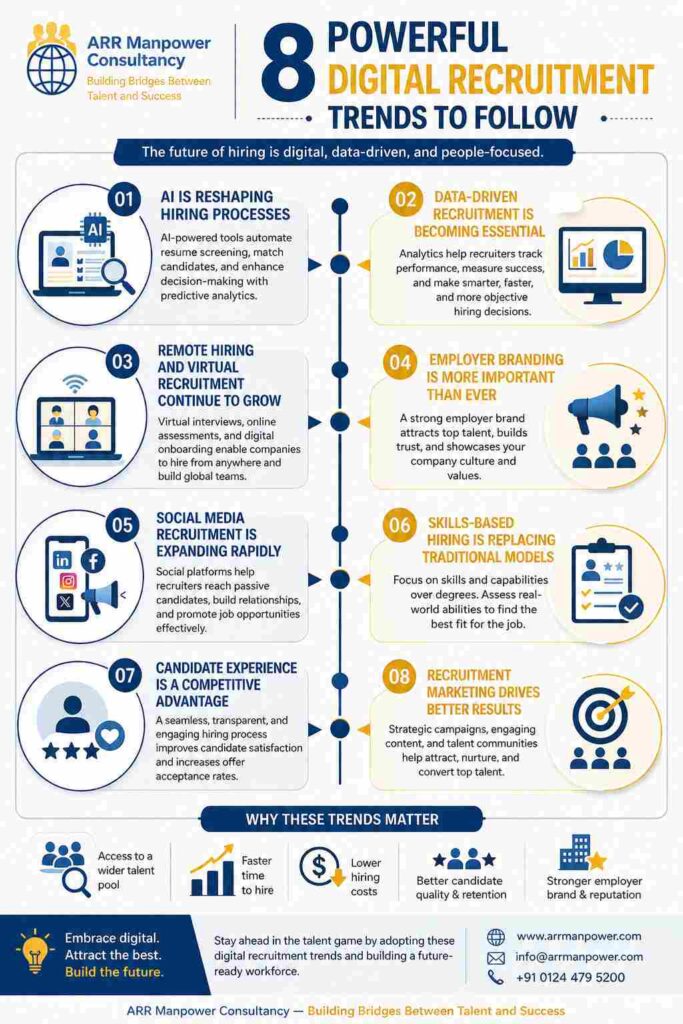
Understanding emerging recruitment trends can help organizations streamline hiring, improve candidate quality, reduce costs, and enhance employer branding. In this article, we explore eight powerful digital recruitment trends that are redefining talent acquisition and helping companies build stronger workforces.
https://arrmanpowerconsultancy.com
1. Artificial Intelligence Is Reshaping Hiring Processes
Artificial Intelligence (AI) has become one of the most influential technologies in recruitment. Many organizations now use AI-powered tools to automate repetitive tasks and improve hiring efficiency.
AI systems can quickly analyze thousands of resumes, identify qualified candidates, and rank applicants based on predefined criteria. This significantly reduces the time recruiters spend reviewing applications manually.
Beyond resume screening, AI-driven chatbots assist candidates by answering questions, scheduling interviews, and providing updates throughout the hiring process. These automated interactions improve response times and create a better candidate experience.
Another major advantage is predictive analytics. AI can evaluate historical hiring data and identify characteristics associated with successful employees. Recruiters can then use these insights to make more informed hiring decisions.
While human judgment remains essential, AI is becoming a valuable partner that enhances productivity and supports better talent acquisition outcomes.
2. Data-Driven Digital Recruitment Is Becoming Essential
Recruitment decisions are increasingly guided by data rather than intuition alone. Organizations are leveraging analytics to measure hiring performance, identify bottlenecks, and improve overall effectiveness.
Recruitment metrics such as time-to-fill, cost-per-hire, source effectiveness, and candidate conversion rates provide valuable insights into hiring success. By tracking these indicators, companies can refine their recruitment strategies and allocate resources more efficiently.
Data analytics also helps employers understand candidate behavior. Organizations can evaluate which job boards generate the highest-quality applicants, which communication channels receive better engagement, and which recruitment campaigns produce stronger results.
Advanced analytics platforms enable recruiters to forecast hiring needs, identify talent shortages, and make strategic workforce planning decisions. This proactive approach allows businesses to stay ahead of future staffing challenges.
Companies that embrace data-driven recruitment are often better positioned to attract top talent while optimizing hiring costs and improving overall performance.
3. Remote Hiring and Virtual Recruitment Continue to Grow
The rise of remote work has significantly influenced hiring practices. Many organizations now recruit candidates from broader geographic regions, expanding access to diverse talent pools.
Virtual recruitment has become a standard approach for many businesses. Video interviews, online assessments, and digital onboarding platforms allow organizations to complete hiring processes without requiring candidates to visit physical offices.
Remote hiring offers several advantages. Companies can reach specialized talent regardless of location, reduce recruitment expenses, and accelerate hiring timelines. Candidates also benefit from increased flexibility and convenience.
Digital collaboration tools have made remote interviewing more effective than ever. Recruiters can conduct structured interviews, evaluate candidate skills, and collaborate with hiring managers in real time.
As remote and hybrid work models continue to gain popularity, organizations are expected to invest further in technologies that support virtual recruitment and workforce integration.
4. Employer Branding Is More Important Than Ever
Today’s job seekers conduct extensive research before applying for positions. They want to understand company culture, leadership values, career growth opportunities, and employee experiences.
This shift has elevated the importance of employer branding. Organizations are actively promoting their workplace culture through websites, social media platforms, employee testimonials, and digital content.
A strong employer brand helps companies differentiate themselves in competitive talent markets. Candidates are more likely to apply for positions when they perceive an organization as trustworthy, innovative, and employee-focused.
Businesses are increasingly sharing behind-the-scenes content, workplace achievements, diversity initiatives, and employee success stories to strengthen their reputation. Authenticity plays a crucial role in building credibility with prospective applicants.
Organizations that invest in employer branding often experience higher application rates, improved candidate quality, and stronger employee retention over time.
5. Social Media Recruitment Is Expanding Rapidly
Social media has evolved into a powerful recruitment channel. Platforms that were once used primarily for networking and communication are now essential tools for talent acquisition.
Recruiters use social media to promote job opportunities, engage with potential candidates, and showcase company culture. These platforms provide direct access to both active and passive job seekers.
Professional networking sites allow recruiters to identify qualified candidates based on skills, experience, and industry expertise. Meanwhile, visual platforms help organizations present a more human and engaging view of their workplace environment.
Social recruiting also enables targeted advertising. Companies can reach specific demographics, locations, and professional groups with highly relevant job postings.
The interactive nature of social media encourages meaningful engagement between employers and candidates. This relationship-building approach often leads to stronger applicant pools and improved hiring outcomes.
As social platforms continue to evolve, they are expected to play an even greater role in recruitment strategies across industries.
6. Skills-Based Hiring Is Replacing Traditional Qualification Models
Many employers are shifting their focus from academic credentials to practical skills and demonstrated capabilities. This trend reflects the growing recognition that degrees alone do not always predict workplace success.
Skills-based hiring allows organizations to identify candidates who possess the competencies needed to perform effectively, regardless of educational background. This approach expands talent pools and promotes greater workforce diversity.
Digital assessment tools play a critical role in this transition. Employers can evaluate technical abilities, problem-solving skills, communication strengths, and job-specific competencies through online testing platforms.
Project-based evaluations, coding challenges, simulation exercises, and portfolio reviews provide deeper insights into candidate capabilities than resumes alone.
By emphasizing skills over traditional qualifications, organizations can uncover hidden talent and build teams with the expertise required to meet evolving business demands.
7. Candidate Experience Is Becoming a Competitive Advantage
The hiring process significantly influences how candidates perceive an organization. A positive experience can strengthen employer reputation, while a poor experience may discourage future applications and damage brand perception.
Modern candidates expect streamlined application processes, timely communication, and transparent hiring procedures. Organizations are increasingly investing in technologies that improve candidate engagement and satisfaction.
Mobile-friendly career pages, automated updates, interview scheduling tools, and personalized communication contribute to a smoother recruitment journey.
Feedback mechanisms are also becoming more common. Employers seek candidate input to identify areas for improvement and enhance the overall hiring experience.
A strong candidate experience benefits organizations in several ways. It increases application completion rates, improves offer acceptance rates, and encourages positive word-of-mouth recommendations.
As competition for talent grows, delivering an exceptional candidate experience is becoming a key differentiator in recruitment success.
8. Recruitment Marketing Is Driving Better Talent Acquisition Results
Recruitment marketing applies marketing principles to attract and engage potential candidates. Rather than waiting for applicants to discover job openings, organizations proactively promote employment opportunities through strategic campaigns.
This approach focuses on building awareness, generating interest, and nurturing relationships with prospective candidates over time.
Content marketing plays a central role in recruitment marketing. Companies create blogs, videos, employee stories, webinars, and social media content that highlight workplace culture and career opportunities.
Email campaigns, talent communities, and targeted advertising help organizations maintain ongoing engagement with potential candidates. These efforts create a pipeline of interested professionals before positions become available.
Recruitment marketing also supports employer branding by communicating company values, mission, and workplace benefits consistently across multiple channels.
Organizations that adopt recruitment marketing strategies often experience stronger candidate pipelines, higher engagement levels, and improved hiring efficiency.
How Businesses Can Prepare for the Future of Recruitment
Keeping pace with evolving recruitment trends requires more than simply adopting new technologies. Organizations must develop comprehensive strategies that align hiring practices with broader business objectives.
The first step is evaluating current recruitment processes and identifying areas for improvement. Companies should assess hiring timelines, candidate satisfaction levels, and recruitment outcomes to determine where digital solutions can provide the greatest impact.
Investing in recruiter training is equally important. Hiring professionals need the skills to leverage emerging technologies effectively while maintaining meaningful human interactions throughout the recruitment process.
Organizations should also prioritize flexibility. The hiring landscape continues to change rapidly, and businesses that adapt quickly are more likely to secure top talent.
Building a strong employer brand, embracing data-driven decision-making, and focusing on candidate experience can help companies remain competitive in increasingly complex talent markets.
Conclusion
Digital transformation is redefining the way organizations attract, evaluate, and hire talent. From artificial intelligence and data analytics to social recruiting and skills-based hiring, technology is creating new opportunities to improve recruitment outcomes.
The eight trends discussed in this article demonstrate how innovation is shaping the future of talent acquisition. Businesses that embrace these developments can streamline hiring processes, enhance candidate experiences, and gain access to broader talent pools.
Success in modern recruitment requires a combination of technology, strategy, and human insight. Organizations that stay informed about emerging trends and adapt proactively will be better positioned to attract high-quality candidates and build strong, future-ready teams.
As recruitment continues to evolve, companies that invest in digital solutions and candidate-focused approaches will gain a significant advantage in the race for top talent.