Introduction
Hiring the right employees is one of the most important responsibilities for any organization. In India’s highly competitive business environment, companies are constantly looking for skilled professionals who can contribute to growth, innovation, and long-term success. However, many organizations make critical recruitment errors that lead to poor hiring decisions, increased turnover, reduced productivity, and unnecessary expenses.
The recruitment process has evolved significantly over the last decade. Candidates today have more employment options, greater access to information, and higher expectations from employers. As a result, businesses must adopt smarter hiring strategies to attract and retain top talent.
Unfortunately, many employers continue to repeat avoidable mistakes that negatively impact workforce quality. Understanding these common pitfalls can help organizations improve their recruitment outcomes and build stronger teams.
Below are fourteen costly hiring mistakes Indian companies should avoid.
https://arrmanpowerconsultancy.com
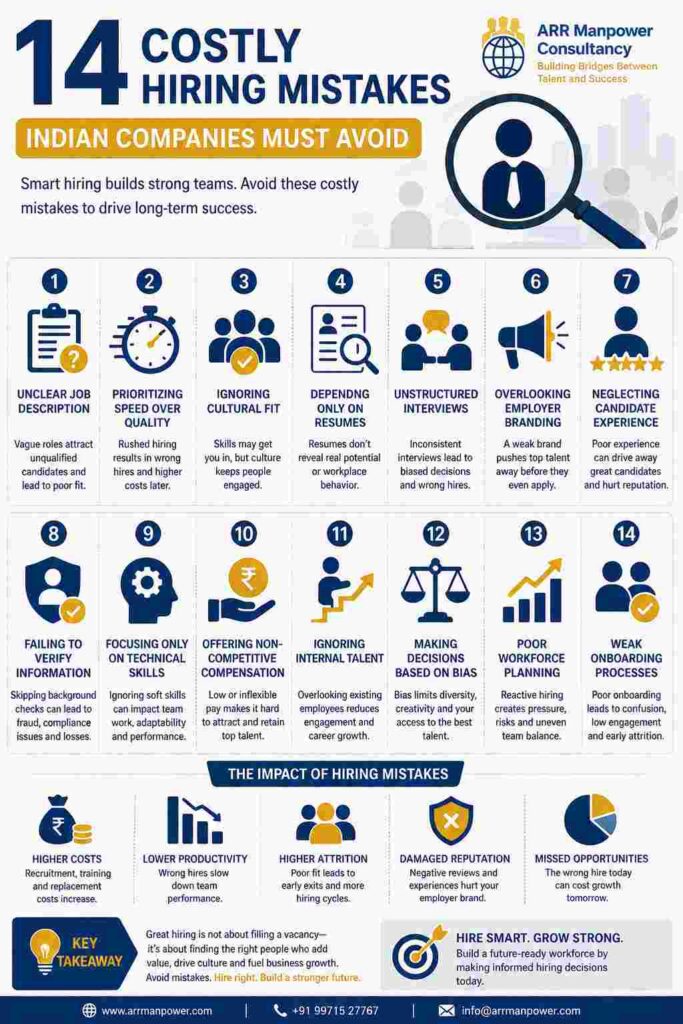
1. Hiring Without a Clear Job Description
One of the most common recruitment errors is starting the hiring process without defining the role properly.
Many organizations create vague job descriptions that fail to specify responsibilities, required skills, experience levels, and performance expectations. This confusion attracts unsuitable applicants and wastes valuable recruitment time.
A detailed job description helps candidates understand the position and allows recruiters to evaluate applicants more effectively. Before posting any vacancy, employers should clearly identify the purpose of the role, reporting structure, qualifications, and expected outcomes.
2. Prioritizing Speed Over Quality
Companies often rush to fill vacant positions due to project deadlines, business expansion, or workforce shortages. While quick hiring may seem beneficial, it frequently results in selecting candidates who are not the best fit.
A poor hiring decision can cost significantly more than leaving a position vacant for a few extra weeks. Organizations should balance urgency with careful evaluation.
Taking sufficient time to assess skills, experience, cultural compatibility, and long-term potential often produces better recruitment outcomes.
3. Ignoring Cultural Fit
Technical expertise is important, but cultural alignment plays a major role in employee success.
A highly skilled candidate who struggles to adapt to company values, communication styles, or workplace expectations may create conflicts within teams. This often affects collaboration and productivity.
Employers should assess whether candidates can thrive within the organizational environment. Interview questions related to work style, teamwork, adaptability, and professional values can provide valuable insights.
4. Depending Only on Resumes
Resumes provide useful information, but they rarely reveal the complete picture.
Many candidates possess impressive credentials yet struggle to perform in real workplace situations. Conversely, some highly capable professionals may not have exceptionally polished resumes.
Organizations should combine resume screening with structured interviews, assessments, practical tests, and reference checks. This approach helps evaluate actual capabilities rather than relying solely on written achievements.
5. Conducting Unstructured Interviews
Many hiring managers rely on informal conversations during interviews. While casual discussions can help establish rapport, they often produce inconsistent evaluations.
Without a structured interview process, recruiters may overlook important competencies or unintentionally favor certain candidates.
Preparing standardized questions allows employers to compare applicants fairly. Consistent evaluation criteria also reduce bias and improve decision-making accuracy.
6. Overlooking Employer Branding
In today’s digital era, candidates actively research organizations before applying.
A weak employer brand can discourage talented professionals from pursuing opportunities. Negative online reviews, poor communication, and an outdated company image may create unfavorable impressions.
Organizations should showcase workplace culture, employee achievements, career development opportunities, and company values across professional platforms. A strong employer reputation attracts higher-quality applicants and strengthens recruitment efforts.
7. Neglecting Candidate Experience
The recruitment journey significantly influences how candidates perceive an organization.
Delayed responses, confusing interview schedules, lack of feedback, and poor communication can frustrate applicants. Even highly interested candidates may withdraw from the process if they feel ignored.
Providing clear communication, timely updates, and respectful interactions enhances the candidate experience. This not only improves acceptance rates but also strengthens the company’s reputation in the job market.
8. Failing to Verify Candidate Information
Some employers skip thorough background verification due to time constraints or budget considerations.
This can lead to serious consequences, including falsified qualifications, inaccurate employment histories, or misrepresented skills. Hiring individuals based on incorrect information may create performance issues and compliance risks.
Comprehensive verification procedures help confirm educational credentials, work experience, references, and professional certifications before making final hiring decisions.
9. Focusing Only on Technical Skills
Many organizations prioritize technical expertise while overlooking essential soft skills.
Communication, problem-solving, leadership, adaptability, emotional intelligence, and teamwork are increasingly important in modern workplaces. Employees interact with colleagues, clients, vendors, and stakeholders regularly.
A technically strong candidate who lacks interpersonal abilities may struggle to contribute effectively. Balanced assessments should consider both technical and behavioral competencies.
10. Offering Non-Competitive Compensation
The Indian employment market has become increasingly competitive, particularly in sectors such as technology, healthcare, finance, manufacturing, and consulting.
Organizations sometimes lose qualified candidates by offering salaries that do not align with market standards. Compensation expectations have risen significantly due to increased demand for specialized talent.
Employers should conduct regular salary benchmarking and ensure their compensation packages remain attractive. Competitive benefits, flexible work arrangements, learning opportunities, and performance incentives can further strengthen hiring success.
11. Ignoring Internal Talent
Many companies immediately look outside the organization when vacancies arise.
While external recruitment can introduce fresh perspectives, overlooking existing employees may reduce engagement and career satisfaction. Internal candidates often possess valuable organizational knowledge and require less onboarding time.
Creating clear internal mobility programs encourages career growth and improves employee retention. Promoting from within also demonstrates commitment to workforce development.
12. Making Decisions Based on Bias
Unconscious bias remains a significant challenge during recruitment.
Hiring managers may unintentionally favor candidates based on educational institutions, previous employers, personal similarities, age, gender, or other non-performance-related factors.
Bias can prevent organizations from accessing diverse talent pools and may result in missed opportunities. Structured evaluation systems, diverse interview panels, and objective assessment criteria help reduce bias and support fair recruitment practices.
13. Poor Workforce Planning
Reactive hiring often creates recruitment challenges.
Many organizations wait until staffing shortages become critical before beginning recruitment efforts. This approach places pressure on recruiters and increases the likelihood of rushed decisions.
Effective workforce planning involves forecasting future talent needs based on business goals, growth projections, employee turnover, and industry trends.
Companies that anticipate staffing requirements can build talent pipelines and reduce recruitment disruptions.
14. Weak Onboarding Processes
The hiring process does not end when a candidate accepts an offer.
Many employers invest considerable effort in recruitment but provide inadequate onboarding experiences. New employees may receive limited guidance, unclear expectations, or insufficient training during their initial weeks.
Poor onboarding can lead to early dissatisfaction and increased turnover. A structured onboarding program helps employees integrate into the organization more effectively.
Providing mentorship, training resources, performance expectations, and regular check-ins improves engagement and accelerates productivity.
The Financial Impact of Hiring Mistakes
Recruitment errors can have substantial financial consequences.
The costs associated with a poor hiring decision extend beyond salary expenses. Organizations may incur costs related to recruitment advertising, interview processes, onboarding, training, productivity losses, and replacement hiring.
In addition, employee turnover can negatively affect team morale and customer relationships. Repeated hiring mistakes may also damage organizational reputation and reduce competitiveness.
By improving recruitment practices, companies can reduce unnecessary expenses while strengthening workforce quality.
Building a More Effective Recruitment Strategy for Indian Companies
Organizations seeking better hiring outcomes should adopt a comprehensive recruitment approach.
Key strategies include:
- Defining clear job requirements.
- Creating structured interview frameworks.
- Investing in employer branding.
- Enhancing candidate communication.
- Conducting thorough background verification.
- Evaluating both technical and soft skills.
- Implementing workforce planning initiatives.
- Strengthening onboarding programs.
- Encouraging internal career mobility.
- Using data-driven recruitment metrics.
Continuous improvement is essential because workforce expectations and market conditions evolve regularly.
Conclusion
Successful recruitment requires more than simply filling vacancies. It involves identifying individuals who possess the skills, mindset, and potential needed to contribute to organizational growth. Unfortunately, many businesses continue to make avoidable recruitment errors that result in increased costs, reduced productivity, and higher employee turnover.
The fourteen mistakes discussed above represent some of the most common challenges faced by Indian employers. From unclear job descriptions and rushed hiring decisions to weak onboarding and unconscious bias, each issue can significantly affect workforce quality.
Organizations that focus on structured recruitment processes, candidate experience, workforce planning, and long-term talent development are better positioned to attract exceptional professionals. By avoiding these costly hiring mistakes, Indian companies can build stronger teams, improve employee retention, and create a sustainable foundation for future success in an increasingly competitive business environment.
Furthermore, organizations that continuously refine their recruitment practices gain a significant advantage in attracting and retaining high-performing professionals. Investing in modern hiring technologies, recruiter training, and data-driven decision-making can improve candidate selection and overall workforce effectiveness.
As industries evolve and skill requirements change, businesses must remain flexible and proactive in their talent acquisition strategies. A thoughtful hiring approach not only reduces recruitment risks but also strengthens company culture and employee satisfaction. Ultimately, organizations that prioritize quality hiring decisions today will be better equipped to achieve long-term growth, innovation, and business resilience in the future.