Introduction
In today’s competitive business environment, organizations are no longer defined solely by their products or services. Instead, the real differentiator lies in the strength of their workforce. A capable, motivated, and well-aligned team can drive innovation, improve productivity, and help businesses navigate uncertainty with confidence.
However, building such a workforce is not as simple as hiring skilled individuals. It requires a thoughtful approach that combines smart recruitment, continuous development, positive culture, and effective leadership. Companies that understand this are able to create teams that not only perform well but also grow stronger over time.
This article explores seven practical and effective ways to build a strong workforce. These strategies are easy to implement, scalable, and suitable for businesses of all sizes.
https://arrmanpowerconsultancy.com/
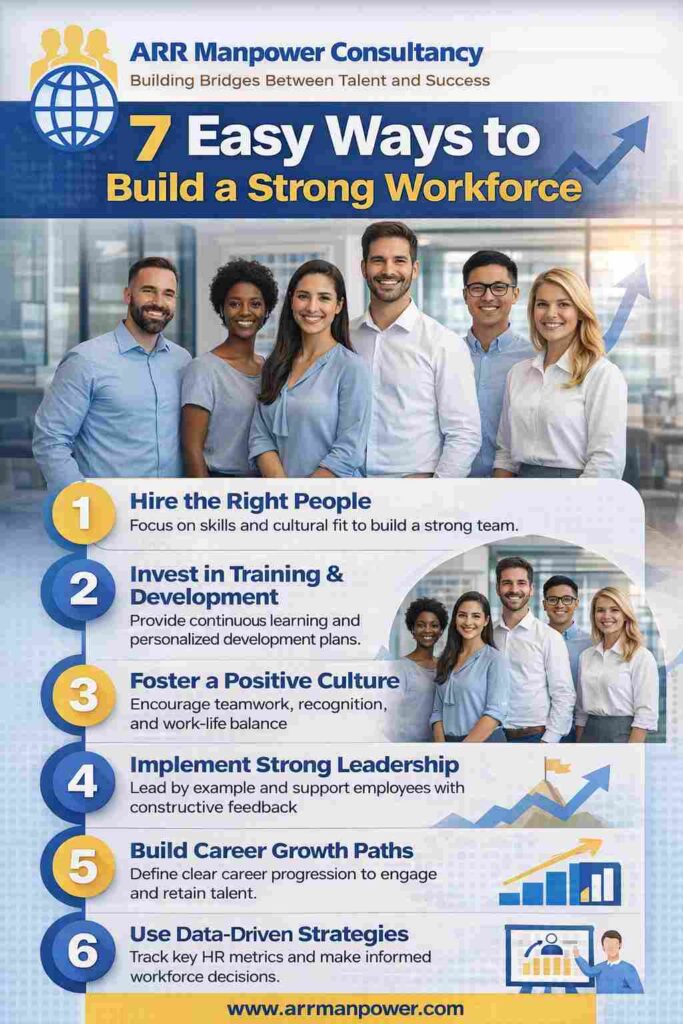
1. Hire the Right People from the Start
The foundation of a strong workforce begins with hiring the right individuals. Even the best training programs cannot fully compensate for poor hiring decisions. Therefore, it is essential to focus on quality over quantity when bringing new people into the organization.
Focus on Skills and Cultural Fit
While technical skills are important, cultural alignment plays an equally critical role. Employees who share the organization’s values are more likely to stay engaged, collaborate effectively, and contribute positively.
Use Structured Hiring Processes
Implementing a structured approach—such as standardized interviews, skill assessments, and clear evaluation criteria—helps reduce bias and ensures consistency.
Leverage Recruitment Expertise
Partnering with experienced recruitment professionals can streamline the hiring process and improve candidate quality. They can help identify individuals who match both job requirements and organizational culture.
Avoid Common Hiring Mistakes
- Rushing the hiring process
- Ignoring soft skills
- Overlooking long-term potential
Taking time to hire carefully pays off in the long run by reducing turnover and improving team performance.
2. Invest in Employee Training and Development
A strong workforce is not static—it evolves continuously. Organizations that invest in employee development create teams that are adaptable, skilled, and future-ready.
Provide Continuous Learning Opportunities
Training should not be limited to onboarding. Offering regular workshops, online courses, and skill development programs helps employees stay updated and relevant.
Encourage Cross-Functional Learning
Allowing employees to learn about different roles within the organization improves collaboration and builds a more versatile workforce.
Create Personalized Development Plans
Each employee has unique strengths and goals. Tailoring development plans ensures that individuals grow in ways that benefit both them and the organization.
Benefits of Ongoing Development
- Increased productivity
- Higher employee satisfaction
- Improved retention rates
When employees feel that their growth is supported, they are more likely to stay committed and perform at their best.
3. Foster a Positive Work Culture
Work culture plays a significant role in shaping employee behavior and overall performance. A positive environment encourages collaboration, innovation, and loyalty.
Promote Open Communication
Encourage transparency and open dialogue at all levels. Employees should feel comfortable sharing ideas, feedback, and concerns.
Recognize and Reward Contributions
Acknowledging achievements—both big and small—boosts morale and motivates employees to maintain high performance.
Encourage Team Collaboration
Creating opportunities for teamwork helps build trust and strengthens relationships within the organization.
Support Work-Life Balance
Flexible work arrangements, reasonable workloads, and respect for personal time contribute to overall well-being.
A healthy work culture not only improves productivity but also attracts top talent.
4. Implement Strong Leadership Practices
Leadership has a direct impact on workforce strength. Effective leaders inspire, guide, and empower their teams.
Lead by Example
Leaders who demonstrate integrity, accountability, and professionalism set the tone for the entire organization.
Provide Clear Direction
Employees perform better when they understand expectations, goals, and priorities.
Offer Constructive Feedback
Regular feedback helps employees improve and stay aligned with organizational objectives.
Encourage Employee Empowerment
Giving employees the autonomy to make decisions fosters confidence and innovation.
Strong leadership creates an environment where employees feel supported and motivated to excel.
5. Build Clear Career Growth Paths
Employees are more likely to stay with organizations that offer clear opportunities for advancement. Career growth is a key factor in building a strong workforce.
Define Career Progression
Clearly outline the steps required for advancement within the organization. This helps employees understand their potential future.
Promote Internal Mobility
Encouraging employees to explore different roles within the company keeps them engaged and reduces turnover.
Provide Mentorship Opportunities
Mentorship programs allow experienced employees to guide others, fostering knowledge sharing and development.
Align Growth with Business Goals
Ensure that employee development aligns with organizational needs, creating a win-win situation.
When employees see a future within the organization, they are more likely to stay committed and contribute effectively.
6. Use Data-Driven Workforce Strategies
Modern organizations rely on data to make informed decisions. Applying data-driven strategies can significantly improve workforce management.
Track Key Metrics
Monitor metrics such as employee performance, retention rates, and engagement levels to identify trends and areas for improvement.
Use Technology for Workforce Management
HR tools and software can streamline processes like recruitment, performance tracking, and employee engagement.
Analyze Hiring Effectiveness
Evaluating hiring outcomes helps refine recruitment strategies and improve future results.
Make Informed Decisions
Data-driven insights reduce guesswork and enable better planning and resource allocation.
By leveraging data, organizations can build a workforce that is efficient, productive, and aligned with business goals.
7. Prioritize Employee Engagement and Well-Being
Engaged employees are more productive, innovative, and loyal. Prioritizing well-being is essential for building a strong workforce.
Encourage Employee Participation
Involving employees in decision-making processes increases their sense of ownership and commitment.
Provide Wellness Programs
Health and wellness initiatives contribute to overall employee satisfaction and performance.
Create a Supportive Environment
Employees should feel valued, respected, and supported in their roles.
Address Challenges Proactively
Identifying and resolving issues early prevents dissatisfaction and disengagement.
A focus on engagement and well-being creates a workforce that is not only strong but also resilient.
Common Challenges in Building a Strong Workforce
While the strategies discussed are effective, organizations may face challenges during implementation.
High Employee Turnover
Frequent departures can disrupt operations and increase costs. Addressing the root causes—such as lack of growth opportunities or poor management—is essential.
Skill Gaps
Rapid technological changes can create skill gaps. Continuous training helps bridge these gaps.
Resistance to Change
Employees may resist new processes or strategies. Clear communication and involvement can ease transitions.
Limited Resources
Small businesses may face budget constraints. Prioritizing key initiatives and leveraging external support can help overcome this.
Practical Tips for Long-Term Success
Building a strong workforce is an ongoing process. Here are some practical tips for sustained success:
- Regularly review and update workforce strategies
- Stay informed about industry trends
- Encourage innovation and adaptability
- Maintain consistent communication across teams
- Continuously evaluate and improve processes
Consistency and commitment are key to achieving long-term results.
Conclusion
Building a strong workforce is not a one-time effort but a continuous journey. By focusing on hiring the right people, investing in development, fostering a positive culture, and implementing effective leadership, organizations can create teams that drive success.
The seven strategies discussed in this article provide a practical roadmap for businesses looking to strengthen their workforce. When implemented effectively, these approaches lead to improved performance, higher employee satisfaction, and sustainable growth.
Organizations that prioritize their workforce are better positioned to navigate challenges, seize opportunities, and achieve long-term success. A strong team is not just an asset—it is the foundation of a thriving business.
In today’s competitive business environment, companies that consistently invest in their employees gain a significant advantage. Skilled, motivated, and engaged workers contribute not only to daily operations but also to innovation, customer satisfaction, and overall organizational resilience. As industries continue to evolve and workplace expectations change, businesses must remain adaptable and committed to supporting their teams.
Creating a strong workforce also requires open communication, recognition of employee contributions, and a willingness to embrace continuous improvement. Employees who feel valued and supported are more likely to remain loyal to the organization, collaborate effectively with colleagues, and contribute their best efforts. This positive cycle helps build trust, strengthen workplace relationships, and create an environment where both individuals and the organization can thrive.
Furthermore, workforce development should be viewed as a long-term investment rather than a short-term expense. Training programs, mentorship opportunities, and career advancement initiatives help employees grow while ensuring the organization has the talent needed to meet future demands. Businesses that proactively develop their workforce are often better prepared to handle market changes, technological advancements, and evolving customer needs.
Ultimately, the success of any organization depends on the people behind it. By applying these seven workforce-building strategies consistently and strategically, businesses can create a high-performing team that supports growth, improves productivity, and drives lasting success. A strong workforce empowers organizations to achieve their goals while building a positive reputation as an employer of choice in their industry.
Additionally, organizations that encourage diversity, inclusion, and employee well-being often experience stronger collaboration and higher levels of engagement. By creating opportunities for every team member to contribute and succeed, businesses can foster a workplace culture that attracts top talent, strengthens retention, and supports sustainable growth in an increasingly competitive marketplace.