Introduction
A strong hiring process is the backbone of every successful organization. The people you bring into your company shape its culture, productivity, innovation, and long-term growth. Yet many businesses unknowingly operate with flawed recruitment systems that quietly undermine their success.
The challenge is that hiring problems don’t always appear obvious at first. Positions may get filled, interviews may happen regularly, and onboarding might proceed as usual. But beneath the surface, inefficiencies, poor decisions, and outdated methods can create serious long-term consequences.
A broken hiring process leads to high turnover, low employee engagement, wasted resources, and missed opportunities to secure top talent. Over time, these issues compound, making it increasingly difficult for organizations to stay competitive.
This article explores 10 clear red flags that indicate your hiring process is not working as it should. More importantly, it provides actionable insights on how to fix these issues and build a more effective approach to recruitment.
https://arrmanpowerconsultancy.com/
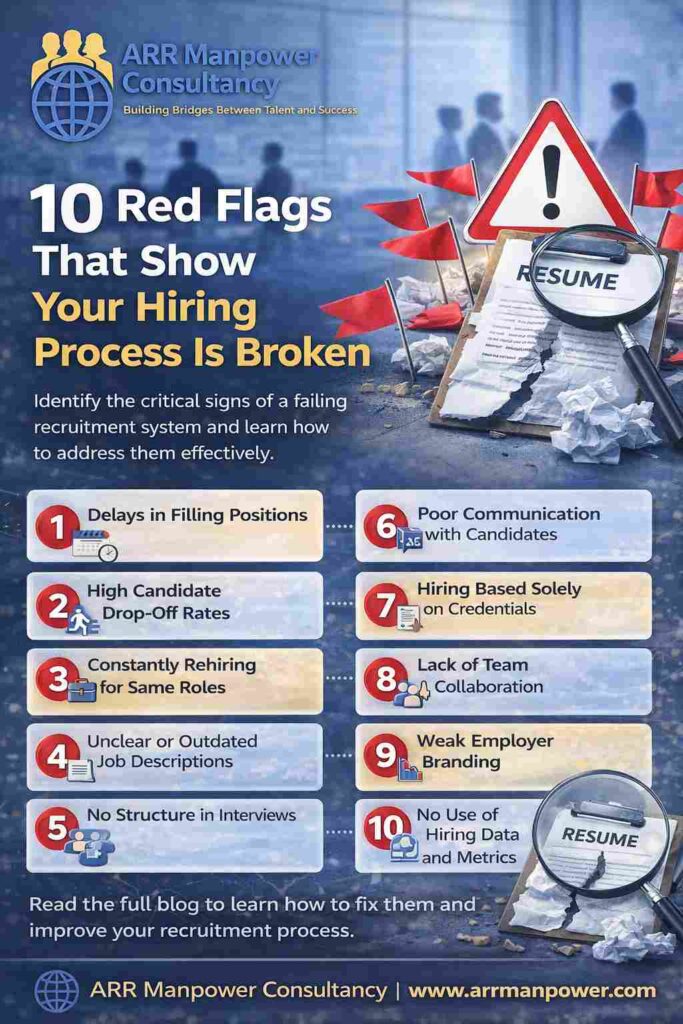
1. You Take Too Long to Fill Positions
One of the most obvious warning signs is a consistently long time-to-hire. When positions remain open for extended periods, it often signals inefficiencies in your recruitment process.
Why This Happens
- Too many interview rounds
- Delayed decision-making
- Poor coordination between teams
- Lack of clarity in job requirements
Why It’s a Problem
Top talent rarely stays available for long. A slow process increases the likelihood that strong applicants will accept offers elsewhere.
How to Fix It
Streamline your process by reducing unnecessary steps. Set clear timelines for each stage and ensure decision-makers are aligned from the beginning. Speed should not compromise quality, but unnecessary delays should be eliminated.
2. High Candidate Drop-Off Rates
If a large number of applicants abandon the process midway, it’s a sign something is wrong.
Common Causes
- Complicated application forms
- Lack of communication
- Long gaps between interview stages
- Poor candidate experience
Impact
High drop-off rates reduce your talent pool and may indicate a negative perception of your organization.
Solution
Simplify the application process and maintain consistent communication. Even small improvements—like timely updates—can significantly enhance engagement.
3. You’re Constantly Rehiring for the Same Roles
Repeatedly filling the same positions is a major red flag. It often indicates deeper issues beyond recruitment.
Possible Reasons
- Poor job fit
- Misaligned expectations
- Weak onboarding
- Toxic work environment
Consequences
Frequent rehiring increases costs, disrupts team dynamics, and lowers morale.
Fix
Focus on better screening and realistic job previews. Ensure candidates understand the role clearly before accepting an offer.
4. Job Descriptions Are Outdated or Unclear
Job descriptions are often the first interaction candidates have with your organization. If they are vague or outdated, they can create confusion.
Signs of a Problem
- Overly generic descriptions
- Long lists of unnecessary requirements
- Lack of clarity about responsibilities
Why It Matters
Poorly written job descriptions attract the wrong applicants and discourage qualified individuals.
Improvement Strategy
Write clear, concise, and engaging descriptions. Focus on outcomes, expectations, and growth opportunities rather than just qualifications.
5. Interview Process Lacks Structure
An unstructured interview process can lead to inconsistent and biased decisions.
Symptoms
- Different questions for each candidate
- No standardized evaluation criteria
- Decisions based on gut feeling
Risks
This approach makes it difficult to compare candidates objectively and increases the chance of poor hiring decisions.
Solution
Adopt structured interviews with predefined questions and scoring systems. This ensures fairness and consistency.
6. Poor Communication with Candidates
Communication plays a crucial role in shaping candidate perception.
Warning Signs
- Delayed responses
- Lack of feedback
- No updates after interviews
Impact
Poor communication can damage your employer reputation and discourage applicants from pursuing opportunities with you.
Fix
Establish clear communication guidelines. Keep candidates informed at every stage and provide feedback whenever possible.
7. Overemphasis on Credentials Instead of Skills
Many organizations still prioritize degrees and past job titles over actual ability.
Problem
Credentials do not always reflect real-world performance.
Consequences
You may overlook capable candidates who could excel in the role.
Solution
Shift to a skills-based approach. Use practical assessments and real-world tasks to evaluate candidates more effectively.
8. Lack of Collaboration Between Hiring Teams
When HR and hiring managers are not aligned, the process becomes inefficient.
Indicators
- Conflicting expectations
- Delayed feedback
- Miscommunication about role requirements
Impact
This leads to confusion, delays, and poor hiring decisions.
Fix
Encourage collaboration and ensure all stakeholders are aligned from the start. Regular check-ins can help maintain clarity throughout the process.
9. Weak Employer Branding
Your reputation as an employer significantly influences your ability to attract talent.
Signs of Weak Branding
- Low application rates
- Negative online reviews
- Lack of online presence
Why It Matters
Candidates often research companies before applying. A weak brand can discourage them from considering your organization.
Improvement
Invest in building a strong employer brand. Highlight company culture, employee success stories, and growth opportunities.
10. No Data-Driven Hiring Strategy
Relying solely on intuition is a major limitation in modern recruitment.
Issues
- Lack of measurable insights
- Inconsistent decision-making
- Difficulty identifying problem areas
Benefits of Data
Using data helps you understand what works and what doesn’t.
Solution
Track key metrics such as:
- Time-to-hire
- Source effectiveness
- Offer acceptance rates
Analyzing this data allows you to continuously improve your process.
The Hidden Costs of a Broken Hiring Process
A flawed hiring system doesn’t just affect recruitment—it impacts the entire organization.
Financial Costs
- Increased hiring expenses
- Lost productivity
- Training costs for replacements
Cultural Impact
- Lower team morale
- Reduced engagement
- Higher stress levels
Strategic Consequences
- Missed growth opportunities
- Reduced competitiveness
- Difficulty scaling operations
Recognizing these costs highlights the importance of addressing hiring issues promptly.
How to Build a Strong Hiring Process
Fixing a broken system requires a strategic approach.
1. Define Clear Hiring Goals
Understand what success looks like for each role.
2. Standardize Processes
Create consistent workflows for recruitment.
3. Focus on Candidate Experience
Ensure the process is smooth and respectful.
4. Use Technology Wisely
Leverage tools to improve efficiency without losing the human touch.
5. Continuously Evaluate
Regularly review and refine your approach.
Future-Proofing Your Recruitment Strategy
The hiring landscape continues to evolve. Staying ahead requires adaptability.
Emerging Trends
- Remote hiring
- AI-driven recruitment tools
- Increased focus on diversity and inclusion
- Greater emphasis on employee experience
Organizations that embrace these trends are better positioned for long-term success.
Conclusion
A broken hiring process rarely fails all at once. Instead, it deteriorates gradually through small inefficiencies, poor communication, unclear expectations, lengthy decision-making cycles, and inconsistent candidate experiences. The ten red flags discussed in this article are not just isolated problems—they are warning signs that your recruitment system may be costing your organization valuable talent, productivity, and long-term growth.
In today’s highly competitive job market, top candidates have more options than ever before. When hiring processes become slow, confusing, or disconnected from candidate expectations, skilled professionals are quick to pursue opportunities elsewhere. Every delayed response, missed follow-up, or unnecessary interview round increases the risk of losing qualified applicants to competitors who can move faster and provide a better experience.
Organizations that consistently attract and retain top talent understand that hiring is not simply an administrative function. It is a strategic business process that directly impacts company performance, culture, customer satisfaction, and profitability. A well-structured recruitment process helps businesses identify the right candidates efficiently while creating a positive impression of the employer brand. Even candidates who are not selected should leave the process with a favorable view of the organization.
The good news is that most hiring challenges can be corrected with careful evaluation and continuous improvement. Start by reviewing your current recruitment workflow from the candidate’s perspective. Analyze where delays occur, identify communication gaps, gather feedback from hiring managers and applicants, and measure key recruitment metrics such as time-to-hire, offer acceptance rates, and employee retention. These insights can reveal hidden weaknesses that may be affecting hiring outcomes.
Investing in better hiring practices, modern recruitment tools, clear job descriptions, and structured interview processes can significantly improve results. Equally important is ensuring alignment between HR teams and hiring managers so that decisions are made quickly and consistently. Small improvements implemented today can lead to stronger hiring outcomes and substantial cost savings in the future.
Ultimately, the success of any organization depends on the quality of its people. If several of these red flags sound familiar, consider them an opportunity for improvement rather than a setback. By addressing issues proactively and creating a candidate-focused hiring experience, your company can build a stronger workforce, reduce turnover, and position itself as an employer of choice in an increasingly competitive talent market.
A broken hiring process can quietly undermine even the most promising organizations. The signs may not always be obvious, but their impact is significant in many ways.
By identifying these 10 red flags, you can take proactive steps to improve your recruitment strategy. From streamlining processes to enhancing communication and leveraging data, small changes can lead to meaningful improvements.
Ultimately, successful hiring is not just about filling positions—it’s about building a team that drives growth, innovation, and success.
https://www.shrm.org/resourcesandtools/hr-topics/talent-acquisition