Introduction
In today’s highly competitive business environment, finding and retaining the right talent has become one of the biggest challenges for organizations of all sizes. Companies must navigate skill shortages, evolving workforce expectations, and increasing hiring costs while ensuring they bring the right people into their teams. This is where professional staffing agencies play a crucial role.
These agencies specialize in connecting employers with qualified candidates across various industries and job functions. Whether a company is seeking permanent employees, temporary staff, contract workers, or executive-level professionals, staffing experts streamline the recruitment process and deliver effective hiring solutions.
Businesses that partner with staffing firms gain access to industry expertise, extensive talent networks, and recruitment technologies that can significantly improve hiring outcomes. Below are twenty remarkable advantages that demonstrate why organizations increasingly rely on staffing partners to support workforce growth and operational success.
https://arrmanpowerconsultancy.com
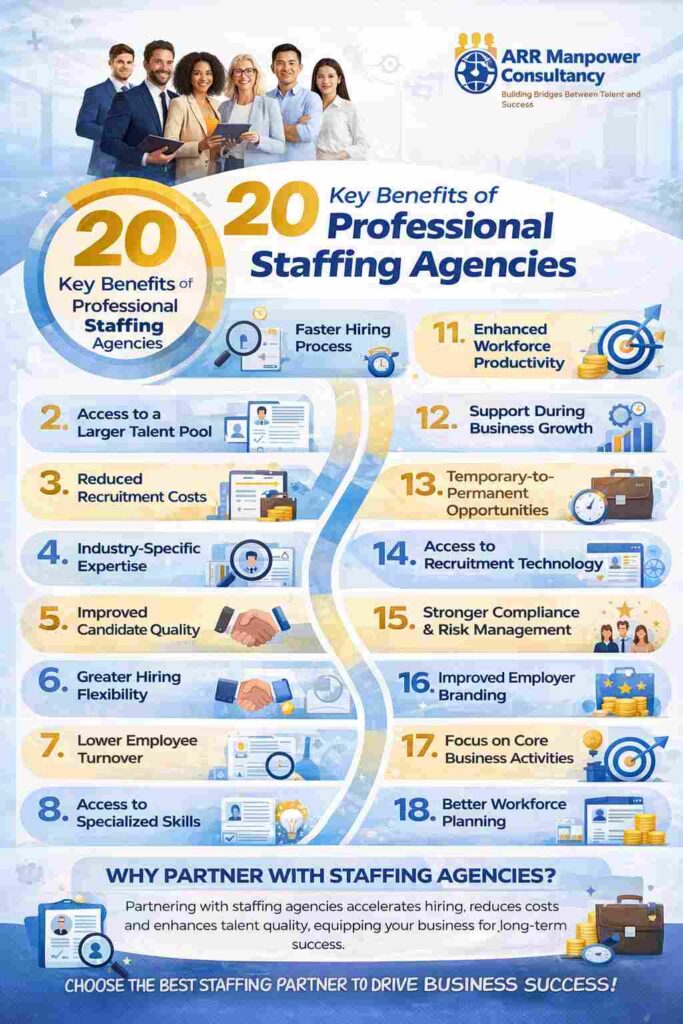
1. Faster Hiring Process
One of the most significant advantages of working with staffing specialists is speed. Recruiting internally can take weeks or even months, especially when companies must advertise positions, screen resumes, and conduct multiple interview rounds.
Staffing firms maintain active candidate databases and talent pipelines, allowing them to quickly identify suitable individuals for open positions. This reduced hiring time helps organizations avoid productivity losses caused by vacant roles.
2. Access to a Larger Talent Pool
Many qualified professionals are not actively searching on job boards but remain open to new opportunities. Staffing agencies maintain relationships with these passive candidates and can introduce employers to talent they may not find through traditional recruitment methods.
This broader reach improves the likelihood of finding candidates with specialized skills and industry-specific experience.
3. Reduced Recruitment Costs
Recruitment expenses can quickly add up through advertising, screening, interviewing, onboarding, and training. An inefficient hiring process may also result in costly turnover.
By streamlining recruitment activities and reducing time-to-hire, staffing agencies help organizations control hiring expenditures while improving overall recruitment efficiency.
4. Industry-Specific Expertise
Many staffing providers specialize in particular industries such as healthcare, information technology, manufacturing, finance, engineering, or administration.
Their recruiters understand industry trends, required qualifications, salary expectations, and candidate availability. This expertise enables them to match employers with professionals who meet both technical and cultural requirements.
5. Improved Candidate Quality
Recruitment specialists use advanced screening methods to evaluate applicants before presenting them to employers. These assessments often include resume reviews, interviews, skill evaluations, reference checks, and background verification.
As a result, hiring managers spend less time reviewing unsuitable applications and more time engaging with highly qualified candidates.
6. Greater Hiring Flexibility
Business demands can fluctuate throughout the year. Seasonal peaks, special projects, and unexpected workload increases often require temporary workforce expansion.
Staffing agencies provide flexible hiring options that allow organizations to scale teams up or down as needed without committing to permanent employment arrangements.
7. Lower Employee Turnover
Poor hiring decisions often lead to employee dissatisfaction and premature departures. Staffing professionals carefully assess candidate qualifications, experience, and compatibility with company culture.
This improved matching process contributes to higher retention rates and stronger workforce stability.
8. Access to Specialized Skills
Certain positions require niche expertise that can be difficult to find through conventional recruitment channels.
Staffing agencies frequently maintain networks of professionals with specialized certifications, technical knowledge, and industry experience. This access helps organizations fill challenging roles more effectively.
9. Reduced Administrative Burden
Recruitment involves numerous administrative tasks including job postings, resume screening, interview scheduling, background checks, and employment documentation.
By managing these responsibilities, staffing providers free internal HR teams to focus on strategic initiatives such as employee engagement, training, and workforce development.
10. Better Market Insights
Recruiters stay informed about employment trends, compensation benchmarks, workforce availability, and industry developments.
Organizations benefit from these insights when designing recruitment strategies, setting competitive salaries, and planning future workforce requirements.
11. Enhanced Workforce Productivity
Vacant positions often place additional pressure on existing employees, leading to burnout and reduced productivity.
Professional staffing support minimizes staffing gaps by quickly identifying suitable candidates, ensuring teams remain productive and operational objectives stay on track.
12. Support During Business Growth
Rapid business expansion creates significant hiring demands. Companies entering new markets or launching new products frequently need to build teams quickly.
Staffing agencies help organizations manage growth by providing scalable recruitment solutions and ensuring workforce requirements are met efficiently.
13. Temporary-to-Permanent Hiring Opportunities
Many employers prefer evaluating candidates in real workplace environments before making long-term commitments.
Temporary-to-permanent arrangements allow companies to assess performance, skills, and cultural fit before extending permanent employment offers. This approach reduces hiring risk and improves decision-making.
14. Access to Recruitment Technology
Modern staffing firms leverage advanced recruitment technologies including applicant tracking systems, AI-powered screening tools, talent databases, and digital assessment platforms.
These technologies improve candidate identification, streamline hiring workflows, and enhance overall recruitment effectiveness.
15. Stronger Compliance and Risk Management
Employment regulations continue to evolve, making compliance increasingly complex. Staffing professionals remain updated on labor laws, employment standards, and hiring regulations.
Their expertise helps organizations minimize legal risks associated with recruitment, documentation, and workforce management.
16. Improved Employer Branding
A positive recruitment experience influences how candidates perceive an organization.
Staffing agencies serve as representatives of the employer during the hiring process. Their professional communication, efficient processes, and candidate engagement strategies help strengthen employer reputation in the talent market.
17. Focus on Core Business Activities
Recruitment can consume significant time and resources, particularly when organizations are hiring for multiple positions.
Outsourcing recruitment responsibilities enables business leaders and HR teams to focus on strategic objectives, customer service, innovation, and operational performance rather than spending excessive time on hiring activities.
18. Confidential Recruitment Support
Certain hiring initiatives require discretion, particularly when replacing senior employees or creating new leadership positions.
Staffing agencies can conduct confidential searches that protect organizational privacy while attracting qualified candidates for sensitive roles.
19. Better Workforce Planning
Successful organizations plan their workforce needs proactively rather than reacting to talent shortages.
Recruitment specialists provide valuable forecasting support by analyzing labor market conditions, identifying future hiring challenges, and helping businesses develop long-term staffing strategies.
20. Competitive Advantage in Talent Acquisition
Attracting top talent is a critical factor in organizational success. Companies that consistently hire skilled professionals often outperform competitors in innovation, productivity, and customer satisfaction.
Professional staffing agencies provide employers with a competitive edge by improving access to talent, accelerating hiring timelines, and ensuring recruitment processes remain efficient and effective.
How Staffing Agencies Add Value Across Industries
The benefits of staffing support extend across virtually every sector. Healthcare organizations rely on recruitment specialists to find qualified nurses and medical professionals. Technology companies use staffing partners to source developers, engineers, and cybersecurity experts. Manufacturing businesses depend on staffing firms to address workforce shortages and production demands.
Similarly, financial institutions, logistics providers, educational organizations, and administrative departments leverage staffing expertise to secure skilled professionals and maintain operational efficiency.
Regardless of industry, organizations that partner with experienced recruiters often achieve better hiring outcomes than those relying solely on internal resources.
Choosing the Right Staffing Partner
To maximize recruitment success, businesses should carefully evaluate potential staffing partners. Key factors to consider include:
- Industry specialization
- Recruitment experience
- Candidate screening processes
- Talent network size
- Client testimonials
- Compliance knowledge
- Technology capabilities
- Communication standards
Selecting a reputable staffing agency ensures a productive partnership and improves the likelihood of achieving workforce objectives.
Conclusion
In today’s competitive employment landscape, professional staffing agencies provide far more than simple recruitment support. They serve as strategic partners that help businesses overcome hiring challenges, reduce recruitment costs, and secure access to qualified talent in a timely manner. By leveraging industry expertise, extensive candidate networks, and streamlined hiring processes, staffing agencies enable organizations to focus on their core operations while maintaining a strong and productive workforce.
For job seekers, these agencies open doors to valuable career opportunities, professional guidance, and faster placements that may not be available through traditional job searches. Whether a company is seeking temporary staff, permanent employees, or specialized professionals, staffing agencies offer flexible solutions tailored to evolving workforce needs. As labor markets continue to change, partnering with a trusted staffing agency can provide a significant competitive advantage, ensuring long-term growth, operational efficiency, and successful talent acquisition for businesses of all sizes.
Hiring the right people remains one of the most important factors influencing business success. Organizations face increasing challenges related to talent shortages, rising recruitment costs, and evolving workforce expectations. Professional staffing agencies help overcome these obstacles by providing expertise, efficiency, flexibility, and access to high-quality candidates.
From accelerating hiring timelines and reducing recruitment expenses to improving candidate quality and supporting workforce planning, the advantages of partnering with staffing specialists are substantial. Businesses that leverage these services can strengthen their teams, improve productivity, and maintain a competitive position in today’s dynamic employment landscape.
Ultimately, staffing agencies accelerate growth, reduce risks, and ensure success.
As workforce demands continue to evolve, professional staffing agencies will remain valuable strategic partners for organizations seeking sustainable growth and long-term success.