Introduction
Employee departures can be costly for any organization. When talented professionals leave, businesses lose valuable knowledge, productivity declines, and recruitment expenses increase. High workforce turnover can also affect team morale and customer satisfaction. As competition for skilled professionals continues to grow, organizations must focus on creating an environment where employees feel valued, motivated, and committed to long-term success.
Reducing workforce turnover is not about implementing a single strategy. It requires a combination of leadership, communication, professional growth opportunities, and a supportive workplace culture. Companies that invest in employee retention often experience stronger performance, improved engagement, and sustainable growth.
Below are 14 powerful ways organizations can reduce workforce turnover and build a stable, productive team.
https://arrmanpowerconsultancy.com
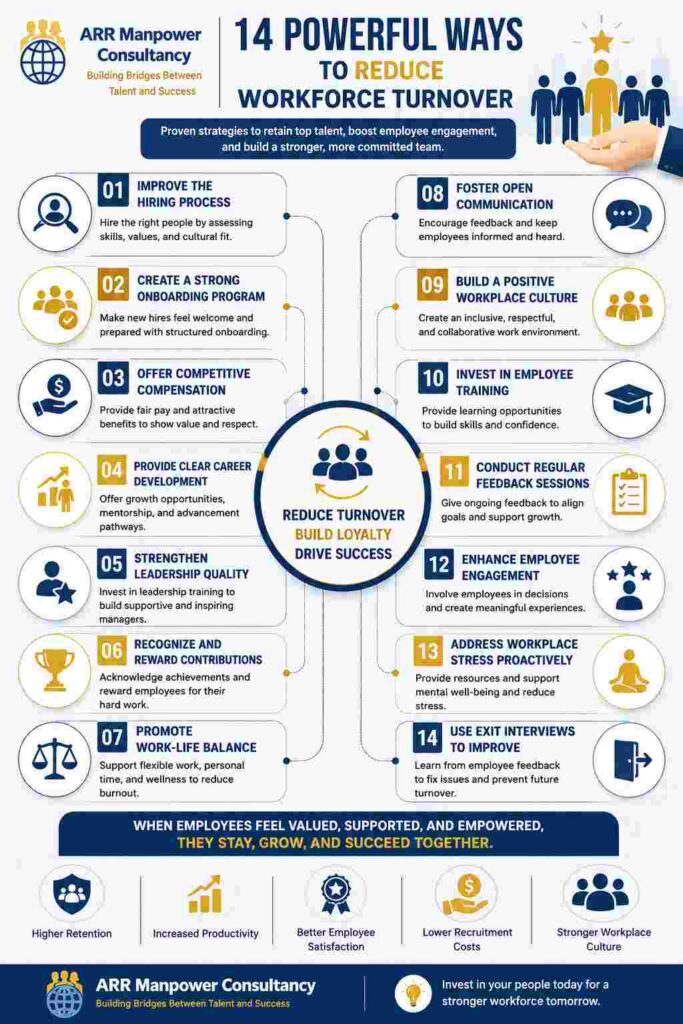
1. Improve the Hiring Process
Retention begins long before an employee’s first day. Hiring candidates who align with the company’s values, culture, and job expectations significantly improves long-term commitment.
Organizations should create accurate job descriptions and clearly communicate responsibilities during recruitment. Candidates who understand the role are less likely to feel disappointed after joining. Behavioral interviews, skills assessments, and realistic job previews can help identify individuals who are genuinely suited for the position.
When businesses focus on quality hiring rather than filling vacancies quickly, they reduce the likelihood of early resignations.
2. Create a Strong Onboarding Program
A well-structured onboarding experience helps new employees feel welcomed and prepared. The first few weeks often determine how individuals perceive their employer.
Effective onboarding should include role-specific training, introductions to team members, company culture education, and regular check-ins with managers. Providing support during the transition period helps employees gain confidence and understand expectations.
Organizations that invest in onboarding often see higher engagement levels and stronger retention rates among new hires.
3. Offer Competitive Compensation
Compensation remains one of the most important factors influencing employee decisions. Professionals who feel underpaid may seek opportunities elsewhere, even if they enjoy their current role.
Employers should regularly review salary benchmarks within their industry and region. Competitive wages demonstrate respect for employees’ contributions and help attract top talent.
Beyond base salary, organizations can offer performance bonuses, incentives, retirement benefits, and health coverage to enhance overall compensation packages.
4. Provide Clear Career Development Opportunities
Many employees leave because they do not see a future within the organization. Career growth is a major factor in retention.
Businesses should establish clear advancement pathways and discuss professional goals with employees regularly. Internal promotions, mentorship programs, leadership training, and skill development opportunities encourage individuals to remain with the company.
When employees believe they can grow professionally, they are more likely to stay committed to their employer.
5. Strengthen Leadership Quality
Managers have a direct impact on employee satisfaction. Poor leadership often contributes to workplace frustration and increased resignations.
Organizations should invest in leadership training that emphasizes communication, coaching, conflict resolution, and emotional intelligence. Effective leaders support their teams, provide guidance, and foster trust.
Employees who feel respected and supported by their managers are generally more engaged and less likely to seek employment elsewhere.
6. Recognize and Reward Contributions
People want their efforts to be acknowledged. Recognition plays a critical role in maintaining motivation and job satisfaction.
Organizations can implement formal recognition programs, employee awards, peer appreciation initiatives, and performance-based incentives. Even simple expressions of gratitude can have a positive impact.
Regular recognition reinforces positive behavior and helps employees feel valued for their contributions.
7. Promote Work-Life Balance
Excessive workloads and constant pressure can lead to burnout. Employees who experience ongoing stress often consider leaving for healthier work environments.
Employers can support work-life balance by offering flexible schedules, remote work options, wellness programs, and reasonable workload expectations. Encouraging employees to take vacations and personal time also contributes to well-being.
A healthy balance between professional and personal responsibilities increases overall job satisfaction.
8. Foster Open Communication
Transparent communication builds trust throughout an organization. Employees want to feel informed about company goals, changes, and expectations.
Leaders should encourage feedback and create opportunities for meaningful conversations. Regular team meetings, surveys, and one-on-one discussions help identify concerns before they become larger issues.
When employees believe their opinions matter, they are more likely to remain engaged and committed.
9. Build a Positive Workplace Culture
Company culture influences how employees feel about coming to work each day. A positive environment encourages collaboration, respect, and shared success.
Organizations should promote inclusivity, teamwork, ethical behavior, and mutual support. Celebrating achievements and encouraging healthy relationships among colleagues strengthens workplace culture.
Employees who enjoy their work environment are less likely to look for opportunities elsewhere.
10. Invest in Employee Training
Continuous learning benefits both employees and employers. Professionals often seek organizations that support skill development and career advancement.
Training programs can include technical skills, leadership development, communication workshops, and industry certifications. Providing access to educational resources demonstrates a commitment to employee growth.
Workers who continue learning within an organization often develop stronger loyalty and greater confidence in their abilities.
11. Conduct Regular Employee Feedback Sessions
Many organizations only discuss performance during annual reviews. However, employees benefit from more frequent feedback.
Regular performance discussions allow managers to address concerns, recognize achievements, and align expectations. These conversations help employees understand their progress and identify development opportunities.
Constructive feedback also creates stronger relationships between managers and team members, contributing to long-term retention.
12. Enhance Employee Engagement
Engaged employees are more productive, motivated, and committed to organizational success. They are also less likely to leave.
Businesses can improve engagement by involving employees in decision-making, encouraging innovation, and creating opportunities for meaningful participation. Team-building activities and collaborative projects further strengthen engagement.
When employees feel connected to the organization’s mission, they develop a stronger sense of purpose in their work.
13. Address Workplace Stress Proactively
Stress is a common factor behind employee dissatisfaction. Organizations that ignore workplace stress risk losing talented professionals.
Employers should monitor workloads, provide mental health resources, and encourage open discussions about challenges. Employee assistance programs, wellness initiatives, and supportive management practices can reduce pressure.
Creating a psychologically safe environment allows employees to seek help when needed and maintain better overall well-being.
14. Use Exit Interviews to Identify Improvement Areas
When employees choose to leave, organizations have an opportunity to learn from their experiences. Exit interviews can provide valuable insights into workplace issues and retention challenges.
Employers should ask departing employees about their reasons for leaving, management experiences, compensation concerns, and suggestions for improvement. Analyzing patterns across multiple interviews can reveal recurring problems.
By acting on feedback, organizations can strengthen retention strategies and prevent similar departures in the future.
The Long-Term Benefits of Reducing Workforce Turnover
Reducing workforce turnover delivers advantages that extend far beyond staffing stability. Organizations with strong retention rates often benefit from higher productivity, improved customer service, and lower recruitment expenses. Experienced employees contribute valuable institutional knowledge, helping businesses operate more efficiently.
Retention also enhances workplace morale. Employees who see long-term colleagues remain with the company often develop greater confidence in leadership and organizational direction. Strong retention creates continuity, allowing teams to build trust and collaborate effectively.
Furthermore, companies known for employee satisfaction often attract higher-quality candidates. A positive employer reputation strengthens recruitment efforts and supports long-term growth objectives.
Creating a Sustainable Retention Strategy
Employee retention requires ongoing attention rather than one-time initiatives. Organizations should regularly evaluate workplace practices, gather employee feedback, and adapt to changing workforce expectations.
Successful retention strategies combine fair compensation, career growth opportunities, supportive leadership, recognition, and a healthy work environment. No single solution can eliminate turnover entirely, but consistent efforts can significantly reduce employee departures.
Leaders who prioritize employee experience demonstrate that people are valued assets rather than replaceable resources. This mindset helps create stronger relationships, higher engagement, and greater loyalty across the workforce.
Conclusion
Organizations that prioritize employee satisfaction, professional development, and transparent communication are better positioned to retain top talent in a competitive market. Consistently evaluating workplace policies, recognizing employee contributions, and providing opportunities for growth can significantly improve retention rates over time.
A stable workforce not only reduces recruitment and training expenses but also strengthens productivity, teamwork, and customer satisfaction. By implementing these proven strategies and adapting them to changing workforce expectations, businesses can create a positive work environment that encourages long-term commitment, sustainable growth, and continued organizational success.
Workforce turnover presents challenges for organizations of every size, but it can be managed through thoughtful planning and employee-focused strategies. By improving hiring practices, strengthening leadership, promoting professional growth, and fostering a positive workplace culture, companies can create an environment where employees choose to stay.
The 14 strategies outlined above provide a practical framework for enhancing retention and building a committed workforce. Organizations that invest in their employees not only reduce turnover costs but also position themselves for long-term success in an increasingly competitive business landscape.
A stable, engaged workforce is one of the most valuable assets any organization can possess. By making employee retention a priority, businesses can strengthen performance, improve morale, and create sustainable growth for years to come.