Introduction
Finding skilled professionals has become more challenging than ever. Organizations across industries are competing for experienced talent, specialized expertise, and individuals who can contribute immediately to business growth. Traditional hiring methods alone are no longer enough to attract top performers in today’s competitive employment market.
Candidates now have access to multiple opportunities, detailed employer reviews, and extensive information about organizations before applying. As a result, businesses must adopt smarter approaches to stand out and engage the right people.
The good news is that attracting exceptional professionals does not always require larger budgets or complex recruitment systems. With the right strategies, organizations can significantly improve their ability to connect with qualified applicants and shorten hiring timelines.
In this ARR Guide, we explore 12 practical methods that can help businesses attract high-quality candidates faster while building a stronger talent pipeline for long-term success.
https://arrmanpowerconsultancy.com
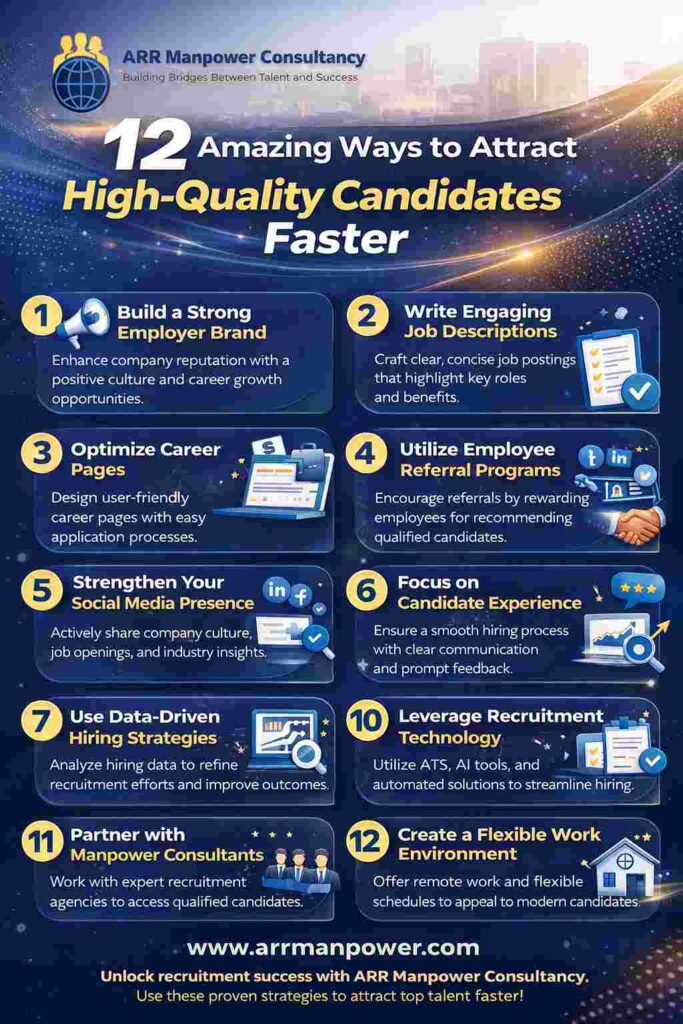
1. Build a Strong Employer Brand with High-Quality Candidates
A company’s reputation plays a significant role in attracting talented professionals. Before submitting applications, many job seekers research organizations online, review employee feedback, and evaluate workplace culture.
A strong employer brand communicates:
- Company values
- Career growth opportunities
- Work environment
- Employee benefits
- Leadership vision
Organizations should regularly share employee success stories, workplace achievements, training initiatives, and community involvement through their website and social media channels.
When professionals see a positive workplace reputation, they are more likely to consider career opportunities within the organization.
2. Write Clear and Engaging Job Descriptions
Job descriptions are often the first interaction between an organization and potential applicants. Generic or poorly written postings can discourage qualified individuals from applying.
Effective job descriptions should include:
- Accurate job titles
- Key responsibilities
- Required qualifications
- Preferred skills
- Career advancement opportunities
- Compensation information when possible
Avoid lengthy lists of unrealistic requirements. Focus on essential qualifications while clearly explaining how the role contributes to organizational success.
A concise and engaging job description helps attract professionals who are genuinely suited for the position.
3. Optimize Career Pages for User Experience
Many businesses invest heavily in advertising vacancies but overlook the importance of their career page.
An effective career page should:
- Load quickly
- Be mobile-friendly
- Provide simple navigation
- Offer easy application processes
- Showcase company culture
Include videos, employee testimonials, workplace photos, and details about organizational values. A well-designed career portal creates a positive first impression and encourages more applications from qualified individuals.
4. Utilize Employee Referral Programs
Current employees often know professionals with similar skills, work ethics, and industry experience. This makes referral programs one of the most effective sourcing methods available.
Benefits of employee referrals include:
- Faster hiring cycles
- Better cultural alignment
- Higher retention rates
- Reduced recruitment costs
Organizations can encourage participation by offering incentives such as bonuses, recognition programs, or additional benefits.
A structured referral system helps build a steady stream of qualified applicants while improving workforce quality.
5. Strengthen Your Social Media Presence
Social media platforms have become valuable channels for connecting with potential applicants.
Businesses should actively share:
- Company updates
- Industry insights
- Workplace events
- Employee achievements
- Open positions
Platforms such as LinkedIn, Facebook, Instagram, and X can help organizations reach both active and passive job seekers.
Consistent engagement allows companies to build credibility and increase visibility among professionals who may not be actively searching for opportunities but are open to considering new roles.
6. Focus on Candidate Experience
A poor application experience can drive talented individuals away.
Common issues include:
- Complicated application forms
- Lack of communication
- Long hiring processes
- Delayed feedback
To improve the experience:
- Simplify application procedures
- Acknowledge submissions promptly
- Keep candidates informed
- Provide timely updates
Even unsuccessful applicants should receive professional communication.
Positive interactions create a favorable impression and encourage professionals to consider future opportunities with the organization.
7. Offer Competitive Compensation and Benefits
Compensation remains a critical factor in employment decisions.
Organizations should regularly evaluate market trends and ensure their packages remain competitive.
Beyond salary, candidates often consider:
- Health benefits
- Retirement plans
- Flexible work arrangements
- Paid leave
- Professional development support
- Performance incentives
A comprehensive benefits package demonstrates commitment to employee well-being and increases interest among skilled professionals.
8. Invest in Professional Development Opportunities
Career growth is a major priority for today’s workforce.
Many professionals seek employers that support continuous learning and advancement.
Organizations can attract ambitious individuals by offering:
- Training programs
- Certifications
- Mentorship initiatives
- Leadership development
- Skill enhancement workshops
Highlighting these opportunities during recruitment efforts can significantly improve employer appeal.
Candidates are more likely to join organizations where they see clear pathways for personal and professional growth.
9. Use Data-Driven Hiring Strategies
Modern recruitment efforts generate valuable information that can improve decision-making.
Key metrics include:
- Time-to-fill
- Application conversion rates
- Source effectiveness
- Interview success rates
- Offer acceptance rates
Analyzing these metrics helps organizations identify strengths and weaknesses within their hiring process.
Data-driven strategies allow businesses to focus resources on channels that consistently deliver qualified applicants while eliminating inefficient practices.
10. Leverage Recruitment Technology
Technology can simplify many aspects of talent acquisition.
Modern tools help organizations:
- Screen applications
- Schedule interviews
- Track candidates
- Manage communication
- Analyze recruitment performance
Applicant Tracking Systems (ATS), AI-powered sourcing platforms, and automated workflows can significantly improve efficiency.
By reducing administrative tasks, hiring teams can spend more time building relationships with qualified professionals and making informed decisions.
11. Partner with Experienced Manpower Consultants
Professional recruitment agencies offer valuable expertise, industry knowledge, and access to extensive talent networks.
A reputable manpower consultancy can help organizations:
- Identify suitable candidates quickly
- Reduce hiring time
- Access specialized talent pools
- Conduct preliminary screening
- Support workforce planning
Experienced consultants understand market conditions and hiring trends, allowing businesses to secure qualified professionals more efficiently.
This partnership becomes particularly valuable when filling technical, leadership, or hard-to-find positions.
12. Create a Flexible Work Environment
Workplace flexibility has become increasingly important across industries.
Many professionals now prioritize:
- Remote work options
- Hybrid schedules
- Flexible hours
- Improved work-life balance
Organizations that offer flexibility often attract a broader range of applicants and experience higher employee satisfaction.
While not every role can be fully remote, providing adaptable work arrangements where possible demonstrates responsiveness to evolving workforce expectations.
A flexible environment can become a significant competitive advantage when attracting skilled professionals.
Common Mistakes That Reduce Candidate Interest
Even organizations with strong recruitment efforts can unintentionally discourage qualified applicants.
Some common mistakes include:
Unclear Job Requirements
Vague descriptions make it difficult for applicants to understand expectations and determine suitability.
Slow Decision-Making
Lengthy approval processes can result in losing talented professionals to competing employers.
Poor Communication
Candidates appreciate regular updates throughout the hiring journey.
Ignoring Employer Reputation
Negative reviews and inconsistent branding can damage organizational credibility.
Overlooking Passive Talent
Many highly skilled professionals are not actively searching but may consider attractive opportunities.
Avoiding these mistakes can significantly improve hiring outcomes.
The Future of Talent Attraction
The employment landscape continues to evolve rapidly. Organizations must remain adaptable to changing workforce expectations and emerging technologies.
Future talent attraction strategies will likely focus on:
- Personalized candidate engagement
- Skills-based hiring
- Diversity and inclusion initiatives
- Enhanced digital recruitment tools
- Employer branding investments
- Flexible workplace models
Businesses that embrace these developments will be better positioned to secure top talent and maintain a competitive advantage.
Conclusion
In today’s highly competitive hiring landscape, attracting high-quality candidates quickly requires more than simply posting vacancies and waiting for applications. Organizations that consistently secure top talent focus on creating a compelling employer brand, streamlining recruitment processes, leveraging technology, and delivering an exceptional candidate experience at every stage of the hiring journey. These strategies not only reduce time-to-hire but also improve the quality of hires and long-term employee retention.
Businesses that adapt to evolving candidate expectations gain a significant advantage in the talent market. Job seekers increasingly value transparency, career development opportunities, workplace culture, flexibility, and meaningful engagement with potential employers. By addressing these priorities, companies can build stronger connections with qualified professionals and encourage faster application decisions.
For recruitment agencies and employers alike, continuous improvement is essential. Regularly evaluating hiring metrics, refining sourcing channels, and adopting innovative recruitment practices can help maintain a steady pipeline of skilled candidates. As workforce demands continue to evolve, organizations that invest in modern talent acquisition strategies will be better positioned to attract exceptional candidates, fill critical roles efficiently, and achieve sustainable business growth in the years ahead.
Attracting high-quality candidates quickly requires more than simply posting job openings. Organizations must create compelling experiences, strengthen their employer reputation, leverage technology, and adopt strategic recruitment practices.
By implementing these 12 approaches, businesses can improve talent acquisition outcomes, reduce hiring delays, and build stronger teams for sustainable growth.
Whether through employer branding, referral programs, professional development opportunities, or partnerships with experienced manpower consultants, every strategy contributes to a more effective hiring process.
Companies that consistently prioritize candidate engagement and workforce planning will be better equipped to attract exceptional professionals in an increasingly competitive employment market.
At ARR, we believe successful recruitment begins with understanding both employer needs and candidate expectations. By applying the strategies outlined in this guide, organizations can build a reliable talent pipeline and achieve faster, higher-quality hiring results.