Introduction
Finding the right employees has become increasingly challenging in today’s competitive job market. Organizations are no longer relying solely on traditional job postings to attract qualified candidates. Instead, recruiters and HR professionals are adopting innovative approaches to identify, engage, and hire top talent before competitors do.
Talent sourcing is the proactive process of identifying and connecting with potential candidates who possess the skills, experience, and qualities required for specific roles. Effective sourcing helps organizations build strong talent pipelines, reduce hiring time, and improve overall recruitment outcomes.
Whether you’re a recruiter, HR manager, or business owner, understanding modern sourcing strategies can significantly improve your hiring success. This article explores 17 powerful methods that can help you discover exceptional candidates and strengthen your recruitment efforts.
https://arrmanpowerconsultancy.com
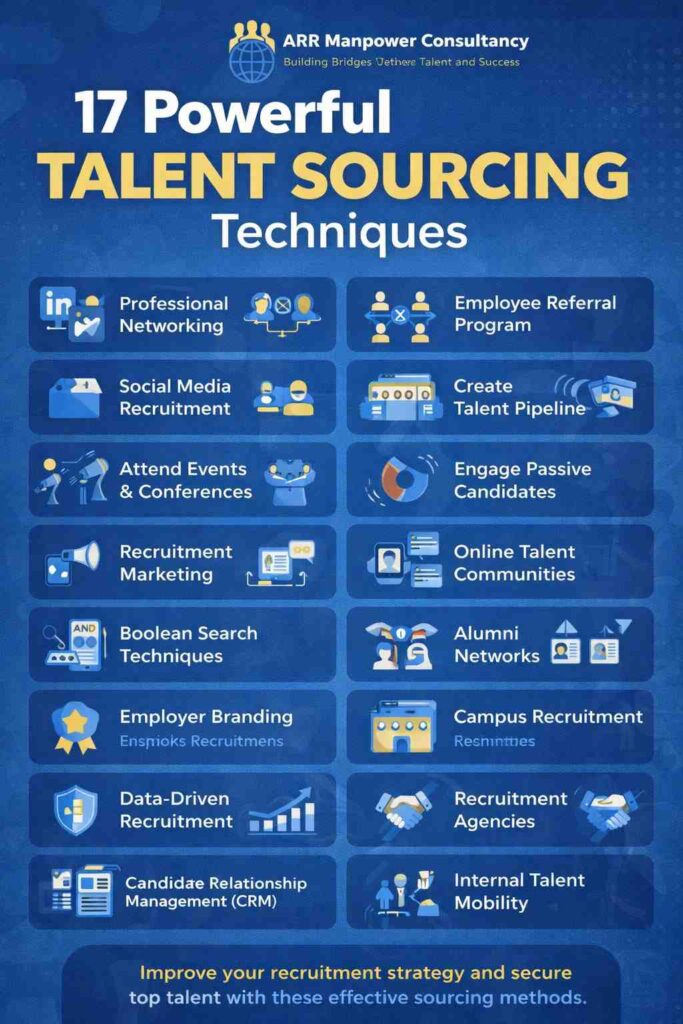
1. Leverage Professional Networking Platforms
Professional networking sites have transformed recruitment practices. Platforms such as LinkedIn allow recruiters to search for candidates based on skills, experience, education, and industry expertise.
Advanced search filters help narrow down candidate profiles that match specific job requirements. Recruiters can also engage with potential applicants through direct messaging, industry groups, and professional discussions.
Building a strong presence on professional networks increases visibility and encourages qualified professionals to connect with your organization.
2. Build a Strong Employee Referral Program
Employee referrals remain one of the most effective recruitment channels. Existing employees often have access to professional networks filled with skilled individuals who may be suitable for open positions.
Referral programs encourage team members to recommend qualified candidates by offering incentives such as bonuses, rewards, or recognition. Since employees understand company culture and job expectations, their recommendations often result in higher-quality hires.
Organizations with structured referral systems frequently experience lower turnover rates and faster hiring processes.
3. Utilize Social Media Recruitment
Social media platforms provide excellent opportunities to connect with both active and passive candidates. Facebook, Instagram, X, and other channels allow organizations to showcase company culture, career opportunities, and workplace achievements.
Sharing engaging content, employee stories, and recruitment campaigns helps attract professionals who align with organizational values. Social recruiting also expands reach beyond traditional job boards.
Consistent engagement on social platforms can significantly strengthen employer branding and candidate attraction.
4. Create a Talent Pipeline
A talent pipeline consists of pre-qualified candidates who may be suitable for future opportunities. Rather than starting each hiring process from scratch, recruiters maintain relationships with promising professionals over time.
Talent pipelines help reduce time-to-hire because potential candidates have already been identified and assessed. Maintaining regular communication through newsletters, updates, or networking events keeps candidates engaged until suitable positions become available.
A well-managed pipeline ensures organizations are prepared for future hiring needs.
5. Attend Industry Events and Conferences
Industry conferences, trade shows, and networking events offer valuable opportunities to meet skilled professionals face-to-face. These gatherings bring together individuals who are passionate about their fields and interested in professional growth.
Recruiters can establish relationships, discuss career opportunities, and gain insights into emerging industry trends. Personal interactions often create stronger connections than online communication alone.
Participating in industry events also enhances an organization’s reputation within professional communities.
6. Engage Passive Candidates
Many highly qualified professionals are not actively searching for new jobs. However, they may be open to considering attractive opportunities if approached correctly.
Recruiters should identify passive candidates who possess valuable skills and engage them with personalized communication. Highlighting career advancement opportunities, workplace culture, and organizational achievements can spark interest.
Building relationships with passive talent expands access to a larger and often higher-quality candidate pool.
7. Use Recruitment Marketing Strategies
Recruitment marketing involves promoting an organization as an attractive employer. Similar to traditional marketing, this approach focuses on attracting and nurturing potential candidates.
Content such as employee testimonials, workplace videos, blog articles, and career success stories helps communicate company values and culture. Strong recruitment marketing campaigns generate interest among prospective employees and improve application quality.
Organizations that invest in employer branding often gain a competitive hiring advantage.
8. Explore Online Talent Communities
Numerous online communities bring together professionals with specialized skills and interests. Platforms such as GitHub, Stack Overflow, Behance, and industry-specific forums provide access to talented individuals who may not be active on conventional job boards.
Recruiters can evaluate candidates’ contributions, portfolios, and expertise by reviewing their activity within these communities. Engaging respectfully in discussions also helps establish credibility and attract top performers.
These platforms are particularly valuable for technical and creative roles.
9. Implement Boolean Search Techniques
Boolean search enables recruiters to find highly targeted candidates through advanced search commands. Using operators such as AND, OR, and NOT helps refine search results across professional networks, search engines, and candidate databases.
For example, recruiters can combine specific skills, job titles, certifications, and locations to identify relevant professionals more efficiently.
Mastering Boolean search improves sourcing accuracy and reduces time spent reviewing unsuitable profiles.
10. Reconnect with Previous Applicants
Past applicants represent an often-overlooked source of talent. Candidates who previously applied may have gained additional skills, experience, or qualifications since their last interaction.
Maintaining an organized applicant tracking system allows recruiters to revisit qualified individuals when new opportunities arise. These candidates are already familiar with the organization, making future engagement easier.
Reconnecting with previous applicants can significantly shorten recruitment timelines.
11. Utilize Alumni Networks
University and corporate alumni networks provide access to experienced professionals who share common educational or organizational backgrounds.
Many educational institutions maintain active alumni communities that facilitate networking and career development. Recruiters can partner with universities to identify skilled graduates and experienced professionals seeking new opportunities.
Corporate alumni programs also offer opportunities to re-engage former employees who may be interested in returning.
12. Conduct Campus Recruitment Programs
Campus recruitment remains an effective strategy for identifying emerging talent. Partnering with colleges and universities allows organizations to connect with students before they enter the workforce.
Career fairs, internship programs, workshops, and guest lectures help build relationships with future professionals. Early engagement increases brand awareness and enables organizations to secure high-potential candidates ahead of competitors.
Campus recruitment is particularly valuable for entry-level and graduate positions.
13. Develop an Attractive Employer Brand
Employer branding plays a critical role in sourcing success. Candidates increasingly evaluate organizations based on workplace culture, employee satisfaction, leadership quality, and growth opportunities.
A strong employer brand communicates what makes an organization unique. Positive employee reviews, transparent communication, and recognition programs contribute to a favorable reputation.
Companies with strong employer brands often attract more applicants and experience higher retention rates.
14. Use Data-Driven Recruitment
Data analytics helps recruiters make informed sourcing decisions. Metrics such as source effectiveness, candidate conversion rates, time-to-fill, and quality-of-hire provide valuable insights into recruitment performance.
By analyzing recruitment data, organizations can identify which channels produce the best candidates and allocate resources more effectively.
Data-driven approaches improve efficiency and support continuous optimization of sourcing strategies.
15. Implement Candidate Relationship Management
Candidate Relationship Management (CRM) systems help recruiters build and maintain long-term relationships with potential candidates.
These platforms enable personalized communication, automated follow-ups, and talent pool segmentation. Consistent engagement keeps candidates informed about opportunities and strengthens their connection with the organization.
CRM systems are especially beneficial for organizations with ongoing hiring needs and large candidate databases.
16. Partner with Recruitment Agencies
Recruitment agencies provide access to extensive candidate networks and specialized industry expertise. These agencies often maintain relationships with professionals across various sectors and experience levels.
Partnering with reputable agencies can help organizations fill difficult positions more quickly. Agencies also assist with candidate screening, interview coordination, and market intelligence.
While agency partnerships involve additional costs, they can deliver significant value for specialized or urgent hiring requirements.
17. Encourage Internal Talent Mobility
Internal talent mobility focuses on identifying and promoting existing employees for new opportunities within the organization.
Current employees already understand company processes, culture, and expectations, reducing onboarding time and training costs. Internal recruitment also boosts employee engagement by demonstrating commitment to career development.
Organizations that prioritize internal mobility often experience stronger retention rates and enhanced workforce satisfaction.
Best Practices for Effective Talent Sourcing
To maximize sourcing success, recruiters should follow several key principles:
Personalize Communication
Generic outreach messages rarely generate strong responses. Tailoring communication to individual candidates demonstrates genuine interest and improves engagement rates.
Focus on Candidate Experience
Positive candidate experiences enhance employer reputation and increase the likelihood of successful hires. Clear communication, timely feedback, and respectful interactions are essential.
Maintain Consistent Engagement
Building relationships requires ongoing communication. Regular updates, industry insights, and networking opportunities help keep candidates connected.
Continuously Evaluate Results
Recruitment strategies should be reviewed regularly to identify strengths and areas for improvement. Data analysis supports better decision-making and long-term success.
Embrace Technology
Modern recruitment tools, artificial intelligence, automation, and analytics platforms can significantly improve sourcing efficiency and candidate identification.
Conclusion
Successful recruitment requires more than posting jobs and waiting for applications. Modern organizations must proactively identify, engage, and nurture potential candidates through diverse sourcing methods.
From leveraging professional networks and employee referrals to utilizing recruitment marketing and data analytics, these 17 strategies can help organizations build stronger talent pipelines and secure top-performing employees. By combining multiple approaches and continuously refining recruitment practices, businesses can gain a competitive advantage in attracting exceptional talent.
Implementing these proven methods not only improves hiring outcomes but also strengthens employer branding, reduces recruitment costs, and supports long-term organizational growth. As the job market continues to evolve, organizations that invest in effective sourcing strategies will be better positioned to attract and retain the professionals needed for future success.