Introduction
The world of recruitment is evolving faster than ever before. Organizations across industries are adapting to technological advancements, changing employee expectations, and increasing competition for skilled talent. To remain competitive, businesses must understand and embrace emerging hiring trends that are transforming the modern workplace.
As a trusted recruitment and workforce solutions provider, ARR Manpower continuously monitors market developments to help organizations build stronger, more efficient teams. From artificial intelligence-driven recruitment to skills-based hiring approaches, these innovations are reshaping how employers attract, evaluate, and retain talent.
This article explores 16 amazing hiring trends that are influencing modern workplaces and helping companies create future-ready workforces.
https://arrmanpowerconsultancy.com
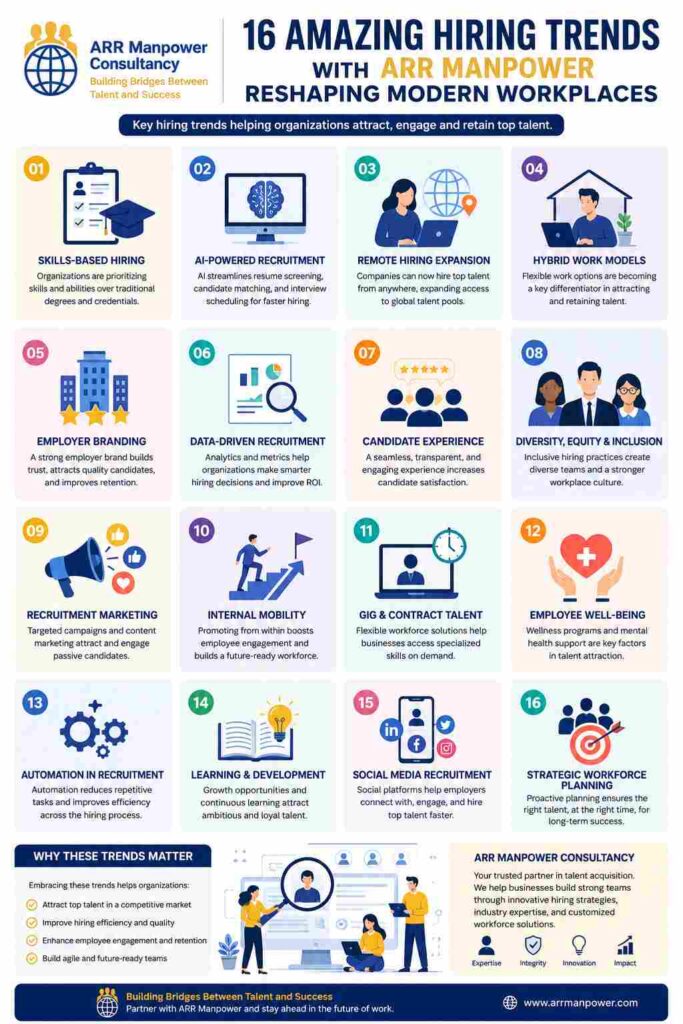
1. Skills-Based Hiring Trends Is Replacing Traditional Credentials
Organizations are increasingly prioritizing skills over formal educational qualifications. Employers now recognize that practical abilities and real-world experience often provide a better indication of job performance than degrees alone.
This shift enables companies to access a broader talent pool while giving opportunities to qualified candidates who may not possess conventional academic backgrounds. Skills assessments, portfolio evaluations, and competency-based interviews are becoming standard recruitment practices.
Businesses partnering with ARR Manpower benefit from recruitment strategies focused on identifying candidates with the right capabilities rather than simply reviewing educational credentials.
2. Artificial Intelligence Is Transforming Recruitment
Artificial intelligence has become an essential tool in modern hiring processes. Recruiters use AI-powered software to screen resumes, identify suitable candidates, schedule interviews, and analyze applicant data.
AI significantly reduces administrative workload, allowing hiring teams to focus on strategic decision-making and candidate engagement. It also improves efficiency by shortening recruitment cycles and enhancing candidate matching accuracy.
Organizations that integrate AI into their recruitment strategies gain a competitive advantage in attracting high-quality talent quickly.
3. Remote Hiring Continues to Expand
Remote work has permanently changed recruitment practices worldwide. Companies are no longer limited to hiring candidates within a specific geographical location.
Remote hiring allows employers to access global talent pools, reduce overhead costs, and improve workforce diversity. Virtual interviews, online assessments, and digital onboarding processes have become standard components of recruitment.
This trend enables organizations to find specialized professionals regardless of location while offering employees greater flexibility and work-life balance.
4. Hybrid Work Models Influence Talent Acquisition
Many professionals now prefer hybrid work arrangements that combine remote and office-based responsibilities. Employers that offer flexible working models are often more attractive to job seekers.
Recruitment teams increasingly highlight workplace flexibility during hiring campaigns because it has become a key factor in candidate decision-making.
Companies embracing hybrid work environments often experience improved employee satisfaction, productivity, and retention rates.
5. Employer Branding Has Become a Priority
A strong employer brand significantly impacts recruitment success. Candidates research organizations extensively before applying for positions.
Companies are investing in employer branding initiatives that showcase workplace culture, employee benefits, career growth opportunities, and organizational values.
Positive online reviews, employee testimonials, and engaging social media content help employers attract qualified professionals while strengthening their reputation in the job market.
6. Data-Driven Recruitment Improves Hiring Decisions
Organizations increasingly rely on analytics to optimize recruitment strategies. Data-driven hiring allows employers to measure recruitment performance, identify bottlenecks, and improve candidate selection processes.
Metrics such as time-to-hire, cost-per-hire, quality-of-hire, and candidate conversion rates provide valuable insights for recruitment teams.
By leveraging workforce analytics, businesses can make informed decisions that enhance hiring outcomes and long-term workforce planning.
7. Candidate Experience Is More Important Than Ever
Job seekers expect smooth, transparent, and engaging recruitment experiences. A complicated application process can discourage talented candidates from pursuing opportunities.
Employers are simplifying application procedures, improving communication, and providing timely updates throughout the recruitment journey.
A positive candidate experience strengthens employer reputation and increases the likelihood of securing top talent in competitive markets.
8. Diversity, Equity, and Inclusion Drive Recruitment Strategies
Organizations recognize the value of diverse workforces in fostering innovation, creativity, and business growth. As a result, diversity, equity, and inclusion initiatives are becoming central to recruitment efforts.
Employers are implementing unbiased hiring practices, expanding sourcing channels, and creating inclusive workplace cultures.
Diverse teams often contribute broader perspectives, improved problem-solving capabilities, and stronger organizational performance.
9. Recruitment Marketing Is Gaining Momentum
Modern recruitment increasingly resembles marketing. Organizations actively promote job opportunities through digital campaigns, social media platforms, content marketing, and targeted advertising.
Recruitment marketing helps employers engage passive candidates who may not be actively seeking new opportunities but are open to attractive offers.
This proactive approach expands talent pipelines and improves recruitment outcomes.
10. Internal Mobility Is Becoming a Strategic Priority
Rather than constantly seeking external candidates, many organizations are focusing on internal talent development.
Internal mobility programs encourage employees to explore new roles, develop additional skills, and advance within the organization. This strategy reduces recruitment costs while improving employee engagement and retention.
Promoting internal career growth demonstrates a commitment to workforce development and organizational stability.
11. Gig and Contract Hiring Continue to Grow
The demand for flexible workforce solutions has increased significantly. Many businesses are utilizing freelancers, consultants, and contract professionals to address project-specific requirements.
This approach allows organizations to access specialized expertise without committing to permanent employment arrangements.
The growth of the gig economy provides businesses with greater workforce flexibility while offering professionals diverse career opportunities.
12. Employee Well-Being Influences Hiring Success
Candidates increasingly evaluate potential employers based on their commitment to employee well-being. Organizations that prioritize mental health, wellness programs, and work-life balance often attract stronger applicants.
Benefits such as counseling support, flexible schedules, wellness initiatives, and comprehensive healthcare packages have become important recruitment tools.
A healthy workforce contributes to higher productivity, reduced absenteeism, and improved employee satisfaction.
13. Automation Streamlines Recruitment Processes
Automation technologies are reducing repetitive recruitment tasks and increasing efficiency. Automated systems can manage application tracking, interview scheduling, candidate communication, and onboarding procedures.
By minimizing manual administrative work, recruiters can dedicate more time to relationship building and strategic talent acquisition activities.
Automation also improves consistency and accuracy throughout the hiring process.
14. Learning and Development Opportunities Attract Talent
Modern professionals seek employers who invest in continuous learning and career advancement. Training programs, certifications, mentorship initiatives, and leadership development opportunities have become powerful recruitment advantages.
Organizations that promote skill development demonstrate long-term commitment to employee success.
Candidates are increasingly attracted to workplaces that support professional growth and future career progression.
15. Social Media Recruitment Remains Effective
Social media platforms play a crucial role in connecting employers with potential candidates. Professional networking sites, industry communities, and digital engagement campaigns help organizations reach broader audiences.
Recruiters use social media to share job openings, showcase company culture, and engage with prospective employees.
This trend enables organizations to build stronger talent pipelines and improve brand visibility among job seekers.
16. Workforce Planning Is Becoming More Strategic
Forward-thinking organizations are adopting long-term workforce planning strategies to prepare for future talent needs. Rather than reacting to vacancies, businesses proactively identify skill gaps and recruitment requirements.
Strategic workforce planning helps organizations align hiring activities with business objectives and market conditions.
By anticipating future workforce demands, companies can build resilient teams capable of adapting to evolving industry challenges.
How ARR Manpower Supports Modern Recruitment
As workplace expectations continue to evolve, organizations require recruitment partners that understand changing market dynamics. ARR Manpower helps businesses navigate emerging workforce challenges through customized recruitment solutions, industry expertise, and access to qualified talent networks.
By combining innovative recruitment practices with a deep understanding of workforce trends, ARR Manpower assists organizations in attracting, evaluating, and retaining exceptional professionals across various industries.
Whether companies require permanent staffing, temporary workforce solutions, executive search services, or large-scale recruitment support, ARR Manpower provides tailored strategies designed to meet modern business needs.
Conclusion
Ultimately, these hiring trends highlight how organizations can build stronger, more adaptable teams in a rapidly changing employment landscape. By embracing data driven recruitment, flexible work models, skills based hiring, and technology enabled talent acquisition, businesses can improve efficiency while attracting high quality candidates.
ARR Manpower supports employers in navigating these developments with practical expertise and market insight. As workforce expectations continue to evolve, companies that stay informed and proactive will be better positioned to secure top talent, strengthen retention, encourage innovation, and achieve sustainable growth. Investing in modern hiring strategies today creates lasting competitive advantages for tomorrow’s workforce success.
The future of recruitment is being shaped by innovation, flexibility, and evolving workforce expectations. These 16 hiring trends highlight the significant changes influencing talent acquisition and workplace development across industries.
Organizations that embrace skills-based hiring, leverage technology, prioritize candidate experience, and invest in employee growth are better positioned to attract and retain top talent. As competition for skilled professionals continues to increase, staying informed about emerging recruitment practices becomes essential for long-term success.
With the guidance and expertise of ARR Manpower, businesses can confidently adapt to changing recruitment landscapes and build high-performing teams that drive sustainable growth. By understanding and implementing these transformative hiring trends, organizations can create stronger, more agile workplaces prepared for the challenges and opportunities of the future.
https://www.linkedin.com/pulse/16-amazing-hiring-trends-arr-manpower-reshaping-consultancy-ea3rc