Introduction
The recruitment industry has changed dramatically over the last decade. Companies are no longer satisfied with traditional hiring methods that consume time and resources while delivering average results. Businesses now expect staffing partners to provide speed, accuracy, scalability, and long-term value. In this competitive environment, ARR manpower consultancy firms must adopt smarter strategies to establish authority and dominate the market.
Success in manpower consulting is not only about finding candidates. It is about building trust, understanding industry trends, and creating efficient systems that connect the right talent with the right organizations. Firms that consistently deliver quality hiring solutions position themselves ahead of competitors and become preferred partners for companies across industries.
Dominance in the staffing sector requires more than aggressive marketing. It involves operational excellence, technology adoption, relationship building, and a strong reputation in the market. Below are seven proven strategies that can help consultancy businesses strengthen their position and create sustainable growth.
https://arrmanpowerconsultancy.com/
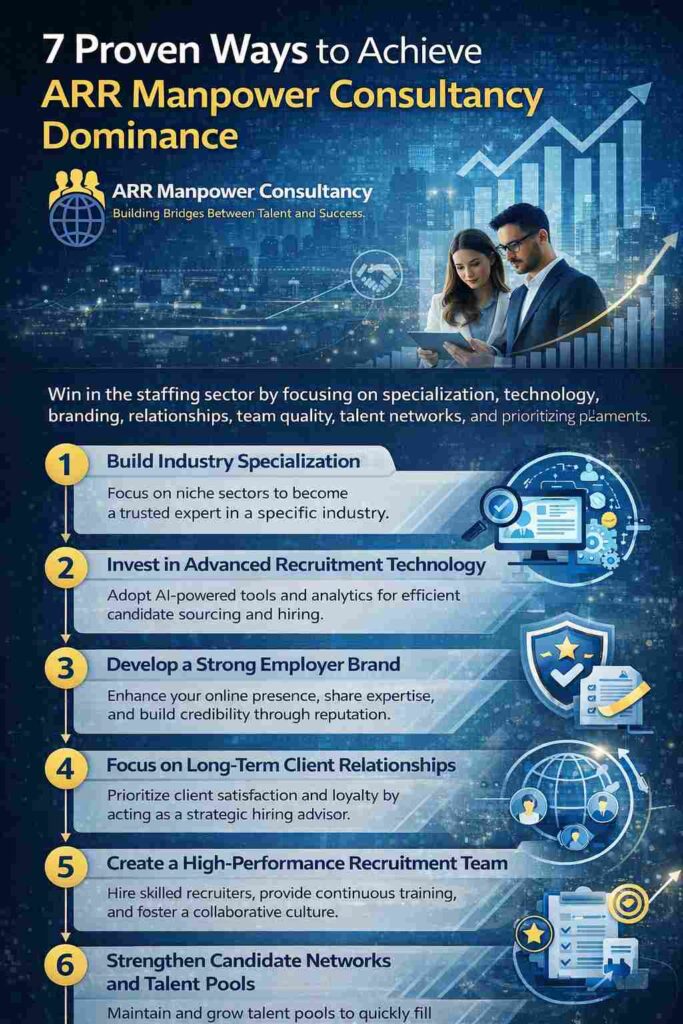
1. Dominance in a Strong Industry Specialization
One of the most effective ways to gain leadership in recruitment is to focus on specific industries instead of trying to serve everyone. Specialized consulting firms are often more successful because they understand the technical requirements, hiring challenges, and market expectations of a particular sector.
For example, recruitment in healthcare differs greatly from hiring in information technology or manufacturing. Each industry has unique qualifications, compliance standards, and workforce demands. A consultancy that develops expertise in one niche becomes more credible and trusted among employers.
Industry specialization offers several advantages:
- Better understanding of client expectations
- Faster identification of qualified candidates
- Stronger professional networks
- Higher placement success rates
- Improved client retention
When a consultancy becomes recognized as an expert in a particular field, businesses naturally prefer its services over general recruiters. This targeted approach helps create a strong market identity and improves long-term profitability.
Another advantage of specialization is reduced competition. Instead of competing with every staffing agency in the market, niche-focused firms compete within a smaller and more manageable space. This creates opportunities for premium pricing and stronger business relationships.
2. Invest in Advanced Recruitment Technology
Technology has become essential in modern hiring practices. Companies expect staffing partners to use digital tools that improve efficiency and provide better candidate experiences. Firms that rely solely on manual processes often struggle to keep pace with competitors.
Modern recruitment software simplifies candidate sourcing, resume screening, interview scheduling, and communication management. Artificial intelligence and automation tools can identify qualified applicants quickly and reduce repetitive administrative work.
Important technologies that can improve recruitment performance include:
- Applicant tracking systems
- AI-powered sourcing tools
- CRM software for client management
- Video interviewing platforms
- Recruitment analytics dashboards
Using advanced technology helps consultancy firms manage large volumes of applications while maintaining accuracy and speed. It also enhances communication between recruiters, clients, and job seekers.
Data analytics is another powerful advantage. Recruitment metrics provide insights into hiring timelines, candidate quality, and client satisfaction. These insights help agencies make informed decisions and continuously improve performance.
Technology adoption also improves employer branding. Candidates appreciate smooth application processes, timely updates, and professional communication. A positive candidate experience strengthens the reputation of the consultancy and encourages referrals.
3. Develop a Powerful Employer Brand
A strong brand is one of the most valuable assets for any consultancy business. Clients prefer agencies with credibility, professionalism, and a proven track record. Candidates also trust firms that demonstrate transparency and expertise.
Building a respected brand requires consistency across all communication channels. The consultancy website, social media profiles, client interactions, and marketing materials should reflect professionalism and reliability.
Several factors contribute to a strong brand image:
Professional Online Presence
A well-designed website with informative content creates confidence among visitors. The website should clearly explain services, industries served, success stories, and contact information.
Thought Leadership
Publishing blogs, industry reports, and hiring insights helps position the consultancy as an authority in the recruitment field. Educational content attracts both employers and job seekers while increasing visibility online.
Client Testimonials
Positive reviews and case studies strengthen credibility. Companies are more likely to trust a staffing partner that has delivered measurable results for other organizations.
Candidate Experience
Job seekers remember how they are treated during the hiring process. Timely communication, honest feedback, and respectful interactions contribute to a positive reputation.
A recognizable and respected brand creates a competitive advantage. Clients often choose firms they trust, even if other agencies offer lower prices.
4. Focus on Long-Term Client Relationships
Many recruitment firms focus heavily on acquiring new clients while neglecting existing relationships. However, long-term partnerships often generate the highest value and stability.
Strong client relationships are built through communication, consistency, and understanding business goals. A consultancy should act as a strategic hiring advisor rather than simply filling vacancies.
Ways to strengthen client relationships include:
- Understanding company culture and workforce needs
- Providing regular hiring updates
- Offering market insights and salary trends
- Delivering post-placement support
- Maintaining transparency throughout the hiring process
When clients view a consultancy as a trusted partner, they are more likely to provide repeat business and long-term contracts. Repeat clients also reduce marketing costs because retaining existing customers is generally less expensive than acquiring new ones.
Relationship-driven recruitment creates opportunities for upselling services such as executive search, workforce planning, and contract staffing. It also increases referrals, which are highly valuable in the consulting industry.
Trust is particularly important during challenging hiring periods. Companies prefer agencies that remain dependable under pressure and continue delivering quality talent despite market fluctuations.
5. Create a High-Performance Recruitment Team
A consultancy can only succeed when its recruiters are skilled, motivated, and knowledgeable. The recruitment team directly influences candidate quality, client satisfaction, and overall business growth.
Hiring experienced recruiters is important, but continuous training is equally essential. Recruitment trends, hiring technologies, and candidate expectations evolve rapidly. Teams must stay updated to remain competitive.
Key areas for recruiter development include:
- Communication skills
- Negotiation techniques
- Industry knowledge
- Candidate assessment methods
- Relationship management
- Technology proficiency
Performance incentives can also improve productivity and morale. Recognizing achievements encourages recruiters to maintain high standards and exceed targets.
Collaboration within the team is another critical factor. Recruiters should share insights, candidate databases, and market information to improve overall efficiency. A supportive work environment increases employee retention and strengthens organizational culture.
Leadership also plays a major role in team performance. Managers should provide clear goals, regular feedback, and professional development opportunities. A motivated team creates better client experiences and contributes significantly to business expansion.
6. Strengthen Candidate Networks and Talent Pools
Recruitment success depends heavily on access to quality candidates. Firms that maintain strong talent pipelines can respond quickly to client requirements and reduce hiring timelines.
Building a talent network requires ongoing engagement rather than waiting for job openings. Recruiters should consistently connect with professionals through online platforms, networking events, referrals, and industry communities.
Effective talent pool strategies include:
Maintaining Candidate Databases
Well-organized databases help recruiters identify suitable candidates quickly. Detailed profiles, skills, and career preferences make future placements more efficient.
Engaging Passive Candidates
Many highly qualified professionals are not actively searching for jobs. Regular communication helps maintain relationships with these passive candidates.
Using Social Media Strategically
Platforms such as LinkedIn provide valuable opportunities for sourcing and networking. Sharing career advice and job updates increases visibility among professionals.
Hosting Recruitment Events
Webinars, career fairs, and networking events help consultancies connect with potential candidates while strengthening brand awareness.
A strong talent network improves placement quality and reduces dependency on expensive advertising campaigns. It also enhances responsiveness when clients need urgent hiring support.
Candidates are more likely to work with recruiters who maintain genuine professional relationships rather than contacting them only when vacancies arise.
7. Prioritize Quality Over Quantity
Some recruitment firms focus heavily on filling positions quickly, often sacrificing candidate quality in the process. While speed is important, long-term success depends on delivering employees who perform well and remain with the organization.
Poor placements damage client trust and increase turnover costs. High-quality recruitment, on the other hand, strengthens relationships and enhances reputation.
Prioritizing quality involves:
- Conducting detailed candidate evaluations
- Understanding client culture and expectations
- Performing skill assessments
- Verifying references carefully
- Ensuring proper communication throughout the process
Quality-focused recruitment leads to better retention rates and stronger client satisfaction. Companies appreciate staffing partners who value long-term success rather than short-term transactions.
Consultancies should also measure performance using meaningful metrics such as retention rates, client feedback, and placement success instead of only counting placements.
A commitment to quality differentiates leading agencies from average competitors. Over time, this reputation attracts larger clients and premium opportunities.
The Role of Adaptability in Recruitment Success
The recruitment landscape changes constantly due to technological innovation, economic conditions, and workforce expectations. Firms that adapt quickly are more likely to maintain growth and remain competitive.
Remote work, hybrid hiring models, and global talent sourcing have transformed traditional recruitment practices. Consultancies must stay informed about these trends and adjust strategies accordingly.
Adaptability also involves understanding generational differences in the workforce. Younger professionals often prioritize flexibility, career growth, and company culture alongside salary. Recruiters who understand these priorities can better match candidates with employers.
Continuous learning is essential for long-term success. Consultancy firms should regularly evaluate processes, gather feedback, and implement improvements. Businesses that resist change risk losing relevance in a rapidly evolving market.
Why Reputation Matters More Than Ever
In the digital era, reputation spreads quickly. Online reviews, social media interactions, and candidate experiences significantly influence public perception. A single negative experience can impact future business opportunities.
Maintaining a positive reputation requires integrity, transparency, and consistent service quality. Honest communication is especially important during difficult situations such as delayed hiring processes or candidate rejections.
Satisfied clients and candidates often become brand advocates who recommend the consultancy to others. Word-of-mouth referrals remain one of the most powerful growth drivers in the staffing industry.
Firms should also monitor online feedback and respond professionally to concerns. Demonstrating accountability strengthens trust and shows commitment to service excellence.
Conclusion
Achieving leadership in the staffing industry requires strategic planning, operational excellence, and long-term commitment. Consultancy firms that focus on specialization, technology, branding, relationships, team development, talent networks, and quality recruitment position themselves for sustainable success.
The recruitment market will continue evolving, creating both challenges and opportunities. Businesses that adapt quickly and maintain high service standards are more likely to build strong reputations and expand their influence.
Dominance in manpower consulting is not achieved overnight. It is the result of consistent effort, client trust, and the ability to deliver meaningful hiring solutions. By implementing these seven proven strategies, consultancy firms can strengthen their market position and create lasting growth in an increasingly competitive industry.