Introduction
Recruitment in 2026 is no longer just about posting jobs and waiting for applications. The hiring landscape has evolved into a highly strategic, technology-driven, and candidate-focused process. Organizations that rely on outdated methods often struggle to attract and retain high-performing professionals.
To stay ahead, businesses must adopt innovative and proven recruitment techniques that align with modern workforce expectations. From leveraging artificial intelligence to focusing on candidate experience, successful hiring now requires a combination of strategy, data, and human insight.
In this guide, we reveal 14 powerful recruitment techniques that can help organizations improve hiring efficiency, reduce costs, and build a strong workforce.
https://arrmanpowerconsultancy.com/
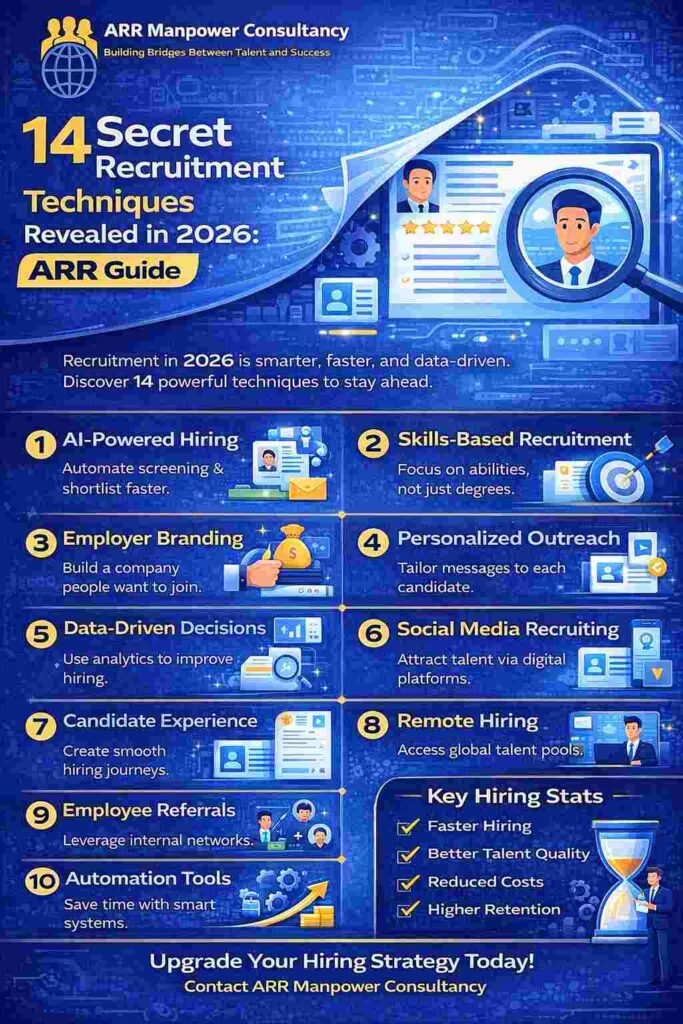
1. AI-Powered Talent Sourcing
Artificial intelligence has transformed how companies identify and engage candidates. AI tools can scan thousands of profiles, match skills, and shortlist the most suitable applicants within minutes.
Key Benefits
- Faster candidate screening
- Reduced manual workload
- Improved accuracy in matching
Implementation Tip
Use AI-driven platforms to automate initial screening while maintaining human oversight for final decisions.
2. Skills-Based Hiring Approach
Traditional hiring often focuses on degrees and experience. However, modern recruitment prioritizes skills and competencies.
Why It Works
- Expands the talent pool
- Identifies capable candidates regardless of background
- Improves job performance
How to Apply
Incorporate skill assessments and real-world tasks into your hiring process.
3. Employer Branding Through Storytelling
Candidates are drawn to organizations with a strong identity. Storytelling helps communicate your company’s mission, culture, and values.
Effective Strategies
- Share employee journeys
- Highlight workplace achievements
- Use video content for authenticity
Outcome
A compelling employer brand attracts candidates who align with your vision.
4. Hyper-Personalized Candidate Outreach
Generic messages often fail to capture attention. Personalized communication significantly improves response rates.
Best Practices
- Address candidates by name
- Reference their skills and experience
- Tailor messages to their career goals
Impact
Candidates feel valued and are more likely to engage with your organization.
5. Data-Driven Recruitment Decisions
Data analytics provides valuable insights into hiring performance.
Metrics to Track
- Time-to-hire
- Cost-per-hire
- Candidate quality
- Source effectiveness
Result
Data-driven strategies lead to more informed and effective hiring decisions.
6. Social Media Talent Engagement
Social media platforms have become essential tools for recruitment.
Popular Platforms
- LinkedIn for professional networking
- Instagram for showcasing culture
- Twitter for updates and engagement
Strategy
Regularly share content that reflects your workplace environment and opportunities.
7. Candidate Experience Optimization
A positive candidate experience enhances your company’s reputation.
Key Elements
- Clear communication
- Quick response times
- Transparent hiring process
Benefit
Even unsuccessful candidates may recommend your company to others.
8. Remote Hiring and Global Talent Access
Remote work has expanded the talent pool beyond geographical boundaries.
Advantages
- Access to diverse talent
- Increased flexibility
- Cost savings
Implementation
Use virtual interviews and remote onboarding tools to streamline the process.
9. Employee Referral Programs
Referrals remain one of the most effective recruitment techniques.
How to Build a Strong Program
- Offer incentives
- Simplify referral submission
- Recognize employee contributions
Outcome
Referred candidates often perform better and stay longer.
10. Recruitment Automation Tools
Automation simplifies repetitive tasks such as scheduling and communication.
Examples
- Applicant Tracking Systems (ATS)
- Chatbots for candidate queries
- Automated email responses
Benefit
Saves time and improves efficiency.
11. Diversity and Inclusion Hiring Strategies
Diverse teams bring innovation and better decision-making.
How to Promote Diversity
- Remove bias from job descriptions
- Use blind recruitment techniques
- Encourage inclusive hiring practices
Impact
Enhances company culture and performance.
12. Continuous Talent Pipeline Building
Waiting until a position opens can delay hiring.
Solution
Build a talent pipeline by:
- Engaging passive candidates
- Maintaining a candidate database
- Networking regularly
Result
Faster hiring when opportunities arise.
13. Employer Value Proposition (EVP) Development
Your EVP defines what employees gain by working with you.
Key Components
- Career growth opportunities
- Work-life balance
- Compensation and benefits
Why It Matters
A strong EVP attracts and retains top talent.
14. Strategic Collaboration with Recruitment Experts
Partnering with recruitment agencies provides access to expertise and resources.
Benefits
- Faster hiring cycles
- Access to specialized talent
- Reduced hiring risks
Outcome
Improved hiring quality and efficiency.
Common Recruitment Mistakes to Avoid
Even with advanced techniques, organizations must avoid common errors:
- Rushing the hiring process
- Ignoring cultural fit
- Overlooking soft skills
- Poor communication with candidates
Avoiding these mistakes ensures better hiring outcomes.
Future Trends in Recruitment
Recruitment will continue to evolve with advancements in technology and changing workforce expectations.
Key Trends
- Increased use of AI and automation
- Focus on employee well-being
- Growth of remote and hybrid work
- Emphasis on skills over qualifications
Organizations that adapt to these trends will remain competitive.
Practical Implementation Tips
To apply these techniques effectively:
- Start with small changes and scale gradually
- Train HR teams on new tools and strategies
- Continuously evaluate hiring performance
- Stay updated with industry trends
Consistency is key to long-term success.
Conclusion
Recruitment in 2026 is no longer just about posting vacancies and waiting for applications to arrive. The hiring landscape has evolved into a highly competitive environment where organizations must combine technology, data, employer branding, and human-centered strategies to attract and retain top talent. The 14 recruitment techniques discussed in this guide demonstrate how modern businesses can gain a significant advantage by adapting to changing workforce expectations and market trends.
One of the most important lessons from these recruitment strategies is that successful hiring depends on understanding candidates as individuals rather than simply evaluating resumes. Today’s professionals seek meaningful work, career growth opportunities, flexible work arrangements, and a positive company culture. Organizations that recognize these priorities and align their recruitment processes accordingly are far more likely to secure high-quality talent.
Artificial intelligence, predictive analytics, and recruitment automation continue to transform hiring processes, but technology alone is not the solution. While automation can streamline candidate sourcing, screening, and communication, human judgment remains essential for assessing cultural fit, leadership potential, and long-term compatibility. The most effective recruiters in 2026 are those who successfully balance technological efficiency with genuine human interaction.
Another critical takeaway is the growing importance of employer branding. Candidates now research companies extensively before applying, often reviewing social media profiles, employee testimonials, company values, and workplace culture. Businesses that actively build a strong employer brand create trust and credibility, making it easier to attract skilled professionals even in highly competitive industries.
Talent communities and proactive recruitment strategies have also become essential. Rather than waiting for vacancies to appear, forward-thinking organizations continuously engage with potential candidates and maintain relationships with promising professionals. This approach shortens hiring timelines and ensures a stronger pipeline of qualified talent when positions become available.
Data-driven recruitment has emerged as a major competitive advantage. Companies that track hiring metrics, candidate engagement, source effectiveness, and retention outcomes can make smarter decisions and continuously improve their recruitment performance. By leveraging accurate data, organizations reduce hiring risks, optimize recruitment spending, and achieve better long-term results.
Diversity and inclusion remain central to modern hiring success. Businesses that embrace diverse talent pools benefit from broader perspectives, improved innovation, and stronger organizational performance. Inclusive recruitment practices not only help companies meet workforce expectations but also strengthen their reputation among candidates, clients, and stakeholders.
Employee referrals continue to be one of the most effective recruitment channels because they combine trust, speed, and quality. Encouraging employees to participate in the hiring process creates a stronger connection between recruitment and organizational culture. At the same time, investing in candidate experience ensures that every applicant leaves with a positive impression of the company, regardless of the hiring outcome.
As workforce dynamics continue to change, adaptability will be the defining characteristic of successful recruiters. Remote work, hybrid teams, skills-based hiring, and evolving candidate expectations require organizations to remain flexible and open to innovation. Companies that resist change risk losing access to top talent, while those that embrace modern recruitment strategies position themselves for sustainable growth.
Ultimately, recruitment is more than filling positions—it is about building the future of an organization. Every hiring decision influences productivity, culture, customer satisfaction, and business success. By implementing these 14 secret recruitment techniques, organizations can strengthen their talent acquisition efforts, reduce hiring challenges, and create a workforce capable of thriving in an increasingly competitive marketplace.
ARR believes that the future of recruitment belongs to organizations that combine strategic planning, advanced technology, and a people-first approach. As 2026 continues to reshape the employment landscape, businesses that invest in smarter recruitment practices today will be better prepared to attract exceptional talent, achieve long-term growth, and maintain a lasting competitive advantage in the years ahead.
These proven recruitment strategies will drive success across industries globally.
Recruitment in 2026 requires a strategic and innovative approach. By implementing these 14 secret techniques, organizations can attract better candidates, improve hiring efficiency, and build a strong workforce.
Success in hiring is not about following trends blindly but adapting strategies that align with your business goals. Companies that invest in modern recruitment practices will gain a significant competitive advantage.
Final Thoughts
The future of recruitment is dynamic, data-driven, and candidate-focused. Organizations that embrace change and continuously improve their hiring strategies will not only attract top talent but also create a workplace where employees thrive.