Introduction
The hiring landscape has changed dramatically over the last decade. Advances in technology, changing workforce expectations, remote work opportunities, and increased competition for skilled professionals have transformed how organizations attract and retain talent. Yet many companies continue to follow recruitment methods that were effective years ago but no longer deliver the same results.
An outdated recruitment strategy can quietly damage business growth. It may lead to longer hiring cycles, increased turnover, higher recruitment costs, and difficulty attracting qualified candidates. Organizations often assume labor shortages or market conditions are responsible for hiring challenges when the real issue lies within their own hiring approach.
Recognizing the warning signs early can help businesses adapt before talent acquisition problems become severe. By evaluating current practices and embracing modern recruitment methods, companies can improve hiring outcomes and build stronger teams.
Here are seven alarming signs that indicate your recruitment strategy may be outdated and in need of immediate attention.
https://arrmanpowerconsultancy.com/
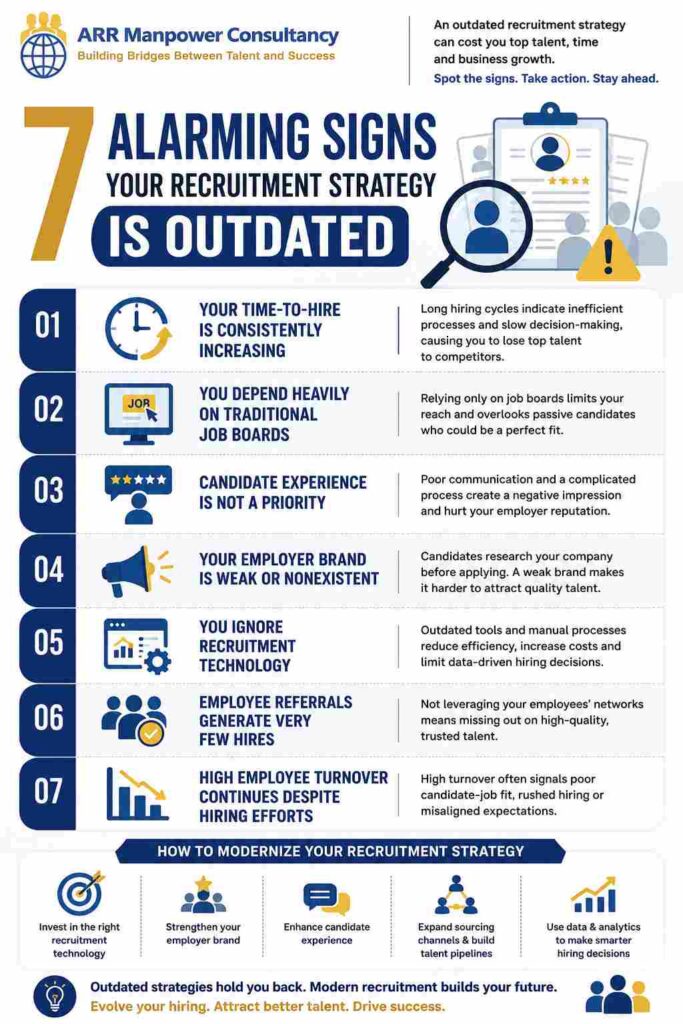
1. Your Time-to-Hire Is Consistently Increasing
One of the clearest indicators of an outdated hiring process is a growing time-to-hire metric. If positions remain vacant for weeks or even months, your recruitment procedures may not align with current market expectations.
Today’s candidates expect efficient communication and quick decision-making. Highly skilled professionals often receive multiple offers within a short period. Organizations that move slowly risk losing top talent to competitors.
Several factors contribute to lengthy hiring timelines:
- Too many approval layers
- Delayed interview scheduling
- Manual resume screening
- Poor coordination among hiring managers
- Inefficient communication with candidates
When hiring takes too long, businesses experience productivity gaps and increased workloads for existing employees. Vacant positions can also affect customer service, project completion, and overall operational efficiency.
Modern organizations streamline recruitment by leveraging applicant tracking systems, automated workflows, and structured interview processes. Faster hiring decisions help secure quality candidates before they move elsewhere.
If your company regularly struggles to fill positions quickly, it may be time to reassess your approach and eliminate unnecessary delays.
2. You Depend Heavily on Traditional Job Boards
Job boards remain useful recruitment tools, but relying on them exclusively can limit access to top talent.
Today’s workforce engages across multiple digital platforms. Many qualified professionals are passive candidates who are not actively searching for jobs but may be open to the right opportunity. Traditional job postings often fail to reach this valuable talent pool.
An outdated strategy typically includes:
- Posting vacancies on the same websites repeatedly
- Waiting for applications to arrive
- Limited use of social recruiting
- No talent community development
- Minimal employer branding efforts
Modern recruiters actively source candidates through professional networks, social media platforms, industry communities, and referral programs. They create talent pipelines rather than starting from scratch whenever a position becomes available.
Diversifying sourcing channels increases candidate quality and expands reach. Organizations that embrace proactive recruiting often experience better hiring outcomes and reduced vacancy periods.
If your hiring process begins and ends with job boards, you may be missing a large segment of qualified professionals.
3. Candidate Experience Is Not a Priority
Candidate experience has become a major factor in successful hiring. Job seekers today share their experiences online and often research potential employers before applying.
A poor candidate experience can damage your reputation and discourage talented individuals from pursuing opportunities with your organization.
Warning signs include:
- Lack of communication after applications
- Long periods without updates
- Complicated application processes
- Disorganized interviews
- Generic rejection messages
- No feedback after interviews
Candidates expect transparency and professionalism throughout the hiring journey. Even unsuccessful applicants can become future customers, referrals, or potential hires if treated respectfully.
Organizations that prioritize candidate experience often see:
- Higher application completion rates
- Improved employer reputation
- Better offer acceptance rates
- Increased candidate referrals
Creating a positive experience does not require major investments. Timely communication, clear expectations, and respectful interactions can significantly improve perceptions of your company.
Ignoring candidate experience is a strong sign that recruitment practices have not evolved with modern workforce expectations.
4. Your Employer Brand Is Weak or Nonexistent
Many organizations focus heavily on advertising open positions while neglecting their employer brand. This approach is becoming increasingly ineffective in a competitive labor market.
Candidates want more than salary information. They want to understand company culture, career growth opportunities, leadership values, and workplace environment before applying.
Signs of a weak employer brand include:
- Low engagement on career pages
- Limited employee testimonials
- Inconsistent messaging
- Poor online reviews
- Lack of social media presence
- Minimal visibility in industry communities
A strong employer brand helps attract candidates naturally by showcasing what makes your organization unique.
Modern job seekers often evaluate:
- Company mission
- Employee satisfaction
- Workplace flexibility
- Diversity and inclusion initiatives
- Professional development opportunities
Organizations with compelling employer brands typically attract more qualified applicants and spend less on recruitment advertising.
If potential candidates know little about your company beyond a job description, your employer branding efforts may need significant improvement.
5. You Ignore Recruitment Technology
Technology has revolutionized talent acquisition. Companies that continue relying solely on spreadsheets, email chains, and manual processes often struggle to compete for talent.
Modern recruitment tools improve efficiency, accuracy, and candidate engagement.
Examples include:
- Applicant tracking systems
- AI-powered sourcing tools
- Automated interview scheduling
- Recruitment analytics platforms
- Candidate relationship management systems
- Video interviewing solutions
Organizations that avoid technology often face challenges such as:
- Administrative overload
- Inconsistent candidate evaluations
- Data management issues
- Reduced recruiter productivity
- Higher recruitment costs
Technology does not replace human decision-making. Instead, it eliminates repetitive tasks and allows recruiters to focus on relationship building and strategic hiring activities.
Recruitment analytics also provide valuable insights into hiring performance, helping organizations identify bottlenecks and optimize processes.
If your team spends excessive time on manual administrative work, your recruitment strategy may be lagging behind industry standards.
6. Employee Referrals Generate Very Few Hires
Employee referral programs consistently rank among the most effective hiring channels. Referred candidates often demonstrate stronger cultural alignment, higher retention rates, and faster onboarding success.
If referrals contribute only a small percentage of hires, your strategy may not be leveraging one of the most valuable recruitment resources available.
Common issues include:
- No formal referral program
- Unclear referral guidelines
- Lack of incentives
- Poor internal communication
- Delayed referral follow-up
Employees serve as brand ambassadors. Their networks frequently contain professionals with relevant skills and industry experience.
Successful referral programs offer:
- Simple submission processes
- Transparent communication
- Timely updates
- Recognition for participation
- Meaningful rewards
Organizations that actively encourage referrals often reduce recruitment expenses while improving candidate quality.
A weak referral program may indicate an overreliance on outdated sourcing methods and missed opportunities to tap into trusted professional networks.
7. High Employee Turnover Continues Despite Hiring Efforts
Many companies focus heavily on filling vacancies while overlooking the quality and long-term success of their hires.
High turnover is often a symptom of deeper recruitment issues rather than solely retention challenges.
Potential causes include:
- Poor candidate-job matching
- Inaccurate job descriptions
- Inadequate screening processes
- Misaligned expectations
- Cultural fit issues
- Rushed hiring decisions
An effective recruitment strategy extends beyond simply making hires. It ensures candidates possess the skills, values, and motivation needed for long-term success.
Organizations should regularly analyze:
- First-year turnover rates
- New hire performance metrics
- Employee engagement levels
- Hiring manager satisfaction
- Exit interview feedback
These insights reveal whether recruitment efforts are producing sustainable results.
When turnover remains high despite continuous hiring activity, it often signals that recruitment practices require significant modernization and strategic refinement.
How to Modernize Your Recruitment Strategy
Recognizing outdated practices is only the first step. Businesses must take action to remain competitive in today’s talent market.
Consider implementing the following improvements:
Invest in Recruitment Technology
Adopt tools that automate administrative tasks and improve hiring efficiency. Technology can streamline sourcing, screening, scheduling, and reporting.
Strengthen Employer Branding
Showcase company culture through employee stories, social media content, and career-focused messaging. Transparency builds trust with potential candidates.
Enhance Candidate Experience
Simplify applications, communicate consistently, and create a professional interview process that reflects organizational values.
Expand Sourcing Channels
Combine job boards with social recruiting, networking events, referral programs, and talent pipeline development.
Use Data-Driven Hiring Decisions
Track key metrics such as time-to-hire, source effectiveness, quality of hire, and candidate satisfaction.
Focus on Workforce Planning
Develop proactive hiring strategies aligned with future business goals rather than reacting only when vacancies arise.
Build Long-Term Talent Relationships
Maintain engagement with previous applicants, passive candidates, and industry professionals to create a sustainable talent pipeline.
Conclusion
Recruitment continues to evolve as workforce expectations, technology, and business needs change. Organizations that rely on outdated hiring practices often face increasing challenges attracting and retaining skilled professionals.
Long hiring cycles, poor candidate experiences, weak employer branding, limited sourcing channels, lack of technology adoption, ineffective referral programs, and persistent turnover are all warning signs that your recruitment strategy may no longer be effective.
The good news is that these issues can be addressed through thoughtful improvements and modern talent acquisition practices. Companies that embrace innovation, prioritize candidate engagement, and leverage data-driven recruitment methods position themselves for long-term hiring success.
By regularly evaluating your hiring processes and adapting to market changes, your organization can attract stronger candidates, reduce recruitment costs, improve retention, and build a workforce capable of driving sustained business growth.
Rather than viewing recruitment as a transactional activity, successful businesses treat it as a strategic function that directly influences organizational performance. The sooner outdated practices are identified and replaced, the sooner companies can gain a competitive advantage in today’s increasingly challenging talent market.
base for xrumer