Introduction
Recruitment has become one of the most complex business functions in India. As industries expand, technology evolves, and workforce expectations shift, employers face increasing difficulties in attracting and retaining qualified professionals. Organizations across sectors—from IT and manufacturing to healthcare and retail—are struggling to identify the right candidates while maintaining hiring efficiency and controlling costs.
India’s workforce is vast, but finding individuals with the right skills, experience, and cultural fit remains a significant challenge. Companies must navigate changing labor market dynamics, talent shortages, competitive hiring environments, and evolving employee expectations.
This article explores twelve major recruitment challenges Indian employers face today and highlights their impact on organizational growth and workforce planning.
https://arrmanpowerconsultancy.com
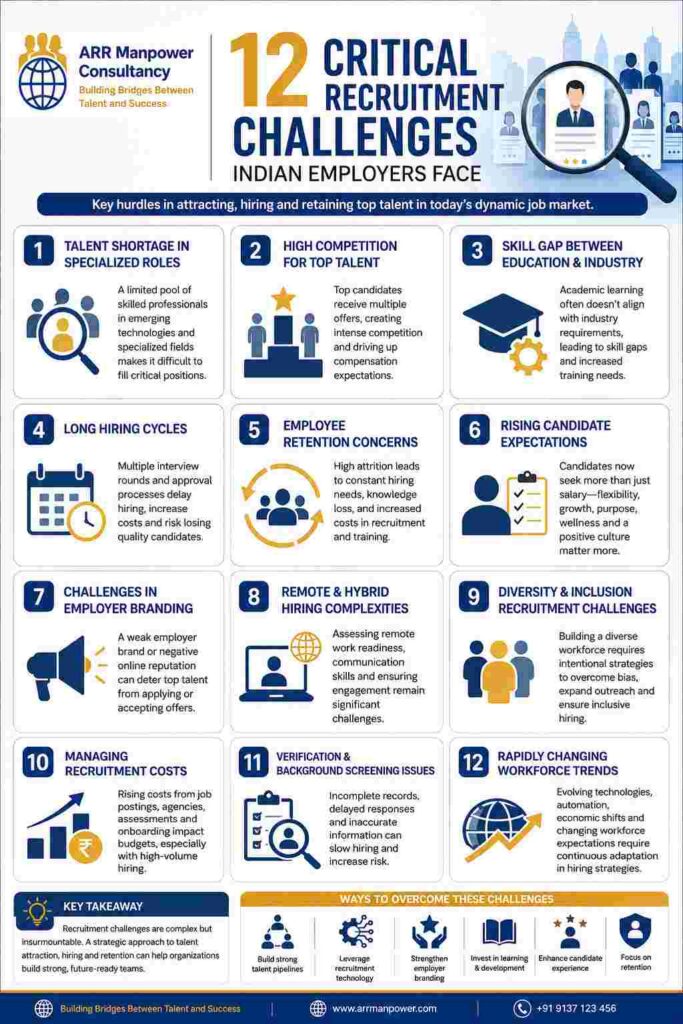
1. Talent Shortage in Specialized Roles for Indian Employers
One of the biggest recruitment challenges is the shortage of qualified professionals in specialized fields. Industries such as information technology, artificial intelligence, cybersecurity, healthcare, engineering, and data analytics require highly skilled talent.
Although India produces a large number of graduates every year, many employers find that candidates lack the specific expertise needed for advanced positions. As a result, organizations spend considerable time searching for suitable applicants.
This shortage increases hiring timelines and often forces businesses to offer higher compensation packages to secure skilled professionals. Smaller companies are particularly affected because they may not be able to compete with larger organizations that have stronger employer brands and larger budgets.
2. High Competition for Top Talent
The demand for high-performing professionals has intensified across industries. Companies frequently compete for the same pool of qualified candidates, especially in technology, finance, and healthcare sectors.
Top candidates often receive multiple job offers simultaneously. This creates pressure on employers to speed up recruitment processes and enhance compensation packages. Delays in decision-making can result in losing desirable candidates to competitors.
The competition is no longer limited to domestic organizations. International firms hiring remotely have expanded opportunities for Indian professionals, making the talent market even more competitive.
3. Skill Gap Between Education and Industry Requirements
Many employers report a significant gap between academic qualifications and workplace readiness. While candidates may possess degrees and certifications, they often lack practical skills required for modern business environments.
Industries increasingly seek professionals who can contribute immediately without extensive training. However, many fresh graduates require additional development in communication, technical competencies, problem-solving abilities, and workplace collaboration.
This mismatch creates additional costs for employers who must invest in onboarding, training programs, and skill development initiatives before employees become fully productive.
4. Long Hiring Cycles
Lengthy recruitment processes remain a common concern for organizations across India. Multiple interview rounds, approval procedures, assessment tests, and background verification checks can significantly delay hiring decisions.
Extended hiring cycles create several problems:
- Increased recruitment costs
- Loss of candidate interest
- Higher workload for existing employees
- Delayed project execution
Candidates today expect faster responses and efficient hiring experiences. Organizations that take too long to make decisions often lose strong applicants to companies with more streamlined recruitment processes.
Reducing unnecessary steps while maintaining quality assessments has become essential for successful hiring outcomes.
5. Employee Retention Concerns
Recruitment does not end when a candidate joins an organization. Retaining employees has become equally challenging. High attrition rates force companies to repeatedly invest in hiring and training replacements.
Several factors contribute to employee turnover, including:
- Better salary opportunities
- Limited career growth
- Poor work-life balance
- Lack of engagement
- Inadequate leadership support
Frequent resignations create disruptions in productivity and increase recruitment pressure. Employers must focus on long-term employee satisfaction to reduce turnover and stabilize workforce planning.
6. Rising Candidate Expectations
Modern job seekers evaluate employers differently than previous generations. Salary remains important, but candidates increasingly consider additional factors when selecting an employer.
Common expectations include:
- Flexible work arrangements
- Career advancement opportunities
- Learning and development programs
- Inclusive workplace culture
- Employee wellness initiatives
Organizations that fail to address these expectations may struggle to attract qualified professionals. Candidates are now more selective and often prioritize overall employee experience rather than compensation alone.
This shift requires employers to rethink their value proposition and create workplaces that align with changing workforce preferences.
7. Challenges in Employer Branding
Employer branding plays a crucial role in attracting talent. Candidates frequently research organizations before applying for positions. Online reviews, social media presence, employee testimonials, and company reputation influence hiring outcomes.
Many organizations underestimate the importance of employer branding. A weak or unclear employer image can discourage qualified professionals from considering job opportunities.
Strong employer branding helps organizations:
- Attract better candidates
- Reduce recruitment costs
- Improve offer acceptance rates
- Enhance employee retention
Building a positive reputation requires consistent communication, transparency, and a focus on employee satisfaction.
8. Remote and Hybrid Hiring Complexities
The rise of remote and hybrid work models has transformed recruitment practices. While these arrangements expand access to talent, they also introduce new challenges.
Employers often face difficulties in:
- Assessing remote work readiness
- Evaluating communication skills virtually
- Maintaining engagement during hiring
- Managing virtual onboarding
Remote hiring requires different evaluation techniques compared to traditional recruitment methods. Organizations must adapt their processes to ensure they can effectively identify candidates who can succeed in distributed work environments.
Additionally, remote opportunities increase competition because candidates can apply to employers located anywhere in the world.
9. Diversity and Inclusion Recruitment Challenges
Many organizations aim to create diverse and inclusive workplaces. However, achieving diversity goals can be difficult without structured recruitment strategies.
Employers may encounter challenges such as:
- Limited representation in applicant pools
- Unconscious bias during selection
- Lack of inclusive hiring practices
- Insufficient outreach efforts
A diverse workforce brings broader perspectives, innovation, and improved decision-making. Therefore, organizations increasingly focus on developing fair and equitable hiring processes.
Building inclusive recruitment systems requires continuous evaluation, training, and commitment from leadership teams.
10. Managing Recruitment Costs
Hiring expenses can quickly increase, particularly when organizations experience high-volume recruitment or frequent employee turnover.
Common recruitment costs include:
- Job advertisements
- Recruitment agency fees
- Assessment tools
- Interview expenses
- Background verification
- Onboarding activities
Inefficient hiring processes often result in wasted resources. Employers must balance recruitment quality with budget considerations to ensure sustainable talent acquisition strategies.
Investing in technology, workforce planning, and talent pipelines can help reduce long-term hiring expenses while improving recruitment outcomes.
11. Verification and Background Screening Issues
Background verification is an important component of modern recruitment. Employers need confidence that candidates possess the qualifications and experience stated in their applications.
However, verification processes can present challenges such as:
- Delayed document submissions
- Inaccurate employment records
- Educational credential discrepancies
- Incomplete reference checks
These issues can extend hiring timelines and increase administrative workloads. Organizations must establish reliable verification procedures to minimize hiring risks and ensure compliance with internal policies.
Accurate screening helps employers make informed hiring decisions while protecting organizational integrity.
12. Rapidly Changing Workforce Trends
The employment landscape continues to evolve at a rapid pace. New technologies, automation, digital transformation, and changing employee preferences regularly reshape hiring requirements.
Employers must continuously adapt to:
- Emerging skill requirements
- Technological advancements
- Industry disruptions
- New workforce expectations
- Economic fluctuations
Failure to respond to these changes can result in talent shortages and reduced competitiveness. Successful organizations monitor labor market trends and proactively adjust their recruitment strategies.
Workforce planning has become a strategic function rather than a purely administrative activity. Companies that anticipate future talent needs are better positioned for long-term growth.
Strategies to Overcome Recruitment Challenges
While recruitment obstacles are significant, organizations can take proactive measures to improve hiring outcomes.
Effective strategies include:
Strengthening Talent Pipelines
Building relationships with educational institutions, industry networks, and professional communities creates access to future talent pools.
Leveraging Recruitment Technology
Applicant tracking systems, artificial intelligence tools, and automation platforms can improve hiring efficiency and reduce administrative burdens.
Enhancing Employer Branding
Organizations should actively communicate their culture, values, career opportunities, and employee success stories to attract quality candidates.
Investing in Employee Development
Upskilling and reskilling programs help address skill shortages while improving retention and workforce capabilities.
Improving Candidate Experience
Transparent communication, timely feedback, and streamlined hiring processes create positive impressions and increase offer acceptance rates.
Focusing on Retention
Reducing employee turnover minimizes recurring hiring costs and strengthens organizational stability.
Conclusion
Recruitment in India presents a unique set of challenges that continue to evolve with changing market conditions. Talent shortages, skill gaps, high competition, rising candidate expectations, and workforce transformation have made hiring more complex than ever before.
Organizations that rely solely on traditional hiring approaches may struggle to secure the talent needed for growth. Success requires a strategic recruitment framework that combines technology, employer branding, workforce planning, employee development, and retention initiatives.
By understanding and addressing these twelve critical recruitment challenges, Indian employers can strengthen their hiring processes, attract high-quality professionals, and build resilient teams capable of supporting long-term business success.
Furthermore, organizations that continuously evaluate their talent acquisition strategies are more likely to stay ahead in an increasingly competitive employment market.
Adopting data-driven hiring practices, nurturing talent communities, and fostering a positive workplace culture can significantly improve recruitment outcomes. As workforce expectations continue to evolve, employers must remain agile and responsive to changing trends. A proactive approach to hiring will help businesses secure the right talent and maintain sustainable growth.