Introduction
Healthcare organizations operate in one of the most demanding environments in the modern workforce. Hospitals, clinics, diagnostic centers, rehabilitation facilities, and long-term care institutions depend on qualified professionals to deliver quality patient care while maintaining operational efficiency. However, workforce shortages, increasing patient expectations, regulatory requirements, and employee burnout have made staffing one of the biggest challenges in the healthcare sector.
A well-planned workforce strategy can help healthcare providers maintain continuity of care, reduce recruitment costs, improve employee retention, and enhance patient satisfaction. This is where ARR Manpower Consultancy plays a significant role by helping organizations build a reliable and skilled workforce.
This article explores 12 powerful healthcare staffing strategies that healthcare organizations can implement to strengthen their workforce and achieve long-term success.
https://arrmanpowerconsultancy.com/
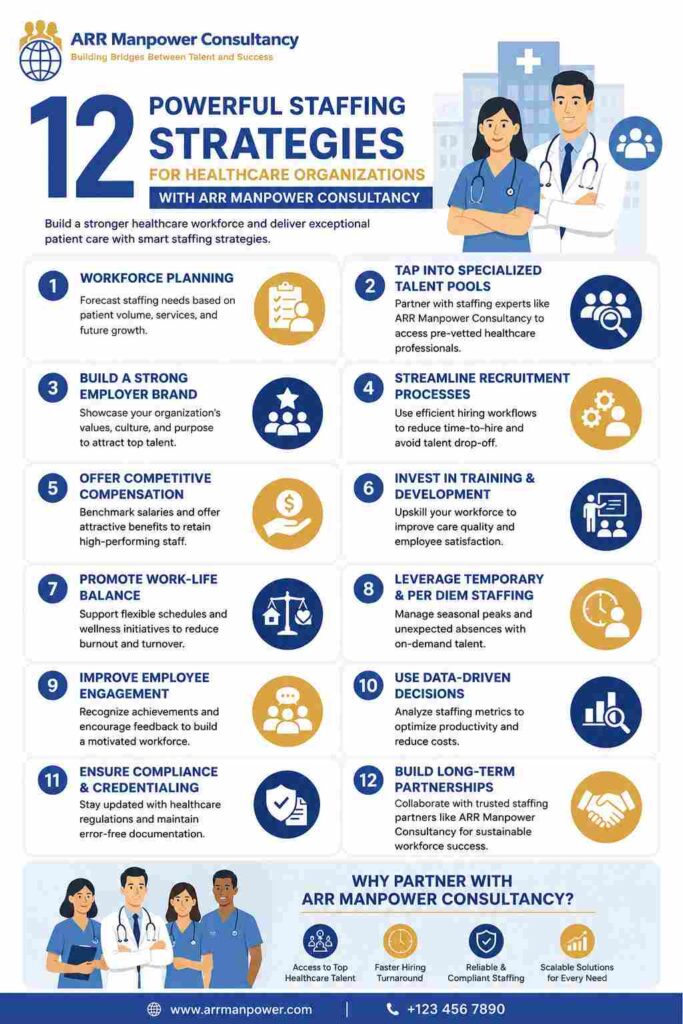
1. Develop a Proactive Workforce Planning Strategy
Many healthcare facilities struggle because staffing decisions are often made only when vacancies arise. Reactive hiring can result in rushed recruitment, increased costs, and operational disruptions.
A proactive workforce planning strategy allows organizations to forecast staffing requirements based on patient demand, seasonal trends, expansion plans, and retirement projections. By analyzing workforce data regularly, healthcare administrators can identify future talent gaps and prepare recruitment plans well in advance.
Strategic workforce planning also enables organizations to maintain an adequate supply of healthcare professionals without overstaffing or understaffing critical departments.
2. Build a Strong Talent Pipeline
Finding qualified healthcare professionals has become increasingly competitive. Organizations that wait until positions become vacant often face lengthy hiring cycles.
Creating a talent pipeline helps healthcare employers maintain relationships with potential candidates before vacancies occur. This can include networking with nursing schools, medical colleges, professional associations, and healthcare training institutions.
Maintaining a database of pre-screened candidates allows recruiters to respond quickly when staffing needs emerge. A strong talent pipeline reduces time-to-hire and ensures critical positions remain filled.
3. Focus on Candidate Experience
The recruitment process significantly influences a candidate’s decision to join an organization. Healthcare professionals often have multiple employment opportunities available, making candidate experience a crucial factor in attracting top talent.
Healthcare employers should streamline application procedures, communicate clearly throughout the hiring process, and provide timely feedback to applicants. Interviews should be organized efficiently, and onboarding should be smooth and welcoming.
A positive hiring experience not only improves acceptance rates but also enhances the organization’s reputation within the healthcare community.
4. Leverage Specialized Recruitment Expertise
Healthcare recruitment requires a deep understanding of industry-specific qualifications, certifications, licensing requirements, and compliance standards.
Working with experienced recruitment specialists enables healthcare organizations to access candidates who meet both technical and regulatory requirements. Specialized recruiters understand the unique demands of different healthcare roles, including physicians, nurses, laboratory technicians, pharmacists, radiologists, and administrative professionals.
By utilizing expert recruitment support, healthcare facilities can reduce hiring risks and improve workforce quality.
5. Implement Flexible Staffing Models
Patient volumes can fluctuate significantly due to seasonal illnesses, public health emergencies, and changing community needs. Traditional staffing models may not always provide the flexibility required to address these fluctuations.
Flexible staffing approaches allow organizations to adjust workforce levels according to demand. These models may include temporary staff, contract professionals, per diem employees, and part-time workers.
A flexible workforce helps maintain service quality during peak periods while controlling labor costs during slower periods. It also provides additional support during emergencies and unexpected staffing shortages.
6. Strengthen Employee Retention Programs
Recruiting healthcare professionals is often expensive and time-consuming. Retaining existing employees is generally more cost-effective than continuously replacing departing staff.
Organizations should prioritize employee engagement and job satisfaction through competitive compensation, recognition programs, career advancement opportunities, and supportive workplace cultures.
Healthcare leaders should conduct regular employee feedback surveys to identify concerns before they lead to turnover. Addressing workplace challenges proactively can significantly improve retention rates and workforce stability.
Retention strategies not only reduce recruitment expenses but also preserve valuable institutional knowledge and clinical expertise.
7. Invest in Continuous Training and Development
The healthcare industry evolves rapidly due to technological advancements, new treatment methods, and changing regulations. Ongoing professional development is essential for maintaining workforce competency.
Healthcare organizations should provide access to training programs, certification courses, leadership development initiatives, and continuing education opportunities. Investing in employee growth demonstrates a commitment to professional success and encourages long-term loyalty.
Training programs also improve clinical outcomes by ensuring staff remain updated on industry best practices and emerging healthcare trends.
8. Utilize Data-Driven Recruitment Decisions
Modern healthcare staffing should be supported by data rather than assumptions. Recruitment metrics provide valuable insights into hiring performance and workforce effectiveness.
Key metrics may include:
- Time-to-fill positions
- Cost-per-hire
- Employee turnover rates
- Candidate quality scores
- Retention statistics
- Recruitment source effectiveness
Analyzing these metrics helps healthcare organizations identify strengths and weaknesses within their staffing processes. Data-driven decision-making enables continuous improvement and more efficient resource allocation.
Organizations that embrace workforce analytics often experience better recruitment outcomes and stronger operational performance.
9. Promote Employer Branding
Healthcare professionals are increasingly evaluating employers based on workplace culture, career growth opportunities, and organizational values.
A strong employer brand can differentiate a healthcare organization from competitors in a crowded talent market. Employers should showcase their mission, patient care standards, employee success stories, and workplace environment through websites, social media platforms, and recruitment campaigns.
Positive employer branding attracts high-quality candidates and encourages current employees to become brand ambassadors.
Organizations with strong reputations often receive more applications and enjoy higher employee retention levels.
10. Prioritize Workforce Diversity and Inclusion
Diversity and inclusion have become essential components of successful healthcare staffing strategies. Diverse teams bring different perspectives, experiences, and problem-solving approaches that contribute to improved patient care.
Healthcare organizations should implement inclusive recruitment practices that provide equal opportunities for candidates from various backgrounds. Diversity initiatives can strengthen workplace culture, encourage innovation, and improve communication with diverse patient populations.
Inclusive environments also enhance employee engagement and contribute to a more positive organizational reputation.
By fostering diversity, healthcare providers can better serve the communities they support.
11. Improve Onboarding Processes
Effective onboarding is a critical but often overlooked aspect of workforce management. New employees who receive comprehensive onboarding support are more likely to become productive quickly and remain with the organization long term.
A structured onboarding program should include:
- Organizational orientation
- Compliance training
- Role-specific instruction
- Technology training
- Mentorship opportunities
- Performance expectations
Healthcare organizations should ensure new hires feel supported from their first day. Clear communication and ongoing guidance can improve confidence, reduce anxiety, and accelerate integration into the workplace.
Successful onboarding contributes directly to employee satisfaction and retention.
12. Prepare for Future Workforce Challenges
The healthcare industry continues to face significant workforce challenges, including aging populations, increasing demand for services, technological transformation, and talent shortages.
Organizations must prepare for future staffing needs by adopting forward-thinking workforce strategies. This includes investing in digital recruitment tools, workforce automation, telehealth staffing models, and succession planning initiatives.
Healthcare leaders should continuously monitor labor market trends and adjust recruitment strategies accordingly. Organizations that remain adaptable will be better positioned to navigate future workforce disruptions and maintain high standards of patient care.
Long-term workforce resilience requires ongoing planning, innovation, and strategic investment.
How ARR Manpower Consultancy Supports Healthcare Organizations
Healthcare staffing demands expertise, speed, and precision. ARR Manpower Consultancy helps healthcare organizations address recruitment challenges through customized workforce solutions tailored to their specific needs.
By understanding industry requirements and candidate expectations, ARR Manpower Consultancy assists employers in identifying qualified professionals for a wide range of healthcare roles. The consultancy focuses on efficient recruitment processes, candidate screening, workforce planning, and talent acquisition support.
Whether organizations require permanent placements, temporary staffing, or specialized healthcare professionals, ARR Manpower Consultancy works to connect employers with suitable talent while reducing recruitment complexity.
The goal is to help healthcare providers maintain workforce stability, improve operational performance, and deliver exceptional patient care.
Conclusion
By partnering with ARR Manpower Consultancy, healthcare organizations gain access to skilled professionals, faster hiring processes, improved workforce stability, enhanced patient care outcomes, and sustainable long-term operational growth and resilience.
Healthcare organizations operate in an environment where workforce quality directly impacts patient outcomes, operational efficiency, and organizational success. Implementing effective staffing strategies is essential for overcoming talent shortages and maintaining high standards of care.
From workforce planning and talent pipeline development to employee retention and future-focused recruitment, each strategy plays an important role in building a resilient healthcare workforce.
By adopting these 12 powerful staffing strategies, healthcare organizations can strengthen their recruitment efforts, enhance employee satisfaction, and create a sustainable foundation for long-term growth. With professional support from ARR Manpower Consultancy, healthcare providers can navigate staffing challenges more effectively and focus on what matters most—delivering outstanding care to patients and communities.