Introduction
In times of uncertainty, especially during global conflicts or geopolitical tensions, one of the biggest concerns for job seekers is stability. News headlines often create fear, making people believe that international careers may come to a halt. But the reality is quite different.
The truth is, global job opportunities have consistently shown resilience—even during wars, economic downturns, and global crises. While certain sectors may face temporary disruptions, the overall international job market adapts, evolves, and often continues to grow.
If you are planning to build a career abroad or are currently exploring overseas employment, this article will help you understand why you don’t need to panic. Let’s explore the 11 powerful insights that prove the stability of global careers—even in challenging times.
https://arrmanpowerconsultancy.com/services/
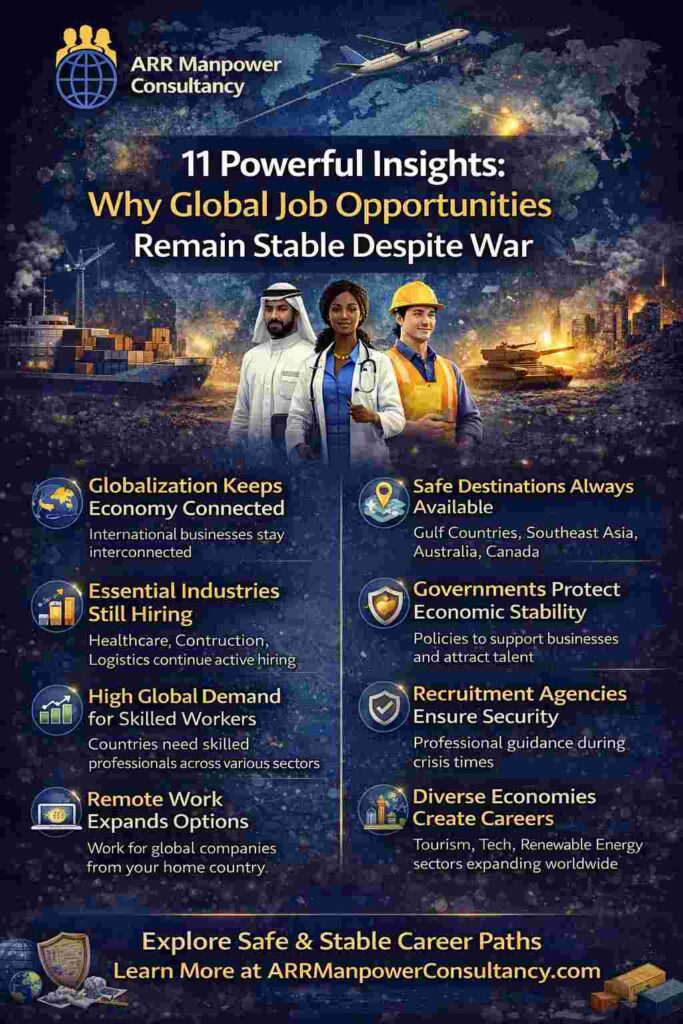
1. Globalization Keeps the World Connected
Despite conflicts, globalization continues to drive economic and workforce integration. Countries rely on each other for trade, technology, healthcare, and infrastructure.
This interconnected system ensures that:
- Businesses continue operations across borders
- Skilled professionals remain in demand
- Recruitment pipelines stay active
Even during war, industries don’t shut down globally—they adjust. This is why global job opportunities remain active in multiple regions.
2. Essential Industries Never Stop Hiring
Certain sectors are considered “essential,” and they continue to operate regardless of global situations.
These include:
- Healthcare
- Construction
- Oil & Gas
- Logistics and Supply Chain
- IT and Technology
For example, hospitals still need nurses, companies still need engineers, and supply chains must keep running. This constant demand ensures that job seekers still have access to stable opportunities abroad.
3. Demand for Skilled Workers Remains High
Many countries face labor shortages, especially in skilled and semi-skilled roles. This gap doesn’t disappear during conflicts—it often increases.
Why?
- Local workforce limitations
- Aging populations in developed countries
- Expansion of infrastructure projects
As a result, employers continue to recruit internationally, ensuring a steady flow of global job opportunities.
4. Multiple Safe Destinations Are Always Available
Not all countries are affected by war at the same time. While one region may experience instability, others remain completely safe and economically strong.
Popular stable destinations include:
- Gulf countries
- Europe
- Southeast Asia
- Australia and Canada
Recruitment agencies help candidates shift focus to safer regions, ensuring continuity in career plans.
5. Governments Prioritize Economic Stability
Even during conflicts, governments work hard to maintain economic balance. They ensure:
- Business continuity
- Employment generation
- Foreign workforce support
Many countries introduce policies to attract international talent, especially in critical sectors. This directly supports the flow of global job opportunities.
6. Overseas Recruitment Agencies Provide Security
Trusted recruitment consultancies play a major role in maintaining job stability during uncertain times.
They:
- Verify job offers
- Guide candidates on safe destinations
- Handle documentation and compliance
- Provide real-time updates
With professional guidance, job seekers can avoid risks and confidently pursue international careers.
7. Remote Work Expands Opportunities
The rise of remote work has changed the global employment landscape.
Now, you can:
- Work for international companies from your home country
- Access global roles without relocation
- Build international experience safely
This trend has made global job opportunities more accessible and less dependent on physical movement.
8. Economic Diversification Strengthens Job Markets
Many countries are diversifying their economies to reduce dependency on a single sector.
For example:
- Gulf countries investing in tourism and technology
- European nations expanding renewable energy sectors
- Asian countries growing manufacturing hubs
This diversification creates new roles and ensures long-term employment stability.
9. Crisis Often Creates New Opportunities
History shows that crises often lead to innovation and growth.
During challenging times:
- New industries emerge
- Existing sectors expand
- Demand shifts to new skill sets
For instance, during global disruptions, healthcare, logistics, and IT sectors experience growth—opening doors for job seekers worldwide.
10. Strong Legal Framework Protects Workers
Most countries have strict labor laws to protect employees, including foreign workers.
These laws ensure:
- Fair wages
- Safe working conditions
- Contract transparency
- Legal support
This protection gives confidence to those pursuing global job opportunities, even during uncertain periods.
11. Career Growth Is a Long-Term Journey
One of the most important things to understand is that careers are long-term. Temporary global issues do not define your entire professional journey.
Instead of focusing on short-term fear, think about:
- Skill development
- Long-term goals
- Global exposure
With the right mindset and guidance, you can continue progressing regardless of external challenges.
How to Stay Safe While Exploring Global Careers
While opportunities remain stable, it’s important to take precautions:
- Choose licensed recruitment agencies
- Verify job offers carefully
- Avoid paying high upfront fees
- Stay updated with official travel advisories
- Keep documents secure
These simple steps can help you confidently explore international opportunities.
The Role of ARR Manpower Consultancy
At ARR Manpower Consultancy, the focus is on helping candidates achieve their career goals safely and efficiently.
Services include:
- Overseas job placement
- Document assistance
- Interview preparation
- Career guidance
With a strong network and industry expertise, ARR ensures that candidates access genuine and secure global job opportunities.
Conclusion
While wars and geopolitical conflicts often dominate headlines and create uncertainty across international markets, the broader picture of global employment tells a far more resilient story. The reality is that global job opportunities continue to remain stable because economies, industries, and labor markets have evolved to withstand regional disruptions more effectively than ever before. Businesses, governments, and workers have learned valuable lessons from past crises, enabling them to adapt quickly and maintain economic activity even during periods of conflict.
One of the most significant reasons for this stability is the growing interconnectedness of the global economy. Companies no longer depend on a single market, workforce, or supply chain. Instead, they diversify operations across multiple countries, reducing risks and ensuring continuity when challenges arise in specific regions. This diversification helps preserve employment opportunities and allows organizations to continue recruiting skilled professionals from around the world.
Technology has also played a transformative role in protecting global employment. Remote work, digital collaboration tools, cloud-based systems, and virtual recruitment platforms have made it possible for businesses to operate efficiently regardless of geographic limitations. As a result, many professionals can continue working, interviewing, and securing international positions without being directly affected by localized conflicts. This digital transformation has created a more flexible and resilient employment landscape that supports job seekers worldwide.
Another important factor is the persistent demand for skilled talent. Industries such as healthcare, information technology, engineering, logistics, construction, renewable energy, and education continue to experience workforce shortages in many countries. Employers remain focused on filling critical positions to sustain growth and productivity. Even during uncertain times, organizations recognize that access to qualified professionals is essential for long-term success, ensuring that recruitment efforts remain active across international markets.
Governments and policymakers also contribute to labor market stability through economic support measures, immigration programs, workforce development initiatives, and strategic investments. Many countries actively seek foreign talent to address demographic challenges, aging populations, and skills gaps. These efforts create ongoing opportunities for international workers and reinforce the demand for global recruitment services.
For job seekers, this environment presents both opportunities and responsibilities. While global employment prospects remain strong, candidates must stay informed about market trends, emerging industries, and evolving skill requirements. Continuous learning, professional development, and adaptability have become critical factors in securing long-term career success. Those who invest in acquiring relevant skills and maintaining a global perspective are often better positioned to benefit from international opportunities.
Employers, meanwhile, continue to recognize the value of diverse and multicultural workforces. Access to talent from different countries brings fresh perspectives, specialized expertise, and innovative problem-solving capabilities. This ongoing demand for international talent further strengthens the global employment ecosystem and supports cross-border recruitment activities.
It is also important to remember that not all conflicts have the same economic impact. While certain regions may experience temporary disruptions, global labor markets are influenced by a wide range of factors including technological innovation, demographic shifts, consumer demand, infrastructure development, and investment trends. These broader forces often have a stronger and more lasting influence on employment than individual geopolitical events.
Looking ahead, the future of global employment appears increasingly dynamic and interconnected. Organizations will continue expanding internationally, digital transformation will accelerate, and new industries will emerge to meet changing economic and societal needs. These developments are expected to create fresh opportunities for workers across different sectors and regions, reinforcing the overall stability of the global job market.
Ultimately, the key takeaway is clear: despite the uncertainties associated with war and geopolitical tensions, global job opportunities remain remarkably resilient. Economic adaptation, technological advancement, international collaboration, and ongoing demand for skilled talent continue to drive employment growth worldwide.
For professionals seeking international careers, this resilience offers confidence, hope, and motivation to pursue opportunities beyond borders. By staying informed, adaptable, and focused on skill development, job seekers can successfully navigate challenges and take advantage of the many opportunities that continue to exist in the global workforce.
Global conflicts may create uncertainty, but they do not stop progress. The world continues to move forward, and so do careers.
The key takeaway is simple:
Don’t let fear hold you back.
With the right information, guidance, and planning, you can still build a successful international career. The demand for skilled professionals remains strong, industries continue to grow, and opportunities are always available somewhere in the world.
Stay informed, stay prepared, and take confident steps toward your future.