The dream of working in Gulf countries like the UAE, Saudi Arabia, Qatar, Kuwait, Bahrain, and Oman continues to attract thousands of job seekers every year. With tax-free salaries, better career growth, and global exposure, Gulf manpower jobs remain a top choice in 2026.
However, one wrong step in the visa process can lead to rejection, financial loss, or even legal trouble. Many candidates fall victim to fake agents, incomplete documentation, or simple mistakes that could have been avoided.
This comprehensive guide will walk you through the most important do’s and don’ts of the Gulf visa process, helping you stay safe, confident, and successful in your overseas journey.
https://arrmanpowerconsultancy.com/
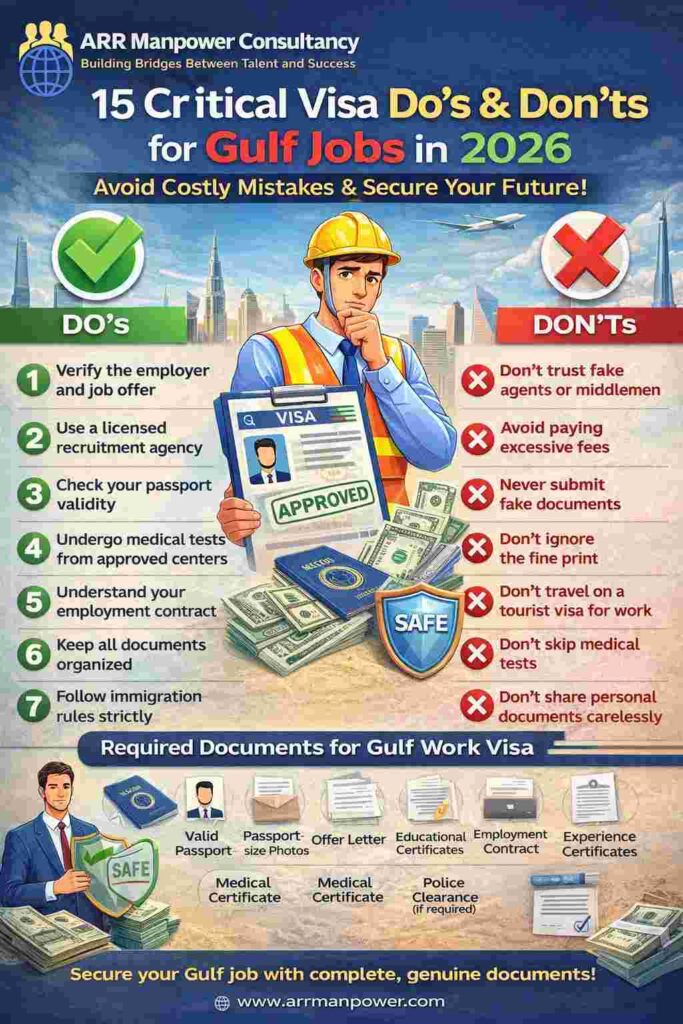
🌍 Understanding the Gulf Visa Process in 2026
Before diving into the do’s and don’ts, it’s important to understand how the process works.
✈️ Basic Steps:
- Job Offer from a verified employer
- Employment contract signing
- Work visa processing
- Medical examination
- Emigration clearance (if required)
- Travel and onboarding
With stricter regulations in 2026, governments are focusing more on worker protection and fraud prevention, making it even more important to follow the correct process.
✅ Top 8 Do’s for Gulf Visa Process in 2026
1. ✔️ Verify the Employer and Job Offer
Always confirm that your job offer is genuine. Check:
- Company registration
- Official email domain
- Offer letter authenticity
A legitimate employer will never hesitate to provide verification.
2. ✔️ Choose a Licensed Recruitment Agency
If you’re using a manpower consultancy, ensure it is:
- Government-approved
- Has a valid license
- Transparent with fees
This reduces the risk of scams significantly.
3. ✔️ Check Your Passport Validity
Your passport should:
- Be valid for at least 6 months
- Have sufficient blank pages
Expired or damaged passports can delay or cancel your visa.
4. ✔️ Undergo Medical Tests from Approved Centers
Medical fitness is mandatory. Always:
- Visit authorized medical centers
- Keep copies of reports
Unapproved reports are not accepted.
5. ✔️ Understand Your Employment Contract
Read every detail:
- Salary structure
- Working hours
- Benefits (accommodation, transport, insurance)
Never sign blindly.
6. ✔️ Keep All Documents Organized
Maintain copies of:
- Passport
- Visa
- Offer letter
- Medical reports
Digital and physical copies are both important.
7. ✔️ Follow Immigration Rules Strictly
Ensure you:
- Get proper emigration clearance (if required)
- Follow legal travel procedures
Skipping steps can result in travel bans.
8. ✔️ Stay Updated with Visa Rules
Visa policies change frequently in Gulf countries. Stay informed through:
- Official government portals
- Trusted consultancies
❌ Top 7 Don’ts for Gulf Visa Process in 2026
1. ❌ Don’t Trust Fake Agents or Middlemen
Avoid:
- Agents without offices
- Verbal promises without documents
- Requests for full payment upfront
Fraud cases are still common in 2026.
2. ❌ Don’t Pay Excessive Fees
Recruitment costs should be reasonable. Be cautious if:
- Fees are unusually high
- No receipt is provided
Always demand transparency.
3. ❌ Don’t Submit Fake Documents
Never provide:
- Fake certificates
- Altered documents
This can lead to:
- Visa rejection
- Permanent ban
4. ❌ Don’t Ignore the Fine Print
Hidden clauses can include:
- Salary deductions
- Long working hours
- Contract penalties
Always read carefully.
5. ❌ Don’t Travel on a Tourist Visa for Work
Working on a tourist visa is illegal and can result in:
- Deportation
- Legal action
Always travel on a proper employment visa.
6. ❌ Don’t Skip Medical Tests
Even if an agent says it’s not required—don’t believe it. Medical clearance is mandatory.
7. ❌ Don’t Share Personal Documents Carelessly
Avoid sharing:
- Passport copies
- Bank details
Only provide documents to verified sources.
⚠️ Common Mistakes to Avoid in 2026
Even experienced job seekers make errors. Here are some common ones:
🔴 Ignoring Visa Type
Different jobs require different visa categories. Applying for the wrong one can delay your process.
🔴 Not Checking Contract Language
Ensure the contract is:
- In English or a language you understand
🔴 Rushing the Process
Haste leads to mistakes. Take time to verify everything.
📄 Required Documents for Gulf Work Visa
Here’s a checklist to keep you prepared:
- Valid Passport
- Passport-size Photos
- Offer Letter
- Employment Contract
- Educational Certificates
- Experience Certificates
- Medical Certificate
- Police Clearance (if required)
💡 Expert Tips for a Smooth Visa Process
⭐ Stay in Direct Contact with Employer
Avoid relying only on agents.
⭐ Use Email Communication
Always keep written proof of conversations.
⭐ Track Your Visa Status
Use official portals whenever possible.
⭐ Keep Emergency Contacts Ready
Have contact details of:
- Employer
- Embassy
- Recruitment agency
🌟 Benefits of Following Proper Visa Guidelines
When you follow the correct process:
- ✅ Faster visa approval
- ✅ Reduced risk of fraud
- ✅ Better job security
- ✅ Peace of mind
🔮 Gulf Job Market Trends in 2026
The demand for manpower is growing in sectors like:
- Construction
- Healthcare
- Hospitality
- Oil & Gas
- IT & Engineering
Countries are focusing more on skilled workers, making documentation and verification even more critical.
🛡️ How to Identify Genuine Opportunities
Look for:
- Official company websites
- Verified job portals
- Transparent recruitment process
Avoid offers that sound too good to be true.
📢 Final Thoughts
As Gulf countries continue to modernize their labor markets and strengthen immigration regulations in 2026, securing a work visa has become a process that demands greater awareness, preparation, and responsibility from job seekers. While opportunities across sectors such as construction, healthcare, hospitality, logistics, engineering, information technology, and oil & gas remain strong, the path to employment success begins long before arriving in the Gulf. It starts with understanding visa requirements, verifying employment offers, and making informed decisions at every stage of the recruitment journey.
Many workers unfortunately lose significant amounts of money, face legal complications, or become victims of recruitment fraud simply because they overlook essential visa guidelines. A small mistake—such as submitting inaccurate documents, trusting unauthorized agents, or ignoring contract details—can lead to visa rejection, travel delays, financial losses, or even employment bans. This is why following the right visa practices is not just recommended; it is essential for protecting your career and future.
The 15 visa do’s and don’ts outlined in this guide serve as a practical roadmap for anyone planning to work in the Gulf region. Whether you are applying for your first overseas job or seeking a new opportunity abroad, these principles can help you navigate the recruitment process with confidence. By ensuring your documents are authentic, keeping copies of all paperwork, understanding your employment contract, and dealing only with licensed recruitment agencies, you significantly reduce the risks associated with international employment.
It is equally important to remember that Gulf governments are increasingly implementing digital verification systems, electronic contracts, biometric identification processes, and stricter compliance measures. These advancements are designed to improve transparency and worker protection, but they also mean that applicants must be more accurate and diligent than ever before. Staying informed about the latest visa policies and employment regulations can make the difference between a smooth relocation process and a costly setback.
For job seekers, patience and careful planning often yield better outcomes than rushing into an opportunity that appears attractive on the surface. Always take the time to verify company credentials, research employer reputations, and confirm visa sponsorship details before making any commitments. If an offer seems unusually generous or demands large upfront payments, it deserves extra scrutiny. Legitimate employers and professional recruitment agencies follow established procedures and maintain transparency throughout the hiring process.
Another key factor in long-term success is maintaining legal compliance even after arriving in the Gulf. Respecting local laws, keeping your residency status valid, renewing permits on time, and understanding your rights as an employee can help you build a stable and rewarding career abroad. Workers who stay informed and proactive are often better positioned to take advantage of future opportunities, promotions, and career growth within the region.
Families also depend on the decisions made during the visa process. For many overseas workers, a Gulf job represents more than personal advancement—it is an opportunity to support loved ones, invest in education, build financial security, and create a better future. Protecting that opportunity requires vigilance, informed decision-making, and a commitment to following proper procedures from start to finish.
Ultimately, the safest and most successful Gulf employment journeys are built on knowledge, preparation, and trust in verified recruitment channels. By avoiding common visa mistakes and following proven best practices, you can focus on what truly matters: building a successful international career, achieving your professional goals, and securing a brighter future for yourself and your family. As the Gulf job market continues to evolve in 2026 and beyond, informed candidates will remain best equipped to seize opportunities while avoiding the pitfalls that can derail their dreams.
Careful visa planning today creates lasting career success, stability, and future of the job prosperity.
Getting a Gulf job in 2026 is a life-changing opportunity—but only if done correctly. The visa process is your gateway, and even a small mistake can cost you time, money, and your dream job.
By following these 15 critical do’s and don’ts, you can confidently navigate the process, avoid scams, and secure a successful international career.