Introduction
Recruitment has evolved far beyond posting a job ad and waiting for candidates to apply. In today’s competitive market, attracting and retaining the right talent requires a blend of strategy, psychology, technology, and human insight. Many organizations still rely on outdated hiring practices, which often leads to poor candidate matches, high turnover, and wasted resources.
What separates high-performing companies from the rest is not just their ability to hire—but how they hire. There are subtle, often overlooked recruitment techniques that can dramatically improve the quality of hires and streamline the entire process.
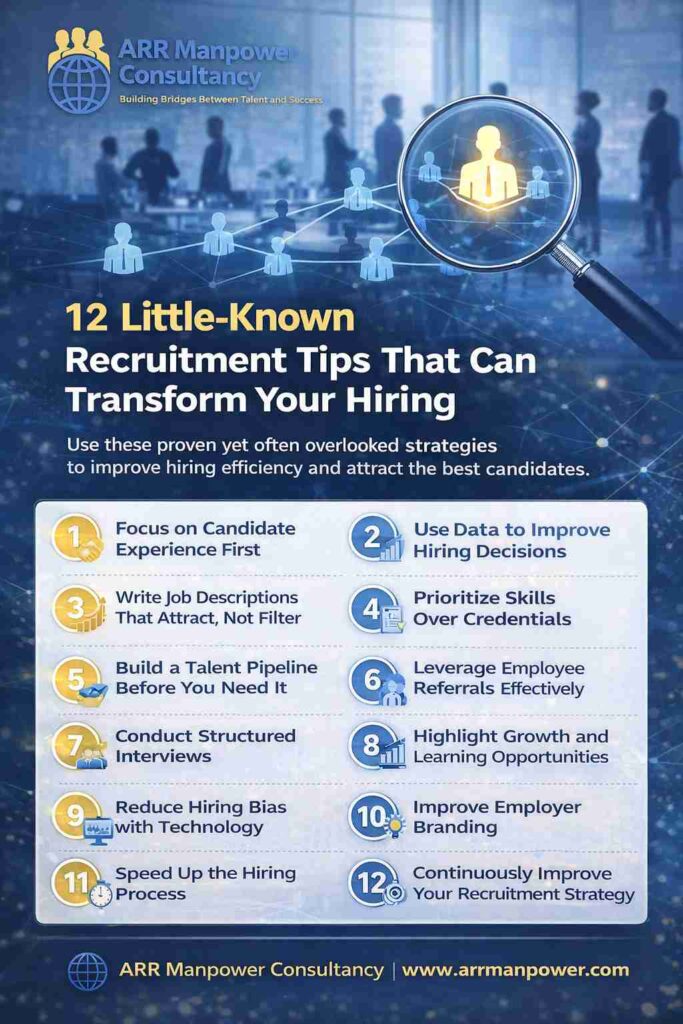
This article uncovers 12 little-known recruitment tips that can significantly transform your hiring outcomes. These strategies are practical, actionable, and designed for modern businesses that want to stay ahead in talent acquisition.
https://arrmanpowerconsultancy.com/
1. Focus on Candidate Experience First
Most companies focus heavily on evaluating candidates, but overlook how candidates experience the hiring process. A poor experience can discourage top talent—even if they were initially interested.
A smooth, respectful, and transparent process builds trust. This includes:
- Clear communication at every stage
- Timely updates
- Easy application processes
- Respect for candidates’ time
Candidates today often share their experiences publicly. A positive impression can strengthen your employer reputation, while a negative one can harm future hiring efforts.
2. Write Job Descriptions That Attract, Not Filter
Many job descriptions are written like checklists, filled with rigid requirements and corporate jargon. This approach can unintentionally push away qualified candidates.
Instead, focus on:
- Outcomes rather than tasks
- Growth opportunities
- Company culture
- Real impact of the role
When descriptions feel human and engaging, they attract a broader and more diverse talent pool.
3. Use Data to Improve Hiring Decisions
Recruitment should not rely solely on intuition. Data can provide valuable insights into what works and what doesn’t.
Track metrics such as:
- Time-to-hire
- Source of hire
- Candidate drop-off rates
- Interview-to-offer ratio
Analyzing this data helps refine strategies and eliminate inefficiencies. Over time, it leads to more consistent and better hiring outcomes.
4. Prioritize Skills Over Credentials
Traditional hiring often emphasizes degrees and past job titles. However, these do not always reflect actual capability.
A skills-based approach focuses on:
- Practical assessments
- Real-world problem solving
- Portfolio reviews
This allows organizations to identify candidates who can truly perform, even if they come from unconventional backgrounds.
5. Build a Talent Pipeline Before You Need It
Waiting until a position opens can delay hiring and lead to rushed decisions. A better approach is to maintain a pipeline of potential candidates.
This can be done by:
- Engaging with past applicants
- Networking regularly
- Keeping in touch with promising candidates
Having a ready pool of talent reduces hiring time and improves selection quality.
6. Leverage Employee Referrals Effectively
Employee referrals are often one of the most reliable hiring sources, yet many companies underutilize them.
To improve results:
- Offer meaningful incentives
- Make the referral process simple
- Encourage employees to recommend actively
Referred candidates tend to be more aligned with company culture and often stay longer.
7. Conduct Structured Interviews
Unstructured interviews can lead to biased decisions and inconsistent evaluations.
Structured interviews ensure fairness by:
- Asking the same questions to all candidates
- Using a standardized scoring system
- Focusing on job-relevant competencies
This approach improves objectivity and helps compare candidates more effectively.
8. Highlight Growth and Learning Opportunities
Top candidates are not just looking for a job—they are looking for growth.
Make sure to communicate:
- Career progression paths
- Training and development programs
- Opportunities for skill enhancement
Organizations that emphasize growth tend to attract more motivated and ambitious individuals.
9. Reduce Hiring Bias with Technology
Unconscious bias can influence hiring decisions without awareness. Technology can help minimize this.
Examples include:
- Blind resume screening
- AI-based skill assessments
- Standardized evaluation tools
These tools promote fairness and ensure that hiring decisions are based on merit.
10. Improve Employer Branding
Your reputation as an employer plays a major role in attracting talent.
Strengthen your brand by:
- Showcasing company culture
- Sharing employee success stories
- Maintaining an active online presence
Candidates often research companies before applying. A strong employer brand can make a significant difference.
11. Speed Up the Hiring Process
A slow hiring process can cause you to lose top candidates to competitors.
To improve speed:
- Reduce unnecessary interview rounds
- Use efficient communication tools
- Make quicker decisions
Balancing speed with quality ensures you don’t miss out on the best talent.
12. Continuously Improve Your Recruitment Strategy
Recruitment is not a one-time process—it requires continuous improvement.
Regularly:
- Review hiring outcomes
- Gather feedback from candidates
- Adjust strategies based on results
Organizations that evolve their hiring practices stay competitive and attract better talent over time.
Common Recruitment Mistakes to Avoid
Even with the best strategies, certain mistakes can undermine hiring efforts:
- Rushing decisions without proper evaluation
- Ignoring cultural fit
- Overlooking internal talent
- Failing to communicate clearly
Avoiding these pitfalls ensures a smoother and more effective hiring process.
The Role of Technology in Modern Hiring
Technology has transformed recruitment in several ways:
- Automation reduces repetitive tasks
- Analytics improve decision-making
- Digital platforms expand reach
However, technology should complement—not replace—human judgment.
Future Trends in Recruitment
The future of hiring is shaped by changing workforce expectations and technological advancements.
Key trends include:
- Remote hiring becoming standard
- Increased focus on diversity and inclusion
- Greater reliance on AI and automation
- Emphasis on employee experience
Staying updated with these trends helps organizations remain competitive.
Conclusion
Successful recruitment is rarely the result of luck. It comes from a combination of thoughtful planning, consistent execution, and a willingness to improve hiring strategies over time. While many organizations focus on popular recruitment techniques, the lesser-known candidate recruitment tips discussed throughout this article can often create the biggest impact. These approaches help employers move beyond traditional hiring practices and build stronger connections with qualified professionals who can contribute to long-term business success.
The modern job market is more competitive than ever. Skilled candidates have multiple opportunities available to them, which means employers must work harder to stand out. Small adjustments in the recruitment process—such as improving communication, personalizing candidate interactions, strengthening employer branding, and utilizing data-driven decision-making—can significantly improve hiring outcomes. Even seemingly minor changes can lead to better candidate engagement, faster hiring cycles, and improved retention rates.
Organizations that consistently attract top talent understand that recruitment is not just about filling vacancies. It is about building relationships, creating positive candidate experiences, and developing a reputation that encourages talented professionals to seek opportunities within the company. Every interaction with a potential employee contributes to how your organization is perceived in the marketplace. A respectful, transparent, and efficient hiring process can leave a lasting impression, even on candidates who are not ultimately selected.
Another important takeaway is that recruitment should be treated as an ongoing process rather than a one-time activity. Building talent pipelines, nurturing passive candidates, and maintaining communication with promising applicants can provide significant advantages when future positions become available. Companies that invest in long-term recruitment strategies are often better prepared to meet changing workforce demands and business growth objectives.
Technology can also play a valuable role in modern hiring, but it should complement—not replace—the human element of recruitment. Automation tools, applicant tracking systems, and recruitment analytics can streamline processes and improve efficiency. However, genuine conversations, empathy, and personalized engagement remain essential for identifying the right candidates and creating meaningful connections. The most successful hiring strategies balance technological innovation with human insight.
Employers should also regularly evaluate their recruitment performance. Monitoring key metrics such as time-to-hire, cost-per-hire, candidate satisfaction, and employee retention can reveal opportunities for improvement. Continuous refinement helps organizations stay competitive and ensures that recruitment efforts remain aligned with business goals.
Ultimately, the best recruitment results come from a proactive mindset. Companies that are willing to explore new ideas, test unconventional approaches, and adapt to evolving workforce expectations are more likely to attract exceptional talent. By implementing these little-known recruitment tips, organizations can strengthen their hiring processes, reduce costly hiring mistakes, and build teams that drive sustainable growth.
As workforce trends continue to evolve, businesses that prioritize strategic recruitment will be better positioned for future success. The effort invested in improving hiring practices today can lead to stronger teams, increased productivity, and a more resilient organization tomorrow. Every great hire starts with a smart recruitment strategy, and applying these insights can help transform the way your organization discovers, attracts, and retains top talent.
Furthermore, organizations that embrace continuous learning and recruitment innovation can gain a lasting competitive advantage. Strategic hiring decisions not only strengthen teams but also support long-term business stability and success.
Recruitment is both an art and a science. While traditional methods still have value, modern hiring requires a more thoughtful and strategic approach.
By implementing these 12 little-known recruitment tips, organizations can:
- Improve hiring quality
- Reduce turnover
- Enhance candidate experience
- Build stronger teams
Success in hiring does not come from doing more—it comes from doing things smarter. Small changes in strategy can lead to significant improvements in results.