Introduction
The oil & gas industry remains one of the most important sectors in the global economy. From upstream exploration and drilling to downstream refining and distribution, the industry creates thousands of employment opportunities for skilled and semi-skilled professionals every year. Whether you are a mechanical technician, safety officer, welder, electrical engineer, project manager, or construction supervisor, finding the right manpower jobs in this competitive field can significantly improve your career prospects and earning potential.
However, many job seekers struggle to secure quality positions because they rely on outdated job search methods or fail to understand how recruitment works within the oil and gas sector. Employers often prefer candidates who know where to look, how to present their qualifications, and how to connect with trusted recruitment channels.
If you want to accelerate your job search and secure rewarding opportunities, the following seven proven strategies can help you find the best manpower jobs faster in the oil and gas industry.
https://arrmanpowerconsultancy.com
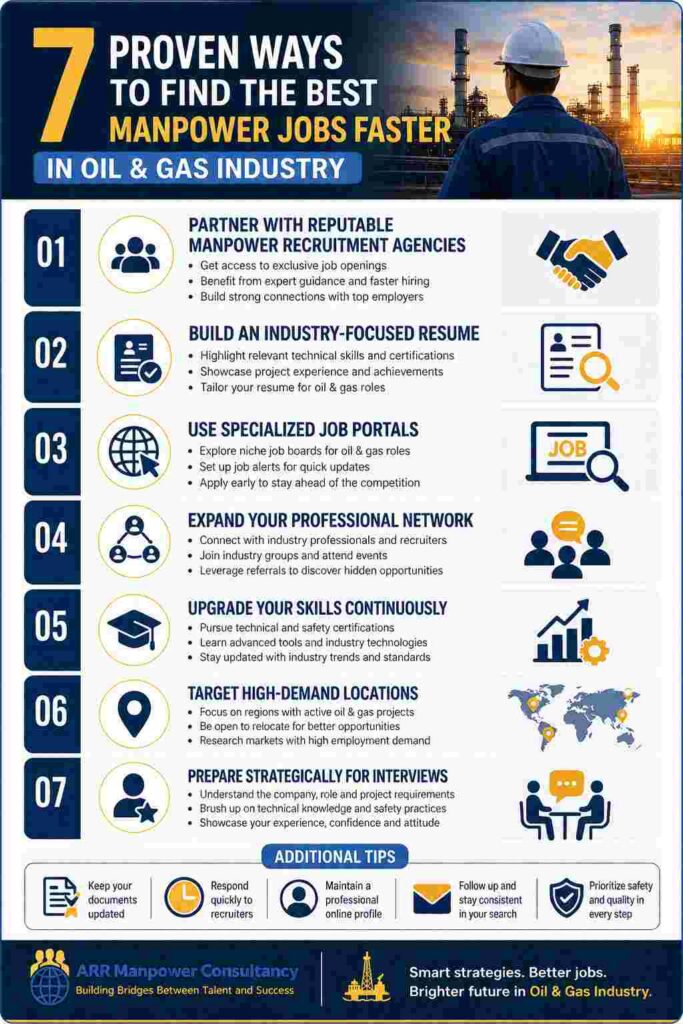
1. Partner With Reputable Manpower Recruitment Agencies
One of the fastest ways to discover high-quality opportunities is to work with reputable manpower recruitment agencies that specialize in oil and gas hiring.
Many energy companies outsource their recruitment activities to staffing firms because it saves time and ensures access to qualified candidates. These agencies maintain strong relationships with employers and often receive job openings before they are publicly advertised.
Benefits of working with a specialized recruitment agency include:
- Access to exclusive vacancies
- Faster interview scheduling
- Professional career guidance
- Resume screening assistance
- Direct employer connections
A trusted recruitment agency understands industry requirements and can match your qualifications with suitable roles. They can also provide valuable information about salary expectations, project locations, contract durations, and employer preferences.
Before registering, ensure the agency has experience recruiting for oil and gas projects, refineries, offshore operations, petrochemical plants, and EPC contractors.
2. Build an Industry-Focused Resume
Your resume is often the first impression employers receive. A generic resume may not effectively showcase your capabilities for oil and gas positions.
To improve your chances of securing manpower jobs, customize your resume specifically for the industry.
Include details such as:
Technical Skills
Highlight industry-relevant competencies including:
- Pipeline installation
- Welding certifications
- Instrumentation maintenance
- Mechanical troubleshooting
- Electrical systems
- Rig operations
- Quality control
- Project management
Safety Certifications
Safety remains a top priority in the oil and gas sector. Mention certifications such as:
- NEBOSH
- IOSH
- H2S Awareness
- OSHA
- BOSIET
- First Aid Training
Project Experience
Employers value candidates with practical field experience. Clearly list:
- Project names
- Responsibilities
- Equipment handled
- Team size managed
- Achievements completed
A well-structured resume helps recruiters quickly identify your qualifications and increases the likelihood of interview invitations.
3. Use Specialized Job Portals
General job websites can be useful, but specialized platforms often provide better access to oil and gas opportunities.
Many employers and recruitment firms advertise vacancies on niche portals dedicated to engineering, construction, energy, and industrial sectors.
When searching for manpower jobs, focus on:
- Oil and gas career websites
- Engineering job boards
- Offshore employment platforms
- Construction recruitment portals
- Energy sector career networks
Set up job alerts using relevant keywords such as:
- Oil and gas technician
- Mechanical engineer
- Offshore supervisor
- Safety officer
- Pipeline inspector
- Electrical technician
- Instrumentation engineer
Automated alerts ensure that you receive notifications immediately after new vacancies are posted, allowing you to apply before competition increases.
4. Expand Your Professional Network
Networking remains one of the most effective ways to uncover hidden opportunities.
Many positions are filled through referrals before they ever reach public job boards. Building strong industry connections can provide access to valuable information about upcoming projects and hiring plans.
Effective networking strategies include:
Connect With Industry Professionals
Reach out to:
- Engineers
- Project managers
- Site supervisors
- Recruiters
- Human resource professionals
Join Industry Groups
Participate in:
- Professional associations
- Energy sector forums
- Technical communities
- Industry webinars
- Career events
Attend Conferences and Exhibitions
Oil and gas conferences frequently attract employers, contractors, and recruitment specialists. These events provide opportunities to establish meaningful connections and learn about workforce requirements.
Strong professional relationships can lead to referrals, recommendations, and direct invitations to apply for manpower jobs.
5. Upgrade Your Skills Continuously
The oil and gas industry is constantly evolving due to technological advancements, automation, digital monitoring systems, and stricter safety regulations.
Employers increasingly seek candidates who possess updated technical knowledge and certifications.
Consider enhancing your qualifications through:
Technical Training
Programs related to:
- Industrial automation
- Instrumentation systems
- Mechanical maintenance
- Process operations
- Electrical controls
Safety Courses
Advanced safety credentials demonstrate commitment to workplace standards and risk management.
Software Skills
Many employers prefer professionals familiar with:
- AutoCAD
- Primavera
- SAP
- Microsoft Project
- SCADA systems
Continuous learning improves employability and helps candidates stand out in a crowded job market.
6. Target High-Demand Locations
Job availability often depends on geographic location. Candidates willing to relocate frequently gain access to more opportunities and higher compensation packages.
Several regions consistently generate demand for oil and gas manpower professionals.
Middle East
Countries such as:
- Saudi Arabia
- United Arab Emirates
- Qatar
- Kuwait
- Oman
continue investing heavily in energy infrastructure and industrial projects.
Asia-Pacific
Growing energy consumption drives hiring demand across:
- Malaysia
- Indonesia
- Singapore
- Australia
Africa
Large-scale energy developments create opportunities for experienced technical professionals in multiple African nations.
North America
The United States and Canada remain major employers within exploration, production, refining, and pipeline operations.
Research regions experiencing active investments and infrastructure expansion. Targeting these locations can significantly shorten your job search timeline.
7. Prepare Strategically for Interviews
Finding vacancies is only part of the process. Successful candidates understand how to perform well during interviews.
Oil and gas employers typically evaluate both technical expertise and workplace readiness.
Common interview topics include:
Technical Knowledge
Employers may ask questions related to:
- Equipment maintenance
- Troubleshooting procedures
- Safety systems
- Industry regulations
- Project execution
Safety Awareness
Safety culture plays a critical role in hiring decisions. Be prepared to discuss:
- Risk assessment procedures
- Incident prevention methods
- Emergency response protocols
- Personal protective equipment usage
Behavioral Questions
Recruiters often assess teamwork, leadership, communication, and problem-solving abilities.
Practice answering questions that demonstrate:
- Responsibility
- Adaptability
- Decision-making
- Conflict resolution
- Time management
Research the company beforehand and understand its operations, projects, and safety standards. Well-prepared candidates create stronger impressions and improve their chances of receiving job offers.
Additional Tips for Faster Job Placement
Beyond the seven primary strategies, several additional practices can accelerate your search for manpower jobs in the oil and gas industry.
Apply Consistently
Do not rely on a single application. Submit applications regularly to increase visibility among recruiters.
Maintain Updated Documents
Keep the following documents ready:
- Resume
- Passport
- Educational certificates
- Experience letters
- Professional licenses
- Safety certifications
Respond Quickly
Recruiters often move rapidly when filling urgent project requirements. Prompt communication can help secure interview opportunities before positions are filled.
Stay Active Online
Maintain a professional online profile showcasing:
- Work experience
- Technical skills
- Certifications
- Project achievements
An active professional presence increases your visibility to recruiters searching for qualified candidates.
Common Mistakes to Avoid
Many applicants unintentionally slow down their job search by making avoidable mistakes.
Common errors include:
- Using generic resumes
- Applying without reading job descriptions
- Ignoring certification requirements
- Failing to follow up with recruiters
- Providing incomplete application information
- Neglecting interview preparation
Avoiding these mistakes can significantly improve recruitment outcomes and shorten the time required to secure employment.
Future Outlook for Oil & Gas Employment
Despite fluctuations in energy markets, the oil and gas sector continues to require skilled professionals across engineering, maintenance, safety, construction, and operations disciplines.
Many organizations face workforce shortages due to retirement trends, expanding infrastructure projects, and increasing technical requirements. As a result, qualified candidates who invest in skills development and strategic job searching can access excellent career opportunities.
Digital technologies, automation, predictive maintenance systems, and sustainability initiatives are also creating new specialized roles. Professionals who adapt to changing industry demands will remain highly competitive in the employment market.
Conclusion
Finding the best manpower jobs faster in the oil and gas industry requires more than simply submitting applications. Successful candidates use a strategic approach that combines professional networking, specialized recruitment agencies, industry-focused resumes, continuous learning, targeted job searches, geographic flexibility, and strong interview preparation.
By implementing these seven proven methods, job seekers can improve visibility among employers, access better opportunities, and accelerate career growth within one of the world’s most dynamic industries. Whether you are an experienced professional or entering the sector for the first time, a focused and proactive strategy can help you secure rewarding positions and build a successful future in oil and gas employment.
In addition, persistence and professional development play a crucial role in long-term success. The oil and gas sector values candidates who demonstrate technical competence, safety awareness, and a willingness to adapt to evolving industry requirements.
Staying informed about market trends, obtaining relevant certifications, and maintaining strong relationships with recruiters can further improve your chances of securing desirable opportunities.
By remaining proactive and committed throughout your job search, you can position yourself ahead of the competition. With the right preparation and strategy, finding rewarding manpower jobs becomes a faster and more achievable process, helping you reach your career goals with greater confidence and success.