Introduction
Finding the right employees has become one of the biggest challenges for organizations across industries. Businesses invest significant time, money, and effort into recruitment, yet many still struggle to build strong teams. According to industry reports, a large percentage of employers admit they have hired the wrong candidate at least once. Poor recruitment decisions often lead to lower productivity, higher turnover, and financial losses.
The modern employment market is highly competitive. Skilled professionals have more options than ever before, while companies are under pressure to hire quickly to meet business demands. In this race to secure talent, many organizations make critical mistakes during the recruitment process. These errors can prevent them from attracting qualified individuals or cause them to overlook the best candidates entirely.
Understanding why companies fail in recruitment is the first step toward improvement. Businesses that recognize these challenges can create better hiring strategies, strengthen their workforce, and improve long-term performance. This article explores the major reasons organizations struggle to recruit suitable professionals and offers practical solutions to improve hiring outcomes.
https://arrmanpowerconsultancy.com/
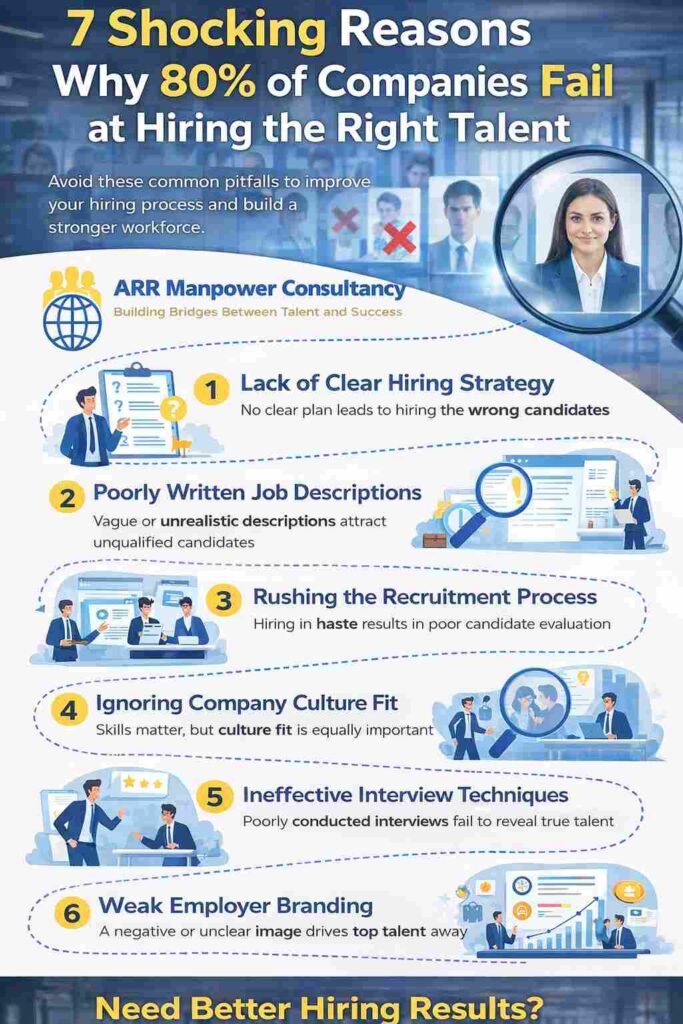
Lack of a Clear Hiring Strategy
One of the primary reasons organizations fail to recruit effectively is the absence of a well-defined hiring plan. Many employers begin recruitment without identifying the exact skills, qualifications, and personality traits required for the role. As a result, the selection process becomes confusing and inconsistent.
A clear strategy should outline:
- Job responsibilities
- Required experience
- Technical and soft skills
- Cultural expectations
- Growth opportunities
Without these details, recruiters may attract candidates who do not fit the role or company culture. This mismatch often leads to dissatisfaction for both employers and employees.
Businesses that develop structured recruitment plans are more likely to identify suitable applicants and reduce employee turnover.
Poorly Written Job Descriptions
Job descriptions are often the first interaction candidates have with an organization. If the content is vague, outdated, or unrealistic, talented professionals may avoid applying.
Many companies make the mistake of listing too many requirements or using complicated language. Some descriptions fail to explain the actual responsibilities of the position. Others exaggerate expectations without mentioning benefits or career growth opportunities.
An effective job description should:
- Clearly explain the role
- Highlight essential qualifications
- Mention salary expectations if possible
- Describe workplace culture
- Explain advancement opportunities
Transparent communication helps attract candidates who genuinely fit the position.
Rushing the Recruitment Process
Speed is important in recruitment, but rushing can lead to poor decisions. Many businesses focus on filling vacancies quickly instead of evaluating applicants carefully. This approach often results in hiring individuals who lack the necessary skills or motivation.
A hurried process may include:
- Short interviews
- Limited background checks
- Ignoring reference verification
- Incomplete skill assessments
While urgent hiring needs are understandable, companies must balance speed with quality. Taking additional time to evaluate candidates properly can save significant costs in the future.
Ignoring Company Culture
Technical skills alone do not guarantee success. Employees must also fit the organization’s values, communication style, and work environment.
Many recruitment failures occur because businesses focus only on qualifications while ignoring cultural compatibility. A highly skilled professional may still struggle if they cannot adapt to the company’s environment.
For example, a candidate who prefers independent work may feel uncomfortable in a highly collaborative workplace. Similarly, someone who values flexibility may not thrive in a rigid corporate structure.
Organizations should evaluate:
- Communication style
- Teamwork abilities
- Adaptability
- Professional attitude
- Long-term career goals
Hiring individuals who align with company culture improves employee satisfaction and retention.
Overlooking Soft Skills
Technical expertise is important, but soft skills play an equally critical role in workplace success. Many organizations focus heavily on educational qualifications and experience while ignoring communication, leadership, and problem-solving abilities.
Employees with strong soft skills contribute positively to teamwork, customer relationships, and workplace productivity.
Important soft skills include:
- Communication
- Time management
- Emotional intelligence
- Team collaboration
- Critical thinking
A candidate with average technical skills but excellent adaptability may perform better in the long term than someone with advanced technical knowledge but poor interpersonal abilities.
Ineffective Interview Techniques
Interviews remain one of the most common recruitment methods, yet many companies fail to conduct them effectively. Poor interview practices can lead to inaccurate assessments and biased decisions.
Common interview mistakes include:
- Asking irrelevant questions
- Focusing too much on academic scores
- Making judgments too quickly
- Failing to assess practical abilities
- Lack of structured evaluation criteria
Unstructured interviews often create inconsistent hiring decisions. Different interviewers may evaluate candidates based on personal opinions instead of objective standards.
Organizations should implement structured interviews with standardized questions and clear evaluation methods.
Failure to Use Modern Recruitment Technology
Technology has transformed recruitment, yet many businesses still rely on outdated methods. Manual processes can slow hiring, reduce efficiency, and limit access to qualified candidates.
Modern recruitment tools help organizations:
- Track applications efficiently
- Screen resumes automatically
- Schedule interviews faster
- Analyze candidate data
- Improve communication
Companies that fail to adopt digital recruitment solutions may struggle to compete in today’s employment market.
Applicant tracking systems, artificial intelligence tools, and online assessment platforms can streamline recruitment and improve hiring accuracy.
Weak Employer Branding
Employer branding refers to how a company is perceived by job seekers. Organizations with poor reputations often struggle to attract skilled professionals.
Candidates research employers before applying. Negative reviews, poor communication, and lack of transparency can discourage talented individuals from joining the organization.
Strong employer branding involves:
- Positive workplace culture
- Career development opportunities
- Fair compensation
- Employee recognition
- Professional growth support
Businesses should actively build a strong reputation through social media, employee testimonials, and transparent communication.
Unrealistic Expectations
Some organizations expect candidates to possess every possible skill while offering limited salaries or benefits. Unrealistic expectations can significantly reduce the talent pool.
For example, a company may seek:
- Extensive experience
- Multiple certifications
- Advanced technical expertise
- Leadership skills
- Industry specialization
At the same time, they may offer compensation below market standards.
Talented professionals understand their value and are unlikely to accept unfair offers. Companies must balance expectations with competitive salaries and realistic job requirements.
Lack of Workforce Planning
Recruitment should not be reactive. Many businesses only start hiring when an employee resigns or workload becomes unmanageable. This reactive approach creates pressure and increases the likelihood of poor decisions.
Strategic workforce planning helps organizations prepare for future staffing needs. Businesses should regularly evaluate:
- Upcoming projects
- Retirement trends
- Skill shortages
- Business expansion plans
- Employee performance
Proactive planning allows companies to build talent pipelines and reduce emergency hiring.
Ignoring Employee Retention
Recruitment failure is not always about selecting the wrong candidate. In many cases, organizations lose skilled employees because of poor retention strategies.
High employee turnover creates continuous recruitment challenges and increases operational costs.
Common reasons employees leave include:
- Limited growth opportunities
- Poor management
- Lack of recognition
- Inadequate compensation
- Unhealthy work environments
Businesses that prioritize employee satisfaction often experience better retention and reduced hiring difficulties.
Inadequate Training and Onboarding
Even skilled professionals need proper guidance when joining a new organization. Weak onboarding processes can make employees feel unsupported and confused.
Without adequate training, new hires may struggle to understand:
- Company policies
- Performance expectations
- Workplace systems
- Team responsibilities
This confusion can reduce productivity and increase resignation rates during the early stages of employment.
Effective onboarding programs help employees adapt quickly and build confidence in their roles.
Limited Diversity in Recruitment
Organizations that recruit from limited sources may miss highly qualified candidates. Diverse recruitment strategies improve innovation, creativity, and problem-solving within teams.
Companies should expand recruitment efforts through:
- Online job portals
- Social media platforms
- Recruitment agencies
- Employee referral programs
- Campus recruitment
Inclusive hiring practices also strengthen company reputation and improve workplace culture.
Poor Communication with Candidates
Candidate experience plays a major role in recruitment success. Many businesses fail to communicate effectively throughout the hiring process.
Common communication issues include:
- Delayed responses
- Lack of interview updates
- Unclear expectations
- Ignoring rejected applicants
Poor communication damages employer reputation and discourages future applications.
Organizations should maintain professional communication from application to onboarding.
The Financial Impact of Bad Hiring Decisions
Hiring the wrong employee can be extremely expensive. Costs may include:
- Recruitment expenses
- Training costs
- Reduced productivity
- Employee replacement
- Loss of client trust
Studies suggest that poor hiring decisions can cost businesses several times the employee’s annual salary.
Improving recruitment accuracy helps organizations reduce financial losses and improve operational efficiency.
How Recruitment Agencies Can Help
Professional recruitment agencies provide expertise, industry knowledge, and access to qualified candidates. They help businesses streamline hiring and reduce recruitment challenges.
Benefits of working with recruitment consultants include:
- Faster hiring processes
- Access to wider talent pools
- Better candidate screening
- Industry-specific expertise
- Reduced administrative workload
Experienced consultants understand market trends and help organizations identify suitable professionals more efficiently.
Practical Steps to Improve Hiring Success
Businesses can improve recruitment outcomes by implementing the following strategies:
Define Clear Requirements
Identify essential skills, responsibilities, and expectations before starting recruitment.
Improve Job Descriptions
Use clear language and realistic requirements to attract qualified applicants.
Focus on Candidate Experience
Maintain professional communication and provide timely updates.
Use Structured Interviews
Develop standardized interview processes for fair evaluations.
Invest in Technology
Adopt recruitment software and digital tools to improve efficiency.
Strengthen Employer Branding
Promote workplace culture and employee success stories.
Prioritize Employee Retention
Support career growth, employee recognition, and healthy work environments.
Work with Recruitment Experts
Partnering with experienced manpower consultants can simplify the hiring process and improve recruitment quality.
Conclusion
Recruitment remains one of the most important aspects of business success. However, many organizations continue to struggle with finding suitable professionals because of unclear strategies, rushed decisions, poor communication, and unrealistic expectations.
Hiring success requires more than simply filling vacancies. Companies must focus on long-term workforce planning, employee satisfaction, cultural compatibility, and modern recruitment practices. Businesses that invest in effective recruitment strategies can build stronger teams, improve productivity, and achieve sustainable growth.
As competition for skilled professionals continues to increase, organizations must adapt their hiring methods to meet changing workforce expectations. Companies that recognize and correct their recruitment mistakes will be better positioned to attract and retain top talent in the future.