Introduction
In today’s competitive business landscape, hiring the right talent is no longer just an HR function—it’s a critical business strategy. Companies that succeed are those that consistently attract, evaluate, and retain top-performing individuals. However, recruitment is often filled with challenges such as skill shortages, high turnover rates, and inefficient hiring processes.
This is where structured hiring practices make a significant difference. With the right approach, organizations can reduce hiring risks, improve employee performance, and build a strong workforce that drives long-term success.
In this comprehensive guide by ARR Manpower Consultancy, we explore 15 top-rated hiring practices that help businesses streamline recruitment, minimize errors, and maximize results.
https://arrmanpowerconsultancy.com/
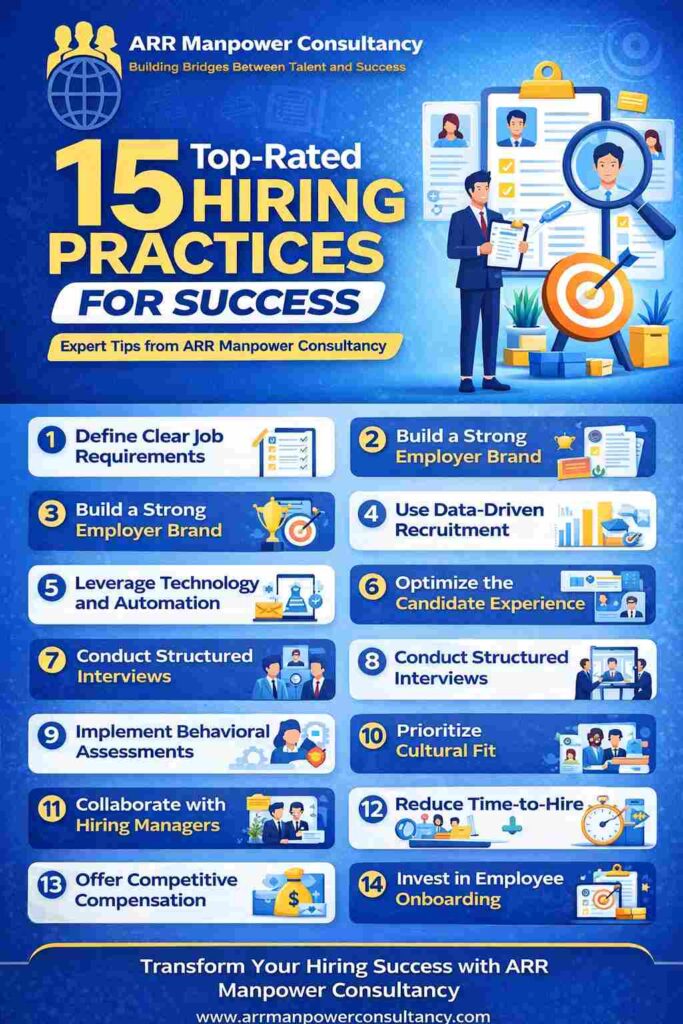
1. Define Clear Job Requirements
One of the most common hiring mistakes is starting the recruitment process without a clear understanding of the role.
A well-defined job description should include:
- Key responsibilities
- Required skills and qualifications
- Experience level
- Performance expectations
Clarity at this stage ensures that both recruiters and candidates are aligned, reducing mismatches and improving hiring efficiency.
2. Focus on Skills Over Degrees
Modern hiring trends emphasize skills rather than just academic qualifications. Many candidates possess practical expertise gained through experience, certifications, or self-learning.
Employers should:
- Prioritize competency-based hiring
- Use skill assessments
- Evaluate real-world problem-solving abilities
This approach broadens the talent pool and ensures better job performance.
3. Build a Strong Employer Brand
Candidates today research companies before applying. A strong employer brand helps attract high-quality applicants.
Key elements include:
- Positive workplace culture
- Employee testimonials
- Transparent communication
- Career growth opportunities
A well-positioned brand reduces hiring costs and improves candidate trust.
4. Use Data-Driven Recruitment
Data plays a crucial role in improving hiring outcomes. Organizations can use analytics to:
- Track time-to-hire
- Measure candidate quality
- Analyze sourcing channels
- Improve recruitment strategies
Data-driven decisions reduce guesswork and enhance efficiency.
5. Leverage Technology and Automation
Recruitment tools simplify complex processes such as resume screening, interview scheduling, and candidate tracking.
Popular solutions include:
- Applicant Tracking Systems (ATS)
- AI-based resume screening
- Automated communication tools
Automation saves time and allows HR teams to focus on strategic tasks.
6. Optimize the Candidate Experience
A positive candidate experience reflects directly on your company’s reputation.
Best practices include:
- Clear communication
- Timely feedback
- Smooth interview processes
- Respect for candidate time
Even rejected candidates should leave with a positive impression.
7. Conduct Structured Interviews
Unstructured interviews often lead to biased decisions. Structured interviews ensure consistency and fairness.
Key techniques:
- Use predefined questions
- Evaluate based on scoring criteria
- Focus on job-related competencies
This improves decision-making accuracy.
8. Implement Behavioral Assessments
Behavioral interviews help predict how candidates will perform in real situations.
Examples:
- “Describe a challenging project you handled.”
- “How do you deal with tight deadlines?”
Such questions provide deeper insights into personality and work style.
9. Prioritize Cultural Fit
Skills alone are not enough—candidates must align with company values and culture.
Hiring for cultural fit ensures:
- Better teamwork
- Higher job satisfaction
- Lower turnover
However, balance is important to maintain diversity and innovation.
10. Expand Talent Sourcing Channels
Relying on a single hiring channel limits your reach. Companies should diversify sourcing strategies:
- Job portals
- Social media platforms
- Employee referrals
- Recruitment agencies
This increases access to a wider talent pool.
11. Collaborate with Hiring Managers
Recruitment is most effective when HR and hiring managers work closely together.
Collaboration ensures:
- Clear role expectations
- Faster decision-making
- Better candidate evaluation
Regular communication is key to success.
12. Offer Competitive Compensation
Compensation plays a major role in attracting and retaining talent.
Organizations should:
- Benchmark salaries
- Offer performance incentives
- Provide additional benefits
A strong compensation package enhances employer attractiveness.
13. Reduce Time-to-Hire
Lengthy hiring processes often result in losing top candidates.
To improve speed:
- Streamline interview rounds
- Use pre-screening tools
- Make quick decisions
Efficiency ensures you secure the best talent before competitors.
14. Invest in Employee Onboarding
Hiring doesn’t end with selection. A structured onboarding process is essential for long-term success.
Effective onboarding includes:
- Training programs
- Clear role expectations
- Mentorship support
This helps new employees integrate smoothly into the organization.
15. Continuously Improve Hiring Strategies
Recruitment is an evolving process. Companies must regularly evaluate and refine their strategies.
Ways to improve:
- Collect feedback from candidates
- Analyze hiring metrics
- Adapt to market trends
Continuous improvement ensures long-term hiring success.
Common Hiring Mistakes to Avoid
While implementing best practices, organizations should also avoid common pitfalls:
- Rushing the hiring process
- Ignoring cultural fit
- Overlooking soft skills
- Failing to verify candidate information
- Poor communication with applicants
Avoiding these mistakes significantly improves hiring outcomes.
Future Trends in Recruitment
The hiring landscape is rapidly evolving. Some key trends include:
- AI-driven recruitment
- Remote hiring and global talent pools
- Skills-based hiring models
- Diversity and inclusion focus
Organizations that adapt to these trends gain a competitive advantage.
Why Choose ARR Manpower Consultancy
ARR Manpower Consultancy provides expert recruitment solutions tailored to business needs.
Key benefits include:
- Access to a large talent network
- Industry-specific expertise
- Efficient hiring processes
- Customized workforce solutions
With professional support, companies can streamline recruitment and achieve better results.
Conclusion
Hiring the right talent is one of the most important investments any organization can make. In today’s highly competitive business environment, companies can no longer rely on traditional recruitment methods alone. The workforce is evolving rapidly, candidate expectations are changing, and industries are becoming increasingly specialized. As a result, organizations must adopt modern, strategic, and data-driven hiring practices to attract, evaluate, and retain top-performing professionals.
The 15 hiring practices discussed in this guide provide a strong foundation for building a successful recruitment strategy. From creating clear job descriptions and leveraging technology to improving candidate experience and promoting diversity, each practice contributes to a more effective and efficient hiring process. Businesses that implement these strategies are better positioned to identify qualified candidates, reduce hiring mistakes, and strengthen their overall workforce.
One of the most critical aspects of successful hiring is understanding that recruitment is not merely about filling vacancies. It is about finding individuals who align with the company’s goals, values, and long-term vision. Employees who fit both the role and the organizational culture tend to be more engaged, productive, and committed to their work. This alignment ultimately leads to improved performance, lower turnover rates, and stronger business outcomes.
Employers should also recognize the importance of continuous improvement in recruitment processes. Market conditions, industry requirements, and candidate preferences evolve over time. Organizations that regularly evaluate their hiring strategies, gather feedback, and adopt innovative recruitment solutions gain a significant competitive advantage. Staying informed about emerging hiring trends and best practices helps companies remain agile and responsive to changing workforce demands.
Technology has become a game-changer in modern recruitment. Applicant tracking systems, AI-powered screening tools, virtual interviews, and data analytics can streamline hiring workflows and enhance decision-making. However, while technology improves efficiency, the human element remains essential. Building genuine relationships with candidates, maintaining transparent communication, and demonstrating respect throughout the recruitment journey are equally important for attracting high-quality talent.
Another key factor in recruitment success is employer branding. Candidates today often research companies extensively before applying for positions. A strong employer brand can help organizations stand out in a crowded job market. Businesses that showcase positive workplace culture, employee development opportunities, and meaningful career growth prospects are more likely to attract skilled professionals who are eager to contribute and succeed.
Furthermore, diversity and inclusion should remain central to every hiring strategy. Diverse teams bring unique perspectives, foster creativity, and drive innovation. By implementing fair hiring practices and eliminating unconscious bias, organizations can create more inclusive workplaces that benefit both employees and business performance. Companies that prioritize diversity often experience enhanced problem-solving capabilities and stronger organizational resilience.
Retention should also be considered during the hiring process. Successful recruitment does not end when a candidate accepts a job offer. Effective onboarding, training, mentorship, and employee engagement initiatives play a crucial role in ensuring long-term success. When new hires feel supported and valued from the beginning, they are more likely to remain committed to the organization and contribute positively to its growth.
At ARR Manpower Consultancy, we understand that every organization has unique hiring challenges and workforce requirements. Our expertise in recruitment, talent acquisition, and workforce solutions enables us to connect businesses with qualified candidates who possess the skills, experience, and potential needed for success. By combining industry knowledge, modern recruitment practices, and personalized service, we help employers build strong and sustainable teams.
As businesses continue to navigate changing market dynamics, the importance of strategic hiring will only increase. Organizations that invest in effective recruitment practices today will be better equipped to meet future challenges, seize new opportunities, and achieve long-term growth. Whether you are a startup looking to build your first team or an established company seeking specialized talent, implementing proven hiring practices can significantly improve recruitment outcomes.
Ultimately, successful hiring is about more than filling positions—it is about creating a workforce that drives innovation, supports organizational objectives, and contributes to lasting business success. By applying the strategies outlined in this guide and partnering with experienced recruitment professionals like ARR Manpower Consultancy, businesses can develop a stronger talent pipeline, enhance employee performance, and build a foundation for sustainable growth in the years ahead.
Hiring the right talent is one of the most important investments a company can make. By following these 15 top-rated hiring practices, businesses can improve recruitment efficiency, reduce risks, and build a strong workforce.
From defining clear job roles to leveraging technology and focusing on candidate experience, each step plays a crucial role in achieving success. Partnering with experienced professionals like ARR Manpower Consultancy further enhances the effectiveness of your hiring strategy.
Final Thoughts
Success in hiring is not about luck—it’s about strategy, consistency, and continuous improvement. Organizations that adopt modern recruitment practices are better positioned to thrive in today’s competitive market.