Introduction
The hiring landscape is evolving at an unprecedented pace. Organizations across industries are facing new workforce expectations, technological advancements, and changing business priorities. As companies prepare for the future, recruitment strategies that worked a few years ago may no longer deliver the desired results.
In 2027, talent acquisition will become more data-driven, candidate-focused, and technology-enabled than ever before. Employers will need to adapt quickly to attract top professionals in an increasingly competitive market. The organizations that embrace innovation and modern hiring practices will gain a significant advantage in securing skilled employees.
This article explores ten powerful recruitment trends expected to shape hiring in 2027 and explains how businesses can prepare for these changes.
https://arrmanpowerconsultancy.com
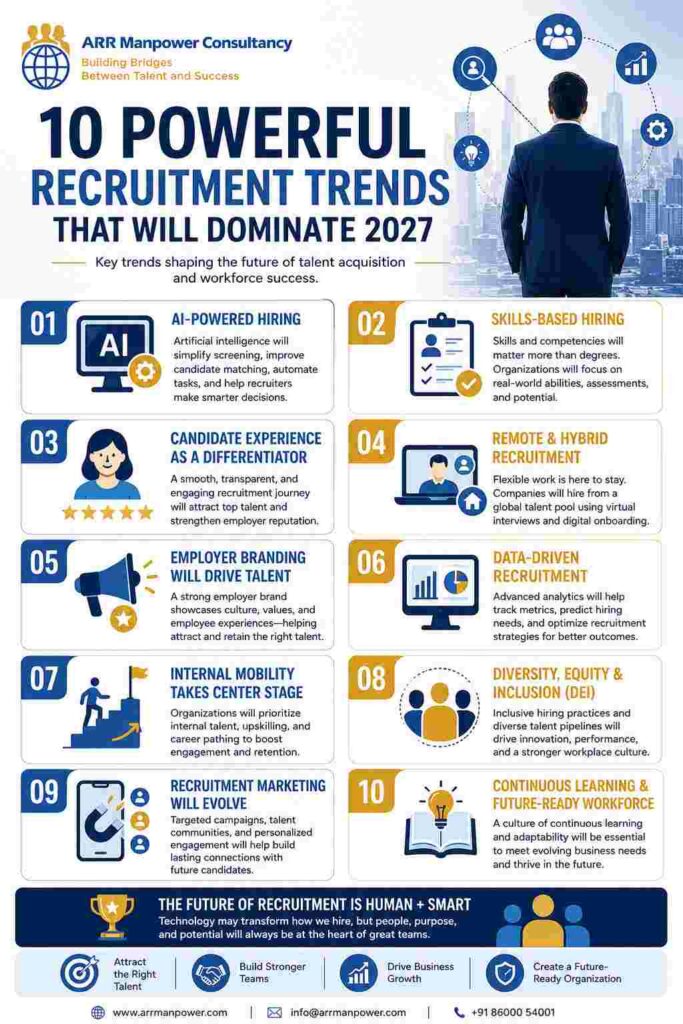
1. Artificial Intelligence Will Become a Core Hiring Tool
Artificial intelligence is already transforming recruitment, but by 2027 its role will become even more significant. Companies will increasingly rely on AI-powered systems to streamline hiring processes and improve decision-making.
These tools can analyze resumes, identify suitable candidates, automate repetitive tasks, and provide insights that help recruiters make informed choices. AI can also reduce administrative workloads, allowing hiring teams to focus on relationship-building and strategic activities.
Organizations using AI effectively will benefit from faster hiring cycles, improved candidate matching, and greater operational efficiency. However, human oversight will remain essential to ensure fairness, transparency, and ethical decision-making throughout the recruitment process.
2. Skills-Based Hiring Will Replace Degree-Centric Recruitment
One of the biggest shifts expected in 2027 is the growing emphasis on skills rather than academic qualifications alone. Employers are increasingly recognizing that practical abilities often matter more than formal degrees.
Many organizations have already started removing unnecessary educational requirements from job descriptions. Instead, they focus on competencies, certifications, portfolios, and real-world experience.
This approach expands the available talent pool and creates opportunities for capable professionals who may not have traditional educational backgrounds. It also helps companies identify individuals who can contribute immediately to business objectives.
Skills assessments, project-based evaluations, and practical tests will become standard components of modern hiring strategies.
3. Candidate Experience Will Become a Competitive Advantage
In a talent-driven market, candidate experience will play a critical role in attracting and retaining prospective employees. Job seekers increasingly evaluate employers based on how they are treated during the application and interview process.
Long response times, poor communication, and complicated procedures can discourage highly qualified candidates from continuing with an opportunity.
By 2027, organizations will invest heavily in creating seamless hiring experiences. This includes:
- Simplified application processes
- Faster interview scheduling
- Regular communication updates
- Personalized interactions
- Transparent hiring timelines
A positive experience can strengthen employer reputation and increase the likelihood of successful hiring outcomes.
4. Remote and Hybrid Recruitment Will Continue to Expand
Remote work has fundamentally changed workforce expectations. Even as some organizations return to physical offices, flexible work arrangements remain highly attractive to many professionals.
In 2027, businesses will continue expanding their search for talent beyond local geographic boundaries. Companies will recruit professionals from different cities, states, and countries to access specialized skills.
Virtual interviews, online assessments, and digital onboarding programs will become standard practices. Organizations capable of managing distributed teams effectively will gain access to broader talent markets and reduce limitations associated with local hiring shortages.
This trend will encourage employers to build recruitment frameworks designed specifically for geographically diverse workforces.
5. Employer Branding Will Influence Hiring Success
A strong employer brand will become one of the most valuable recruitment assets in 2027. Job seekers increasingly research organizations before applying for positions.
Candidates want to understand:
- Company culture
- Leadership values
- Career development opportunities
- Employee satisfaction levels
- Diversity initiatives
- Workplace flexibility
Businesses that actively communicate their culture and mission will attract stronger applicant pools.
Organizations will invest in employee advocacy programs, workplace storytelling, social media engagement, and authentic content that highlights employee experiences. A compelling employer reputation can significantly reduce hiring challenges and improve application quality.
6. Data-Driven Recruitment Will Guide Strategic Decisions
Recruitment decisions are becoming increasingly dependent on measurable insights. In 2027, companies will use advanced analytics to optimize every stage of the hiring process.
Recruiters will monitor metrics such as:
- Time-to-hire
- Cost-per-hire
- Source effectiveness
- Candidate conversion rates
- Interview success rates
- Employee retention
Data analytics can reveal patterns that help organizations improve hiring outcomes and allocate resources more effectively.
Predictive analytics may also help businesses anticipate future workforce needs, identify talent shortages, and develop proactive hiring strategies. As competition intensifies, data-driven decision-making will become a critical component of successful talent acquisition.
7. Internal Mobility Will Receive Greater Attention
Many organizations are realizing that existing employees represent one of their most valuable talent sources. Instead of focusing exclusively on external hiring, businesses will increasingly prioritize internal mobility.
By 2027, companies will create structured pathways that allow employees to move into new roles, departments, and leadership positions.
Benefits of internal mobility include:
- Reduced recruitment costs
- Faster onboarding
- Improved retention
- Higher employee engagement
- Better workforce planning
Organizations that invest in upskilling and reskilling programs can fill critical positions more efficiently while supporting employee career growth.
This trend reflects a broader shift toward workforce development and long-term talent management.
8. Diversity, Equity, and Inclusion Will Remain a Priority
Diversity, equity, and inclusion initiatives will continue influencing recruitment practices in 2027. Businesses increasingly recognize that diverse teams contribute to innovation, creativity, and stronger business performance.
Recruiters will focus on reducing bias throughout the hiring process by implementing structured interviews, standardized evaluations, and inclusive sourcing strategies.
Technology can support these efforts by helping identify potential barriers and improving fairness in candidate assessments.
Organizations will also pay greater attention to creating inclusive workplace environments where employees from different backgrounds feel valued and supported.
Companies that demonstrate a genuine commitment to diversity will strengthen their ability to attract high-quality talent and improve organizational performance.
9. Recruitment Marketing Will Become More Sophisticated
Recruitment is increasingly resembling modern marketing. Organizations must actively engage potential candidates rather than simply posting vacancies and waiting for applications.
In 2027, recruitment marketing strategies will become more personalized and targeted. Employers will use multiple channels to reach prospective employees, including:
- Social media platforms
- Professional networking sites
- Email campaigns
- Employee referral programs
- Content marketing initiatives
- Talent communities
Personalized messaging and audience segmentation will help organizations connect with specific candidate groups more effectively.
Businesses that invest in recruitment marketing will improve visibility, strengthen employer awareness, and create ongoing relationships with future talent.
10. Continuous Learning Will Shape Workforce Planning
Rapid technological change is creating constant demand for new skills. As a result, continuous learning will become a central component of workforce strategy in 2027.
Organizations will increasingly seek candidates who demonstrate adaptability, curiosity, and a commitment to professional development.
Employers will also invest in learning programs that help employees acquire emerging skills and remain competitive in evolving industries.
Rather than hiring solely for current requirements, businesses will focus on long-term potential. Candidates who show strong learning agility may become highly valuable assets, even if they do not meet every technical requirement initially.
This shift will encourage organizations to view recruitment and workforce development as interconnected processes.
How Businesses Can Prepare for 2027 Recruitment Trends
To remain competitive in the future hiring environment, organizations should begin preparing today. Several proactive steps can help businesses adapt successfully:
Invest in Technology
Modern recruitment platforms, automation tools, and analytics systems can improve efficiency and support better decision-making.
Strengthen Employer Reputation
Build a strong employer brand by highlighting company culture, employee achievements, and career development opportunities.
Focus on Skills
Review job requirements and prioritize competencies that directly impact performance rather than relying heavily on traditional credentials.
Improve Candidate Engagement
Create transparent, responsive, and user-friendly hiring experiences that leave positive impressions on applicants.
Develop Internal Talent
Implement training, mentorship, and career development programs that support workforce growth from within.
Embrace Flexibility
Offer work arrangements that align with evolving employee expectations and attract a broader range of professionals.
The Future of Recruitment Beyond 2027
While these trends are expected to dominate 2027, recruitment will continue evolving beyond that point. Emerging technologies, changing demographics, and economic shifts will introduce new opportunities and challenges.
Organizations that prioritize adaptability will be best positioned for long-term success. Rather than reacting to change, successful employers will actively monitor workforce trends and continuously refine their hiring strategies.
Future recruitment models will likely place even greater emphasis on personalization, workforce intelligence, and employee experience. Businesses that embrace innovation while maintaining a human-centered approach will have a clear advantage in attracting and retaining exceptional talent.
Conclusion
The recruitment industry is entering a transformative period driven by technology, evolving workforce expectations, and changing business needs. The trends expected to dominate 2027 highlight the importance of agility, innovation, and strategic thinking.
Artificial intelligence, skills-based hiring, enhanced candidate experiences, remote recruitment, employer branding, workforce analytics, internal mobility, diversity initiatives, recruitment marketing, and continuous learning are all shaping the future of talent acquisition.
Organizations that begin adapting now will be better equipped to compete for top talent and achieve sustainable growth. By understanding these emerging trends and implementing forward-thinking hiring strategies, businesses can build stronger teams and create lasting competitive advantages in the years ahead.