Introduction
In today’s competitive hiring landscape, organizations can no longer afford to wait until a position becomes vacant before beginning the recruitment process. Businesses that consistently attract and retain top professionals understand the importance of creating a proactive hiring strategy. One of the most effective ways to ensure long-term recruitment success is by building a strong talent pipeline.
A talent pipeline is a pool of qualified candidates who have already shown interest in your organization or possess the skills needed for future opportunities. Instead of scrambling to fill vacancies at the last minute, companies with a well-developed pipeline can quickly identify suitable candidates and reduce hiring delays.
Whether you are a startup looking to scale or an established organization aiming to strengthen workforce planning, developing a sustainable approach to talent acquisition can significantly improve recruitment outcomes. This article explores nine essential steps that can help organizations build a reliable and future-ready talent pipeline.
https://arrmanpowerconsultancy.com
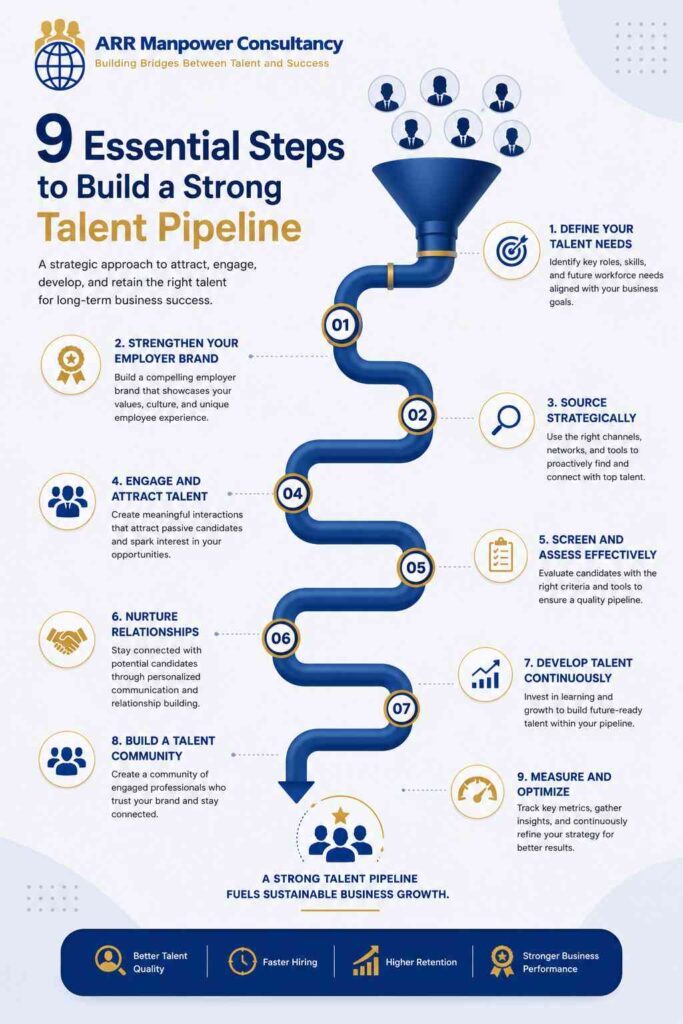
A step-by-step infographic highlighting the nine essential stages of attracting, engaging, developing, and retaining top talent.
1. Understand Your Current and Future Workforce Needs
The foundation of any successful hiring strategy begins with workforce planning. Before building a candidate pool, organizations must clearly understand the positions they need today and those they may require in the future.
Start by analyzing:
- Current workforce capabilities
- Upcoming retirements or resignations
- Business expansion plans
- Emerging skill requirements
- Department growth projections
Collaborate with department managers and leadership teams to identify potential hiring needs over the next six to twelve months. Understanding future workforce demands allows recruiters to target the right candidates before vacancies arise.
When organizations align recruitment planning with business objectives, they can avoid reactive hiring and create a more strategic approach to talent acquisition.
2. Develop a Strong Employer Brand
Candidates are more likely to engage with companies that have a positive reputation in the job market. A strong employer brand helps attract qualified professionals and encourages them to remain interested in future opportunities.
Your employer brand should communicate:
- Company values
- Work culture
- Career development opportunities
- Employee benefits
- Diversity and inclusion initiatives
To strengthen your reputation:
- Share employee success stories
- Highlight workplace achievements
- Showcase company events
- Publish thought leadership content
- Maintain active social media profiles
Candidates often research organizations before applying for positions. A compelling employer brand can create trust and make your company a preferred destination for skilled professionals.
3. Create Detailed Candidate Personas
Not every role requires the same type of professional. Creating candidate personas helps recruiters understand the characteristics, skills, motivations, and career goals of ideal candidates.
A candidate persona may include:
- Educational background
- Professional experience
- Technical skills
- Soft skills
- Career aspirations
- Preferred communication channels
For example, hiring an experienced software developer requires a different approach than recruiting an entry-level marketing executive.
Candidate personas help recruitment teams:
- Develop targeted messaging
- Choose effective sourcing channels
- Improve candidate engagement
- Increase recruitment efficiency
By understanding what motivates potential candidates, organizations can build stronger relationships and improve future hiring outcomes.
4. Leverage Multiple Sourcing Channels
Relying on a single recruitment source limits access to qualified professionals. Successful organizations use multiple sourcing channels to build a diverse and extensive candidate network.
Effective sourcing channels include:
Job Portals
Online job boards remain a valuable resource for reaching active job seekers. Regular posting helps maintain visibility among professionals searching for new opportunities.
Professional Networking Platforms
Platforms such as LinkedIn allow recruiters to identify passive candidates who may not be actively seeking jobs but are open to future opportunities.
Employee Referrals
Current employees often know qualified professionals within their networks. Referral programs can significantly improve candidate quality and reduce hiring costs.
Industry Events
Conferences, trade shows, seminars, and networking events provide excellent opportunities to connect with skilled professionals.
Educational Institutions
Partnering with universities and colleges helps organizations identify emerging talent and build relationships with future graduates.
A diversified sourcing strategy increases access to a broader range of candidates and strengthens long-term recruitment efforts.
5. Build and Maintain Candidate Relationships
Building a strong talent pipeline is not just about collecting resumes. It involves creating meaningful relationships with potential candidates over time.
Many organizations make the mistake of contacting candidates only when vacancies arise. This approach often results in missed opportunities because top professionals may already have accepted other positions.
Relationship-building strategies include:
- Regular email communication
- Personalized follow-ups
- Industry updates and newsletters
- Invitations to company events
- Career-related content sharing
Maintaining ongoing engagement helps keep candidates interested in your organization and increases the likelihood that they will consider future opportunities.
Strong candidate relationships also enhance the overall recruitment experience and improve employer reputation.
6. Utilize Recruitment Technology and Talent Databases
Modern recruitment technology plays a critical role in pipeline development. Applicant Tracking Systems (ATS) and Candidate Relationship Management (CRM) tools help recruiters organize, manage, and engage potential candidates efficiently.
Benefits of recruitment technology include:
Centralized Candidate Information
Recruiters can store resumes, interview notes, and communication history in one location.
Improved Search Capabilities
Advanced filtering features help identify candidates based on skills, experience, and qualifications.
Automated Communication
Technology allows recruiters to send updates, reminders, and personalized messages at scale.
Enhanced Collaboration
Hiring managers and recruiters can work together more effectively by sharing candidate information and feedback.
By leveraging technology, organizations can maintain a well-organized talent pool and reduce administrative burdens throughout the recruitment process.
7. Focus on Candidate Experience
The candidate experience significantly impacts an organization’s ability to attract future talent. Even candidates who are not selected may recommend your company if they have a positive experience during the recruitment process.
Key factors influencing candidate experience include:
Clear Communication
Provide timely updates regarding application status, interview schedules, and next steps.
Efficient Processes
Avoid lengthy and complicated recruitment procedures that may discourage qualified professionals.
Transparency
Clearly explain job responsibilities, expectations, compensation, and organizational culture.
Respect and Professionalism
Treat every candidate with courtesy and professionalism throughout the hiring journey.
Candidates often share their experiences with peers and online communities. Positive experiences strengthen employer reputation and contribute to a healthier pipeline of future applicants.
8. Invest in Talent Communities
A talent community is a group of professionals who have expressed interest in your organization, even if they are not currently applying for a position.
Talent communities allow companies to stay connected with potential candidates and nurture relationships over time.
Ways to build talent communities include:
- Career newsletters
- Webinars and workshops
- Networking events
- Online discussion groups
- Industry-specific forums
These communities provide opportunities to:
- Share company updates
- Highlight career opportunities
- Promote organizational culture
- Engage potential candidates
When positions become available, recruiters can quickly reach individuals who are already familiar with the organization.
Talent communities create a long-term recruitment advantage by maintaining consistent engagement with skilled professionals.
9. Measure and Continuously Improve Your Pipeline Strategy
Building a successful talent pipeline requires ongoing evaluation and refinement. Recruitment teams should regularly assess performance metrics to identify strengths and areas for improvement.
Important metrics include:
Time-to-Fill
Measures the average number of days required to fill a vacancy.
Quality of Hire
Evaluates employee performance and long-term success after hiring.
Source Effectiveness
Identifies which sourcing channels generate the best candidates.
Candidate Engagement Rates
Tracks response rates, event participation, and communication effectiveness.
Offer Acceptance Rates
Measures the percentage of candidates who accept employment offers.
Regular analysis helps organizations make data-driven decisions and optimize recruitment strategies.
Continuous improvement ensures the pipeline remains aligned with changing business needs and labor market conditions.
Common Challenges in Building a Talent Pipeline
While the benefits are significant, organizations often encounter obstacles when developing a candidate pipeline.
Limited Resources
Smaller organizations may struggle with budget and staffing constraints.
Changing Skill Requirements
Rapid technological advancements can create new workforce demands.
Intense Competition
Many industries face fierce competition for highly skilled professionals.
Inconsistent Engagement
Candidates may lose interest if communication is infrequent or irrelevant.
Data Management Issues
Poorly organized candidate information can reduce recruitment efficiency.
Recognizing these challenges early allows organizations to develop proactive solutions and maintain a strong recruitment strategy.
Benefits of a Strong Talent Pipeline
Organizations that invest in pipeline development enjoy numerous advantages.
Faster Hiring
Pre-qualified candidates reduce recruitment timelines and minimize vacancy periods.
Better Candidate Quality
Ongoing engagement helps identify professionals who align with organizational goals and culture.
Reduced Recruitment Costs
Proactive hiring efforts decrease reliance on emergency recruitment campaigns.
Improved Workforce Planning
Companies can anticipate future hiring needs and prepare accordingly.
Enhanced Business Continuity
Critical positions can be filled more quickly, reducing operational disruptions.
These benefits contribute to long-term organizational growth and workforce stability.
Conclusion
Building a strong talent pipeline is no longer optional in today’s competitive employment market. Organizations that take a proactive approach to recruitment are better positioned to attract qualified professionals, reduce hiring delays, and support long-term business objectives.
By understanding workforce needs, strengthening employer branding, developing candidate personas, utilizing multiple sourcing channels, nurturing relationships, embracing recruitment technology, prioritizing candidate experience, creating talent communities, and continuously measuring results, companies can establish a sustainable recruitment framework.
A well-maintained pipeline provides access to skilled professionals when opportunities arise, helping organizations remain agile and competitive. Investing time and effort into pipeline development today creates a stronger workforce and greater recruitment success in the future.
https://business.linkedin.com/hire/resources/talent-acquisition