Introduction
Hiring skilled manpower has never been more challenging—or more important—than it is in 2026. Businesses across industries are evolving rapidly, driven by technology, globalization, and shifting workforce expectations. Whether you’re running a small enterprise or managing a large organization, the quality of your workforce directly impacts your growth, productivity, and long-term success.
But here’s the reality: many companies are still making costly hiring mistakes.
These errors don’t just slow down recruitment—they lead to poor performance, high turnover, wasted resources, and even damage to your brand reputation. In a competitive hiring landscape, even one wrong decision can set you back significantly.
The good news? These mistakes are avoidable.
In this article, we’ll break down the 8 most critical mistakes in skilled manpower hiring and, more importantly, show you how to avoid them with practical, real-world strategies.
https://arrmanpowerconsultancy.com/
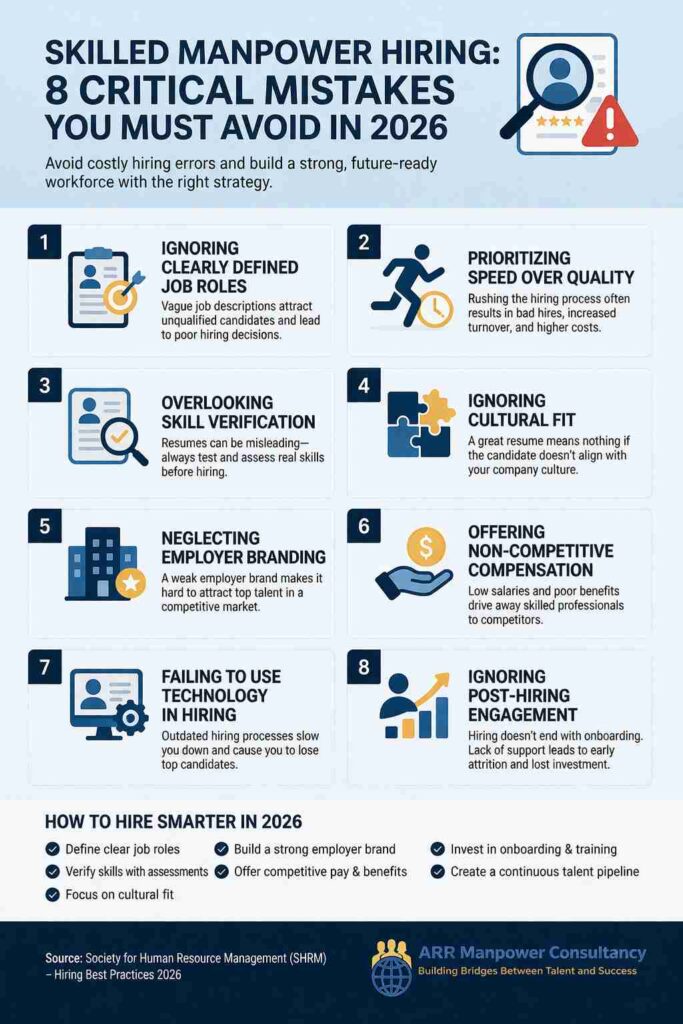
1. Ignoring Clearly Defined Job Roles
The Problem
One of the biggest hiring mistakes companies make is starting recruitment without a clear understanding of the role. Vague job descriptions lead to confusion—for both recruiters and candidates.
You might think you’re saving time by rushing into hiring, but unclear expectations often result in hiring the wrong person.
Real Impact
- Mismatched expectations
- Poor job performance
- Increased employee dissatisfaction
- Higher turnover rates
The Solution
Take time to define:
- Core responsibilities
- Required skills and experience
- Performance expectations
- Growth opportunities
A well-defined role attracts the right candidates and sets them up for success from day one.
2. Prioritizing Speed Over Quality
The Problem
In urgent situations, companies often rush the hiring process just to fill a vacancy quickly. While speed is important, sacrificing quality can be disastrous.
Real Impact
- Hiring underqualified candidates
- Increased training costs
- Frequent rehiring cycles
- Loss of productivity
The Solution
Balance speed with quality by:
- Using structured interview processes
- Implementing skill assessments
- Creating a shortlist of pre-vetted candidates
Remember, a delayed good hire is better than a quick bad one.
3. Overlooking Skill Verification
The Problem
Relying solely on resumes and interviews without verifying actual skills is a major risk. Many candidates may exaggerate their abilities.
Real Impact
- Poor job performance
- Project delays
- Increased supervision requirements
The Solution
Always validate skills through:
- Practical tests
- Real-world assignments
- Technical assessments
- Reference checks
Hiring should be based on proven ability—not just claims.
4. Ignoring Cultural Fit
The Problem
A highly skilled candidate may still fail if they don’t align with your company culture.
Real Impact
- Team conflicts
- Low engagement
- Early resignations
The Solution
Evaluate:
- Work ethic
- Communication style
- Adaptability
- Values alignment
Hiring for cultural fit ensures long-term stability and team harmony.
5. Neglecting Employer Branding
The Problem
In 2026, candidates don’t just look for jobs—they look for employers they trust. If your company lacks a strong reputation, top talent may not even apply.
Real Impact
- Reduced candidate pool
- Difficulty attracting skilled professionals
- Lower offer acceptance rates
The Solution
Build a strong employer brand by:
- Maintaining a professional website
- Sharing employee success stories
- Showcasing workplace culture
- Being active on professional platforms
Your brand speaks before you do.
6. Offering Non-Competitive Compensation
The Problem
Skilled professionals know their worth. Offering below-market salaries or limited benefits can drive away top talent.
Real Impact
- Losing top candidates to competitors
- Increased negotiation failures
- Higher attrition rates
The Solution
Stay competitive by:
- Researching market salary trends
- Offering performance-based incentives
- Providing non-monetary benefits (flexibility, growth opportunities)
Compensation isn’t just a cost—it’s an investment.
7. Failing to Use Technology in Hiring
The Problem
Manual hiring processes are slow, inefficient, and prone to errors.
Real Impact
- Missed opportunities
- Inefficient candidate tracking
- Poor communication
The Solution
Leverage modern hiring tools such as:
- Applicant Tracking Systems (ATS)
- AI-based screening tools
- Video interview platforms
- Data-driven hiring analytics
Technology enhances efficiency and improves decision-making.
8. Ignoring Post-Hiring Engagement
The Problem
Many companies think hiring ends once the candidate joins. In reality, the real work begins after onboarding.
Real Impact
- Low employee retention
- Poor performance
- Lack of motivation
The Solution
Focus on:
- Structured onboarding programs
- Continuous training and development
- Regular feedback and performance reviews
- Employee engagement initiatives
Retention starts from day one.
The Future of Skilled Manpower Hiring in 2026
Hiring is no longer just about filling positions—it’s about building a future-ready workforce.
Companies that succeed in 2026 will:
- Focus on skills over degrees
- Embrace remote and hybrid work models
- Invest in employee development
- Use data-driven hiring strategies
The hiring landscape is evolving—and so should your approach.
Practical Tips to Improve Your Hiring Strategy
To stay ahead, implement these best practices:
✔ Build a Talent Pipeline
Don’t wait for vacancies—maintain a pool of qualified candidates.
✔ Standardize Interview Processes
Consistency improves fairness and decision-making.
✔ Focus on Candidate Experience
A smooth hiring process improves your reputation.
✔ Use Data and Analytics
Track hiring metrics to optimize performance.
✔ Collaborate with Hiring Experts
Professional consultancies can help you find the right talent faster.
Conclusion
Skilled manpower hiring is one of the most critical aspects of business success. While the process may seem straightforward, the reality is far more complex.
The mistakes discussed in this article are common—but they are also preventable.
By:
- Defining roles clearly
- Prioritizing quality over speed
- Verifying skills
- Focusing on cultural fit
- Strengthening employer branding
- Offering competitive compensation
- Leveraging technology
- Engaging employees post-hiring
—you can transform your hiring process into a powerful growth engine.
In 2026, success will belong to organizations that hire smart, not just fast.
Final Thought
Hiring the right people isn’t just about filling roles—it’s about shaping the future of your business.
Make every hire count.