Introduction
Hiring the right employees is one of the most important responsibilities for any business. A strong workforce improves productivity, supports growth, and creates a better workplace culture. However, the hiring process often becomes stressful, expensive, and time-consuming when companies rely on outdated methods or unorganized systems.
Modern businesses need smarter strategies to attract qualified candidates quickly while reducing hiring costs and minimizing manual work. Recruiters today are expected to fill positions faster without compromising quality. This is where practical recruitment hacks can make a significant difference.
By improving sourcing methods, simplifying communication, using technology effectively, and focusing on candidate experience, companies can streamline hiring operations and achieve better results. Whether you manage a startup, small business, or large organization, the following strategies can help improve your recruitment process.
https://arrmanpowerconsultancy.com
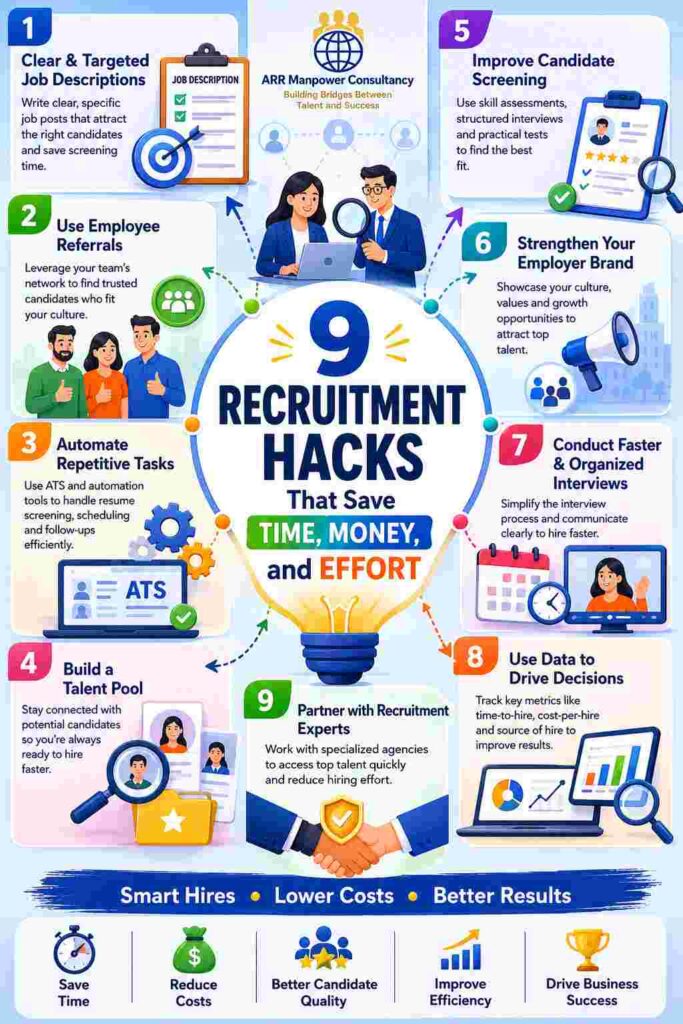
1. Create Clear and Targeted Job Descriptions
A poorly written job description attracts the wrong applicants and wastes valuable screening time. One of the simplest ways to improve hiring efficiency is by creating detailed and targeted job postings.
A strong job description should clearly explain:
- The responsibilities of the role
- Required skills and qualifications
- Company culture and values
- Salary range and benefits
- Growth opportunities
Avoid using vague terms or unnecessary jargon. Candidates appreciate transparency, and clear communication reduces confusion during the hiring process.
Instead of listing every possible requirement, focus on the essential skills needed for success in the role. Overly demanding job descriptions discourage qualified candidates from applying.
When companies use accurate and concise postings, recruiters spend less time filtering irrelevant applications and more time engaging with suitable talent.
2. Use Employee Referrals Strategically
Employee referral programs remain one of the most effective hiring methods. Existing employees often recommend candidates who align with company culture and work expectations.
Referral hires usually:
- Join faster
- Require less onboarding time
- Stay longer with the company
- Deliver better performance
To encourage participation, businesses can offer referral bonuses, incentives, or recognition programs. Even small rewards motivate employees to recommend quality candidates from their professional networks.
A structured referral system also reduces dependency on expensive job portals and external agencies. This directly lowers recruitment costs while improving hiring speed.
Organizations should regularly remind employees about open positions and make the referral process simple. Complicated procedures discourage participation and reduce program effectiveness.
3. Automate Repetitive Hiring Tasks
Recruiters often spend countless hours handling repetitive administrative work. Manual resume screening, interview scheduling, and follow-up emails consume time that could be used for strategic hiring activities.
Automation tools help businesses simplify routine tasks and improve efficiency.
Popular automation features include:
- Resume parsing
- Candidate tracking
- Interview scheduling
- Automated email responses
- Assessment management
Applicant Tracking Systems (ATS) are especially valuable for organizing applications and filtering candidates based on qualifications.
Automation does not replace human decision-making. Instead, it helps recruiters focus on meaningful interactions with candidates while reducing paperwork and delays.
Companies that embrace technology often experience faster hiring cycles and improved productivity across HR departments.
4. Build a Talent Pool Before You Need It
Many businesses start searching for candidates only after a vacancy appears. This reactive approach creates pressure and often leads to rushed hiring decisions.
A better strategy involves building a talent pipeline in advance.
Recruiters can maintain relationships with:
- Previous applicants
- Internship candidates
- Freelancers
- Industry professionals
- Passive job seekers
By creating a database of potential hires, companies can quickly contact suitable candidates whenever opportunities arise.
Social media platforms, networking events, webinars, and professional communities are excellent places to connect with future talent.
Maintaining regular communication with potential candidates helps businesses reduce hiring delays and improves long-term workforce planning.
5. Improve Candidate Screening Techniques
Traditional hiring methods sometimes focus too heavily on resumes instead of practical skills. While resumes provide useful information, they do not always reflect real-world performance.
Smarter screening techniques save time and improve hiring accuracy.
Effective screening methods include:
- Skill assessments
- Behavioral interviews
- Problem-solving exercises
- Video interviews
- Portfolio evaluations
Structured interviews are particularly useful because they allow recruiters to compare candidates fairly using consistent questions.
Pre-employment assessments can also reduce hiring mistakes by identifying candidates who truly match role requirements.
When companies improve screening methods, they reduce employee turnover and avoid the cost of poor hiring decisions.
6. Strengthen Your Employer Brand
Top candidates often research companies before applying for jobs. Businesses with weak online presence or poor employee reviews may struggle to attract skilled professionals.
A strong employer brand helps organizations stand out in competitive hiring markets.
Companies can improve their employer reputation by:
- Sharing employee success stories
- Highlighting workplace culture
- Posting team activities on social media
- Encouraging positive employee reviews
- Demonstrating career growth opportunities
Candidates want to work for organizations that value employee development and maintain a healthy work environment.
A positive reputation naturally attracts more qualified applicants, reducing the need for aggressive recruiting campaigns.
Employer branding also lowers hiring costs over time because companies receive more organic applications from interested professionals.
7. Conduct Faster and More Organized Interviews
Long hiring processes frustrate candidates and increase the risk of losing top talent to competitors.
One of the best recruitment hacks is simplifying interview stages while maintaining quality evaluation standards.
Businesses can speed up interviews by:
- Scheduling interviews quickly
- Combining multiple interview rounds
- Using virtual interviews when possible
- Creating standardized evaluation forms
- Training hiring managers for faster decisions
Video interviews are especially useful for initial screening because they reduce travel costs and scheduling conflicts.
Interview panels should communicate clearly with candidates about timelines and next steps. Delayed communication creates negative impressions and reduces candidate engagement.
A faster process not only saves time but also improves the overall candidate experience.
8. Use Data to Improve Hiring Decisions
Modern recruitment relies heavily on analytics and measurable performance indicators.
Companies that track hiring metrics gain valuable insights into what works and what needs improvement.
Useful recruitment metrics include:
- Time-to-hire
- Cost-per-hire
- Source of hire
- Offer acceptance rate
- Employee retention rate
- Candidate satisfaction
Analyzing these metrics helps recruiters identify bottlenecks and optimize hiring strategies.
For example, if a company notices that referral hires stay longer than job board applicants, it can invest more resources into referral programs.
Data-driven hiring reduces guesswork and improves decision-making accuracy.
Businesses that regularly review recruitment performance often achieve better hiring outcomes with fewer resources.
9. Partner with Specialized Recruitment Agencies
Sometimes internal HR teams lack the time or expertise to fill highly specialized positions. In such cases, working with professional recruitment agencies can save significant effort.
Experienced recruiters have access to larger talent networks and industry-specific knowledge. They can quickly identify suitable candidates and manage early screening stages.
Benefits of agency partnerships include:
- Faster access to qualified talent
- Reduced hiring workload
- Better market insights
- Improved candidate quality
- Lower risk of bad hires
Choosing the right agency is important. Businesses should work with firms that understand their industry, hiring goals, and company culture.
A reliable recruitment partner acts as an extension of the internal HR team and contributes to long-term hiring success.
Why Smart Hiring Strategies Matter
Recruitment affects every aspect of business performance. Poor hiring decisions lead to low productivity, high turnover, and financial losses.
On the other hand, efficient hiring practices help organizations:
- Build stronger teams
- Improve employee morale
- Reduce operational costs
- Increase productivity
- Support business growth
Companies that modernize their hiring approach gain a competitive advantage in attracting and retaining talent.
As job markets continue evolving, recruiters must adapt to changing candidate expectations and technological advancements.
Organizations that ignore hiring innovation risk falling behind competitors who prioritize speed, efficiency, and candidate experience.
Common Hiring Mistakes Businesses Should Avoid
While improving recruitment processes, businesses should also avoid common mistakes that create unnecessary delays and expenses.
Ignoring Cultural Fit
Skills are important, but cultural compatibility also matters. Employees who align with company values often collaborate better and remain with the organization longer.
Delayed Communication
Candidates appreciate timely updates. Poor communication damages employer reputation and causes applicants to lose interest.
Overcomplicated Hiring Processes
Excessive interview rounds discourage talented candidates. Businesses should keep processes efficient and purposeful.
Hiring in a Rush
Rushed decisions increase the risk of selecting unsuitable candidates. Strategic planning helps avoid emergency hiring situations.
Neglecting Candidate Experience
Every interaction shapes how candidates perceive a company. A positive experience encourages future applications and referrals.
The Future of Recruitment
Recruitment continues evolving with advancements in technology and changing workforce expectations.
Artificial intelligence, remote hiring tools, and predictive analytics are transforming how businesses identify and evaluate candidates.
Future hiring trends may include:
- AI-powered talent matching
- Virtual onboarding
- Remote workforce expansion
- Skills-based hiring models
- Increased use of automation
Despite technological changes, human connection will always remain essential in recruitment.
Candidates still value meaningful communication, transparency, and respectful treatment throughout the hiring journey.
Companies that combine technology with strong relationship-building strategies will likely achieve the best hiring results.
Conclusion
Hiring talented employees does not have to be slow, expensive, or overwhelming. By applying practical recruitment hacks, businesses can improve efficiency while reducing hiring costs and administrative burdens.
Simple improvements such as writing clearer job descriptions, automating repetitive tasks, building talent pools, and using structured interviews can create major long-term benefits.
Organizations that invest in smarter hiring practices gain access to better talent, stronger teams, and improved business performance.
Recruitment success depends on preparation, consistency, and adaptability. Businesses willing to modernize their hiring strategies are better positioned to thrive in competitive job markets.
As workforce expectations continue changing, companies that prioritize efficient and people-focused recruitment methods will continue attracting top professionals and achieving sustainable growth.