In 2026, the dream of working abroad is stronger than ever. Thousands of candidates are actively searching for better opportunities, higher salaries, and global exposure. From Gulf countries to Russia and beyond, overseas employment offers life-changing possibilities.
But here’s the hard truth—most job seekers fail not because of lack of skills, but because of avoidable mistakes.
Yes, shocking but true.
Many candidates unknowingly reduce their chances even before their application is reviewed. These mistakes may seem small, but they can completely block your path to success.
If you are planning to apply for overseas opportunities, this guide will help you understand what not to do—and how to improve your chances.
Let’s uncover the 7 shocking mistakes job seekers make before applying for overseas jobs and how you can avoid them.
https://arrmanpowerconsultancy.com/services/
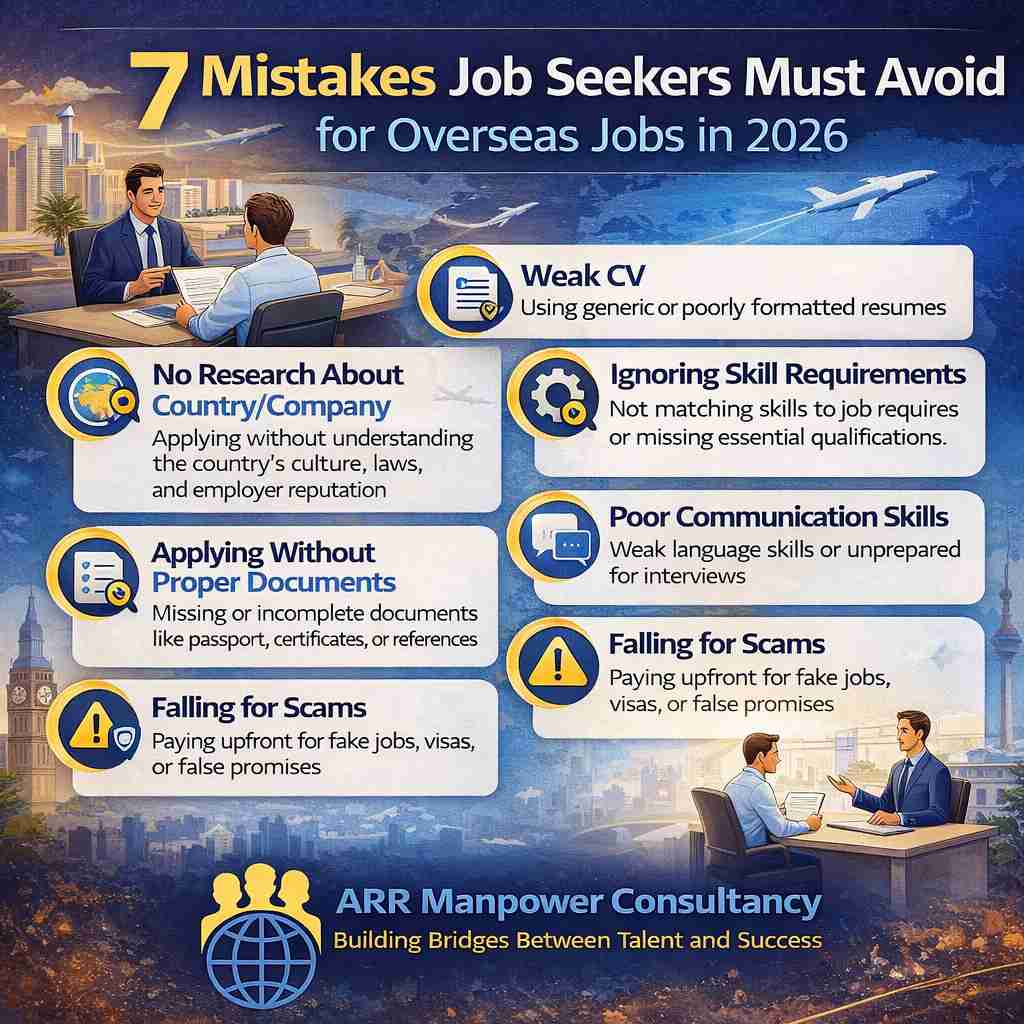
Build a stronger career with the right guidance from ARR Manpower Consultancy.
Why Avoiding Mistakes Matters More Than You Think
Before diving into the list, it’s important to understand something:
Recruiters don’t have time to analyze every application in detail. They scan quickly, shortlist faster, and reject instantly.
This means:
- One mistake = instant rejection
- Poor preparation = missed opportunity
- Lack of awareness = wasted effort
The goal is not just to apply—but to apply smartly and strategically.
Mistake 1: Applying Without Proper Research
This is one of the most common and dangerous mistakes.
Many candidates apply blindly without understanding:
- Job role
- Country requirements
- Salary standards
- Work conditions
Why This Is a Problem:
You may apply for roles that don’t match your skills or expectations.
Real Impact:
- Rejections increase
- Time is wasted
- Confidence drops
What You Should Do Instead:
✔ Research the country
✔ Understand job demand
✔ Compare salary vs cost of living
✔ Check employer credibility
👉 Smart research = smart decisions.
Mistake 2: Using a Generic CV for Every Job
A “one CV fits all” approach doesn’t work anymore.
Recruiters can easily identify generic applications.
Why It Fails:
Every job has different requirements. If your CV doesn’t match, it gets ignored.
Example:
Applying for:
- Construction job → needs site experience
- IT job → needs technical skills
Using the same CV for both? Big mistake.
Solution:
✔ Customize your CV for each job
✔ Highlight relevant experience
✔ Use keywords from job description
👉 A targeted CV increases selection chances significantly.
Mistake 3: Ignoring ATS (Applicant Tracking System)
In 2026, many companies use software to filter applications.
If your CV is not ATS-friendly, it may never reach a recruiter.
Common ATS Mistakes:
❌ Using images
❌ Fancy designs
❌ Missing keywords
What Happens:
Your CV gets rejected automatically—even if you are qualified.
Fix It:
✔ Use simple format
✔ Include relevant keywords
✔ Avoid graphics and tables
👉 Think simple, clear, and professional.
Mistake 4: Falling for Job Scams
This is a serious issue in overseas recruitment.
Many candidates lose money due to fake job offers.
Warning Signs:
❌ Asking for high upfront fees
❌ No proper company details
❌ Fake offer letters
Risks:
- Financial loss
- Legal issues
- Emotional stress
How to Stay Safe:
✔ Verify recruitment agency
✔ Check company website
✔ Avoid suspicious payments
👉 If it sounds too good to be true—it probably is.
Mistake 5: Not Understanding Job Contracts
Many candidates accept offers without reading the contract properly.
This can lead to major problems later.
What Candidates Ignore:
- Salary structure
- Working hours
- Overtime rules
- Accommodation details
Consequences:
- Misunderstandings
- Job dissatisfaction
- Legal complications
What You Should Do:
✔ Read every detail carefully
✔ Ask questions
✔ Get everything in writing
👉 Clarity today prevents problems tomorrow.
Mistake 6: Poor Communication and Language Skills
Communication plays a crucial role in overseas jobs.
Even if your technical skills are strong, poor communication can hold you back.
Common Issues:
- Lack of confidence
- Language barriers
- Poor interview performance
Why It Matters:
Employers prefer candidates who can:
✔ Understand instructions
✔ Communicate clearly
✔ Work in teams
How to Improve:
✔ Learn basic English or required language
✔ Practice interviews
✔ Improve confidence
👉 Communication = opportunity.
Mistake 7: Lack of Patience and Unrealistic Expectations
Many candidates expect:
- Instant job offers
- High salary without experience
- Quick visa processing
This mindset leads to frustration.
Reality Check:
Overseas hiring takes time.
What You Need:
✔ Patience
✔ Consistency
✔ Realistic expectations
Smart Approach:
- Apply regularly
- Follow up professionally
- Stay positive
👉 Success comes to those who stay consistent.
Bonus Mistakes You Should Avoid
Let’s quickly cover a few more common mistakes:
❌ Incomplete Documents
Missing documents delay your application.
❌ Fake Information
Providing false details can permanently damage your career.
❌ Ignoring Skill Development
The world is competitive—skills matter.
How to Apply Smartly in 2026
Now that you know the mistakes, here’s how to do it right:
✔ Prepare a Strong CV
Tailored, clear, and professional.
✔ Use Trusted Sources
Apply through verified agencies.
✔ Keep Documents Ready
Passport, certificates, experience letters.
✔ Stay Updated
Follow job trends and demand.
Mindset That Guarantees Success
Your mindset plays a key role.
Successful candidates:
- Stay patient
- Keep learning
- Adapt to changes
- Take action
👉 Opportunities don’t just come—you create them.
Final Thoughts
Applying for overseas jobs is a big step. It can change your life—but only if done correctly.
The difference between success and failure often comes down to avoiding simple mistakes.
When you:
✔ Research properly
✔ Customize your CV
✔ Stay alert and informed
✔ Maintain the right mindset
—you dramatically improve your chances.
Conclusion
Securing an overseas job can be one of the most rewarding career decisions a person makes, offering better income, international exposure, professional growth, and a chance to build a brighter future. However, many job seekers unknowingly reduce their chances of success long before they even submit an application. The mistakes discussed in this article may seem small at first glance, but they can have a significant impact on how employers and recruiters evaluate candidates.
The reality is that international employers receive applications from thousands of candidates across different countries. This means that every detail matters. A poorly prepared resume, incomplete documentation, lack of research, unrealistic expectations, or failure to verify job opportunities can quickly move an applicant from the shortlist to the rejection pile. In today’s competitive global job market, preparation is not optional—it is essential.
One of the biggest advantages a job seeker can have is awareness. Understanding the common pitfalls that prevent candidates from getting hired allows you to avoid them before they become obstacles. Instead of rushing through the application process, take the time to build a professional profile that accurately showcases your skills, qualifications, and experience. Employers are looking for candidates who demonstrate professionalism, attention to detail, and a genuine interest in the position and country they are applying to.
It is equally important to remember that overseas recruitment is often more complex than local hiring. Different countries have unique visa requirements, labor laws, certification standards, and employer expectations. Candidates who invest time in researching these factors position themselves ahead of others who rely on assumptions or outdated information. Knowledge not only improves your application but also helps you make informed career decisions that protect your future.
Another critical factor is patience. Many job seekers become frustrated when they do not receive immediate responses from employers or recruitment agencies. International hiring processes often involve multiple stages, including document verification, interviews, background checks, and visa procedures. Staying organized, following instructions carefully, and maintaining professional communication throughout the process can make a substantial difference in achieving a successful outcome.
Trust and credibility also play a major role in overseas employment. Employers want to hire individuals they can depend on, while candidates need trustworthy recruitment partners who can guide them through the process. Verifying job offers, checking employer credentials, and working with reputable recruitment agencies can help prevent costly mistakes and protect job seekers from fraudulent opportunities.
The good news is that every mistake highlighted in this article is preventable. Whether you are applying for your first overseas job or seeking a better international opportunity, taking a strategic approach can dramatically improve your chances of success. Focus on creating a strong application, presenting accurate information, developing relevant skills, and understanding the requirements of your target destination. Small improvements in preparation can lead to significant career opportunities.
Ultimately, success in overseas job hunting is not determined by luck alone. It is the result of careful planning, continuous learning, and informed decision-making. Candidates who approach the process with professionalism, realistic expectations, and a commitment to excellence are far more likely to stand out in a competitive market.
As you begin your journey toward international employment, use these insights as a guide to strengthen your application and avoid unnecessary setbacks. By steering clear of these shocking yet common mistakes, you can increase your confidence, improve your chances of securing interviews, and move one step closer to achieving your dream of building a successful career abroad.
“7 Shocking Mistakes Job Seekers Make Before Applying for Overseas Jobs” is not just a list—it’s a warning and a guide.
Every mistake you avoid brings you one step closer to your dream job.
Now the question is:
👉 Will you repeat these mistakes—or rise above them?