Introduction
Germany has become one of the most attractive destinations for job seekers worldwide. In 2026, the demand for skilled manpower is at an all-time high, driven by industrial growth, technological advancements, and a shortage of local talent. From engineering and IT to healthcare and construction, opportunities are expanding across multiple sectors.
But here’s the reality—while opportunities are abundant, getting hired is not as easy as it seems. Many candidates apply to hundreds of jobs without success. Others struggle with visa processes, language barriers, or understanding the expectations of German employers.
If you are planning to find manpower jobs in Germany, you need more than just qualifications. You need the right strategy.
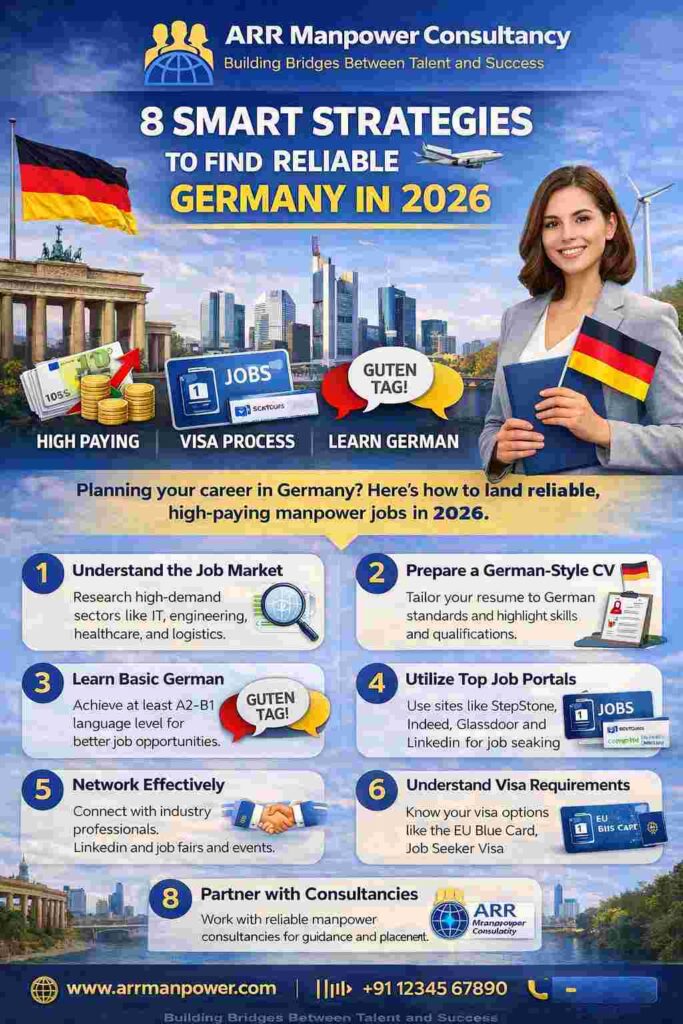
In this guide, we will explore 8 smart strategies that will help you find reliable manpower jobs in Germany in 2026—faster, smarter, and with better results.
https://arrmanpowerconsultancy.com/contact-us-arr-manpower-consultancy/
Why Germany Needs Skilled Manpower in 2026
Germany is facing a significant labor shortage due to its aging population and economic growth. This has created a strong demand for foreign workers in various industries.
High-Demand Sectors:
- Engineering and manufacturing
- Information technology
- Healthcare and nursing
- Construction and skilled trades
- Logistics and transportation
This demand creates opportunities, but employers still expect high standards.
1. Understand the German Job Market
Before applying for jobs, it’s essential to understand how the German job market works.
Key Insights:
- Employers prefer qualified and experienced candidates
- Structured hiring processes are common
- Cultural fit matters
What You Should Do:
- Research job roles in your field
- Understand required skills
- Analyze job descriptions carefully
👉 The more you understand the market, the better your chances of success.
2. Build a German-Style Resume (CV)
Your resume is your first impression—and in Germany, it follows a specific format.
Key Features:
- Clear structure
- Professional photo (optional but common)
- Detailed work experience
- Certifications and skills
Tips:
- Keep it concise (1–2 pages)
- Use bullet points
- Highlight achievements
👉 A well-crafted CV can significantly increase your chances of getting shortlisted.
3. Learn Basic German Language Skills
While some jobs are available in English, learning German gives you a strong advantage.
Benefits:
- More job opportunities
- Better communication
- Easier integration
Recommended Level:
- Minimum: A2–B1
- Ideal: B2 or higher
👉 Language skills can be the difference between rejection and selection.
4. Use Multiple Job Search Platforms
Don’t rely on just one platform when searching for jobs.
Where to Apply:
- Job portals
- Company career pages
- Recruitment agencies
- Social media platforms
Strategy:
- Apply consistently
- Track applications
- Follow up when needed
👉 More visibility = more opportunities.
5. Leverage Networking for Hidden Opportunities
Networking is one of the most powerful tools for finding jobs in Germany.
How to Network:
- Connect with professionals on LinkedIn
- Join industry groups
- Attend webinars and events
Why It Works:
Many jobs are filled through referrals rather than public listings.
👉 Your network can open doors that job portals cannot.
6. Understand Visa and Work Permit Requirements
Without the right visa, you cannot work in Germany.
Common Options:
- Job Seeker Visa
- EU Blue Card
- Skilled Worker Visa
Tips:
- Check eligibility before applying
- Prepare documents in advance
- Follow official guidelines
👉 A smooth visa process ensures a smooth career journey.
7. Prepare for Interviews the Smart Way
Getting shortlisted is just the beginning. Interviews are where you prove your value.
What Employers Look For:
- Technical knowledge
- Problem-solving ability
- Communication skills
Preparation Tips:
- Practice common questions
- Research the company
- Be confident and clear
👉 Preparation builds confidence and increases your chances of success.
8. Partner with a Manpower Consultancy
If you want faster results, working with a manpower consultancy can be a smart move.
Benefits:
- Access to verified job opportunities
- Professional guidance
- Faster hiring process
When to Use:
- If you’re applying from abroad
- If you want expert support
- If you’re unsure where to start
👉 The right consultancy can save you time and effort.
Common Mistakes to Avoid
Even small mistakes can delay your job search.
Avoid These:
- Sending generic resumes
- Ignoring language requirements
- Applying without research
- Unrealistic salary expectations
- Not preparing for interviews
👉 Avoiding mistakes is just as important as following strategies.
Step-by-Step Action Plan
Here’s a simple roadmap to follow:
Step 1: Research your industry
Step 2: Upgrade your skills
Step 3: Learn basic German
Step 4: Create a strong CV
Step 5: Apply strategically
Step 6: Network actively
Step 7: Prepare for interviews
Step 8: Get professional help if needed
Benefits of Working in Germany
- High salary potential
- Strong work-life balance
- Job security
- Career growth opportunities
- International exposure
Challenges You Should Be Ready For
- Language barrier
- Cultural differences
- Initial relocation costs
- Complex documentation
Real-Life Example
Imagine two candidates applying for the same job:
Candidate A:
- No German skills
- Generic resume
- No networking
Candidate B:
- Basic German knowledge
- Tailored CV
- Strong LinkedIn connections
👉 Candidate B has a much higher chance of success.
Future Scope of Manpower Jobs in Germany
The demand for skilled manpower will continue to grow in:
- Technology and AI
- Renewable energy
- Healthcare
- Skilled trades
Germany will remain a strong destination for job seekers in the coming years.
Conclusion
Finding reliable manpower jobs in Germany in 2026 is absolutely possible—but only if you follow the right approach.
By applying these 8 smart strategies, you can:
- Improve your chances of getting hired
- Avoid common mistakes
- Build a successful international career
Remember, success doesn’t come from applying to hundreds of jobs blindly. It comes from strategy, preparation, and consistency.
Start your journey today, and take one step closer to building your career in Germany.
FAQs
1. Is Germany good for manpower jobs in 2026?
Yes, especially in high-demand sectors like IT, healthcare, and engineering.
2. Do I need German language skills?
Not mandatory for all jobs, but highly recommended.
3. What is the best way to find jobs?
Use multiple platforms, networking, and consultancies.
4. Are salaries high in Germany?
Yes, but living costs and taxes should be considered.
5. Can freshers apply?
Yes, but experienced candidates have better chances.
Final Thoughts
Germany offers incredible opportunities—but only for those who prepare smartly and act strategically. With the right mindset and approach, you can turn your dream of working in Germany into reality.