Introduction
Germany has long been one of the most attractive destinations for job seekers across the globe. In 2026, this reputation is stronger than ever—but so is the competition. Thousands of skilled professionals dream of working in Germany for its high salaries, work-life balance, and career growth opportunities. Yet, many fail—not because they lack skills, but because they lack the right strategy.
If you are planning to work in Germany, you need more than just qualifications. You need clarity, preparation, and awareness of the real challenges.
This guide reveals 9 powerful truths about jobs in Germany in 2026—including opportunities, hidden risks, and practical strategies to help you succeed.
https://arrmanpowerconsultancy.com/services/
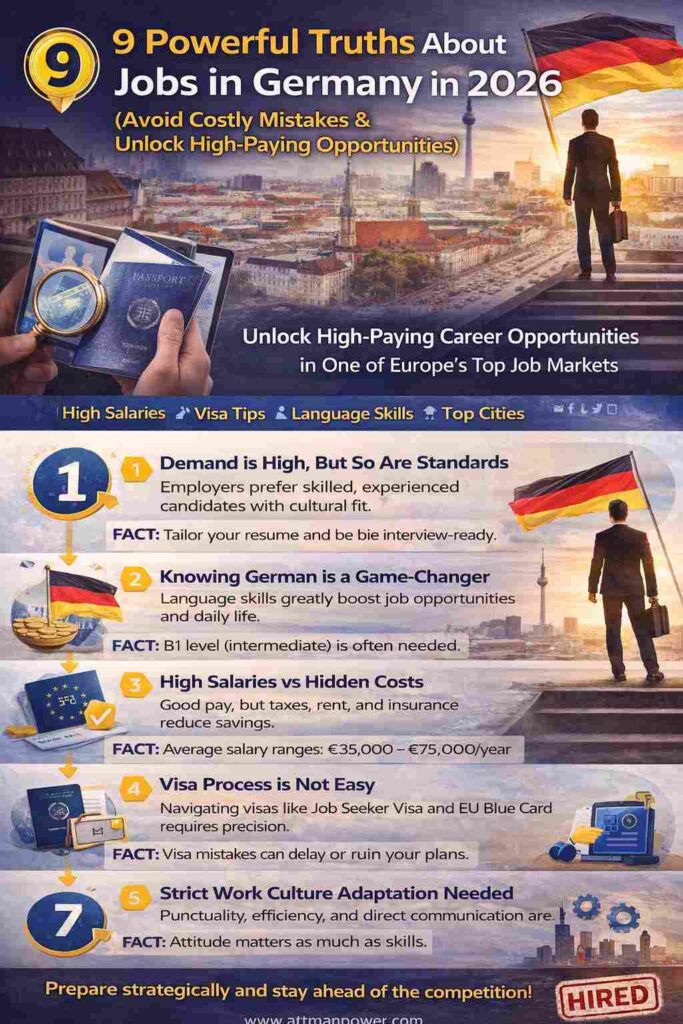
Why Germany is Still a Top Destination in 2026
Germany continues to face a significant skilled labor shortage, especially in sectors like:
- Engineering
- IT and software development
- Healthcare
- Construction
- Logistics
The country’s aging population has created a strong demand for international workers. This means more opportunities—but also stricter hiring standards.
1. High Demand Doesn’t Mean Easy Hiring
Many people assume that because Germany needs workers, getting a job is easy. This is a costly mistake.
The Reality:
- Employers still expect high-quality skills
- Strong preference for experienced candidates
- Cultural fit and communication matter
What You Should Do:
- Tailor your resume to German standards
- Highlight measurable achievements
- Prepare for structured interviews
👉 Truth: Opportunity exists—but only for those who prepare seriously.
2. Language Can Make or Break Your Career
While some jobs are available in English, German language skills are a massive advantage.
Why It Matters:
- Improves job prospects
- Helps in daily life
- Builds trust with employers
Levels That Matter:
- A1–A2: Basic survival
- B1–B2: Job-ready
- C1: Highly competitive
👉 Truth: Not knowing German limits your growth significantly.
3. Salary Expectations vs Reality
Germany offers attractive salaries—but expectations must be realistic.
Average Salary Ranges (2026):
- Entry-level: €35,000 – €50,000/year
- Mid-level: €50,000 – €75,000/year
- Senior roles: €75,000+
Hidden Costs:
- Taxes (can be high)
- Rent (especially in cities)
- Health insurance
👉 Truth: High salary doesn’t always mean high savings.
4. Visa and Work Permit Process is Critical
One of the biggest hurdles is the visa process.
Common Pathways:
- Job Seeker Visa
- EU Blue Card
- Skilled Worker Visa
Mistakes to Avoid:
- Incomplete documentation
- Applying without job readiness
- Ignoring eligibility criteria
👉 Truth: A small mistake can delay your dream by months.
5. The Hidden Power of Networking
In Germany, many jobs are not publicly advertised.
Where Opportunities Exist:
- LinkedIn connections
- Industry events
- Referrals
Strategy:
- Build a professional profile
- Connect with recruiters
- Engage in industry discussions
👉 Truth: Your network can be more powerful than your resume.
6. Work Culture is Different (And Strict)
German work culture is structured, disciplined, and punctual.
Key Traits:
- Respect for time
- Clear communication
- Strong work ethics
Challenges:
- Limited flexibility in some sectors
- Direct communication style
👉 Truth: Adapting to culture is as important as skills.
7. Degrees Alone Are Not Enough
Having a degree does not guarantee a job.
What Employers Look For:
- Practical experience
- Certifications
- Problem-solving ability
Tip:
If your degree is not recognized, consider:
- Skill-based certifications
- Internship or training programs
👉 Truth: Skills > Degrees in many cases.
8. Some Cities Offer Better Opportunities
Not all cities are equal when it comes to jobs.
Top Cities for Jobs:
- Berlin – Startups & IT
- Munich – Engineering & Automotive
- Frankfurt – Finance
- Hamburg – Logistics
Cost Factor:
Big cities = higher rent
👉 Truth: Choose location wisely for balance.
9. Preparation is the Ultimate Game-Changer
The biggest difference between success and failure is preparation.
What You Need:
- Strong CV (German format)
- Language skills
- Interview preparation
- Clear career plan
👉 Truth: Luck favors the prepared.
Step-by-Step Strategy to Get a Job in Germany
Step 1: Identify Your Industry Demand
Research sectors where your skills are needed.
Step 2: Upgrade Your Skills
Take relevant certifications.
Step 3: Learn Basic German
At least A2/B1 level.
Step 4: Build a Strong Resume
Follow German CV format.
Step 5: Apply Strategically
Don’t apply randomly—target suitable roles.
Step 6: Prepare for Interviews
Practice technical and behavioral questions.
Common Mistakes to Avoid
- Applying without research
- Ignoring language skills
- Sending generic resumes
- Not understanding visa rules
- Unrealistic salary expectations
Benefits of Working in Germany
- High-quality life
- Job security
- Strong labor laws
- Work-life balance
- Global career exposure
Challenges You Must Be Ready For
- Language barrier
- Cultural adjustment
- Bureaucracy
- Initial expenses
Real-Life Scenario
Imagine two candidates:
Candidate A:
- No German skills
- Generic resume
- Random applications
Candidate B:
- B1 German level
- Tailored CV
- Strong networking
👉 Candidate B gets hired faster—even with similar qualifications.
Future Job Trends in Germany (2026 & Beyond)
- Increased demand for IT professionals
- Growth in renewable energy jobs
- Rise in healthcare roles
- Automation creating new skill needs
Final Thoughts
Germany in 2026 is full of opportunities—but only for those who approach it strategically. It’s not just about finding a job; it’s about building a career in a competitive global environment.
If you focus on skills, preparation, and smart planning, your chances of success increase dramatically.
FAQs
1. Is Germany good for jobs in 2026?
Yes, especially for skilled professionals in high-demand sectors.
2. Do I need German language skills?
Not always, but it significantly improves your chances.
3. What is the easiest way to get a job?
Through networking, targeted applications, and proper preparation.
4. Are salaries high in Germany?
Yes, but living costs and taxes must be considered.
5. Can freshers get jobs?
Yes, but it’s more competitive compared to experienced professionals.
Conclusion
Germany continues to stand out as one of the most attractive destinations for international professionals seeking stable employment, competitive salaries, and long-term career growth. As labor shortages affect multiple industries across the country, 2026 presents a unique opportunity for skilled workers to secure rewarding positions in sectors such as healthcare, engineering, IT, manufacturing, logistics, construction, and hospitality.
However, success in the German job market is not simply about finding a vacancy and submitting an application. Many candidates lose valuable opportunities because they underestimate the importance of preparation. From understanding visa requirements and qualification recognition to creating a professional CV that meets German standards, every step plays a crucial role in determining whether an applicant stands out or gets overlooked.
One of the most powerful truths about jobs in Germany is that employers value skills, reliability, and qualifications more than nationality. Candidates who invest time in improving their professional profiles, gaining relevant certifications, and learning basic German often enjoy a significant advantage over others. Even though many multinational companies operate in English, German language proficiency can unlock a wider range of opportunities and accelerate career advancement.
Another important lesson is to avoid shortcuts and unrealistic promises. Job seekers should remain cautious of fraudulent recruitment agencies, fake employment offers, and individuals requesting payments for guaranteed jobs or visas. Genuine employers follow transparent hiring processes, provide official documentation, and comply with German labor regulations. Conducting proper research before accepting any offer can prevent costly mistakes and protect both your finances and career aspirations.
The German government continues to introduce policies aimed at attracting international talent, making the immigration process more accessible for qualified professionals. This means that candidates who possess in-demand skills and meet eligibility requirements may find it easier than ever to enter the German workforce. Keeping up with the latest visa updates, labor market trends, and industry demands can help applicants position themselves strategically for success.
Beyond financial benefits, working in Germany offers valuable professional and personal advantages. Employees often enjoy strong labor protections, structured career development programs, excellent healthcare systems, and a high quality of life. These factors contribute to long-term stability and make Germany a preferred destination for professionals seeking both career growth and personal well-being.
Ultimately, the biggest opportunity in 2026 belongs to those who prepare early and act wisely. Research the industries experiencing talent shortages, tailor your applications to German employer expectations, strengthen your language skills, and ensure all documents are accurate and complete. Small efforts made today can create significant opportunities tomorrow.
Germany’s evolving labor market is filled with potential for motivated professionals willing to invest in their future. By avoiding common mistakes, staying informed, and approaching the job search strategically, you can transform your ambition into a successful international career. The opportunities are real, the demand for skilled talent is growing, and 2026 could be the year that opens the door to a prosperous new chapter in Germany.
In addition, networking can significantly increase your chances of securing employment in Germany. Building professional connections through industry events, online platforms, recruitment agencies, and employer networking programs can help you discover hidden opportunities that may never appear on public job boards. Combining strong qualifications with proactive networking creates a powerful foundation for long-term success and career advancement in Germany’s competitive yet rewarding employment market.
The dream of working in Germany is achievable—but only if you understand the realities. By following the insights shared in this guide, you can avoid costly mistakes and position yourself for success.
Take action today, prepare smartly, and unlock the powerful opportunities waiting for you in Germany.