Introduction
Building a successful business requires more than a strong product or service. Behind every growing organization is a skilled, motivated, and productive workforce expert hiring that drives results consistently. Hiring the right people is one of the most important decisions any company can make because employees directly influence productivity, workplace culture, customer satisfaction, and long-term growth.
However, recruitment is becoming more challenging every year. Companies face intense competition for skilled professionals, evolving employee expectations, and rapidly changing industry demands. Finding candidates who not only possess technical expertise but also align with company values can be difficult without a clear hiring strategy.
This is where expert recruitment planning becomes essential. Businesses that focus on smart hiring practices are more likely to build high-performing teams capable of adapting to market changes and achieving organizational goals efficiently.
In this article, we will discuss 20 expert hiring tips that can help organizations improve recruitment quality, reduce hiring mistakes, and create a productive workforce.
https://arrmanpowerconsultancy.com/
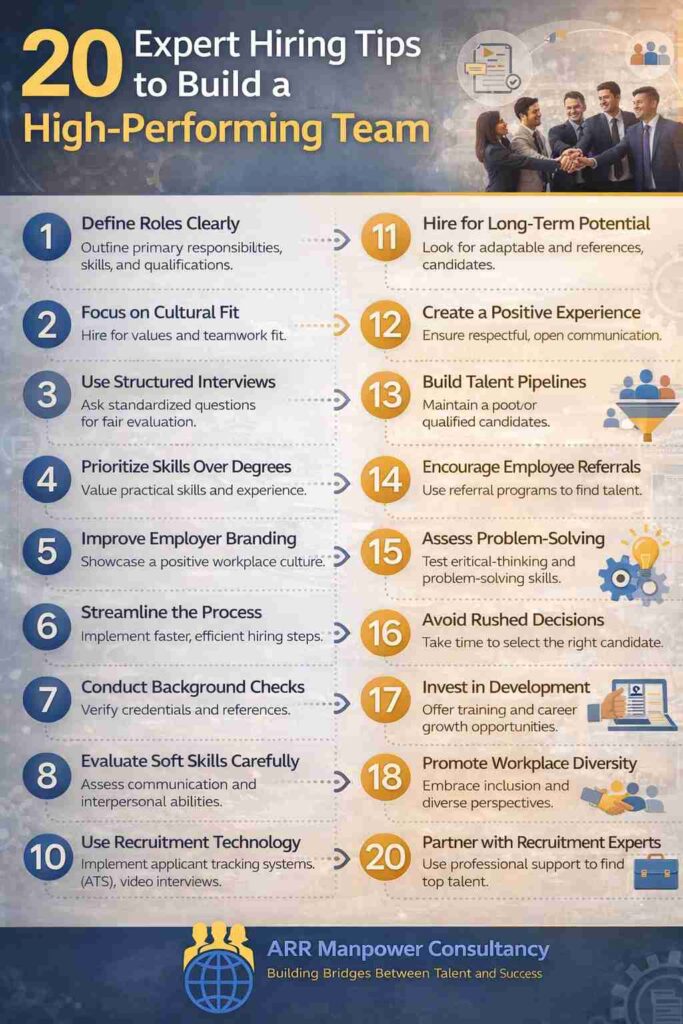
1. Define Job Roles Clearly for Expert Hiring
One of the biggest hiring mistakes businesses make is creating vague job descriptions. Candidates need a clear understanding of responsibilities, expectations, qualifications, and growth opportunities before applying.
A detailed job description should include:
- Primary responsibilities
- Required technical skills
- Educational qualifications
- Experience level
- Soft skills needed
- Reporting structure
- Work environment details
When roles are clearly defined, recruiters attract more relevant applicants and reduce confusion during the hiring process.
2. Focus on Cultural Fit
Technical expertise alone does not guarantee success within an organization. Employees should also fit into the company culture and work effectively with existing teams.
Hiring individuals who align with organizational values often leads to:
- Better collaboration
- Improved employee retention
- Higher productivity
- Stronger workplace relationships
Assessing communication style, adaptability, teamwork, and attitude during interviews can help determine whether a candidate is the right cultural fit.
3. Use Structured Interviews
Unstructured interviews may lead to biased decisions or inconsistent evaluations. Structured interviews provide a more reliable way to compare candidates fairly.
Prepare a standardized list of questions related to:
- Technical knowledge
- Problem-solving ability
- Leadership skills
- Workplace behavior
- Industry experience
Using the same evaluation criteria for every applicant improves hiring accuracy and decision-making.
4. Prioritize Skills Over Degrees
While educational qualifications remain important, practical skills and experience often matter more in today’s competitive industries.
Many highly capable professionals develop expertise through:
- Hands-on projects
- Certifications
- Online training
- Freelance work
- Industry exposure
Employers who focus on demonstrated ability instead of only academic credentials can discover talented individuals with exceptional potential.
5. Improve Employer Branding
Candidates prefer organizations with strong reputations, positive workplace culture, and career growth opportunities.
Businesses can strengthen employer branding by:
- Maintaining a professional online presence
- Sharing employee success stories
- Promoting workplace achievements
- Highlighting company values
- Offering learning opportunities
A positive brand image attracts better candidates and improves recruitment results.
6. Streamline the Recruitment Process
Lengthy hiring procedures often cause companies to lose skilled candidates to competitors. Simplifying recruitment stages improves candidate experience and increases hiring efficiency.
An effective recruitment process should include:
- Quick resume screening
- Timely interview scheduling
- Clear communication
- Fast feedback
- Efficient decision-making
Candidates appreciate organizations that respect their time and communicate professionally.
7. Conduct Thorough Background Checks
Verifying candidate information helps businesses avoid future risks and hiring complications.
Background verification may include:
- Employment history checks
- Educational verification
- Reference checks
- Criminal record screening
- Identity confirmation
This process helps ensure authenticity and reduces the likelihood of fraudulent hiring.
8. Evaluate Soft Skills Carefully
Technical knowledge can be taught, but soft skills often determine long-term workplace success.
Important soft skills include:
- Communication
- Leadership
- Time management
- Emotional intelligence
- Adaptability
- Team collaboration
Employees with strong interpersonal skills usually contribute positively to workplace culture and customer relationships.
9. Offer Competitive Compensation
Talented professionals expect salaries and benefits that reflect their skills and market value.
Competitive compensation packages may include:
- Attractive salaries
- Performance bonuses
- Flexible work arrangements
- Health benefits
- Paid leave
- Career development programs
Businesses offering strong employee benefits often attract and retain top talent more effectively.
10. Use Technology for Recruitment
Modern recruitment technology simplifies hiring and improves efficiency.
Many organizations now use:
- Applicant tracking systems
- AI-powered screening tools
- Video interviews
- Recruitment analytics
- Online assessments
Technology helps recruiters save time while improving candidate selection accuracy.
11. Hire for Long-Term Potential
Some companies focus only on immediate skill requirements without considering future growth potential.
Hiring employees with learning ability, adaptability, and ambition creates stronger long-term teams. Candidates willing to grow with the organization often become valuable future leaders.
12. Create a Positive Candidate Experience
Every interaction during recruitment influences how candidates perceive a company.
Organizations should:
- Respond professionally
- Respect interview schedules
- Provide clear instructions
- Offer constructive feedback
- Maintain transparent communication
Even rejected applicants may recommend companies that provide respectful hiring experiences.
13. Build Talent Pipelines
Waiting until positions become vacant can delay operations and increase hiring pressure.
Maintaining a talent pipeline allows businesses to:
- Identify future candidates early
- Reduce hiring time
- Improve workforce planning
- Access skilled professionals quickly
Networking events, job fairs, and online professional platforms help companies build strong talent pools.
14. Encourage Employee Referrals
Current employees often know professionals who may fit company culture and job requirements.
Referral programs provide several advantages:
- Faster hiring
- Reduced recruitment costs
- Better cultural alignment
- Higher employee retention
Employees usually recommend candidates they believe can perform successfully.
15. Assess Problem-Solving Ability
Modern workplaces require employees who can think critically and solve challenges independently.
Interviewers can evaluate problem-solving skills through:
- Real-world scenarios
- Case studies
- Situational questions
- Technical tasks
Candidates who demonstrate analytical thinking are often better equipped for workplace challenges.
16. Avoid Rushed Hiring Decisions
Hiring under pressure sometimes leads to poor decisions that affect productivity and morale.
A rushed recruitment process may result in:
- Skill mismatches
- Increased turnover
- Workplace conflicts
- Financial losses
Taking time to evaluate candidates thoroughly improves long-term hiring outcomes.
17. Invest in Employee Development
Recruitment does not end after hiring. Organizations must continue supporting employee growth through training and development programs.
Continuous learning opportunities improve:
- Employee engagement
- Productivity
- Job satisfaction
- Innovation
- Retention rates
Companies that invest in professional development often build more loyal and capable teams.
18. Promote Workplace Diversity
Diverse teams bring different perspectives, experiences, and ideas that improve creativity and decision-making.
An inclusive workplace encourages:
- Innovation
- Collaboration
- Equal opportunities
- Better problem-solving
- Stronger organizational culture
Businesses that embrace diversity often perform better in competitive markets.
19. Measure Recruitment Performance
Tracking recruitment metrics helps organizations identify areas for improvement.
Useful hiring metrics include:
- Time-to-hire
- Cost-per-hire
- Employee retention rates
- Candidate satisfaction
- Interview-to-offer ratio
Data-driven recruitment strategies improve efficiency and overall hiring quality.
20. Partner With Professional Recruitment Experts
Many businesses struggle to manage recruitment internally due to limited resources, time constraints, or lack of industry expertise.
Professional recruitment consultancies help organizations by:
- Identifying qualified candidates
- Reducing hiring time
- Improving workforce quality
- Managing large-scale hiring
- Providing industry insights
Working with experienced hiring professionals allows companies to focus on business growth while ensuring recruitment efficiency.
Conclusion
Building a high-performing team is not a one-time achievement but an ongoing process that requires strategic planning, careful evaluation, and continuous improvement. Organizations that invest time in refining their hiring practices gain a significant competitive advantage in attracting and retaining top talent. Every hiring decision has a direct impact on productivity, workplace culture, employee engagement, and long-term business success.
By implementing these expert hiring tips, companies can reduce recruitment risks, improve candidate quality, and create a workforce that aligns with their organizational goals. From defining clear job requirements and leveraging technology to assessing cultural fit and prioritizing candidate experience, each step contributes to stronger hiring outcomes. Successful recruitment is about finding individuals who not only possess the required skills but also demonstrate the potential to grow, collaborate, and contribute meaningfully to the organization.
Partnering with experienced recruitment professionals can further streamline the hiring process and provide access to a wider pool of qualified candidates. With the right expertise and industry insights, businesses can fill critical positions more efficiently while maintaining high hiring standards.
At ARR Manpower Consultancy, we understand the challenges organizations face in today’s competitive talent market. Our commitment is to help businesses identify, attract, and hire exceptional professionals who drive growth and innovation. By adopting a proactive and strategic hiring approach, companies can build resilient teams that support sustainable success for years to come.
Building a high-performing team requires careful planning, strategic hiring practices, and long-term workforce management. Successful recruitment goes beyond filling vacancies; it involves identifying individuals who can contribute to organizational success, adapt to changing environments, and strengthen workplace culture.
Businesses that prioritize clear communication, structured hiring processes, employee development, and workplace diversity are more likely to attract and retain skilled professionals.
By applying these 20 expert hiring tips, companies can reduce recruitment challenges, improve workforce productivity, and create stronger teams capable of supporting long-term business growth.
Organizations seeking efficient hiring support can also benefit from professional recruitment guidance offered by experienced staffing consultants such as ARR Manpower Consultancy, helping businesses find qualified talent while saving valuable time and resources.