Introduction
Germany has emerged as one of the most promising destinations for skilled manpower across the globe. In 2026, the country continues to face a significant shortage of workers in multiple industries, creating strong opportunities for international job seekers.
But here’s the truth—while opportunities are abundant, success is not guaranteed.
Many candidates apply with high expectations but fail to secure jobs due to lack of preparation, understanding, and strategy. The German job market is structured, competitive, and highly quality-driven.
This expert guide reveals 12 powerful insights on manpower jobs in Germany that will help you avoid costly mistakes and increase your chances of getting hired faster.
https://arrmanpowerconsultancy.com/services/
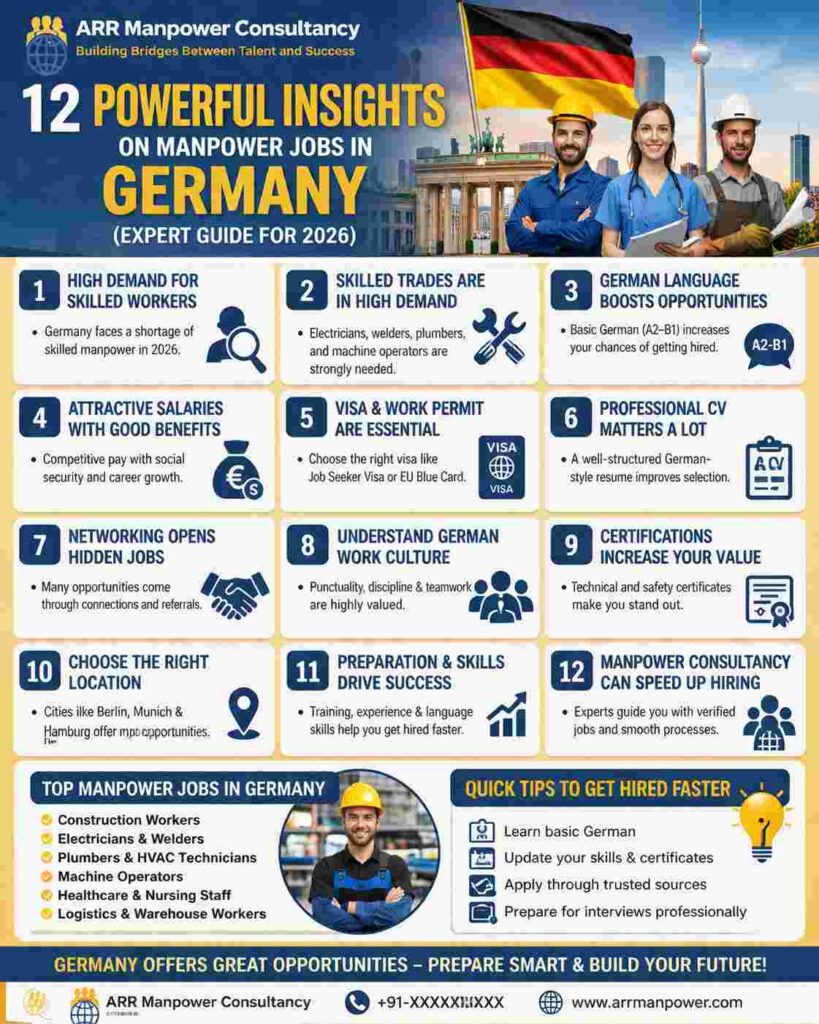
Why Germany Needs Manpower in 2026
Germany’s growing economy and aging population have created a gap in the workforce. Industries are struggling to find skilled professionals, especially in technical and labor-intensive roles.
Key Reasons:
- Aging workforce
- Rapid industrial growth
- Expansion of infrastructure projects
- Increasing demand in healthcare and IT
This shortage has opened doors for skilled manpower from countries like India, making 2026 a crucial year for job seekers.
1. High Demand Exists—But Competition Is Real
Yes, Germany needs manpower. But that doesn’t mean jobs are easy to get.
The Reality:
- Employers prefer skilled and experienced candidates
- Hiring standards are high
- Competition from global talent
👉 Insight: Demand helps—but only preparation gets you hired.
2. Skilled Trades Are More Valuable Than Ever
Blue collar and skilled jobs are in high demand across Germany.
In-Demand Roles:
- Electricians
- Welders
- Plumbers
- Construction workers
- Machine operators
👉 Insight: Skill-based roles often offer faster hiring than office jobs.
3. German Language Is a Game-Changer
Language is one of the most important factors in the hiring process.
Why It Matters:
- Improves communication
- Builds trust
- Expands job opportunities
Recommended Level:
- Minimum: A2–B1
👉 Insight: Learning German can double your chances of getting hired.
4. Salary Looks High—But Understand the Reality
Germany offers attractive salaries, but you must consider expenses.
Costs to Consider:
- Taxes
- Rent
- Health insurance
- Daily living expenses
👉 Insight: Focus on savings, not just salary.
5. Visa Process Requires Careful Attention
Getting the right visa is essential.
Common Options:
- Job Seeker Visa
- EU Blue Card
- Skilled Worker Visa
Mistakes to Avoid:
- Incomplete documents
- Lack of eligibility understanding
👉 Insight: Visa mistakes can delay your journey.
6. Resume Format Matters More Than You Think
German employers expect a structured CV.
Key Features:
- Clear layout
- Professional details
- Relevant experience
👉 Insight: A strong CV increases your chances of shortlisting.
7. Networking Can Unlock Hidden Jobs
Many jobs are not advertised publicly.
Where to Network:
- Industry groups
- Professional communities
👉 Insight: Connections can open doors faster than job portals.
8. Work Culture Is Structured and Professional
Germany has a disciplined work environment.
Key Traits:
- Punctuality
- Clear communication
- Respect for rules
👉 Insight: Adapting to culture is crucial for long-term success.
9. Certifications Boost Your Profile
Additional certifications can make you stand out.
Examples:
- Technical certifications
- Safety training
- Language certificates
👉 Insight: Certifications increase your employability.
10. Location Impacts Opportunities
Different cities offer different job opportunities.
Top Cities:
- Berlin (tech)
- Munich (engineering)
- Frankfurt (finance)
- Hamburg (logistics)
👉 Insight: Choose your location wisely.
11. Preparation Is More Important Than Luck
Success in Germany is not based on luck.
What You Need:
- Strong CV
- Language skills
- Interview preparation
👉 Insight: Preparation determines your success rate.
12. Manpower Consultancies Can Speed Up Hiring
Working with a consultancy can simplify your job search.
Benefits:
- Verified job opportunities
- Faster process
- Professional guidance
👉 Insight: The right support can save time and effort.
Step-by-Step Strategy to Get a Job in Germany
Step 1: Identify in-demand roles
Step 2: Upgrade your skills
Step 3: Learn basic German
Step 4: Create a strong CV
Step 5: Apply strategically
Step 6: Network actively
Step 7: Prepare for interviews
Common Mistakes to Avoid
- Applying without research
- Ignoring language skills
- Sending generic resumes
- Unrealistic expectations
Benefits of Working in Germany
- High-quality lifestyle
- Job security
- Career growth
- International exposure
Challenges You Should Be Ready For
- Language barrier
- Cultural differences
- Documentation process
- Initial expenses
Real-Life Scenario
Two candidates apply for the same job:
Candidate A: No German, generic CV
Candidate B: Basic German, tailored CV
👉 Candidate B gets hired faster.
Future of Manpower Jobs in Germany
The demand for skilled workers will continue to grow in:
- Renewable energy
- Healthcare
- Technology
- Skilled trades
Conclusion
Germany in 2026 offers incredible opportunities for skilled manpower—but only for those who prepare smartly.
By understanding these 12 powerful insights, you can:
- Avoid common mistakes
- Improve your chances of getting hired
- Build a successful career abroad
👉 The opportunity is real. The strategy is what matters.
FAQs
1. Is Germany good for manpower jobs in 2026?
Yes, especially in skilled sectors.
2. Do I need German language skills?
Highly recommended for better opportunities.
3. What is the best way to find jobs?
Use multiple platforms, networking, and consultancies.
4. Are salaries high?
Yes, but living costs must be considered.
5. Can freshers apply?
Yes, but experience improves chances.
Final Thoughts
Manpower jobs in Germany are not just opportunities—they are career-changing possibilities. With the right approach, skills, and preparation, you can turn your dream into reality.
Start today, stay consistent, and take the first step toward your international career.